
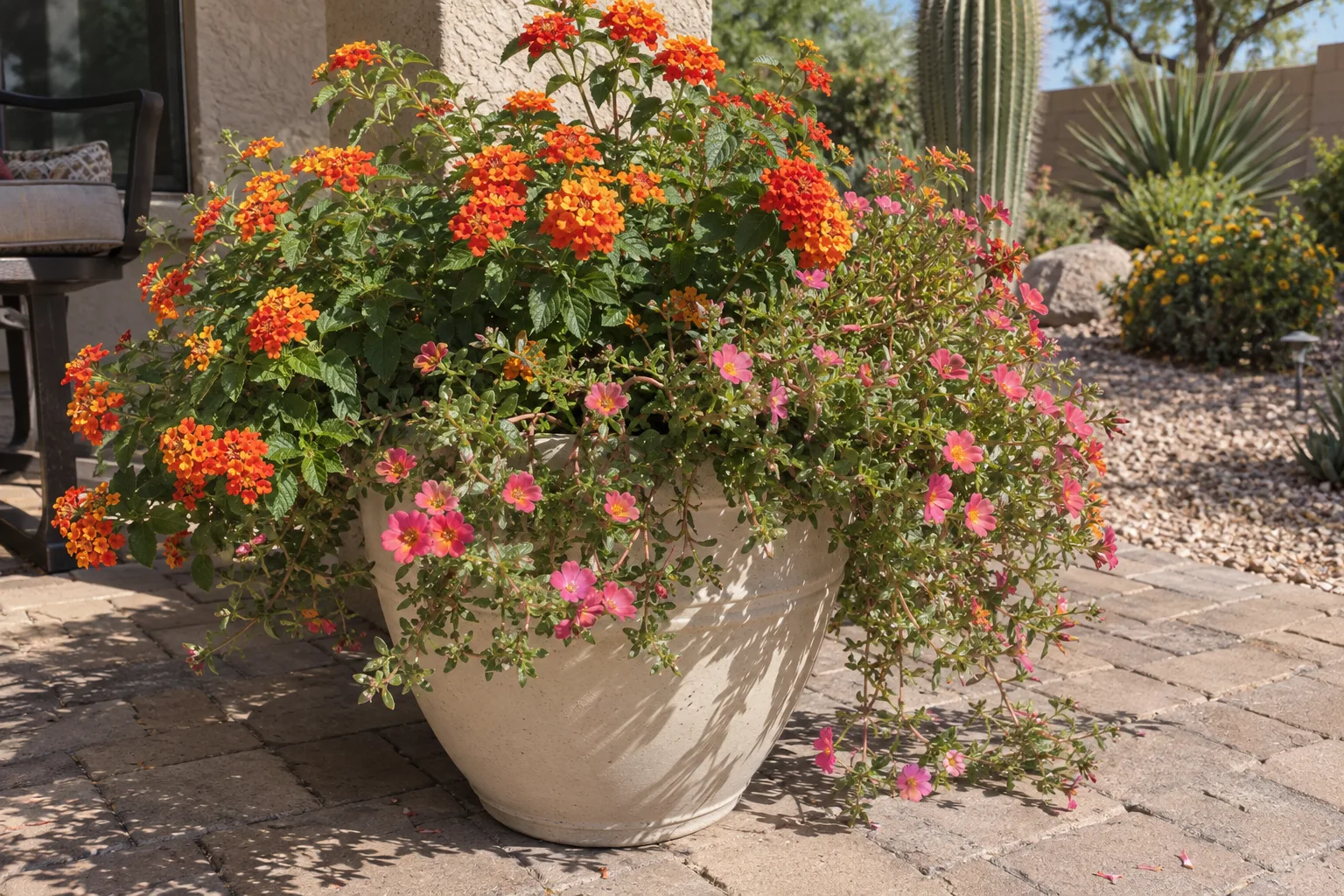
The best colorful container plants for Arizona heat are lantana, portulaca, pentas, vinca, bougainvillea, angelonia, gaillardia and moss verbena. Each keeps blooming through low desert summers when it has a roomy pot, fast-draining mix and some relief from afternoon sun.
Key takeaways
- Use at least a 5-gallon pot for a single plant and 15 gallons or more for mixed plantings, because small pots can dry out within a day when highs top 110°F.
- Set out summer color in April and May, and swap to cool-season color from mid-October to early November.
- Check moisture by pushing a finger 2 inches into the soil, and water early in the morning until water drains from the bottom.
- Pentas, vinca and angelonia bloom best with morning sun and shade from roughly 1 to 5 p.m. in summer.
- Lantana, bougainvillea, pentas and angelonia are frost tender, so cover them or move them when a night near 32°F is forecast.
Why do container plants struggle in Arizona summers?
Pots heat up and dry out faster than ground soil, and that is what stresses plants. A dark pot on a west-facing patio can bake the roots well past the air temperature, and a small volume of soil can go from wet to dry within a day when highs top 110°F. Roots tolerate far less heat than leaves do. Alkaline soil and hard irrigation water add a second problem, because high pH locks up iron and leaves turn yellow between green veins.
The plants below handle these conditions because they come from tropical or semi-arid origins. Browse our annual flowers and foliage department for heat-tolerant color. We commonly carry most of these varieties, though availability changes week to week and season to season.
What pot and potting mix work best in summer heat?
Choose a light-colored pot with thick walls and plenty of soil volume. Light colors reflect heat, and thick resin, fiberglass, foam or glazed ceramic slow the swings in soil temperature. Unglazed terracotta wicks water through its walls, so it dries fastest and suits shaded spots best. Our pottery and planters department shows the range of materials and colors. Size matters just as much as material.
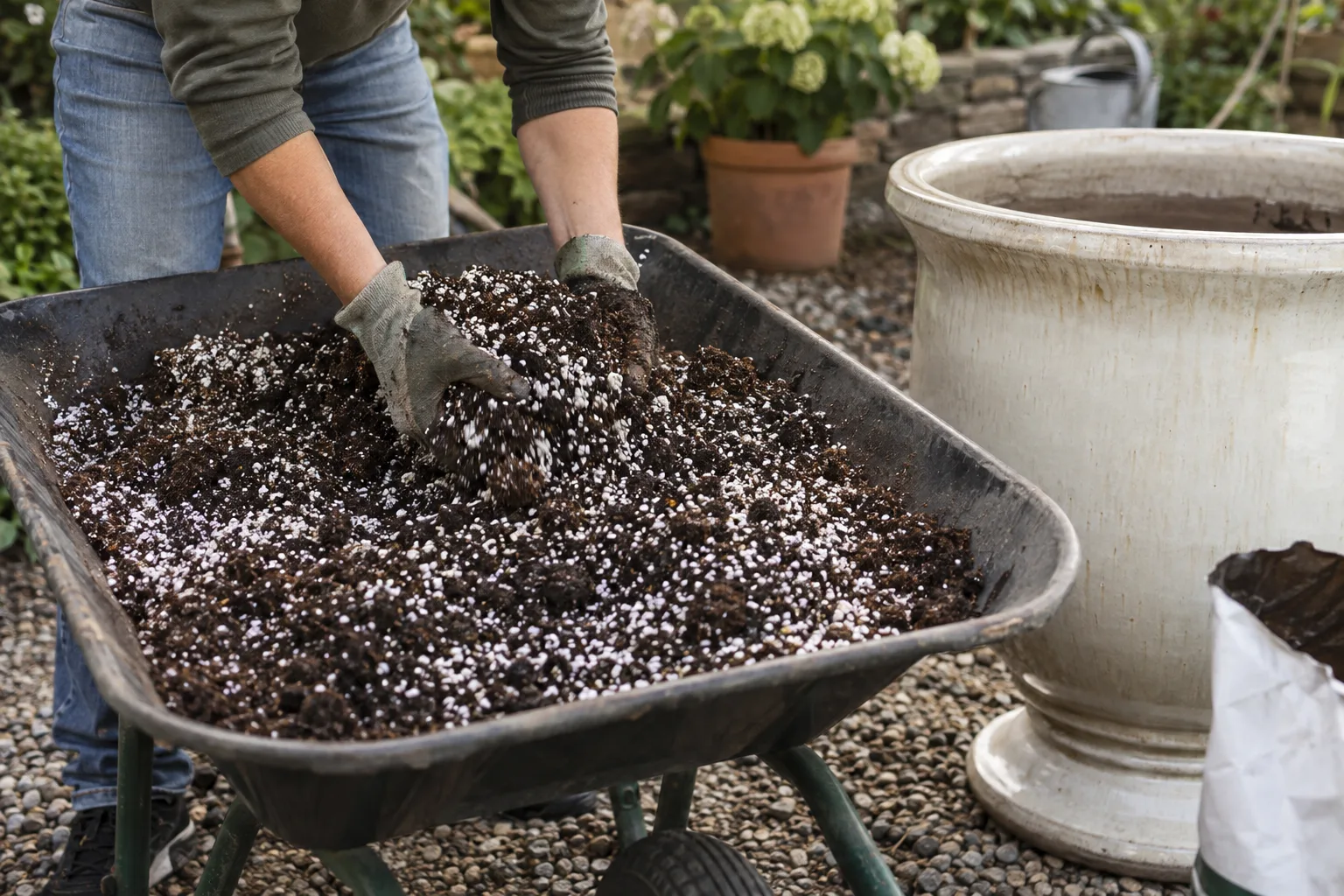
Start with a quality potting mix and blend in roughly one part perlite to four parts mix for drainage. Peat-heavy mixes can turn water-repellent once fully dry, and water then runs down the pot walls and out the drainage holes without wetting the root ball. If that happens, soak the pot in a tub for 20 to 30 minutes. Top the soil with a half-inch layer of pebbles or decomposed granite to cut evaporation.
Mix a slow-release fertilizer into the soil at planting, then add a water-soluble feed every 2 to 4 weeks while plants are in bloom. When leaves yellow between green veins, a chelated iron product made for alkaline soils usually corrects it.
Which colorful container plants handle Arizona heat best?
Eight plants earn a place here because they bloom in summer heat, tolerate alkaline soil and fit in a pot, though each has one drawback worth knowing before you buy. Sizes are typical for container growing.
1. Lantana (Lantana camara)
Lantana reaches 2 to 3 feet tall and wide in a large pot, and trailing types stay lower. It wants full sun and moderate water, with the top inch or two of soil drying between drinks. Blooms come in orange, yellow, pink, red, purple and multicolor combinations from spring until frost. The drawback is that flowering can slow during the hottest weeks and frost cuts it back hard.
2. Portulaca (Portulaca grandiflora)
Portulaca stays 4 to 8 inches tall and spreads about a foot, which makes it a good filler under taller plants. It takes full sun and low to moderate water because its thick leaves store moisture. Flowers appear in magenta, orange, yellow, pink and white. The drawback is that blooms close in shade and on cloudy days, and the plant is a frost-tender annual.
3. Pentas (Pentas lanceolata)
Pentas grows 18 to 30 inches tall in a pot and produces clusters of red, pink, white or lavender flowers that draw hummingbirds and butterflies. It does best with morning sun, afternoon shade in summer and regular water. Dry soil makes it wilt fast. Frost damages it, so protect it in winter.

4. Vinca (Catharanthus roseus)
Annual vinca, also sold as Madagascar periwinkle, grows 10 to 18 inches tall in white, pink, red, coral or bicolor. It likes full sun to light afternoon shade and water only when the top inch of soil is dry. The drawback is a fungal disease called aerial Phytophthora, which can collapse plants in hot, soggy soil, so drainage is essential.
5. Bougainvillea (Bougainvillea spp.)
Dwarf bougainvillea types reach 3 to 5 feet in a large pot with regular pruning. They need at least 6 hours of direct sun and deep watering followed by a short dry-down. The papery bracts come in magenta, orange, red, coral, white and purple. Thorns make it unfriendly to prune, and it is frost tender.
6. Angelonia (Angelonia angustifolia)
Angelonia, called summer snapdragon, grows 12 to 24 inches tall with spikes of purple, pink, white or bicolor flowers. It handles full sun to light afternoon shade with moderate, steady water. Plants can look leggy by late summer, and shearing them back by about a third encourages a fresh round of flowers. Frost ends the season.
7. Gaillardia (Gaillardia x grandiflora)
Blanket flower grows 12 to 24 inches tall with red, orange and yellow daisy-like blooms. It takes full sun and low to moderate water, and it prefers lean soil, so go easy on fertilizer. Flowering is heaviest in spring and fall. It can be a short-lived perennial in pots, so plan to replace it after a year or two.
8. Moss verbena (Glandularia tenuisecta)
Moss verbena stays 4 to 8 inches tall and trails 2 to 3 feet over the pot rim, with fine foliage and small purple, pink or white flower clusters. It wants full sun and low to moderate water. The drawback is that it can look ragged in the hottest weeks and may need a light trim to refresh it.
How often should I water containers in summer?
Check every day, because most pots in the sun need water daily or every other day once highs stay above 105°F. Push a finger 2 inches into the soil and water when it feels dry at that depth. Water early in the morning, and keep going until water runs from the drainage holes, so the whole root ball gets wet.
Bougainvillea, portulaca and gaillardia tolerate drying a bit between drinks, while pentas, vinca and angelonia wilt sooner. Large pots may stretch to every 2 or 3 days. A drip emitter on a timer saves effort for pots you cannot check daily. During the monsoon from roughly July through September, rain and humidity let you cut back, but pots under eaves still dry out. In cooler months, intervals stretch to every 4 to 10 days.
Where should I put containers on a hot patio?
An east-facing spot works best in summer, with full sun until about noon and shade from roughly 1 to 5 p.m. West and south walls bounce heat back at the pot, and a stucco or block wall can raise the temperature right beside it by many degrees. Pull pots a foot or so away from the wall when you can.

Where you only have hot exposure, hang 30 to 40 percent shade cloth over the pots from June through early September. Lantana, bougainvillea, portulaca and gaillardia accept more direct sun than pentas, vinca and angelonia, so put the sun-lovers on the hottest side. Grouping pots lets them shade each other’s sides. Lifting them on pot feet keeps heat from building under the base and allows free drainage.
When should I switch to cool-season color?
Swap in cool-season plants from mid-October to early November, once nights drop consistently below about 65°F. Summer plants such as lantana, pentas and angelonia often keep blooming into October, so you can tuck snapdragons, pansies, alyssum or dianthus beside them for a few weeks.
Frost can arrive from December through January in the East Valley. Cover tender plants with frost cloth or move them under a patio roof when a night near 32°F is forecast. Our gardening calendars lay out planting windows month by month, and our classes and events page lists hands-on workshops.
Frequently asked questions
Can I plant several of these in one pot?
Yes, if you match plants with similar sun and water needs. Pentas, vinca and angelonia suit a part-shade pot, while lantana, portulaca and gaillardia suit a full-sun pot. Give bougainvillea its own large container. Our plants department has companions in many sizes and colors.
Why did my vinca collapse in July?
Hot, soggy soil is the usual cause. Aerial Phytophthora thrives when roots stay wet and temperatures climb, and a plant can fall over within days. Check that the pot drains freely, avoid saucers holding water, and water in the morning rather than late in the day. Replace collapsed plants and use fresh mix.
Do I need saucers under my pots?
Skip saucers in summer, because standing water gets hot and can rot roots. Pot feet that lift the base off the patio let water escape and let air move underneath. If you need to protect a surface, empty any saucer within an hour of watering.
Will these plants survive winter in a pot?
It depends on the plant. Gaillardia and moss verbena handle low desert winters well. Lantana, pentas and bougainvillea often return if covered during frost. Portulaca, vinca and angelonia are best treated as annuals and replaced. Pots lose heat faster than ground soil, so move tender plants close to the house.
Do these plants need deadheading?
Pentas, angelonia and vinca drop old blooms fairly cleanly, so they need little cleanup. Gaillardia keeps flowering longer when you snip spent blooms, and lantana looks tidier with an occasional light trim. Portulaca and moss verbena need almost none. A quick weekly pass takes a few minutes.
Are heat-tolerant container plants right for your patio?
Yes, if your patio gets at least 4 to 6 hours of sun and you can water daily in July or install a drip timer. Skip them if the spot is deep shade, where these sun lovers stretch and stop flowering, or if you travel for weeks each summer with nobody to check the pots. Start with one large pot and two or three companions, then see how that exposure treats them. Stop by the nursery in Queen Creek and we will help you match plants to your patio.