
The best cold-resistant plants for Arizona yards include Texas sage, autumn sage, desert marigold, Parry’s agave, rosemary and blue palo verde. Most handle lows in the teens, and red bird of paradise returns from its roots after a hard freeze.
Key takeaways
- Queen Creek lows usually sit in the 30s, but a few nights each winter can drop into the upper 20s, and those nights decide which plants survive.
- Plant cold-sensitive shrubs and perennials in October or November so roots have several weeks of warm soil before the first freeze.
- Established desert plants need water about every 2 to 3 weeks in winter if rain is scarce, and new plants need it about every 7 to 10 days.
- Frost cloth draped before sunset and removed the next morning protects borderline plants on the coldest nights.
- Wait until March to prune freeze damage, because brown growth shields the live wood below it.

What does cold-resistant mean in the Arizona low desert?
It means a plant takes our usual winter lows, from the 30s on most nights to the upper 20s on cold ones, without losing its structure. Queen Creek falls somewhere between USDA zone 9b and 10a depending on the map edition, with winter minimums in the mid 20s to low 30s. A hard freeze is occasional, but it is the night that sorts the tough plants from the tender ones.
Cold damage depends on more than the minimum temperature. How long the cold lasts, how dry the soil is, and how old the plant is all change the outcome. A plant that has spent two full growing seasons in the ground handles a freeze far better than one planted six weeks ago, because its roots reach deeper and steadier soil.
Your own yard also varies by several degrees. Cold air settles in low spots and along north-facing walls, while a south-facing block wall releases stored heat overnight. After the next cold night, walk the yard at sunrise and note where frost showed up first. Put tender plants in the warm spots and save the cold pockets for the tough ones.
Which cold-resistant plants work best in Queen Creek yards?
The seven below handle our winters with little fuss once they are established. They are varieties we commonly carry in our plants department, though availability changes week to week and season to season. Sizes are typical mature ranges and vary by variety.
Texas sage (Leucophyllum frutescens)
Texas sage grows 5 to 8 feet tall and wide in full sun and needs little water once established. Its silver-gray foliage holds through winter, and purple flowers follow warm, humid weather, often around the monsoon. It tolerates lows around 10°F. The drawback is its dislike of attention: extra water and fertilizer make it leggy and floppy, and soggy soil around the crown can rot it.
Autumn sage (Salvia greggii)
Autumn sage stays compact at 2 to 3 feet and takes full sun or a little afternoon shade. It blooms in spring and fall in red, pink or coral, and hummingbirds visit the flowers. Water needs are low to moderate. The drawback is its habit of turning woody and ragged, so plan to cut it back by about a third in late winter.
Desert marigold (Baileya multiradiata)
Desert marigold forms a silvery clump 1 to 2 feet tall and wide, topped with yellow daisies on tall stems. It wants full sun, very little water and fast-draining soil. Seedlings pop up on their own, so a few plants can become a small colony. It is short-lived, though, and looks sparse in midsummer. Heavy clay that stays wet will rot it.

Parry’s agave (Agave parryi)
Parry’s agave makes a tight, blue-gray rosette 2 to 3 feet tall and wide. It takes full sun and low water, and it shrugs off cold into the single digits or lower once established. The drawback is the sharp spine at each leaf tip. Keep it back from walkways, play areas and the edge of the driveway.
Rosemary (Salvia rosmarinus)
Rosemary grows 3 to 4 feet tall in upright types, while trailing types stay 1 to 2 feet tall and spread 3 to 4 feet. It needs full sun, low water and alkaline, well-drained soil, and it blooms with small blue flowers in late winter. You can cook with it, and our herbs, vegetables and berries page covers more kitchen plants. The drawback is root rot in soggy soil.
Blue palo verde (Parkinsonia florida)
Blue palo verde reaches 20 to 30 feet tall with a wide, airy canopy and green bark that photosynthesizes when the leaves drop. It takes full sun and low water once established, and it handles lows in the teens. In spring it covers itself in yellow flowers. Those flowers, along with leaves and seed pods, litter patios and pools. Branches can also snap in monsoon winds. See our desert trees for similar options.
Red bird of paradise (Caesalpinia pulcherrima)
Red bird of paradise grows 6 to 10 feet tall and wide in full sun with low water once established. Orange-red flowers attract hummingbirds from spring through fall. A hard freeze kills the top growth to the ground, and the plant looks bare until it resprouts from the roots in spring. A spot against a south-facing wall reduces the damage.
How do these plants compare in a freeze?
The table shows approximate low temperatures each plant tolerates once established. Treat the numbers as a guide, because soil moisture, plant age and yard location shift the result.
| Plant | Approximate low tolerated | Hard freeze result | Sun |
|---|---|---|---|
| Parry’s agave | 0°F or lower | Stays intact | Full sun |
| Autumn sage | 0 to 10°F | Stays intact, may lose some leaves | Full sun to light shade |
| Texas sage | About 10°F | Stays intact | Full sun |
| Rosemary | About 10°F | Stays intact, tips may burn | Full sun |
| Desert marigold | About 10°F | Stays intact | Full sun |
| Blue palo verde | About 15°F | Stays intact | Full sun |
| Red bird of paradise | Top growth damaged near 25°F | Dies to the ground, regrows in spring | Full sun |
When should I plant for winter?
Plant in October or November, while the soil is still warm. Roots keep growing in warm soil, so the plant has several weeks to settle in before the coldest nights arrive in December and January. Our gardening calendars lay out the planting windows month by month.
Dig the hole twice as wide as the pot and no deeper, then set the plant at or slightly above the surrounding grade. Fill the hole with water once. If it still holds water after a few hours, you have caliche or heavy clay below, and you should break through it or plant on a low mound. Add 2 to 3 inches of mulch, kept a few inches back from the stems.
Skip fertilizer until spring. Feeding in fall pushes soft new growth, and frost burns that growth first.
How much should I water in winter?
Established desert plants need water about every 2 to 3 weeks in winter when rain is scarce, and new plantings need it about every 7 to 10 days. December and January are among our driest months, and dry plants take cold damage more easily than moist ones. Water in the morning, and soak deeply instead of sprinkling.
Moist soil also holds heat better than dry soil and releases it overnight. Water the afternoon before a forecast freeze, but only if the soil is dry. Wet soil around tender roots in cold, still air is a bad combination, particularly for rosemary, agave and desert marigold.
How do I protect plants during a freeze?
Cover borderline plants with frost cloth before sunset and take it off the next morning. The cloth traps heat that rises from the soil, and it gives a few degrees of protection, enough to save many plants on a night that dips just below freezing. Drape it to the ground and anchor the edges with rocks or stakes. Plastic sheeting touching leaves can transfer cold and damage them.
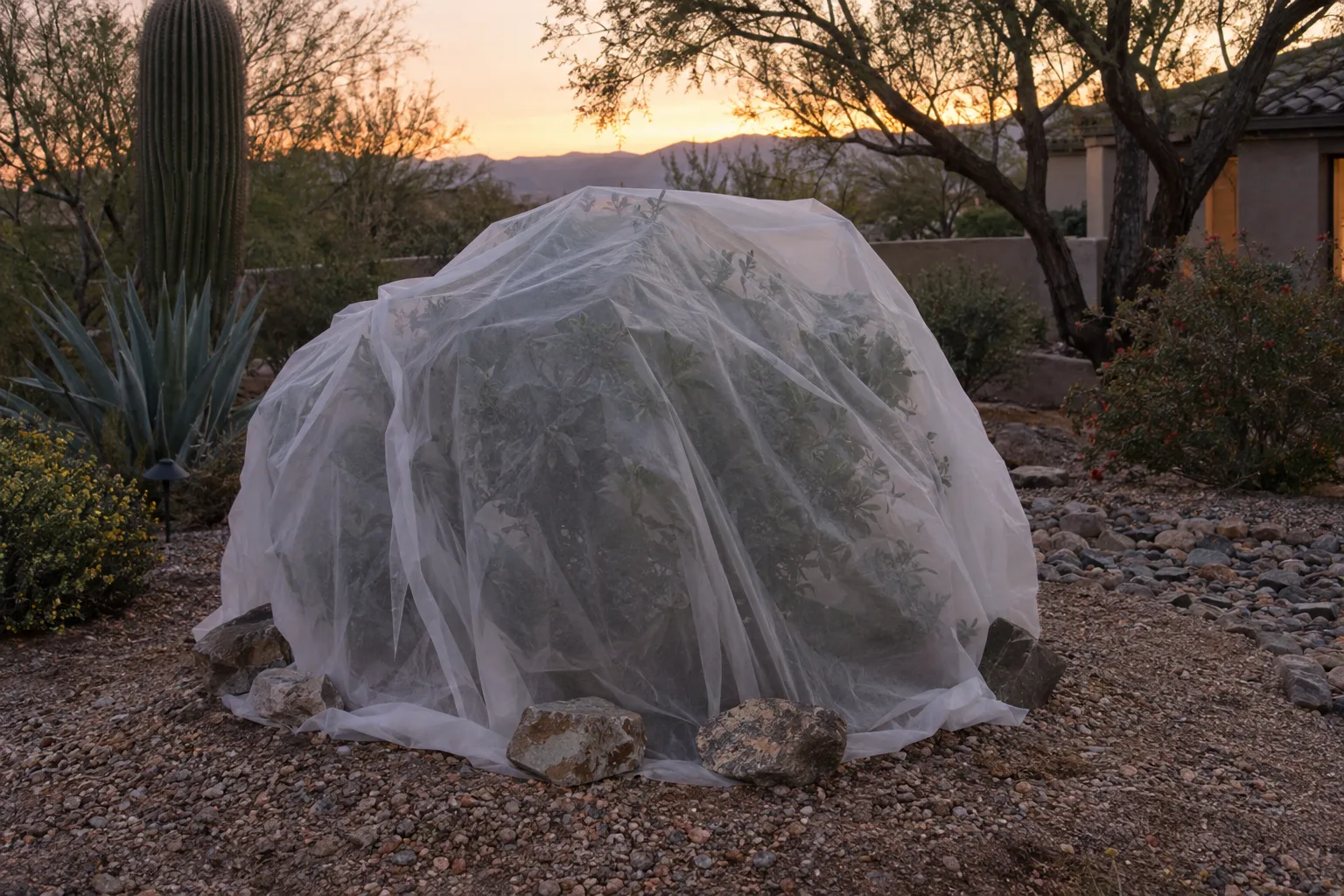
Pots lose heat from every side. Move containers under a covered patio or against a south-facing wall, and group them so they shelter each other. For a plant in the ground that you cannot cover, mounding mulch around the base can protect the roots even if the top freezes.
Leave frost-damaged growth alone until March. The brown leaves shield the lower stems from the next cold night, and new growth shows exactly where to cut.
What can I plant for winter color?
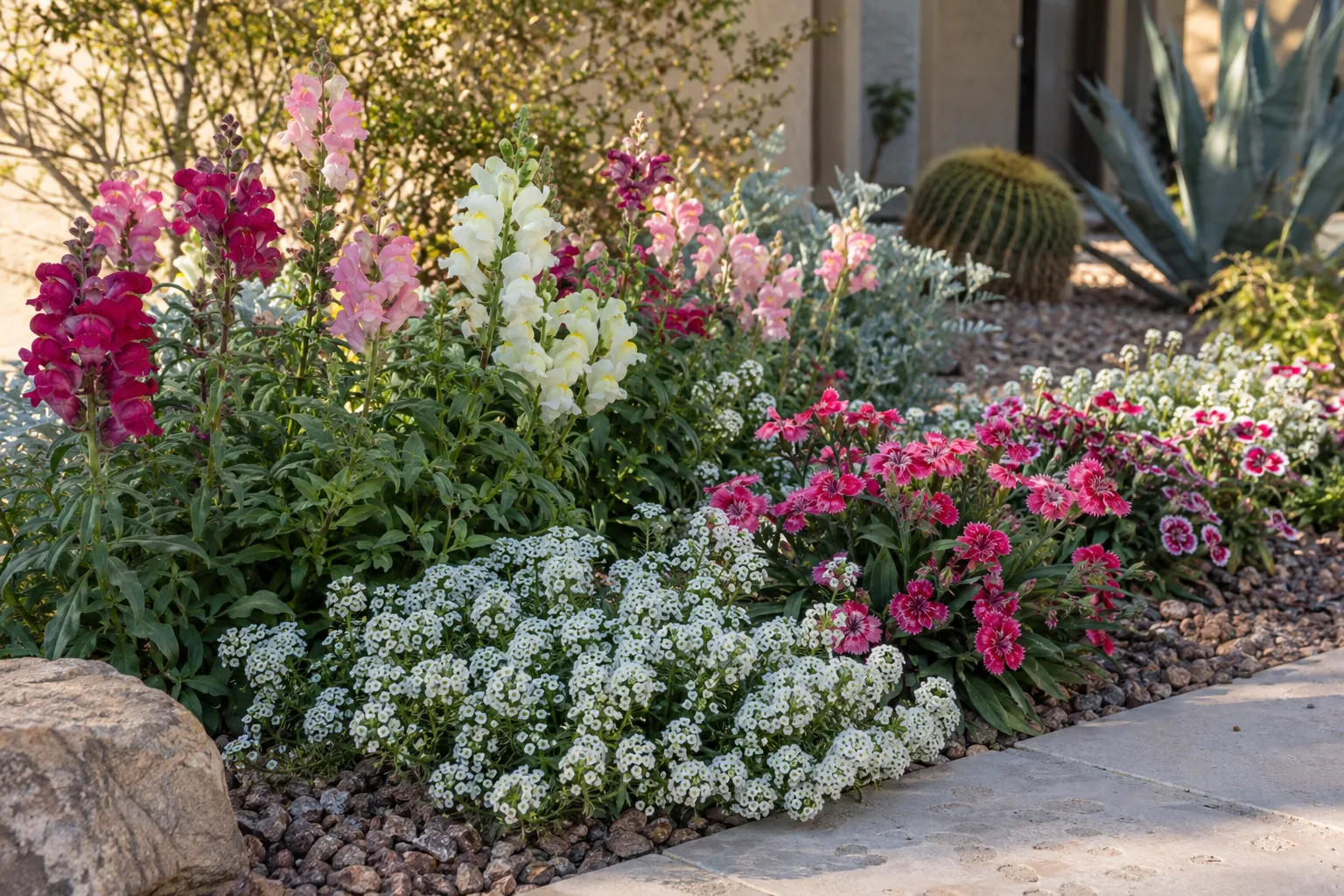
Cool-season annuals fill the gap while perennials rest. Snapdragons, pansies, dianthus, sweet alyssum and dusty miller go in from October through November, once daytime highs stay below about 90°F. They shrug off light frost and bloom into spring. Browse our annual flowers and foliage to see what is in season.
For color that returns each year, Mexican evening primrose and globe mallow fill bare areas with pink and apricot blooms. Both take heat and cold, and both spread, so give them room.
Frequently asked questions
When does frost start in Queen Creek?
Frost can reach Queen Creek from roughly late November through February, and clear, calm nights carry the highest risk. Open ground and low spots run colder than yards near block walls. Watch for forecast lows below 35°F, since frost can form on leaves even when the thermometer reads a few degrees above freezing.
Should I prune right after a freeze?
No, wait until March, when new growth shows where the live wood is. Brown leaves still shield lower stems from the next cold night. When growth begins, scratch a small stem with a fingernail. Green, moist tissue is alive, and dry brown tissue is dead. Cut back to the first live growth.
Can I plant in December?
Yes, tough species like palo verde, agave, rosemary and Texas sage can go in during December, because the soil here rarely freezes. Water them on a regular schedule so roots establish through winter. Wait until March or April for frost-tender plants such as bougainvillea, lantana or tropical hibiscus.
Is bougainvillea reliable in Queen Creek?
Bougainvillea is borderline here. It tolerates roughly 30 to 32°F, so a hard freeze can strip its leaves or kill the top growth. An established plant against a south-facing wall, covered on cold nights, usually regrows from the roots. In an open, low-lying yard, choose a sturdier plant.
Do potted plants need extra protection?
Yes, move potted plants before dark on freeze nights. Roots in a container can freeze at temperatures an in-ground plant survives, since the pot loses heat on all sides. Set pots under a covered patio or against a south-facing wall, group them together, and water dry pots the afternoon before.
Which cold-resistant plants are right for your yard?
Match the plant to your coldest spot. Texas sage, rosemary, agave and blue palo verde suit most East Valley yards with little winter care. Autumn sage and desert marigold add color if you accept a late-winter trim or a few self-sown seedlings. Red bird of paradise suits you only if a bare winter does not bother you. If you want a lush, tropical look with no frost cloth ever, a desert planting may disappoint you. Visit us in Queen Creek and we will help you choose.