

Arizona gardeners use coffee grounds in December because the cool season is a good time to add slow-release organic matter to vegetable beds, compost and containers. Expect a mild feeding and better soil texture, with little change to soil pH.
Key takeaways
- Used grounds hold roughly 1.5 to 2.5% nitrogen by dry weight, released slowly, which suits winter crops growing in 65 to 70°F December weather.
- Apply a layer no thicker than half an inch, mix it into the top 2 to 3 inches of soil, and repeat every 3 to 4 weeks.
- Grounds count as a green material in compost, so balance them with about 3 parts dry browns to 1 part grounds.
- Expect little change in soil pH, because alkaline desert soil resists acidifying.
- Keep grounds away from cactus, succulents, agave and native desert trees.
Do coffee grounds feed cool-season vegetables in December?
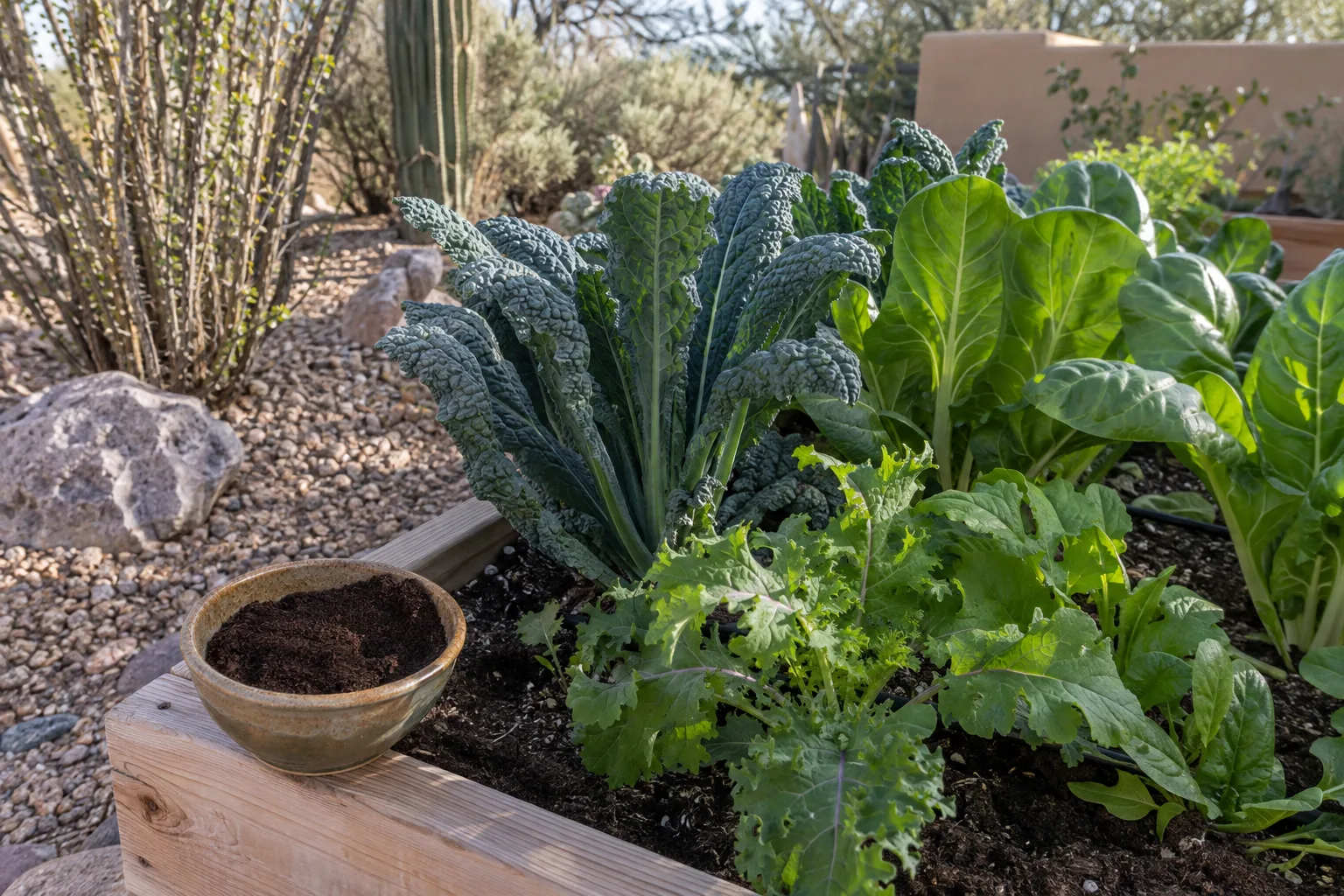
Yes, mildly. Used grounds hold roughly 1.5 to 2.5% nitrogen by dry weight, and they release it slowly as soil microbes break them down. That pace suits December in the East Valley, when daytime highs sit around 65 to 70°F and winter crops grow at a steady pace instead of racing ahead.
Kale (Brassica oleracea), spinach (Spinacia oleracea) and other leafy crops are the easiest beneficiaries, and you can browse the plants in our herbs, vegetables and berries department. Mix a thin dressing into the top 2 to 3 inches of bed soil and water it in. The University of Arizona Cooperative Extension vegetable planting calendar for Maricopa County shows which crops can still go in during December. Grounds supply only a small share of what hungry greens need, so keep your regular fertilizer schedule too.
Can coffee grounds go straight into a compost bin?
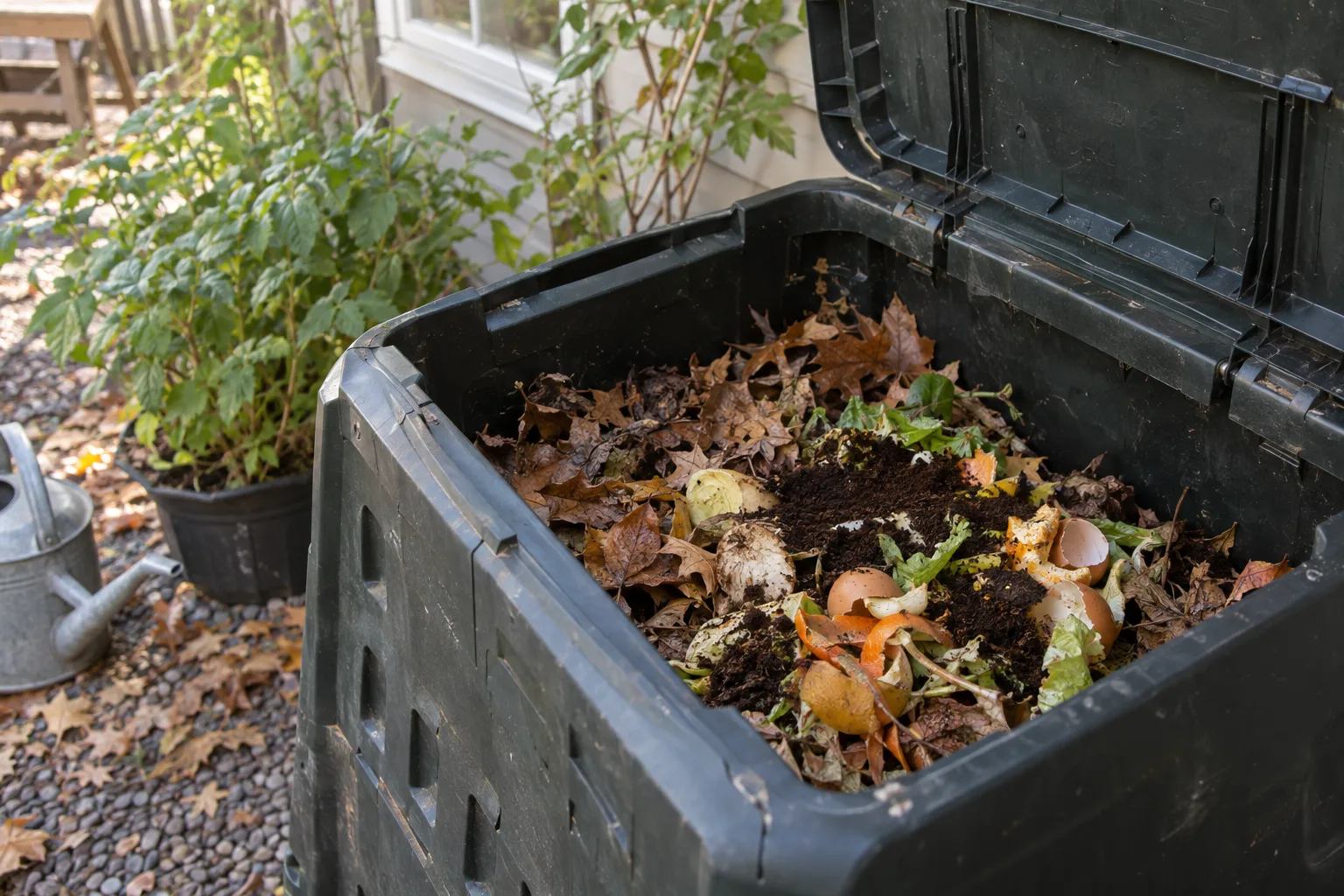
Yes, and they count as a green (nitrogen) material despite their dark color. Balance them with dry browns such as shredded leaves, cardboard or straw, at roughly 3 parts browns to 1 part grounds by volume, and keep the pile about as damp as a wrung-out sponge. Paper filters can go in too.
Compost piles dry out more slowly in December than in a 110°F summer, so a bin that sat idle in July can finally break material down. Turn it every week or two. If a handful squeezed in your fist does not feel damp, add water.
Do coffee grounds improve caliche or sandy desert soil?
They add organic matter, which improves soil texture over several seasons, but they cannot break up caliche. Caliche is a cemented layer of calcium carbonate, and it takes a pick, a drill or a deeper planting hole to get through it.
In sandy beds, organic matter holds moisture a little longer between irrigations. In clay-heavy beds it opens the soil slightly. Grounds alone compact easily and shed water when they dry, so combine them with finished compost for a bigger effect. Compost does most of the work here.
Do coffee grounds help soil life in winter?
They feed soil bacteria and fungi, which stay active when soil temperatures run roughly 50 to 70°F, as they do through much of December. Those microbes convert organic matter into nutrients that roots can take up. After a summer of air temperatures above 110°F, a winter feeding gives the top few inches of bed soil something to work with.
Earthworms may show up in beds that stay moist and mulched, and they will eat grounds when they are present. Dry, bare desert soil usually has few of them.
Do coffee grounds keep slugs and snails away?
Sometimes, but the evidence is mixed. Some gardeners see less damage where grounds form a ring around plants, and caffeine can harm soft-bodied pests, yet results vary and damp grounds can pack into a crust. Slugs and snails cause most trouble in shaded, irrigated beds, container groupings and dense groundcover.
For a dependable fix, remove hiding spots, water in the morning and hand-pick at dusk. Grounds do not deter aphids, and the idea that they block ants rests on anecdote.
Where can I get coffee grounds for the garden?
Start with your own kitchen, then ask a local coffee shop. Many will hand over used grounds if you bring a bucket with a lid, though policies differ from shop to shop. Use plain brewed grounds and skip anything flavored with syrups or additives.
Store them in a covered container and use them within about a week, because wet grounds grow mold quickly. If you would like to learn composting in person, watch our classes and events page for upcoming workshops.
How much should I use, and what should I leave alone?
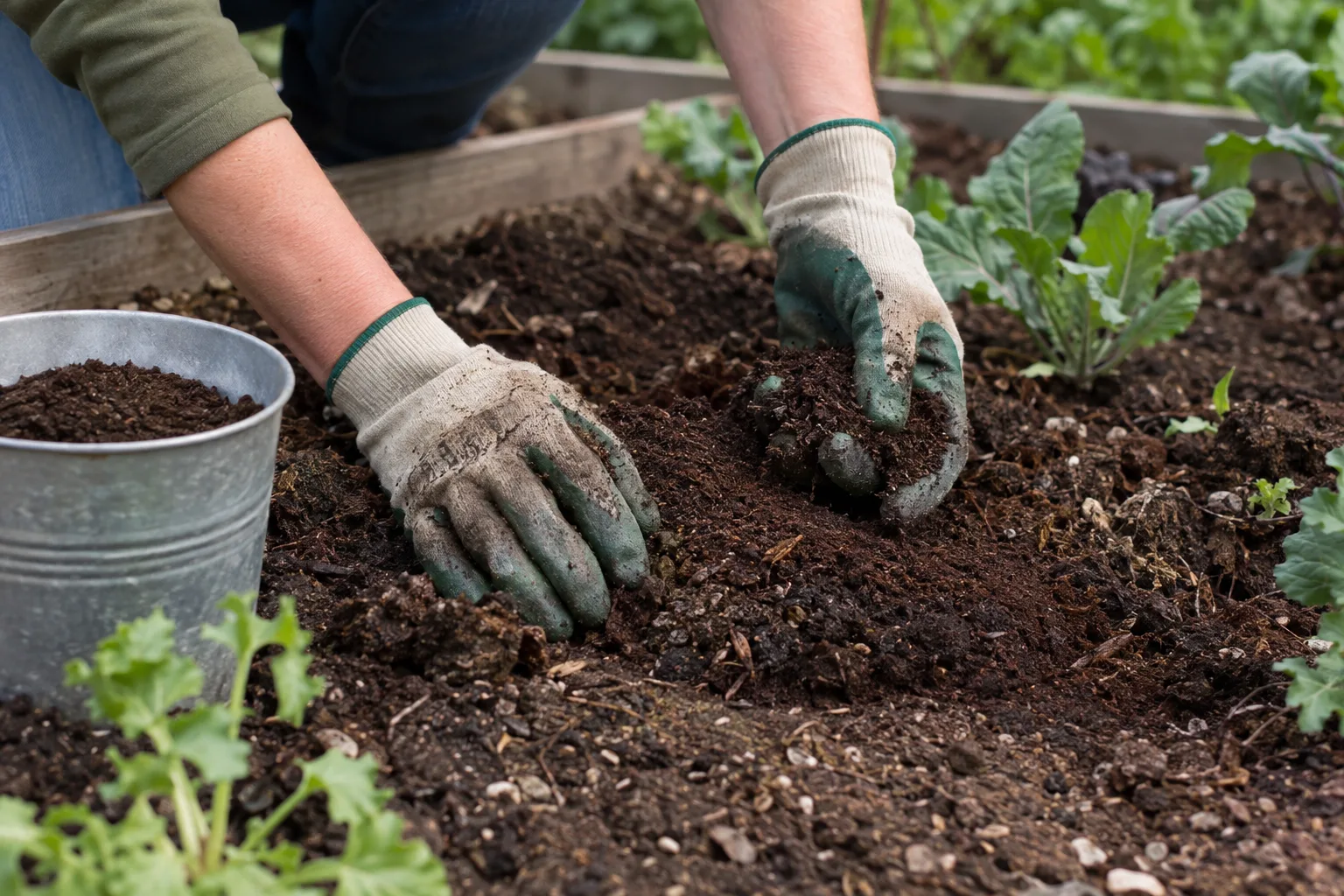
Keep each application to a half-inch layer or less, mix it into the top 2 to 3 inches of soil, and repeat every 3 to 4 weeks through the cool season. Mixing matters because a thick layer of dry grounds forms a crust that sheds water. Our gardening calendars list the other December jobs worth doing alongside this one.
- Good candidates: vegetable beds, herbs such as parsley and cilantro, and citrus (Citrus species). For citrus trees, spread grounds thinly under the canopy edge, keep them several inches off the trunk and cover them with mulch.
- Containers: if you grow in pots and planters, keep grounds to roughly 1 part in 4 of the mix, and blend them in well.
- Leave alone: cactus, succulents, agave (Agave species) and native desert trees such as palo verde (Parkinsonia species), which are adapted to lean, alkaline soil. Rosemary (Salvia rosmarinus) and lavender prefer lean, fast-draining soil as well.
Frequently asked questions
Do coffee grounds lower soil pH in Arizona?
Not by a useful amount. Used grounds sit close to neutral, often around pH 6.5 to 6.8, and East Valley soils are alkaline and rich in calcium carbonate, which resists change. Yellow leaves with green veins on citrus or roses usually call for an iron product, so bring a photo or leaf sample to the nursery.
Can I put coffee grounds around cactus and succulents?
Skip them. Cactus and succulents are adapted to lean, fast-draining, alkaline soil, and extra organic matter holds moisture around their roots and crowns. That raises the risk of rot, especially during cold, damp winter weather. Keep these plants on their usual sparse watering schedule instead.
Should I use coffee grounds on newly seeded beds?
Hold off until seedlings are up. Some studies report that caffeine can slow germination in certain seeds, so a heavy layer over fresh seed is a gamble. Work grounds into the bed a couple of weeks before sowing, or add them around established transplants instead.
Do I need to dry coffee grounds first?
Yes, spreading them out for a day or two helps. Wet grounds clump, can grow mold and mat into a layer that sheds water once the surface dries. Use a baking tray or a piece of cardboard in a shaded spot. Loose, crumbly grounds mix evenly into soil or compost.
Are coffee grounds safe around dogs and cats?
Keep them out of reach. Caffeine can poison dogs and cats if they eat enough, and some pets will eat grounds from the trash or the garden. Mixing grounds into soil and covering them with mulch lowers the chance of a pet getting to them. Call your veterinarian or a pet poison hotline if a pet eats a large amount.
Are coffee grounds worth saving for your garden?
Yes, if you already drink coffee and grow vegetables, herbs, citrus or compost. They cost nothing, add mild nitrogen and organic matter, and December is a comfortable month to work them in. Skip them if you expect them to fix alkaline soil, break through caliche or protect plants from pests, and leave them out of a cactus and succulent garden. For soil advice matched to your yard, stop by the nursery in Queen Creek.