
Citrus fruit drop in April is normal in Arizona when the fallen fruitlets are tiny, because trees set more than they can carry. Marble-sized fruit dropping, or drop alongside dry soil and yellow leaves, points to water or nutrient stress you can fix.
Key takeaways
- Pea-sized fruitlets on the ground in March and April are normal thinning, and no treatment is needed if the leaves are green and glossy.
- Marble-sized or larger fruit dropping, or drop that continues for more than 3 to 4 weeks, usually means the tree is short of water or micronutrients.
- Water deeply enough to wet the soil 2 to 3 feet down, and probe the soil to check instead of guessing from the surface.
- Alkaline soil (often pH 7.5 to 8.5) locks up iron and zinc, so yellow leaves with green veins are a common companion to fruit drop.
- A 3 to 4 inch layer of wood chip mulch under the canopy cools the root zone and slows evaporation during April wind and early heat.
Is it normal for citrus to drop fruit in April?
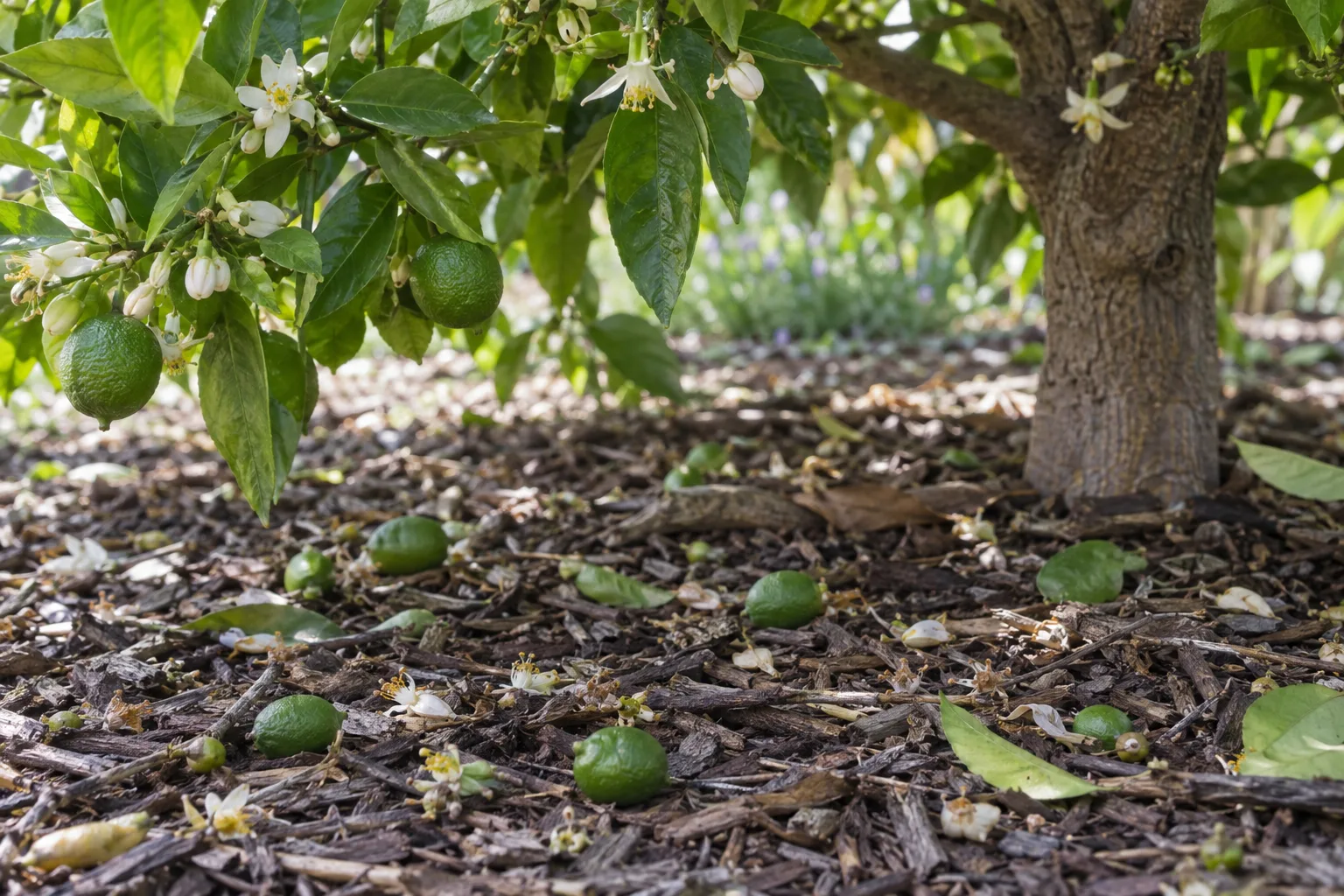
Yes, some drop is normal. A mature tree can open thousands of flowers in February and March, and it cannot carry all of them to harvest, so it sheds the weakest fruitlets in waves. The first wave follows bloom, when flowers that were never fertilized fall. A second wave comes as the tree matches its crop to the water and nutrients it has available.
If the fruitlets on the ground are pea-sized, the fruit still on the branches is firm, and the leaves look green and glossy, leave the tree alone. Size matters. Larger fruit falling, drop that carries on for weeks, or leaves that look dull, yellow or wilted all point to stress instead of thinning.
Our citrus trees page shows the kinds of citrus we commonly carry, though availability changes week to week and season to season. Each type sets and holds fruit a little differently, and the tree you own matters when you judge how much drop is reasonable.
How much water does citrus need in April?
Most established citrus trees need a deep soak every 7 to 10 days in April, and a little more often in sandy soil. April is when highs climb into the 90s and spring wind pulls moisture from leaves and soil, so a winter irrigation schedule often falls short. Many drip timers are still set for cooler months.
Judge a watering by depth, not by minutes or gallons. The goal is to wet the soil 2 to 3 feet down across the whole area under the canopy, because feeder roots spread that wide. A long soak less often builds deeper roots than short daily sprinkles, which leave roots shallow and exposed to heat.
Check the soil with a long screwdriver or soil probe a day or two after watering. It should slide in easily to 2 feet or more. If it stops at 8 inches, the water is not reaching the roots.
Signs of water stress
- Leaves that curl inward or look dull instead of glossy.
- Fruitlets that look slightly shriveled before they fall.
- New growth tips that wilt in the afternoon and stay limp into the evening.
- Soil that is dry several inches down within a few days of watering.
Too much water causes similar symptoms. Heavy clay and caliche can hold water around the roots, and roots that sit wet may rot, which yellows leaves and drops fruit. Dig a small test hole before you add more water, and let the probe decide. Hard irrigation water also leaves salts behind, so an occasional extra-deep soak helps flush them below the root zone.

Can nutrient problems and alkaline soil cause fruit drop?
Yes. Soil across the East Valley is alkaline, often pH 7.5 to 8.5, and that ties up iron, zinc and manganese even when the soil contains them. A tree short on these nutrients struggles to hold fruit.
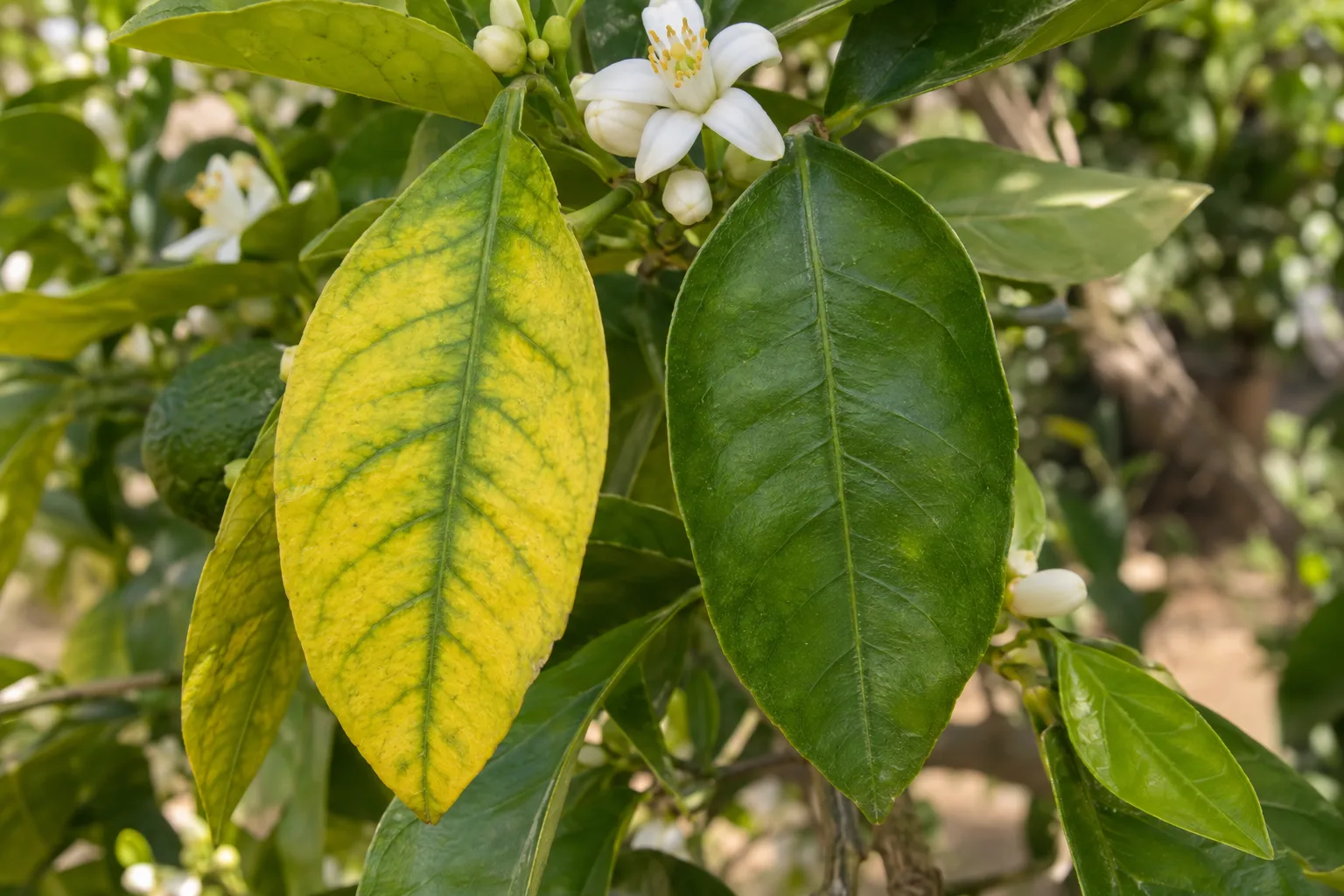
Iron deficiency shows as yellow leaves with green veins, mostly on new growth. Zinc deficiency shows as small, narrow, mottled leaves and poor fruit set. Either problem often appears together with fruit drop.
Chelated iron products labeled for alkaline soil stay available to the tree where plain iron does not, and foliar sprays of zinc or manganese can show a response faster than soil applications. Spray in the early morning or evening, never in midday heat, and follow the label rate exactly.
Fertilizer timing also matters. Citrus is usually fed in late winter ahead of bloom, and a heavy dose of nitrogen in April can push leafy growth that competes with young fruit. The University of Arizona Cooperative Extension publishes citrus feeding schedules, and we suggest checking it before you apply anything in spring.
Do wind, cold and early heat make citrus drop fruit?
They can. A late frost near freezing during bloom can damage flowers, and the poorly formed fruitlets from those flowers fall a few weeks later. Wind and low humidity add to the problem because they strip moisture from leaves and young fruit faster than roots can replace it.
Trees in open spots or in gaps between walls take the most wind. A temporary windscreen or a 20 to 30 percent shade cloth on the windward side can reduce the loss during the worst weeks. Early heat spells in late April work the same way, drawing more water than the tree took up that week.
You cannot control the weather, but you can keep the soil moist at depth so the tree has a reserve. That is the point of the mulch and deep watering described below.
Which pests and diseases cause citrus fruit drop?
Pests are seldom the main cause of April drop, but they add to stress on a tree that is already struggling. Look at the tree before you treat anything.
- Citrus leafminer leaves silvery winding tracks in new leaves. It distorts growth but rarely kills a mature tree.
- Thrips feed on young fruit and leave scarred rinds. The scars are mostly cosmetic.
- Aphids cluster on tender new shoots and curl the leaves.
- Root and trunk rot from soil that stays wet shows up as gum oozing near the base and a thinning canopy. This one needs prompt attention.
Check the undersides of leaves and the new shoots once a week in April. Use the mildest control that works, such as a strong spray of water for aphids. If you use any oil, soap or fungicide, read the label, avoid spraying open flowers where bees are working, and never spray in midday heat. For trunk gumming or a tree that is declining fast, bring photos or a sample to the nursery.
What steps stop April citrus fruit drop?
Start with water and soil, since those are the causes you can see and change. Work through these in order.
- Look at the fallen fruit. Pea-sized means normal thinning, and marble-sized or larger means look for stress.
- Probe the soil 1 to 2 days after watering and note how deep the moisture goes.
- Check every drip emitter for clogs, and make sure emitters cover the whole area under the canopy, not just near the trunk.
- Lengthen each watering so moisture reaches 2 to 3 feet, and keep the 7 to 10 day interval (shorter in sandy soil) through April and May.
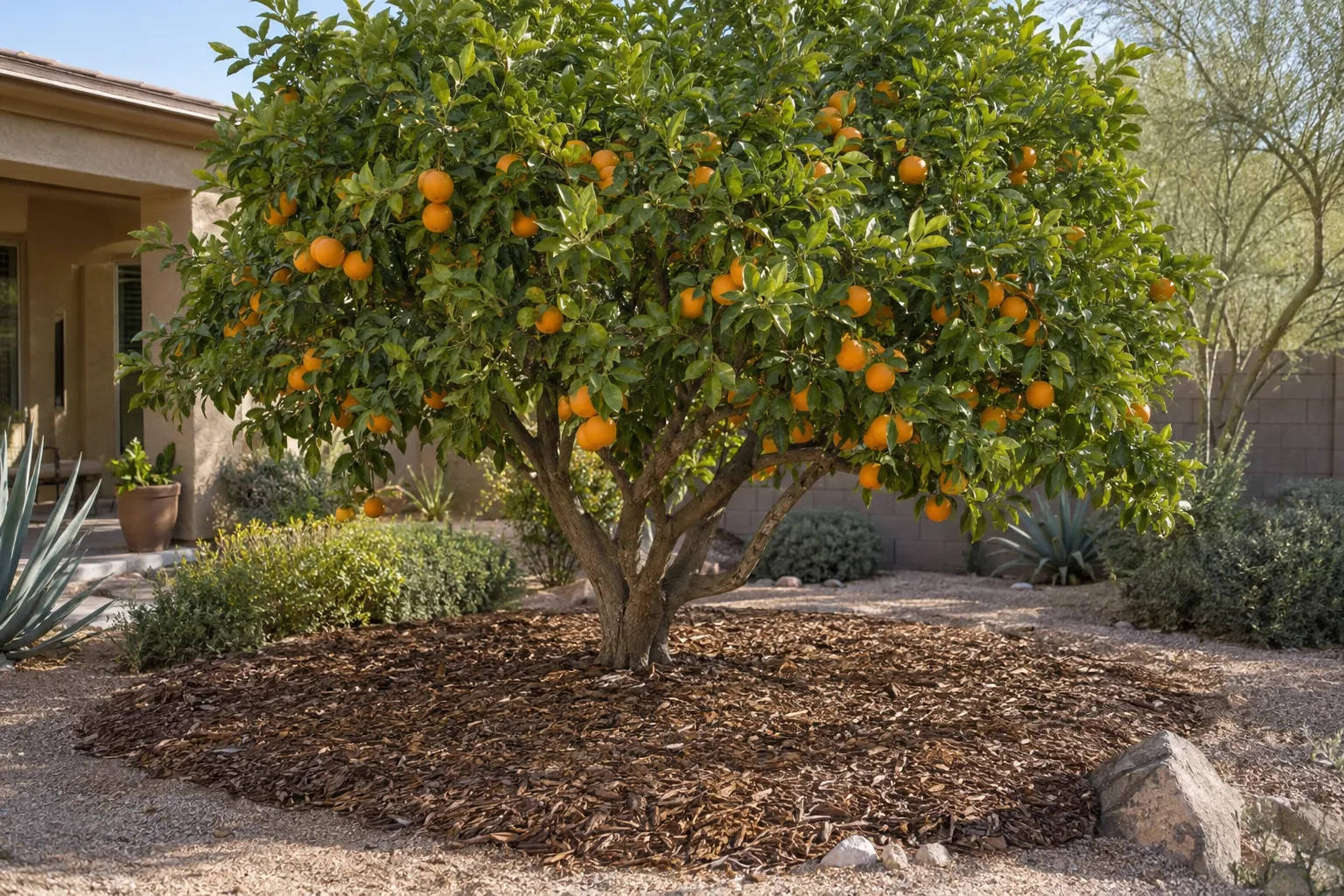
- Spread 3 to 4 inches of wood chip mulch under the entire canopy, and keep it several inches back from the trunk.
- Check new leaves for yellowing or small mottled growth, and treat with chelated iron or foliar zinc where it shows.
- Hold off on heavy pruning until after harvest, because pruning triggers new growth that competes with fruit.
- Add a windscreen or shade cloth if the tree sits in a wind tunnel.
For month-by-month timing on feeding, watering and pruning, see our gardening calendars.
How do I tell which cause is hitting my tree?
Match what you see to the pattern in the table. Several causes often overlap, so start at the top and work down.
| What you see | Likely cause | First step |
|---|---|---|
| Pea-sized fruitlets falling, healthy leaves | Normal thinning | Keep watering on schedule |
| Larger fruit falling, dull or curled leaves | Too little water at depth | Probe soil, lengthen watering |
| Yellow leaves with green veins | Iron shortage in alkaline soil | Chelated iron labeled for high pH |
| Small mottled leaves, poor set | Zinc shortage | Foliar zinc, early morning |
| Yellowing, gum at the trunk base, wet soil | Too much water or rot | Cut back watering, improve drainage |
| Fruit loss after a frost in bloom | Damaged flowers | Nothing to fix, protect next year |
Frequently asked questions
Should I use a fruit-set spray to stop the drop?
We do not recommend it for home trees. Growth regulator sprays are tools for commercial orchards, and most April drop in home yards comes from water, nutrients or normal thinning. Holding fruit on a stressed tree can give you small fruit and strain the tree going into summer. Correct the cause first.
Will my tree still fruit next year after a heavy drop?
Usually yes, if the leaves are green and new growth is coming. Care from May through September decides next year’s bloom, so keep up deep watering, mulch and any needed micronutrients. A tree with thinning leaves, trunk gum or dieback is a different case, so bring photos in. Our classes and events page lists current workshops.
Why is one tree dropping fruit when its neighbor is fine?
Each tree has its own roots, emitters and soil. A clogged emitter, a patch of caliche or a different amount of wind can make one tree short of water while the other is fine. Some types also hold fruit better than others. Probe the soil under both trees. Photos help if you contact us.
Does another drop happen later in spring?
Often, yes. Trees can shed another round of small fruit in late spring or early summer as they size up the crop they can support. Keep the soil moist at depth through that stretch. Steady watering keeps the second drop modest, while heat and dry spells make it heavier.
Should I thin the fruit by hand?
Rarely. After natural thinning, most mature trees carry a crop they can handle. A young tree that sets a heavy crop may benefit from removing some fruit so branches do not bend or break. Remove fruit when it is small, and ask a nursery staff member how many to leave for your tree’s size.
Should you do anything about April fruit drop?
If the fallen fruit is small and the leaves look healthy, do nothing except keep your deep watering schedule. If larger fruit is falling, check soil moisture first, then leaf color for iron or zinc shortages. Skip fruit-set sprays, and do not bother worrying if you hoped every flower would become an orange. No tree does that. Come visit us in Queen Creek and bring photos of your tree if you want a second opinion.