

The most common citrus fertilizing mistakes in April in the Arizona low desert are feeding too late, picking the wrong ratio, skipping micronutrients, spreading granules on dry soil, overfeeding young trees, ignoring pH, and feeding a stressed tree. Each has a straightforward fix.
Key takeaways
- Feed established trees in the first half of April, before East Valley highs climb into the upper 90s.
- Water the soil before and after granular fertilizer, and spread it from about 12 inches off the trunk out to the drip line.
- Yellow leaves with green veins usually mean iron, zinc or manganese is locked up by alkaline soil, often pH 7.5 to 8.5.
- Choose a nitrogen-forward citrus fertilizer and skip high-phosphorus bloom formulas.
- Trees planted within the last 1 to 2 years need less than the mature-tree rate, and a stressed tree should not be fed until the cause is fixed.
When should I fertilize citrus in April in Arizona?
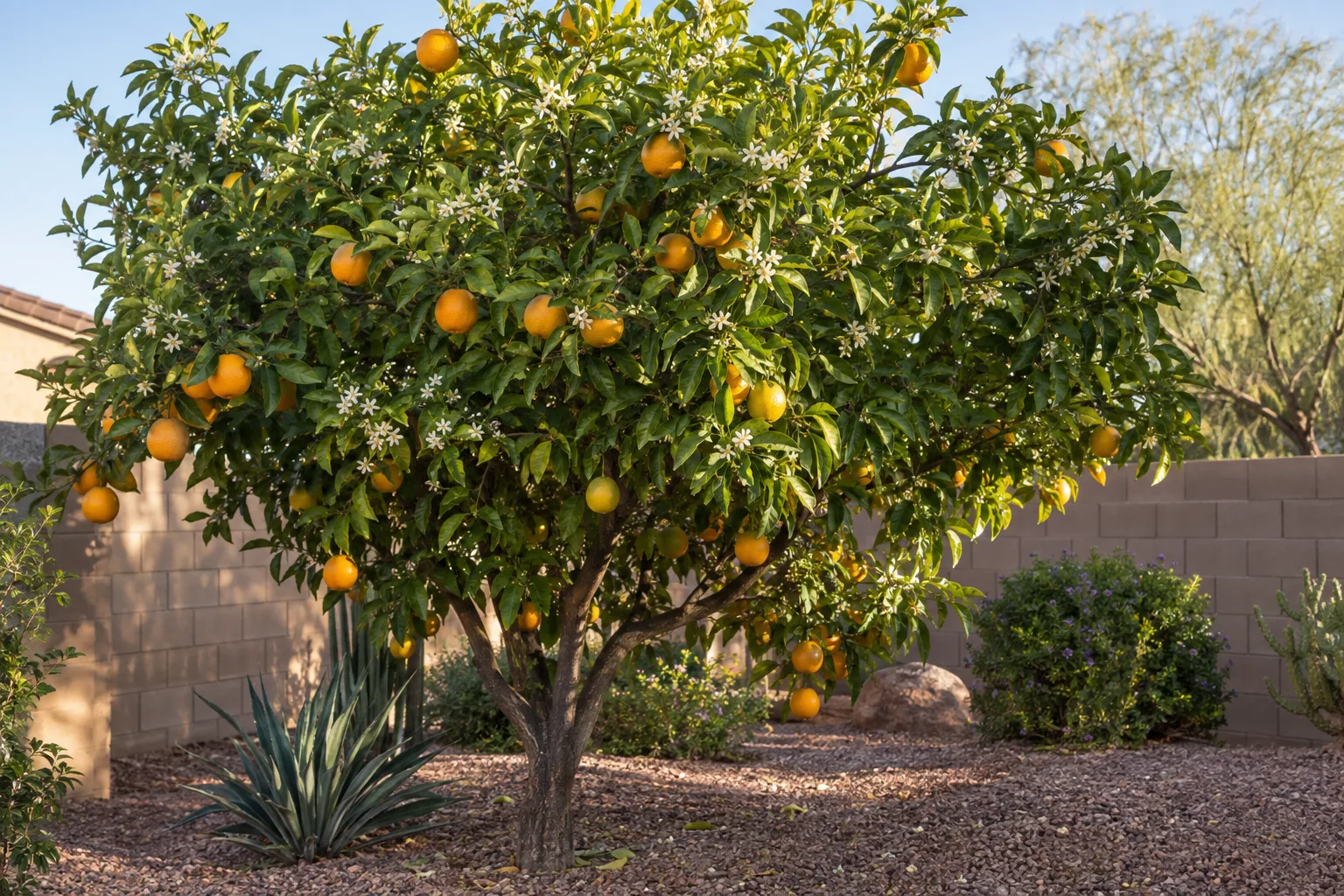
Feed established trees in the first half of April. By late April, East Valley highs often reach the upper 90s, and a heavy dose of nitrogen after that pushes soft new growth that scorches within weeks.
Early feeding gets nutrients to the roots while days are still mild, and the spring flush has a few weeks to harden off before summer. Timing matters here. If you missed the window, use the low end of the label rate and water deeply. Some Arizona schedules put the first feeding of the year in late winter, so a tree fed in February may need only a lighter April application, and our gardening calendars can help you map the year.
If you are planning a new tree, our citrus trees department lists the types we commonly carry, though availability changes week to week and season to season.
What fertilizer ratio does citrus need in the low desert?
Citrus needs nitrogen above all, so choose a fertilizer labeled for citrus with nitrogen as the largest number. Blends such as 8-2-4 or 10-5-5 are common examples, and the label lists the rate for your tree’s size.
Potassium supports fruit quality and heat tolerance. Phosphorus is needed in smaller amounts because many desert soils already hold plenty of it. Avoid bloom-booster formulas with very high phosphorus, such as 10-52-10, which were made for flowering annuals. Read the label first. Fertilizers designed for other regions can still work if the numbers are right, but check that the label lists iron, zinc and manganese for our alkaline soil.
Why are my citrus leaves yellow with green veins?
Yellow leaves with green veins, called interveinal chlorosis, usually point to a shortage of iron, zinc or manganese. Queen Creek soil is alkaline, often with a pH between 7.5 and 8.5, and at that level these minerals bind to the soil where roots cannot take them up.
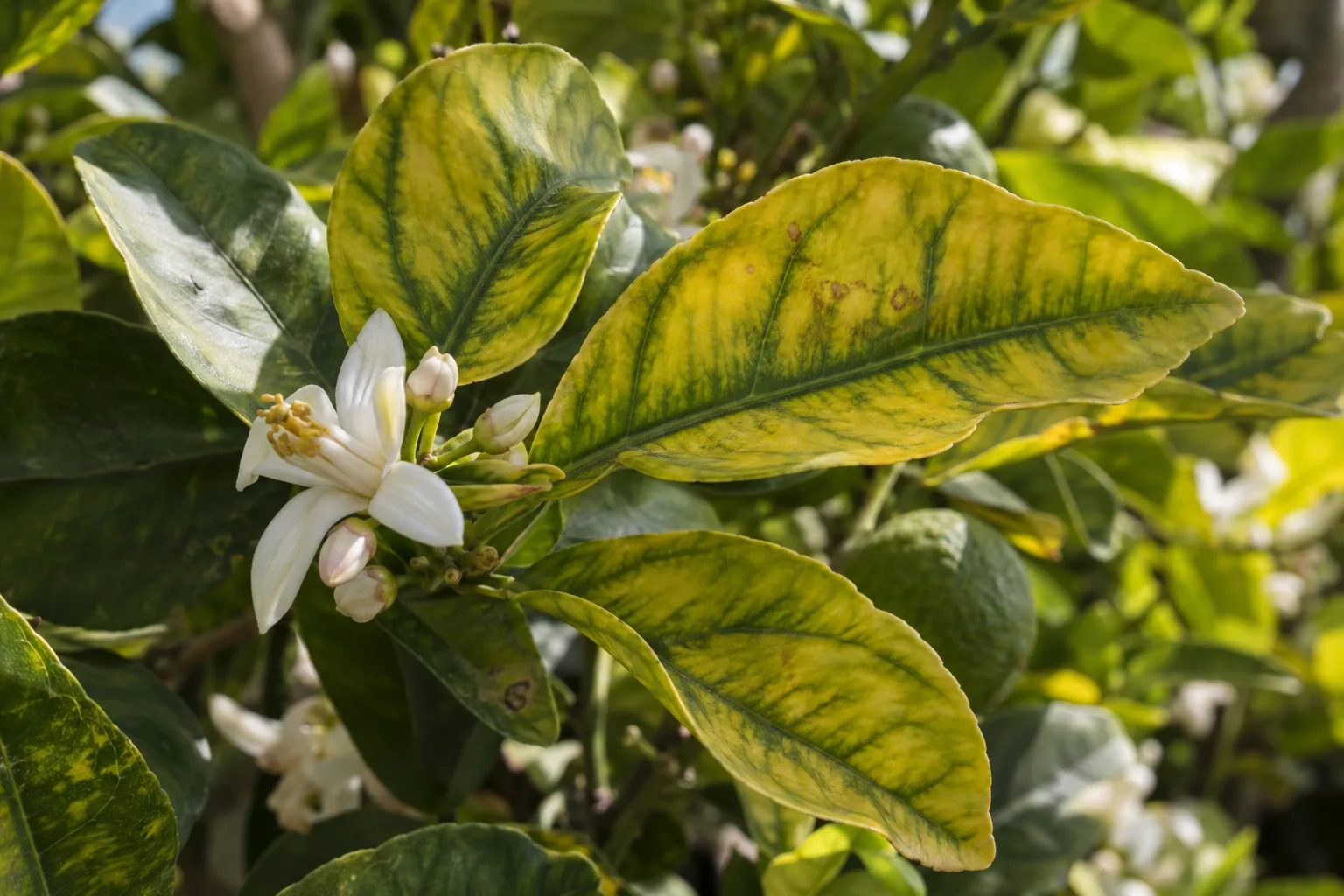
The form of the mineral matters more than the amount. Chelated iron labeled EDDHA stays available in high-pH soil, so apply it as a soil drench and water it in deeply. Zinc can go on as a foliar spray in the early morning while temperatures are mild, and manganese works as a soil drench. Check drainage first, because overwatering and cold damage also turn leaves yellow and look similar.
Can I put granular fertilizer on dry soil?
No. Water the soil deeply the day before, spread the granules, and water again within a few hours. Dry granules sitting on caliche or under decomposed granite concentrate salts at the surface and burn feeder roots.

Rake mulch or rock back so the granules touch soil, then scatter them in a ring from about 12 inches off the trunk out to the drip line, and slightly past it on large trees. Keep fertilizer off the trunk. Feeder roots sit mostly at and beyond the canopy edge, so granules piled at the base do little good and can damage the bark. On drip irrigation, run a full cycle before and after. Hard water adds its own salts, and deep, infrequent soakings help flush them below the roots.
How much fertilizer do young citrus trees need?
Young trees need less than the mature-tree rate on the label. A tree planted within the last year or two has a small root system that fertilizer salts and hard water can burn easily.
Check the label for rates by tree age or trunk size and start at the low end. Many growers hold off on granular feeding for the first few months after planting and use a diluted liquid product instead. The goal in the first two summers is strong roots and sturdy leaves, since soft growth pushed in 110°F heat gives the tree little benefit. Brown tips on leaf edges after feeding mean the dose was too strong. Back off and water deeply.
Does soil pH change how citrus uses fertilizer?
Yes. Above a pH of roughly 7.5 to 8, iron, zinc and manganese become hard for roots to absorb, so even a good fertilizer can leave leaves pale.
A basic home pH test costs little and shows where you stand before you buy anything. Soil sulfur lowers pH slowly over months, and caliche and hard irrigation water push it back up, so treat it as ongoing work. Ammonium sulfate supplies nitrogen while acidifying the soil a little, which suits trees that need both. Expect results over months. Chelated iron gives faster relief on pale leaves while the soil slowly changes, and our classes and events page lists upcoming gardening workshops.
Should I fertilize a stressed citrus tree?
No. Find the cause of the stress first, because fertilizer pushes new growth that a struggling tree cannot support. Added nitrogen also raises salt levels around roots that are already compromised.
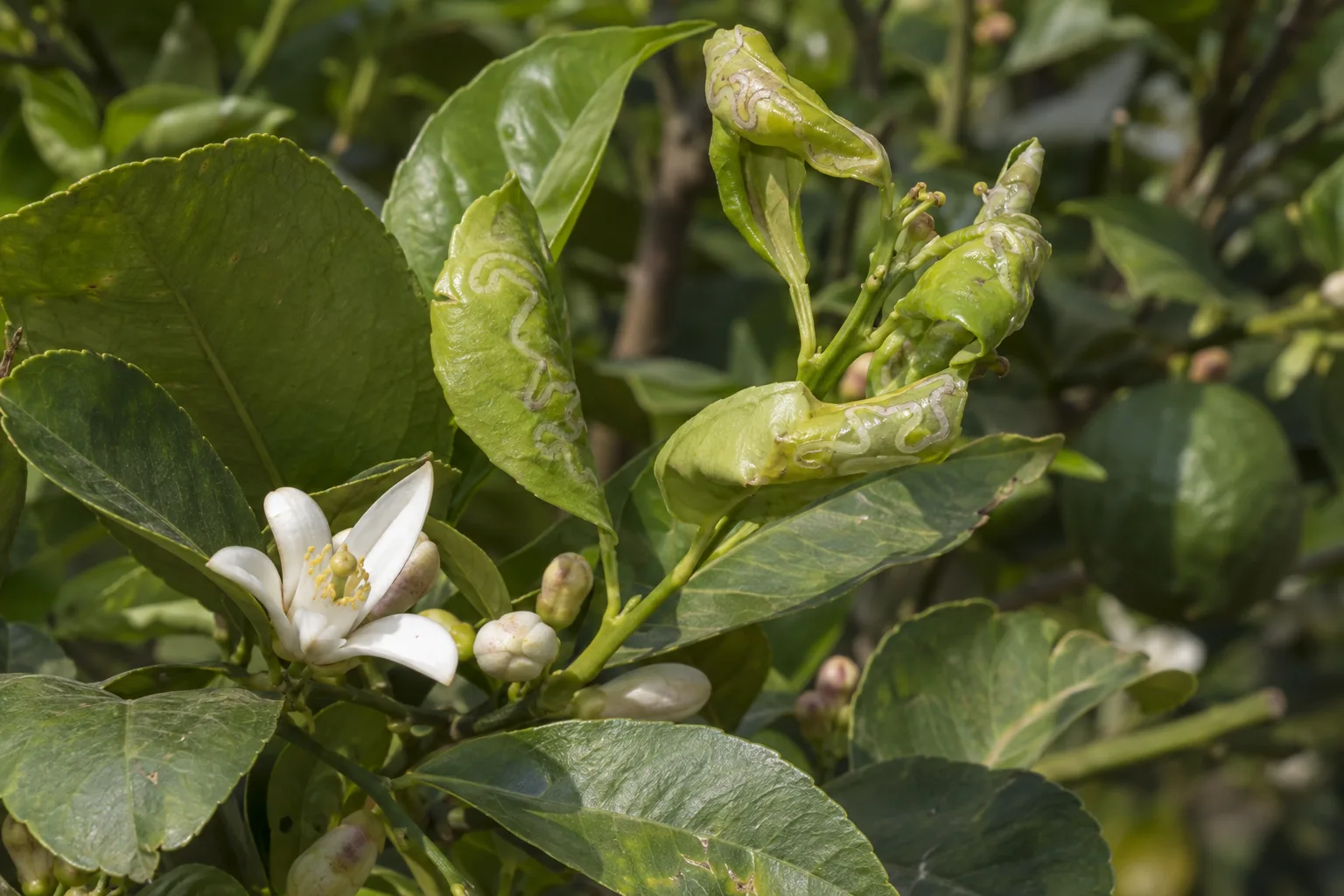
These are common April causes of stress in East Valley yards:
- Root rot from winter overwatering in poorly draining soil
- Citrus leafminer, which leaves silvery winding trails and curled new leaves
- Frost dieback from a cold night over the winter
- A tree planted too deep, with the trunk flare buried
Treat the cause first. It may take a few weeks of correction, such as better drainage or adjusted watering, before the tree responds, and fertilizer can wait that long. Once new growth looks steady and healthy, resume feeding at the normal rate, even if that is May. If you cannot identify the problem, bring a few leaves and photos of the whole tree to the nursery.
Which fertilizer type fits which job?
Match the product to the problem: a balanced citrus blend feeds the tree, and chelated iron corrects a specific deficiency.
| Type | Best for | Application note |
|---|---|---|
| Granular citrus blend | Established trees | Spread at the drip line, water before and after |
| Ammonium sulfate | Alkaline soil that needs nitrogen | Follow the label rate, water in well |
| Chelated iron (EDDHA) | Yellow leaves with green veins | Soil drench, water in deeply |
| Compost or worm castings | Soil improvement | Top-dress under the canopy, keep off the trunk |
Mixing several products in the same week raises the salt load around the roots, so space them out by a week or two and water deeply after each one.
Frequently asked questions
How many times a year should I fertilize citrus in Arizona?
Most Arizona schedules call for about three feedings spread across the growing season, though the exact months vary by source. Common patterns include late winter, late spring and early fall. Check the University of Arizona Cooperative Extension guidance for your county. Monthly feeding adds salt without helping the tree.
Can I use the same fertilizer on lemons, oranges and grapefruit?
Yes, a citrus fertilizer suits all of them, and the differences come down to tree size and age. Adjust the amount using the label rather than switching products. Other fruit trees can have different needs, so check the label and browse our fruit trees department if you are planning more trees.
Is compost enough to feed a citrus tree?
Compost improves soil but usually supplies too little nitrogen to feed a fruiting citrus tree on its own. Spread 1 to 2 inches under the canopy, keep it a few inches off the trunk, and still use a citrus fertilizer in spring. Over time compost helps soil hold water and nutrients.
Should I fertilize while my tree is blooming?
A light feeding during bloom is fine, but avoid heavy nitrogen at peak bloom. Flowers and small fruit already draw on the tree’s stored energy, and a big push of leafy growth competes with them. Use the lower end of the label rate and water in well.
Can I fertilize citrus in the summer?
Avoid heavy nitrogen from June through August. With highs above 110°F, new growth burns, and salts build up in the root zone. If the tree looks pale, a chelated micronutrient product is gentler than a full feeding. Resume regular feeding in early fall according to your schedule.
Is April the right month to fertilize your citrus?
For most established trees, yes, as long as you feed in the first half of the month, water before and after, and use a citrus formula with micronutrients. Skip April feeding if the tree is stressed, was fed heavily in February and has deep green growth, or is newly planted and still settling in. Those trees do better with a lighter hand. We would be glad to see you at the nursery in Queen Creek, where you can bring leaf samples or questions about your tree.