

Good Christmas cactus care in Arizona in December means bright indirect light, evenly moist soil, steady 60 to 70°F air, and a spot you never change once buds form. Twelve tips below cover each step.
Key takeaways
- Bright, indirect light and a 60 to 70°F room keep a blooming plant steady, and an east window or a spot 2 feet back from west glass works in December.
- Water when the top inch of mix is dry, usually every 7 to 10 days, and flush the pot every 3 to 4 weeks to clear hard-water salts.
- Buds form after about 6 weeks of 12 to 14 hours of nightly darkness and 50 to 60°F nights, starting in early October.
- Once buds show, stop moving, repotting and fertilizing the plant, and feed only from March through September.
- Rest the plant with less water in January and February, then repot in late February or March if the roots are crowded.

Where should a Christmas cactus sit in an East Valley home?
Set it in bright, indirect light, such as an east window, and leave it there once buds appear. Morning sun is gentle on the flat stem segments, while afternoon glass that faces west can redden or wrinkle them even in December, when the sun sits lower. For other indoor plants that suit bright rooms, see our houseplants page.
Tip 1: Give it bright, indirect light
An east window works well, and a north window works if you add a grow light. West windows are fine in December when the pot sits at least 2 feet back from the glass. Reddened or wrinkled segments signal sun stress. Pull the plant back.
Tip 2: Keep it away from vents and drafts
Forced-air heat dries stem segments fast and is a common cause of bud drop. Keep the pot several feet from any vent, fireplace or space heater, and away from exterior doors that open on cold nights. December nights in Queen Creek can fall into the 30s and low 40s, and single-pane glass passes that chill to the plant. Aim for 60 to 70°F while it blooms.
Tip 3: Pick the final spot and leave it
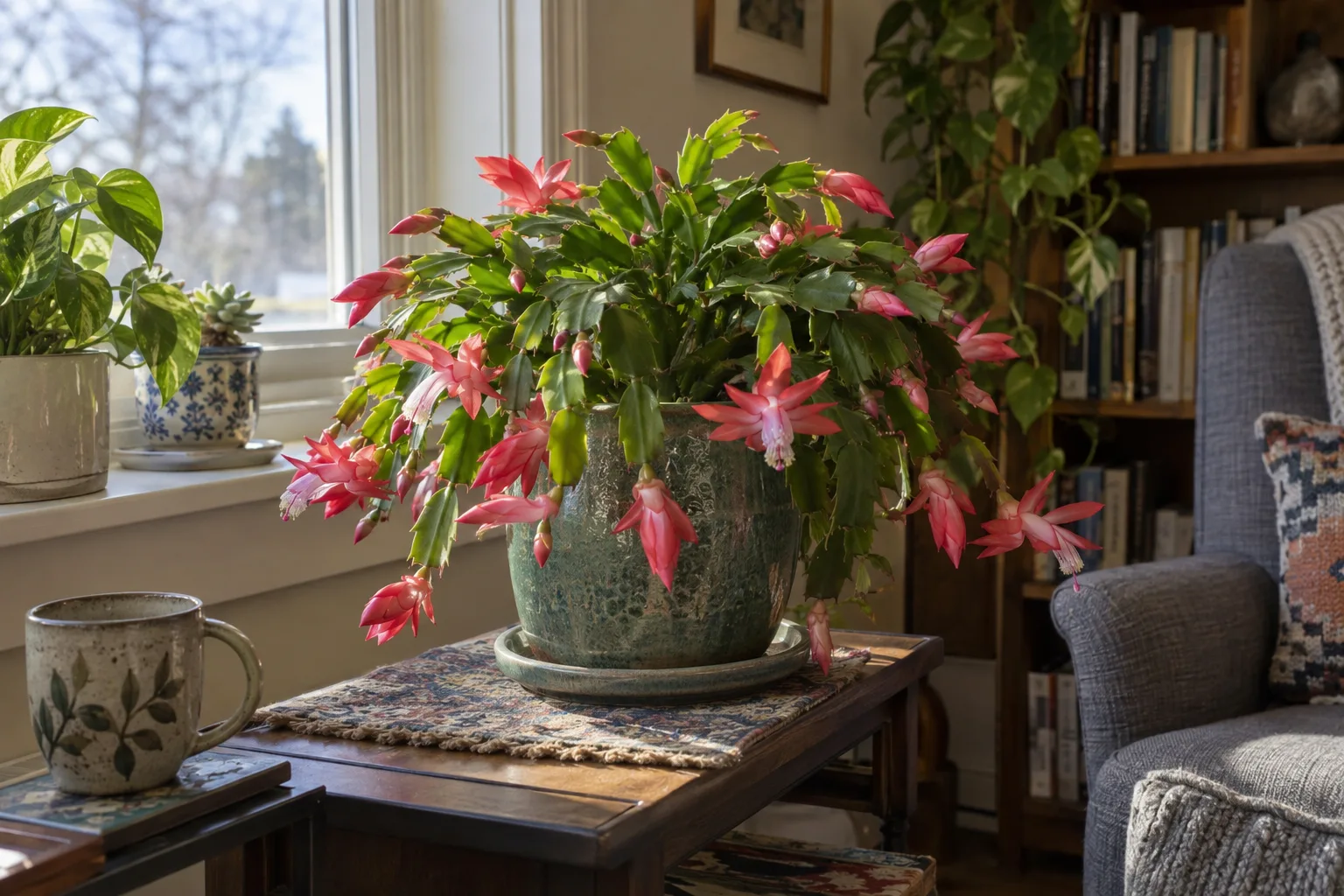
Moving a plant that already carries buds is a leading cause of bud drop. If you want even light on all sides, turn the pot a quarter turn before buds form. Once you see small nubs at the segment tips, choose the display spot and stop rotating. The plant will hold its buds much better.
How often should I water a Christmas cactus in December?
Water when the top inch of the mix feels dry, which is often every 7 to 10 days in a heated Arizona home. Pot size, mix and nearby vents change that interval, so test the soil with a finger each time.
Tip 4: Water until it drains, then wait
Pour slowly until water runs from the drainage hole, then empty the saucer. A blooming plant uses more water than a resting one, so never let the mix go bone dry, and never leave the pot standing in water. Shallow sips leave salt layers on top of the mix in our alkaline conditions.
Tip 5: Flush out hard-water salts
Queen Creek tap water is hard and alkaline, and minerals collect in the mix over weeks. Every 3 to 4 weeks, run several pot-volumes of water through the pot and let it drain fully. Filtered water or stored monsoon rainwater also helps. Yellowing segments and weak blooming often follow salt buildup.
Tip 6: Raise the humidity around the plant
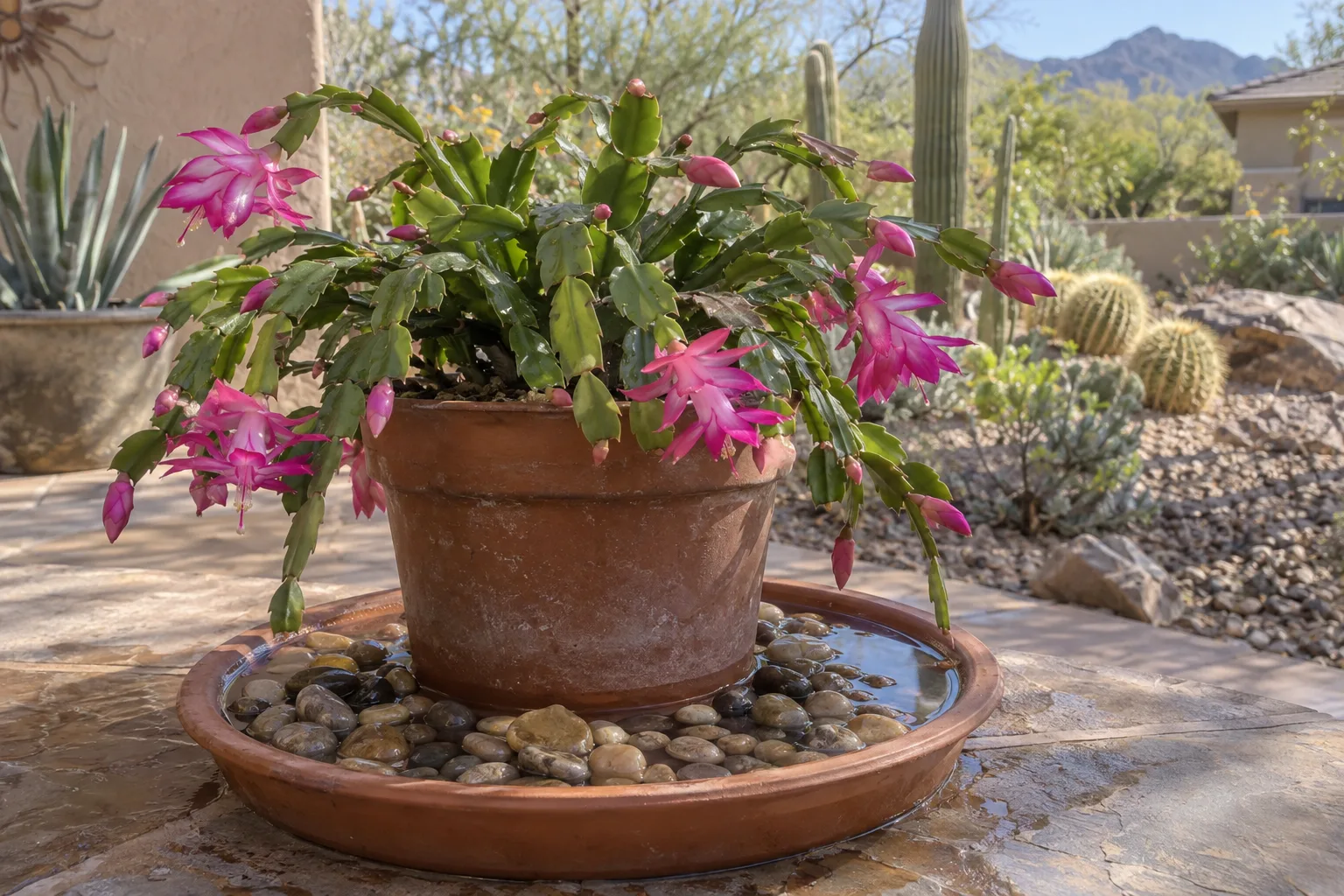
Indoor air in the East Valley is dry in winter, often below 40% humidity with the heat running, while holiday cacti come from humid Brazilian forests. Set the pot on a tray of pebbles and water, group it with other houseplants, or run a small humidifier for a few hours a day. The pot base must sit above the waterline, or the roots rot.
How do I get a Christmas cactus to set buds in our warm fall?
Give it about 6 weeks of long nights and cool air, starting in early October. Christmas cactus is a short-day plant, and our warm October days and lit homes rarely supply that cue on their own.
Tip 7: Provide 12 to 14 hours of full darkness
From early evening until morning, keep the plant in a closet or unused room, or cover it with a cardboard box. A porch light, lamp or streetlight leaking in can interrupt the signal. Return it to bright light each morning. Keep this up for about 6 weeks, until small buds show at the tips.
Tip 8: Keep nights between 50 and 60°F
A covered patio can reach that range on some October nights, and the plant should come indoors on any night that could fall below 50°F. Nights that stay above about 65°F can delay or prevent bud set. Once buds appear, bring the plant to its bright display spot and stop moving it.
Which holiday cactus do I have: Thanksgiving, Christmas or Easter?
Check the stem edges. Pointed, claw-like teeth mean Thanksgiving cactus (Schlumbergera truncata), the plant most often sold as a Christmas cactus. Smooth, rounded edges mean true Christmas cactus (Schlumbergera × buckleyi, sometimes listed as S. bridgesii). Easter cactus (Hatiora gaertneri) blooms in spring. These are varieties we commonly carry around the holidays, and availability changes week to week and season to season.
Tip 9: Match your expectations to the type
A plant that always peaks before December is most likely a Thanksgiving cactus, so its timing is normal. Bloom dates shift with the temperature and darkness your plant receives, and the table gives typical windows only.
| Type | Botanical name | Typical bloom | Segment edges |
|---|---|---|---|
| Thanksgiving cactus | Schlumbergera truncata | November to early December | Pointed, toothed |
| Christmas cactus | Schlumbergera × buckleyi | Late December to January | Smooth, rounded |
| Easter cactus | Hatiora gaertneri | March to April | Rounded, flat |

What should I do after the flowers fade?
Cut back watering, hold off on fertilizer, and let the plant rest until spring. Most plants finish blooming by early to mid January. The rest period sets up next year’s buds.
Tip 10: Rest it in January and February
Let the top 2 inches of mix dry between waterings and leave the plant undisturbed in its bright spot. Remove faded flowers gently once they drop on their own. Individual blooms last about a week, so the display runs several weeks as new buds open.
Tip 11: Feed only in the growing months
Skip fertilizer from October through February, because extra nitrogen pushes leafy growth instead of flowers. From March through September, feed monthly with a balanced houseplant fertilizer mixed at half strength. Some growers switch to a low-nitrogen bloom formula once or twice in September. For a month-by-month view of what else needs attention outdoors, see our gardening calendars.
Tip 12: Repot in late winter or spring, never in bloom
Repot in late February or March, after blooming ends, and only if roots circle the pot or push out of the drainage holes. Choose a container one size larger, since a slightly snug plant tends to bloom well. Use potting soil lightened with perlite or pumice and a little orchid bark. Cactus mix alone drains too fast, and plain potting soil stays too wet.
Why is my Christmas cactus dropping buds or turning yellow?
Bud drop usually follows a sudden change, such as a move, a cold draft, a nearby vent or one complete dry-out. Yellow segments point to soggy mix or mineral buildup. Check the cause before you treat anything.
- Soggy mix and limp segments: unpot the plant, trim brown, mushy roots, and repot in fresh mix.
- Dry mix and wrinkled segments: water thoroughly, and the plant should perk up within a day or so.
- White cottony clusters at the segment joints: these are mealybugs, and dabbing them with a cotton swab dipped in rubbing alcohol removes light infestations. Check weekly.
- No blooms: look for light leaks during the dark period, nights that stayed warm, a skipped winter rest, or a recent repotting.
If a problem stumps you, bring a photo to our team, and see our classes and events page for upcoming sessions.
Frequently asked questions
Can I keep a Christmas cactus outside in Queen Creek in December?
Only on mild days, and in shade. Bring it indoors whenever nights could fall below 50°F. Temperatures near freezing damage the stem segments, and a hard frost can kill the plant. East Valley winter lows vary from yard to yard, so watch the forecast and move it inside early.
Is a Christmas cactus safe for cats and dogs?
The ASPCA lists Christmas cactus as non-toxic to cats and dogs. Chewing a lot of plant can still upset a pet’s stomach, causing vomiting or diarrhea. Place it where animals cannot reach it, and call your veterinarian or the ASPCA Animal Poison Control Center if symptoms appear.
How long do Christmas cactus flowers last?
Each flower lasts roughly a week, and a healthy plant opens new buds in sequence, so the display often runs 3 to 6 weeks. Steady watering, stable temperatures and a fixed location extend bloom time. Heat from vents shortens it.
Can I propagate a Christmas cactus, and when?
Yes, and late February through March is the best window, after blooming ends. Twist off a piece with 2 to 3 segments, let it callus for about 24 hours, and press it half an inch into moist potting mix with perlite. Roots usually form in 3 to 4 weeks in bright, indirect light.
What kind of pot suits a Christmas cactus?
Pick a pot with a drainage hole that is only slightly larger than the root ball. Glazed ceramic holds moisture longer than unglazed clay, which dries faster in our dry indoor air. Browse our pottery and planters for options.
Is a Christmas cactus worth growing in an Arizona home?
A Christmas cactus suits you if you have a bright window, can leave the plant alone for a few weeks in November, and like small, steady care. It is a poor match for a dark room, a spot beside a heating vent, or anyone who wants flowers without any October attention. The payoff is several weeks of blooms each winter, from a plant that lasts for years. Stop by our Queen Creek nursery and talk it over with our team.