
Choose a tomato variety by season. For Arizona spring planting, pick fast-maturing, heat-tolerant types with roughly 60 to 80 days to harvest; for fall, pick varieties that handle early heat and cool nights. Timing and variety together decide your harvest.
Key takeaways
- Low-desert gardeners get two tomato seasons: transplants go in from late January through February, and again from mid-August into September.
- Tomato blossoms stop setting fruit when days stay above roughly 90 to 95°F and nights stay above about 75°F.
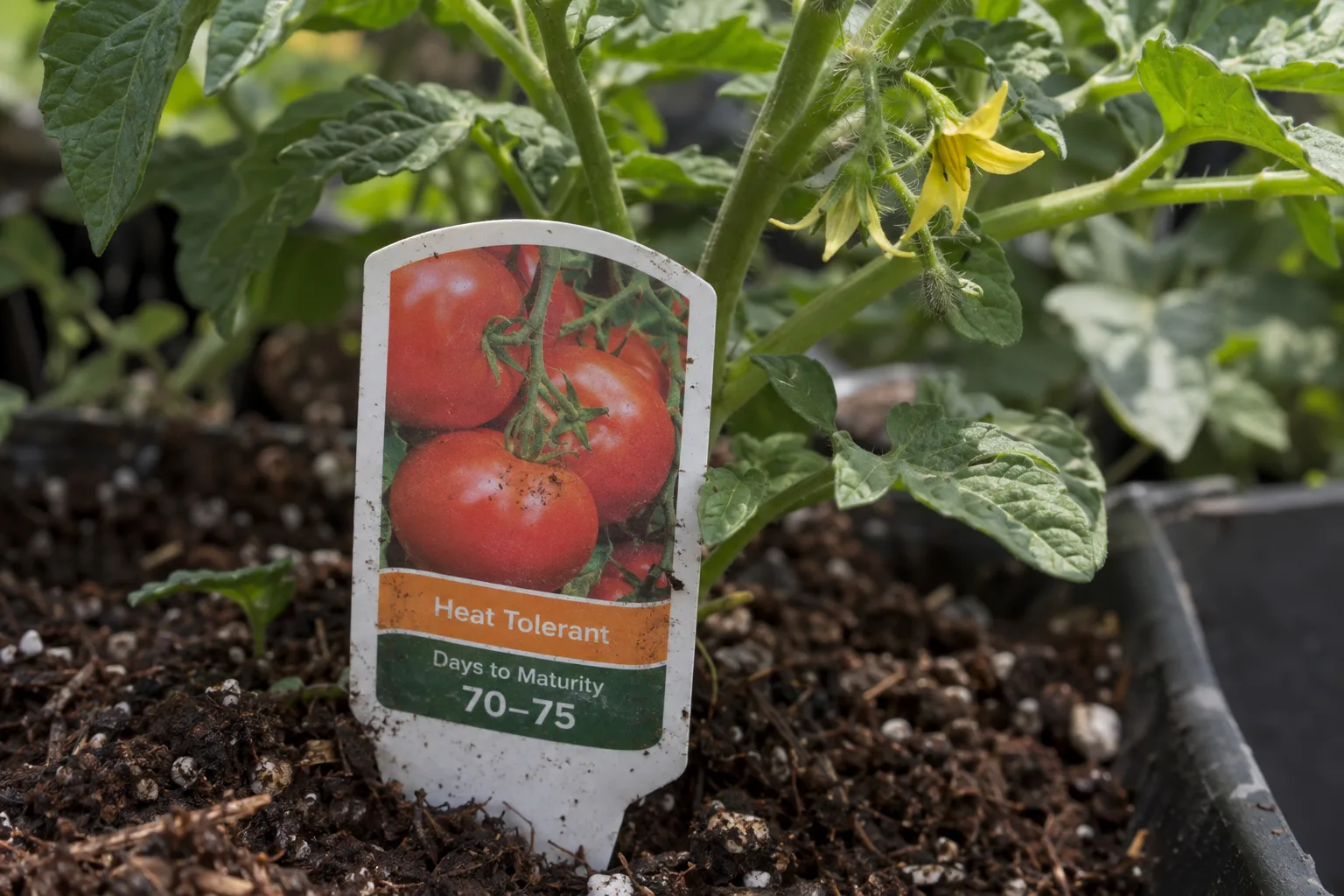
- For spring, look for 60 to 80 days to maturity and tags that say heat-tolerant or heat-set.
- Determinate types suit pots and big harvests of sauce tomatoes, while indeterminate types give steady picking and need a tall cage.
- Look for disease codes such as V, F and N on the tag, because root-knot nematodes are a known problem in desert garden beds.

When should I plant tomatoes in Arizona?
Plant spring tomatoes from late January through February and fall tomatoes from mid-August into September. Each window calls for a different kind of variety.
Spring plants need to flower and set fruit before daytime highs hold above 90 to 95°F, which usually happens sometime in May. Fall plants go into the ground while it is still hot, look tired through September, then produce well in October and November when days cool into the 80s. A cold snap can reach Queen Creek in late January, so keep frost cloth ready for early transplants.
The University of Arizona Cooperative Extension vegetable planting calendar for Maricopa County lists recommended dates for the East Valley. When you are ready to shop, start with our herbs, vegetables and berries department.
Why does tomato variety matter so much in the low desert?
Variety matters because heat ends fruit set long before it ends plant growth. A plant can look lush in May and produce nothing.
Tomato pollen loses viability when daytime highs stay above roughly 90 to 95°F and nighttime lows stay above about 75°F. Many popular catalog varieties were bred for regions where summers peak in the low 90s, so they stall here earlier than heat-selected types. In spring you have roughly three to four months from transplant to that shutdown.
Sun matters too. Summer highs above 110°F can bleach exposed fruit (sunscald), and varieties with dense leaf cover shade their own tomatoes better than open, spindly plants. Our alkaline soil, with a pH often between 7.5 and 8.5, and hard water also affect nutrient uptake in every variety, so soil prep helps whichever one you choose.
What does heat-set mean on a tomato tag?
Heat-set means the variety was selected to keep setting fruit at higher temperatures than standard types. It improves your odds without guaranteeing a crop in a 105°F May.
Tags may also say heat-tolerant, sets fruit in high heat, or hot-climate adapted. Treat those phrases as a starting point and then check days to maturity, because a heat-set variety that takes 90 days to ripen still runs out of calendar. For spring, a tag under about 80 days gives you room to harvest before the heat arrives.
Which tomato varieties work best here?
The best varieties for the low desert are fast-maturing, heat-tolerant types matched to the season you are planting. These are varieties we commonly carry, though availability changes week to week and season to season.
Spring slicers and sauce tomatoes
Solar Fire is a determinate, heat-set red tomato that matures in roughly 70 to 75 days from transplant. Heatmaster is bred for hot conditions and also matures in the 70s. Celebrity has strong disease resistance and fruit quality but is not a heat-set type, so plant it in late January to give it a full run through March and April.
Cherry tomatoes
Cherry types such as Sweet 100 and Sun Gold usually keep producing into warmer weather than large-fruited slicers. They work in both spring and fall. The tradeoff is plant size, since both are indeterminate and sprawl without a sturdy cage.
Paste tomatoes
Roma and San Marzano types have thick walls and little juice, which suits roasting and sauce. They often mature in the mid-70s to high-70s in days, which fits a fall planting that runs into December. Expect a concentrated harvest rather than a long trickle.
Should I grow a determinate or indeterminate tomato?
Choose determinate for pots and a big spring harvest, and indeterminate for steady picking over a longer season. Your space usually decides it.
Determinate plants stop at a fixed height, often 3 to 4 feet, and ripen most of their fruit over a few weeks. That compact habit suits a spring bed where you want tomatoes in the kitchen before the heat arrives. Indeterminate plants keep growing and flowering until heat, frost or disease stops them, and they can reach 6 feet or more.
In large containers, compact determinate or patio types are easier to manage. Browse our pottery and planters if you need a pot of at least 15 gallons, since smaller pots dry out quickly in summer.

How do I choose a tomato variety step by step?
Work from the calendar backward: pick the season, then the days to maturity, then the plant type. These six steps cover it.
- Pick your window. Check our gardening calendars and plan on late January to February for spring or mid-August to September for fall.
- Count days to maturity. For spring, favor 60 to 80 days. Fall transplants tolerate a few more days because October and November are mild.
- Read the tag for heat language. Look for heat-tolerant or heat-set wording, especially for spring plantings that will meet May heat.
- Check disease codes. V, F and N stand for verticillium, fusarium and nematode resistance, and nematodes are worth planning for in established garden beds.
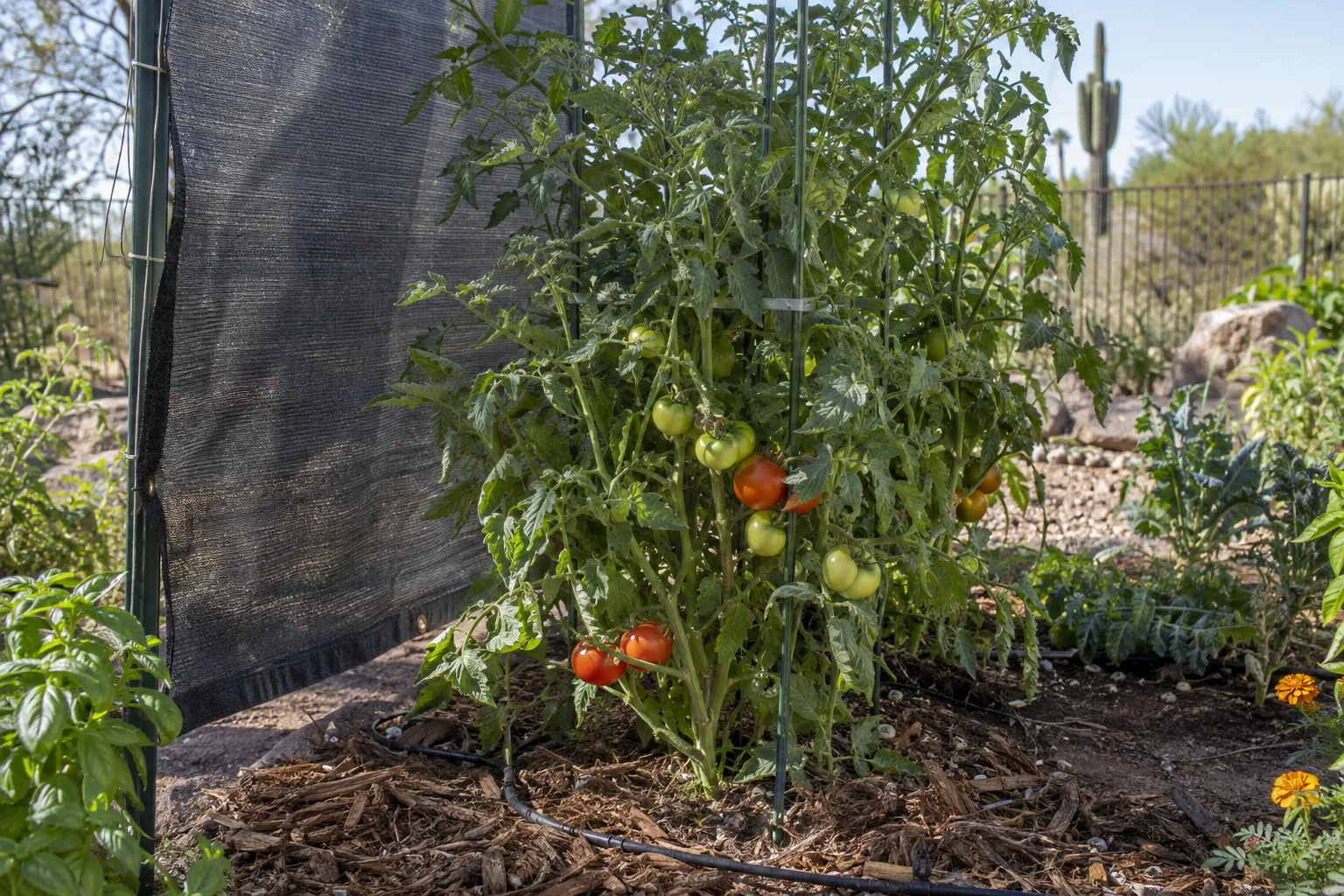
- Match plant type to space. Cages for determinate plants should stand about 4 feet tall, and indeterminate plants need 5 to 6 feet of support.
- Plant deep and mulch. Bury up to two-thirds of the stem so roots form along it, then add 3 to 4 inches of mulch kept a couple of inches off the stem.
What mistakes cost the most tomatoes in Arizona?
Late planting and mismatched varieties cost the most fruit. Most other problems trace back to one of these.
- Planting in March or later. Transplants set out after the best weeks have passed have less time to produce before heat shuts fruit set down.
- Choosing long-season varieties for spring. A 90 to 100 day tomato may still be green when May highs arrive.
- Skipping the fall season. October and November often give the best-tasting fruit of the year, and many gardeners never plant for it.
- Uneven watering. Swings between dry and soaked soil contribute to blossom end rot and split fruit, and mulch and drip irrigation even those swings out.
- Heavy nitrogen once flowering starts. Too much pushes leaves at the expense of fruit.
Frequently asked questions
Can I grow heirloom tomatoes in the low desert?
Yes, if you plant early. Heirlooms such as Cherokee Purple generally lack the heat tolerance of modern hybrids, so transplant in late January and expect them to slow down sooner. Many gardeners pair one or two heirlooms with a heat-set hybrid so the season is covered either way.
Why are my healthy tomato plants not setting fruit?
Heat is the usual cause. When highs stay above roughly 90 to 95°F and nights stay above about 75°F, pollen fails and blossoms drop even though the plant looks fine. Keep watering and shading it, since fruit set often resumes when temperatures ease, or start fresh for the fall season.
Should I start tomatoes from seed or buy transplants?
Transplants are the easier route for spring. For fall, starting seed in late July gives you plants ready for mid-August to September, because transplant selection varies by season. Use fresh seed-starting mix and keep it warm. Our classes and events page lists upcoming workshops.
How big a pot does a tomato need?
Plan on at least 15 gallons for most tomatoes, and larger for indeterminate plants. Bigger pots hold moisture longer, which matters when summer highs top 110°F. Dwarf and patio types can manage in smaller containers, though they need more frequent watering and some afternoon shade from a wall.
Is a heat-set hybrid or an heirloom right for you?
Pick a heat-set hybrid if you want the most reliable crop, especially in spring. Pick an heirloom if flavor and variety matter more to you than yield, and you can plant in late January and accept a shorter season. Skip tomatoes in containers that cannot hold at least 15 gallons, and skip long-season varieties in spring. Come visit us in Queen Creek, and we will help you match a variety to your yard and your calendar.