Choose a garden center in Arizona by checking four things in person: plant health, staff who garden in the low desert, stock suited to 110°F summers and alkaline soil, and a clear guarantee. Google ratings help you build a shortlist, but a 20-minute visit settles it.
Key takeaways
- Use Google ratings to build a shortlist of two or three garden centers, then judge each one in person before buying anything large.
- Visit in the morning, especially from June through September, when air temperatures often pass 110°F and plants look their best soon after watering.
- Healthy container plants have firm, evenly colored leaves, slightly damp soil, and roots visible at the drainage holes but not packed into a tight coil.
- Ask what the guarantee covers, how long it lasts and what proof of care it needs, and get those terms written on your receipt.
- Plant trees and shrubs in October through November when you can, so roots grow through months of mild weather before the next summer.
Can Google Maps ratings tell me which garden center is best?
Ratings can narrow the field to a shortlist, but they cannot confirm how healthy the plants look on the day you visit or how well staff answer your questions. A star average blends opinions from many years, and quality shifts with the season. The Phoenix metro area has dozens of garden centers, so a shortlist of two or three saves real time.
Read the newest reviews first. Look for reviews that name a plant, describe a problem that got solved, or mention a guarantee that was honored. A review that says only “great place” tells you little. Complaints about dead plants deserve a second look at how the owner replied.
We keep this post to method rather than rankings. Nobody can fairly score other businesses from a desk, and a list built on star counts goes stale within months.
When is the best time to visit a garden center in the East Valley?
Go in the morning, and plan tree and shrub planting for October through November. Cooler air makes browsing easier, and plants look their best soon after watering. From June through September, air temperatures often pass 110°F, so an early start protects you and the plants you carry to the car.
Fall is the better planting window. Roots get months of mild weather to grow before the next summer. Spring is another common window, though young plants then have less time to root before the heat arrives. Our gardening calendars page is a good place to match your shopping trip to the month.
What should I know before I visit a garden center?
Bring five facts about your planting spot: sun, space, soil, water and a photo. A plant chosen for those facts is far more likely to survive than one chosen on looks. Browse the plants section of our website to see the categories, then ask about current availability, since it changes week to week and season to season.
- Sun: note which spots get full afternoon sun, especially beside west-facing block walls where reflected heat is highest.
- Space: measure the width and height available, including nearby walls, eaves and overhead lines.
- Soil: say whether you have caliche, a hard, pale layer of calcium carbonate that drains slowly, and how deep you can dig.
- Water: tell staff whether the spot has drip irrigation, a bubbler or hand watering only.
- Photo: a phone picture of the spot and its surroundings helps staff give specific answers.
Alkaline soil and hard irrigation water are normal across the East Valley. If plants you already own show yellowing leaves, mention it. Staff can then point you toward plants that tolerate those conditions.
How do I judge a garden center in person?
Spend 15 to 20 minutes on the checks below before you choose plants. They apply to any garden center, ours included.
- Look at how the plants are watered. Pots should be damp a finger-width below the surface, and tender plants should have shade cloth or a covered area in summer.
- Scan the foliage. Healthy plants have firm, evenly colored leaves, while widespread yellowing, scorched edges or leaf drop can signal stress that began before the plant reached the shelf.
- Press the soil near the edge of the pot. Bone-dry, crusty soil points to uneven watering, and soggy soil points to poor drainage.
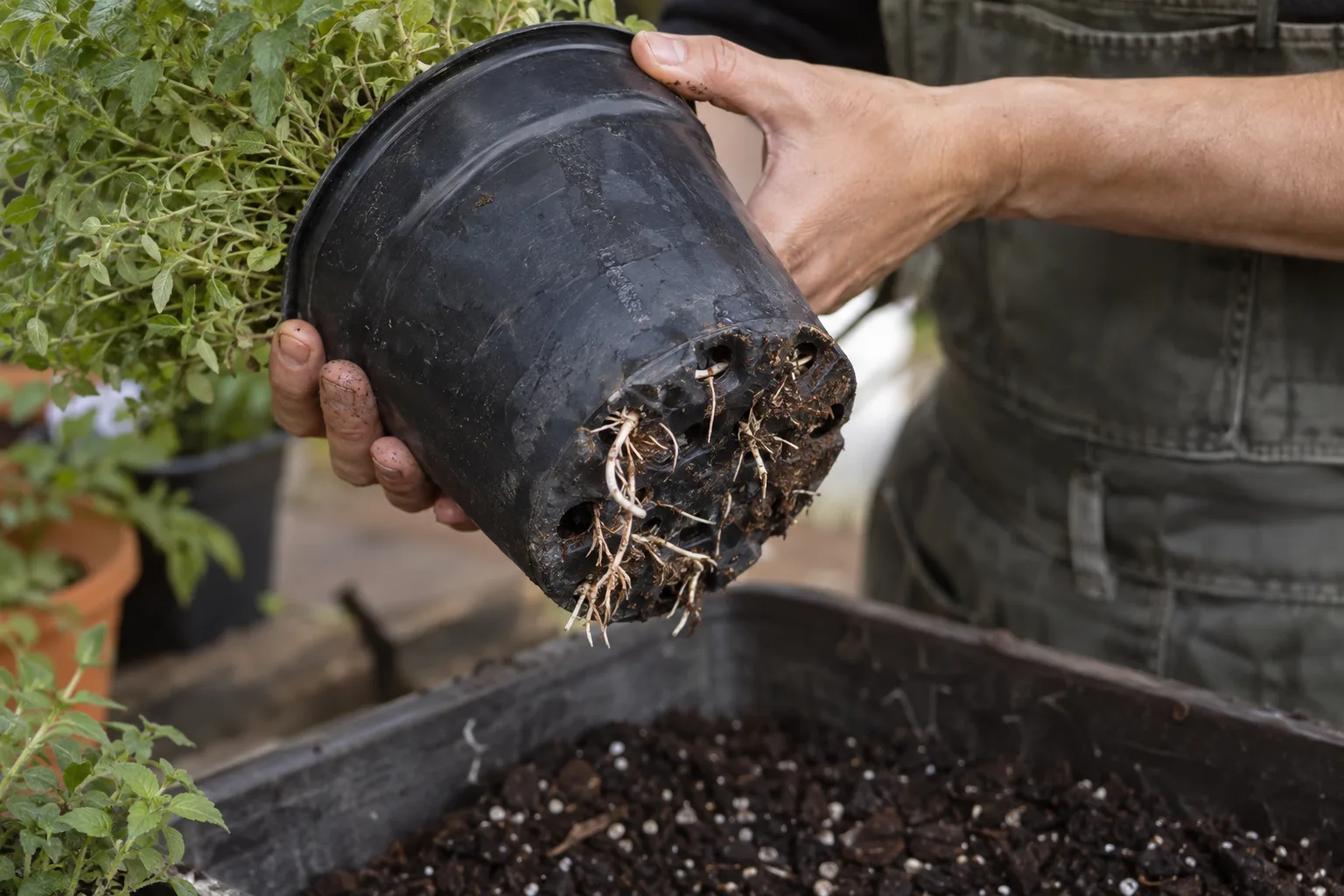
- Tip the pot and look at the drainage holes. A few roots at the holes are normal. Thick roots circling the pot mean the plant has been in its container a long time and may root out more slowly.
- Check the undersides of leaves for scale, spider mites and whitefly. A stray insect is common, but a heavy infestation is a reason to choose a different plant.
- Compare the tag’s mature size with your measured space. Tags give a general size, so ask staff what the plant reaches in the East Valley’s long growing season.
- Describe your spot and watch how staff respond. Good staff ask about sun, drainage and watering before they recommend anything.
- Ask about the guarantee. Get the length, what it covers and what proof of care it requires written on your receipt.
What does a good selection of desert-adapted plants look like?
A good selection leans toward plants that handle summer highs above 110°F, alkaline soil and the occasional winter frost. Familiar low desert names include palo verde (Parkinsonia species), desert willow (Chilopsis linearis), yellow bells (Tecoma stans), lantana (Lantana camara) and bougainvillea (Bougainvillea hybrids). These are varieties we commonly carry, and availability changes week to week and season to season.

For shade and flowers, browse our desert trees, then ask how much room each one needs at maturity. Citrus is common in East Valley yards, and citrus trees need a warm, bright spot and protection when frost is forecast. Ask which varieties suit your yard.
Ask about frost for every flowering shrub. Bougainvillea and yellow bells can be damaged by the cold snaps some winters bring, particularly in low spots in a yard. A shelf of plants that need cool, humid summers is worth a question about how they will handle July here.
What mistakes should I avoid when buying plants here?
The most common mistakes are buying on looks alone, planting in peak heat, and skipping a drainage check. All three are easy to avoid with a little planning.
Buying on looks alone
A tag photo shows a plant at its best, not its needs. Read the sun and water lines, then ask staff how that plant behaves in an East Valley summer.
Planting in peak heat
New trees and shrubs face the highest root stress from June through August. If you must plant then, work early in the morning, water deeply and shade young plants from afternoon sun.
Skipping the drainage test
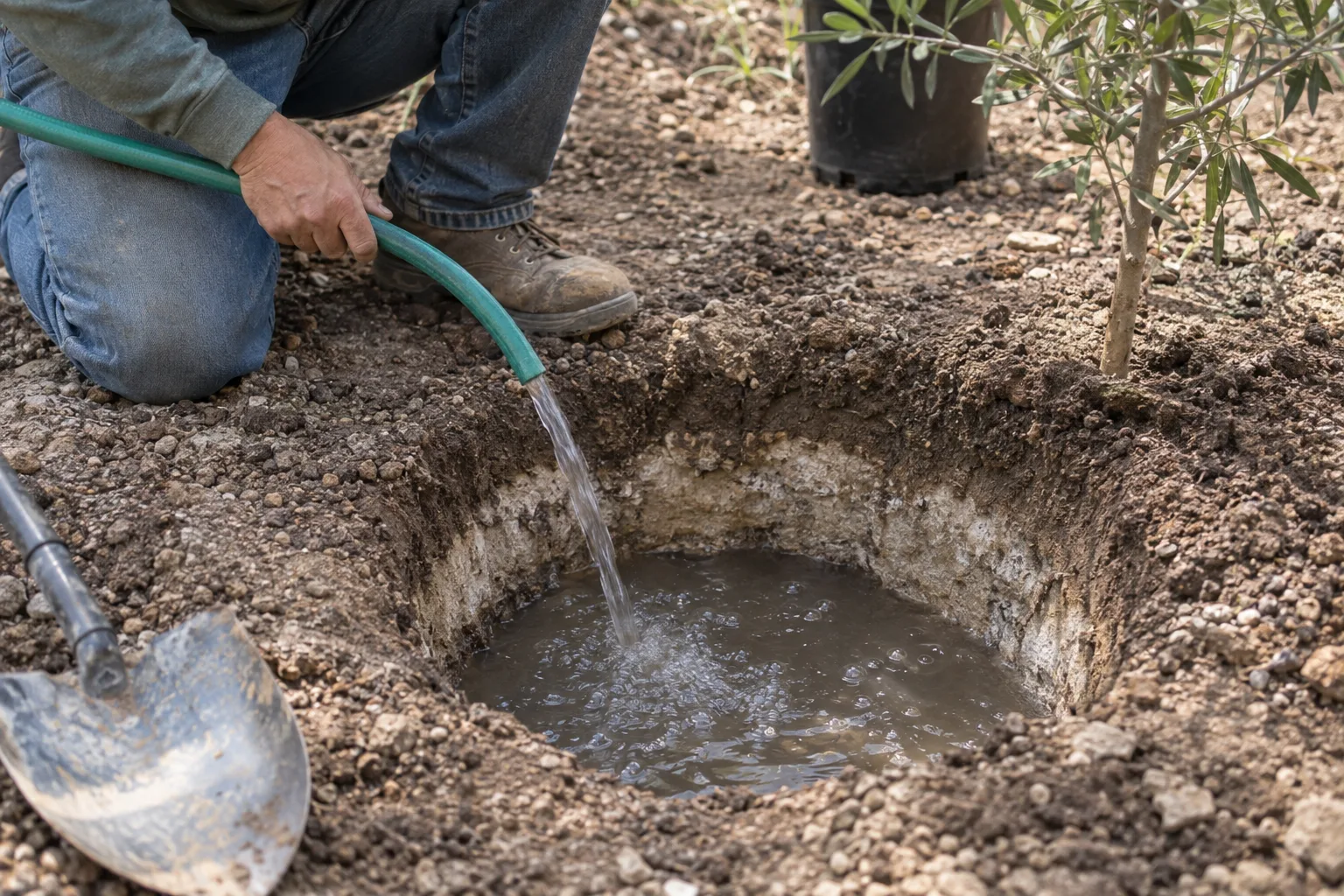
Dig the planting hole, fill it with water, and check it the next day. Water still standing points to caliche or compacted soil, and staff can suggest options such as a wider hole, a different spot or a plant that tolerates slow drainage.
Watering every plant the same way
Cacti and agaves need far less water than flowering shrubs. Yellowing, soft growth on a succulent often signals too much water, so group plants by need. To learn the basics before you buy, see our classes and events page.
Frequently asked questions
What should a plant guarantee cover?
A fair guarantee states which plants it covers, how long it lasts and what proof of care it requires. Ask whether it applies to trees and shrubs only, whether you need your receipt, and whether the nursery wants the plant or a photo back. Policies differ between businesses, so get the terms written on your receipt.
Should I call ahead for a specific plant?
Yes, call or message first if you want a specific plant. Availability changes week to week and season to season, so a quick check saves a trip. Tell staff where it will go, how much sun the spot gets and how much space you have. You can reach us through our contact page.
Is a bigger plant always better?
Not always. A larger plant has more top growth to support while its roots settle into new soil, so it can need closer watering at first. A smaller plant set in a well-prepared hole often catches up. Ask staff which size fits your spot and your timeline.
When do I plant vegetables in the Phoenix area?
Cool-season vegetables are generally planted in fall and winter, and warm-season crops go in from late winter into spring. The University of Arizona Cooperative Extension vegetable planting calendar for Maricopa County gives dates crop by crop. Check it before you shop so you know which transplants to ask about.
Are saguaros protected in Arizona?
Yes, saguaros are protected plants in Arizona, and the Arizona Department of Agriculture administers the state’s native plant rules. Ask any seller how a saguaro was obtained and what tagging or paperwork comes with it, and contact the department if you have doubts. This is general information, not legal advice.
Which garden center is right for you?
Pick the one where plants look watered and healthy, staff ask about your yard before they answer, and the guarantee is in writing. If you only want a bag of mulch or a quick replacement for one annual, a short stop at whichever place is closest is enough, and a long comparison is not worth your Saturday. If you are planting a tree or a hedge, compare two or three. We would be glad to see you at our nursery in Queen Creek.