

Calathea struggles indoors in Arizona mainly because of dry air, hard tap water, strong window light, cold vent drafts, uneven watering, dense potting mix and salt buildup. Each cause has a fix, and most plants show improvement within a few weeks.
Key takeaways
- Aim for 50% humidity or higher within 2 to 3 feet of the plant. Many low desert homes sit well below that, so measure with a hygrometer.
- Water with filtered, distilled or rainwater, and flush the pot every 4 to 6 weeks to clear mineral salts.
- Place the plant 5 to 8 feet from an east or north window, out of any direct sun.
- Keep Calathea at least 4 feet from AC vents and in a room between 65°F and 80°F.
- Water when the top 1 to 2 inches of mix feels dry, and feed at half strength once a month from March through September.

Is dry air the main reason Calathea struggles in Arizona homes?
Yes, for most households it is the first cause to fix. Calathea (often now classed as Goeppertia) comes from humid tropical forest floors, while air-conditioned homes in the East Valley commonly sit between 15% and 30% humidity during dry months.
Low humidity pulls moisture out of the leaves faster than the roots can replace it. Edges turn crisp and brown, then the leaves curl inward and the whole plant droops. Many people read this as thirst and water more, which adds root problems to the leaf damage.
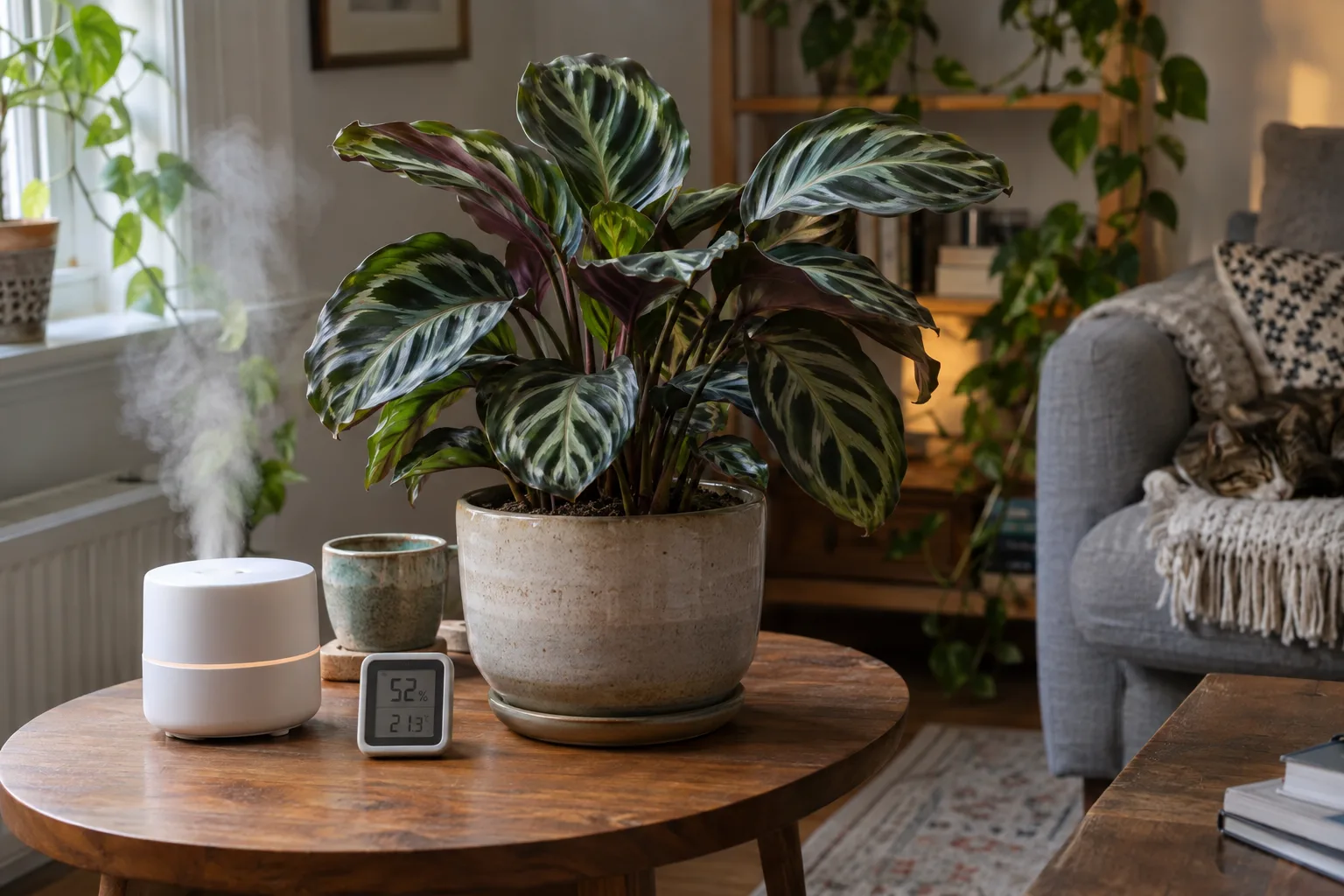
Start by measuring. An inexpensive hygrometer placed next to the plant tells you where you stand. If it reads under 50%, run a small humidifier within 2 to 3 feet of the pot during dry weather. Grouping several leafy plants together raises humidity slightly, and a pebble tray adds a little more. Misting gives only a few minutes of relief.
During the monsoon, from roughly July through September, outdoor humidity climbs and indoor air follows.
If your house stays dry year round, our houseplants department is a good place to look at indoor plants that handle dry air more easily.
Does hard tap water damage Calathea leaves?
It can. Our tap water is hard, meaning it carries dissolved calcium and magnesium, and Calathea is widely reported to be sensitive to the fluoride and chlorine that municipal water may also contain.
The damage looks much like dry air injury: brown, crispy tips that creep inward. Over time, minerals also build a white crust on the soil surface and raise the pH of the mix, which can make it harder for roots to take up nutrients.
Use filtered, distilled or rainwater when you can. Letting tap water sit overnight does not remove minerals or fluoride, so it is only a partial step. Flush the pot with plenty of clean water every 4 to 6 weeks, letting it run freely out of the drainage holes.
How much light can Calathea take near an Arizona window?
Calathea needs bright, indirect light and no direct sun at all. Glass in a low desert home passes a great deal of sun, and a west or south window in summer can scorch leaves within days.
Fading is the other warning sign. Bleached color, washed-out patterns and leaves that flatten instead of standing upright all point to too much light. Move the plant back to about 5 to 8 feet from an east or north window, or hang a sheer curtain to soften the beam.
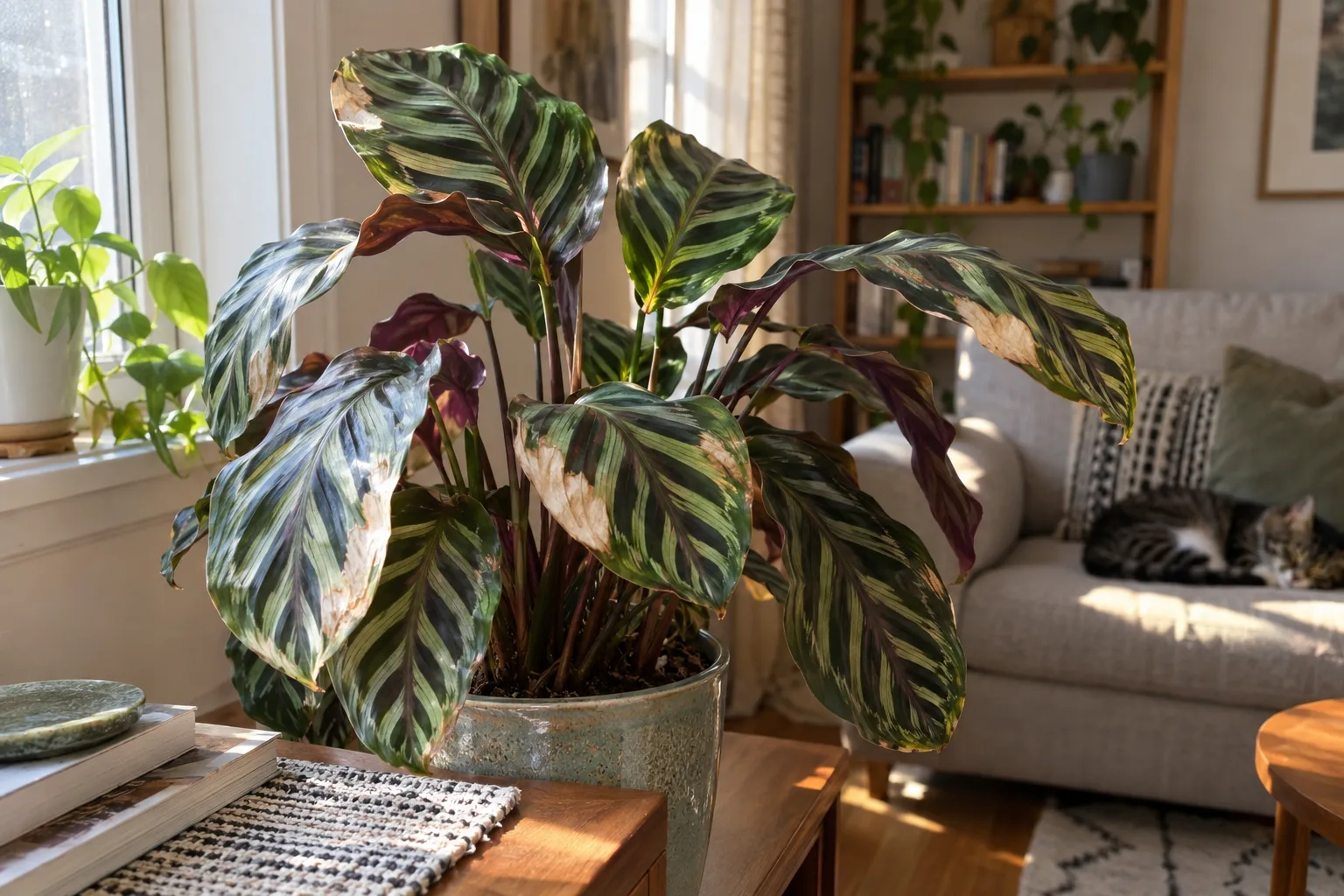
Hot glass also raises the temperature in the air around the pot, adding heat stress on top of the light. A spot that is bright enough to read in, with no sunbeam crossing the leaves at any hour, works well.
Can air conditioning hurt Calathea?
Yes, in two ways. Cold air blasting from a vent shocks the leaves, and a warm room near hot glass or a poorly cooled corner stresses them from the other side.
Calathea is most comfortable between 65°F and 80°F. A plant sitting under or beside a vent gets hit with cold air every time the system cycles on, which can happen many times a day in summer. The leaves curl and the plant slowly yellows. Keep it at least 4 feet from any vent and check the airflow in a room before choosing a spot.
Rooms that climb above 85°F in July and August speed up water loss as well. Pick a cooler interior room if you can.
How often should I water Calathea in a dry house?
Water when the top 1 to 2 inches of mix feels dry, and let the excess drain out completely. A calendar interval is less reliable than a finger test, because light, pot material and room temperature change how quickly the mix dries.
Calathea wants even moisture, never soggy and never bone dry. Dry air dries the surface quickly, but the lower part of a dense mix can stay wet for days. That gap is why overwatering and underwatering look so alike: yellowing, limp stems and curling leaves.
Soft, mushy stems near the soil line and roots that are dark and sour smelling point to rot. Healthy roots are firm and pale. Use a pot with drainage holes, and water less in winter, when growth slows.
What potting mix and pot suit Calathea best?
A loose, airy mix that holds some moisture works best. A typical bagged potting soil on its own can compact and swing between dry and waterlogged, so many growers blend roughly 60% potting soil with 20% perlite and 20% orchid bark or coco coir.
Skip mixes with built-in fertilizer pellets if you plan to feed the plant yourself, since sensitive tropicals burn easily. Pot material matters too. Terracotta wicks moisture through its walls and dries quickly, while glazed ceramic and plastic hold water longer. Browse our pottery and planters to match the pot to your watering habits.
If the plant needs repotting, do it in March or April when the weather is mild and the plant is waking up, rather than in summer heat.
How much fertilizer does Calathea need, and what is that white crust?
Calathea needs light feeding: a balanced liquid fertilizer diluted to half or quarter strength once a month from March through September. Stop from October through February while growth slows.

The white crust on the soil or pot rim is mineral salt from hard water and fertilizer. Heavy salt buildup makes leaf tips brown even when humidity and watering are right. To clear it, water slowly until it drains freely, wait for the pot to stop dripping, and repeat two more times. A routine flush every 4 to 6 weeks prevents the crust from returning.
Do not fertilize a stressed plant. Wait until it pushes out at least two healthy new leaves.
How do I revive a struggling Calathea?
Fix the causes in order, starting with humidity and water, and give the plant about four weeks before judging the result. Our classes and events page lists gardening workshops if you want hands-on help.
- Measure humidity next to the plant and run a small humidifier if it reads below 50%.
- Slide the plant out of its pot and check the roots. Trim soft, dark roots with clean scissors.
- Repot into fresh, airy mix in a pot with drainage holes.
- Switch to filtered, distilled or rainwater and flush the old salts out.
- Move the plant to bright indirect light, away from vents and out of direct sun.
- Trim leaves that are more than half brown, cutting at the base of the stem.
New leaves unfurling is the sign the plant has stabilized. Expect that to take several weeks.
Frequently asked questions
Will brown leaf tips turn green again?
No, damaged leaf tissue does not recover. You can trim the brown edge with clean scissors, following the natural leaf shape, or leave it. What matters is that new leaves come in clean. If they do, your changes to humidity, water and light are working.
Why do the leaves fold up at night?
Calathea leaves rise and fold in the evening and lower again in the morning, a normal movement often called prayer-plant behavior. It is not a sign of trouble. Leaves that stay curled all day or fail to open point to dryness, cold air or root stress.
Can Calathea live outdoors in Queen Creek?
It is a poor outdoor plant here. Direct sun scorches the leaves, summer highs above 110°F cook them, and winter nights can drop near or below freezing. A shaded patio may work for short stretches in mild weather, but indoors is the safer home.
Is some leaf loss in winter normal?
A few older leaves yellowing in winter is normal as growth slows. Widespread loss across leaves of every age is not, and usually means root rot, cold drafts or very dry air. Cut back watering, skip fertilizer from October through February, and check the roots.
Should I bring in a photo for advice?
Yes, a clear photo of the whole plant and a close view of the damaged leaves helps a lot. Tell us where it sits and how you water. You can also reach our team through the contact page.
Is Calathea worth growing in an Arizona home?
Calathea is worth it if you can run a humidifier, use filtered water and give it a spot out of direct sun and away from vents. Skip it if you travel often or want a plant that tolerates neglect. A snake plant (Dracaena trifasciata) or ZZ plant (Zamioculcas zamiifolia) copes with dry air far better. Stop by our nursery in Queen Creek and talk through your light and room with us.