

A cactus wren in your Arizona yard usually means your property has dense spiny plants for nesting, insects to eat, and little pesticide pressure. It is a sign of good desert habitat, and you can keep the visitors by protecting the plants they use.
Key takeaways
- The cactus wren became Arizona’s state bird in 1931, stays in the low desert all year, and measures roughly 7 to 9 inches long.
- Wrens nest in spiny plants such as cholla and prickly pear, so one large cactus in full sun is the best first plant to add.
- Insects are the main food, so a loose layer of leaf litter and no broad-spectrum insecticides keep the food supply up.
- Nesting runs roughly from February through June, and a plant holding a nest should be left alone until the young have left, about three weeks after hatching.
- A shallow dish of water, 1 to 2 inches deep and refilled daily, helps when summer highs pass 110°F.
What does it mean when a cactus wren shows up in your yard?
It usually means your yard offers dense, spiny cover and enough insects to eat. Cactus wrens (Campylorhynchus brunneicapillus) live in the low desert year-round, and they settle where the structure and food are right.
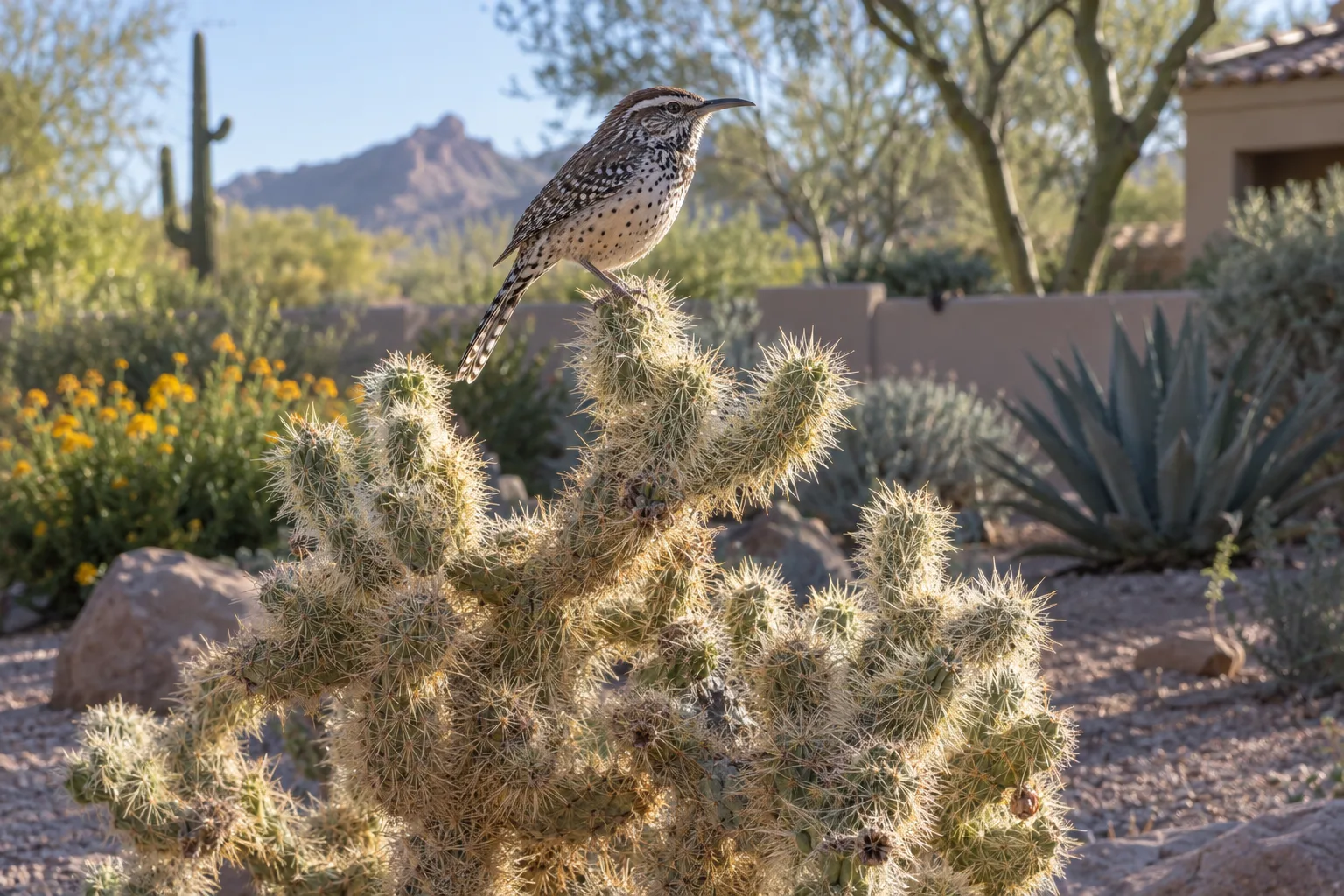
Arizona named the cactus wren its state bird in 1931. It is the largest wren in North America, with a white eyebrow stripe, a heavily spotted chest and a long tail it often holds cocked. You will usually hear it first. The call is a harsh, rattling chatter that can carry across a block at dawn.
Biologists often use birds like this as a rough gauge of habitat quality, and wrens tend to skip yards made of solid gravel, turf and non-native shrubs. Where the East Valley has filled in with homes, a yard that keeps a few large native plants gives a wren a place to nest and forage. One sighting does not mean a pair will stay, but it shows your yard is being considered.
Which plants bring cactus wrens to a yard?
Large spiny cacti, especially cholla and prickly pear, are the plants wrens use most for nesting, and thorny shrubs and trees add cover and perches. These are varieties we commonly carry, though availability changes week to week and season to season. You can browse our desert and landscape plants to see what is available when you visit.
Mature saguaros (Carnegiea gigantea) also host wrens, but they grow slowly, so the plants below are the practical choices for a new planting.

Cholla (Cylindropuntia species)
Cholla is the classic wren nesting plant, with branching, spine-covered stems that shield a nest from predators. Garden chollas such as chain-fruit and staghorn often reach 4 to 10 feet tall. Plant in full sun with fast-draining soil, and once established give a deep soak every 2 to 4 weeks in summer and little in winter. The drawback is the spines. Joints break off and cling to pets, shoes and clothing, so keep cholla well away from paths and play areas.
Prickly pear (Opuntia engelmannii)
Engelmann’s prickly pear forms clumps 3 to 6 feet tall and 5 to 10 feet wide, giving ground-level cover, and birds eat the fruit. It wants full sun and, once established, a deep soak every 2 to 4 weeks in summer. The drawback is its spread and its tiny, hairlike glochids, which irritate skin and are hard to see. Give it room and wear thick gloves when you handle it.
Desert hackberry (Celtis pallida)
This tangled, thorny shrub grows 6 to 10 feet tall and wide and bears small orange berries that birds eat. It does best in full sun to light shade, with a deep soak every 2 to 3 weeks in summer once past the first year or two. The drawback is its looks. It can turn sparse and ragged after winter cold, so it suits a natural-style planting better than a formal one.
Ocotillo (Fouquieria splendens)
Ocotillo sends up spiny canes 8 to 15 feet tall that give wrens a high perch for singing and watching their territory. It needs full sun, very little water once established, and excellent drainage. The drawback is its sensitivity to overwatering, which rots the roots. The canes also stay bare for much of the year until rain brings out the leaves.
Velvet mesquite (Prosopis velutina)
Velvet mesquite reaches 20 to 30 feet tall and wide, and its shade and fallen leaves create the insect-rich ground wrens forage across. It wants full sun and deep, infrequent watering. The drawback is size and mess, since it drops leaves and pods and carries thorns, so plant it well away from the house and pool. Our desert trees page shows the kinds of shade trees that suit our soil.
How do I make my yard friendlier to cactus wrens?
Plant at least one large spiny cactus or thorny shrub in full sun, leave leaf litter on the ground, avoid broad-spectrum insecticides, and offer shallow water. Wrens settle where cover, food and water sit close together.
- Walk the yard and note every spiny or thorny plant you already have. A mature cholla or prickly pear may already be enough cover to start.
- Add a cholla or prickly pear in full sun, in spring or early fall when the soil is warm and the air is below 110°F. Cacti rot in wet, heavy soil, and a caliche layer holds water around the roots, so break through it or plant on a low mound.
- Leave a loose layer of fallen leaves under your trees and shrubs. Wrens flip leaves and debris to find beetles, ants and spiders.
- Spot-treat pests only when needed, and follow the product label. Broad-spectrum insecticides kill harmless insects along with the pests, which removes the wren’s food.
- Give it time. A new planting can take a couple of seasons before a pair commits to the territory.
Heavy pruning is the most common way to undo this work. A cholla cut back to a few bare stems loses the dense branching a nest needs, so shape lightly. Solid rock over weed fabric also blocks ground foraging, and leaving some bare soil or leaf litter between plants helps.
For help choosing and placing desert plants, see our classes and events.
When do cactus wrens nest, and what should I leave alone?
Cactus wrens nest mainly from late winter through spring, roughly February through June in the low desert, and a second attempt can follow later. Leave any plant holding a nest untouched until the young have left, about three weeks after hatching.

The nest is a football-shaped ball of dry grass, plant fibers and feathers, with a tunnel entrance on the side. It sits deep in a spiny plant, where predators have trouble reaching it. Wrens build several nests within a territory, and some serve only as roosts, so a nest in your cholla does not always hold eggs. Treat each one as active unless you have watched it for days and seen no wren going in or out.
Pairs often stay in the same territory, so a plant that hosted a nest this season is worth keeping for the next.
Do cactus wrens need water or feeders?
Cactus wrens need no feeder, because they eat mostly insects plus some fruit and seeds. A shallow water dish helps in summer, when highs pass 110°F and natural moisture is scarce.
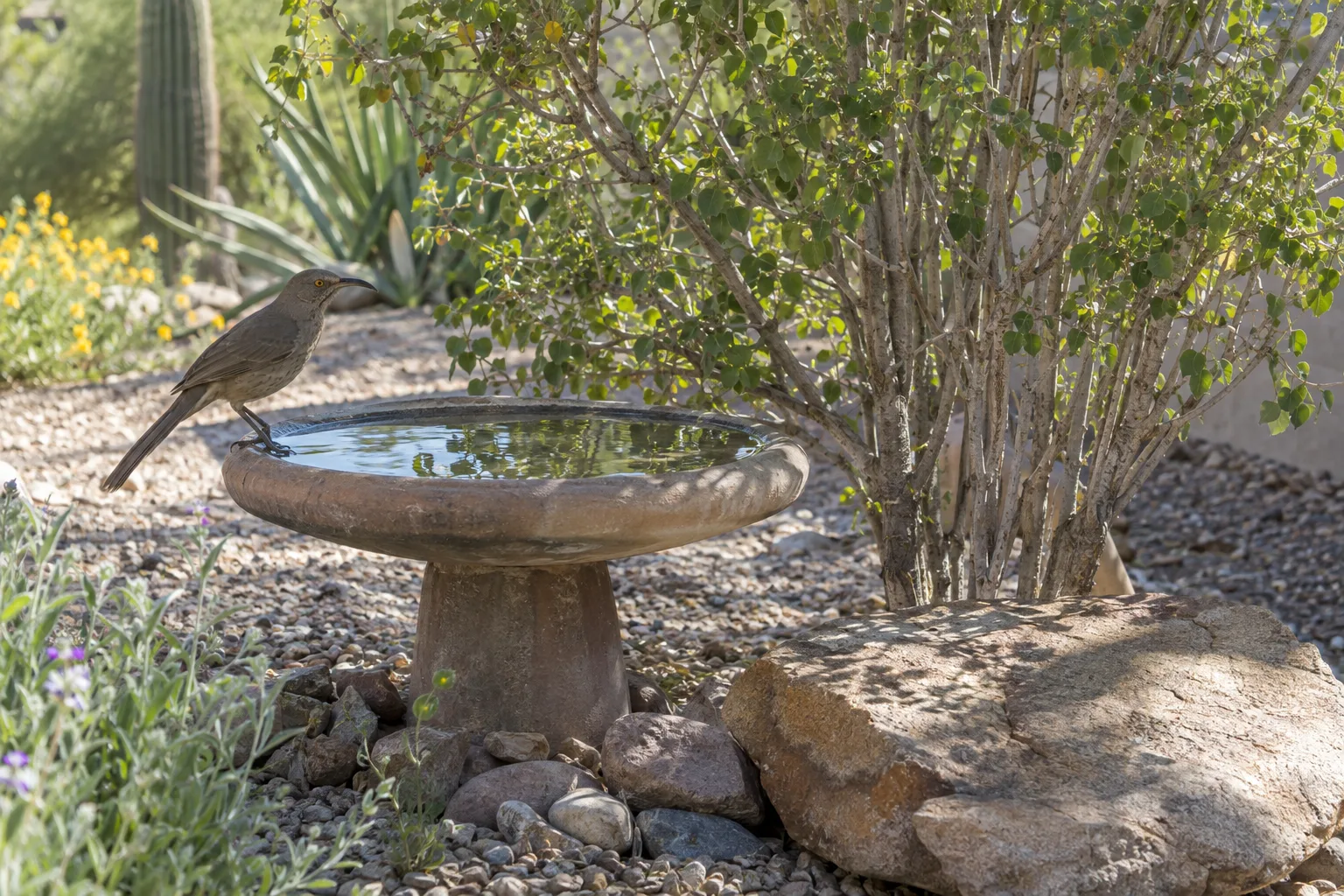
Use a dish or birdbath no more than 1 to 2 inches deep, with a flat rock for footing. Refill it daily and scrub it weekly so it stays clean. Set it near cover, such as a hackberry or cholla, but with open sight lines so a cat cannot hide beside it.
Seasonal timing for planting cacti and trimming shrubs varies from year to year, so our gardening calendars are a good place to check the month before you plant or prune.
Can I prune or move a plant that has a nest in it?
Wait until the nest is no longer in use. Native birds, including the cactus wren, are covered by the federal Migratory Bird Treaty Act, which is administered by the U.S. Fish and Wildlife Service, and the protections extend to active nests with eggs or young.
We cannot tell you what the law allows in your particular situation. If a nest sits in a plant that must be removed or trimmed for safety, contact the U.S. Fish and Wildlife Service or the Arizona Game and Fish Department before you start. For routine trimming of cholla, hackberry and similar plants, schedule the work for after nesting is finished.
Frequently asked questions
Is seeing a cactus wren good luck?
Many Arizonans treat a cactus wren visit as a good omen, though that is folk belief rather than science. The practical meaning is habitat: your yard has spiny cover and insects. Take it as a reason to protect the plants and soil conditions that brought the bird in.
Why are cactus wrens so loud?
Cactus wrens call loudly to defend territory and keep in contact with a mate. They often sing from the top of a tall plant, such as an ocotillo cane or a cholla, early in the morning. The raspy chatter is normal behavior and does not signal distress.
What should I do if I find a baby cactus wren on the ground?
Leave it alone and watch from a distance for an hour or two. Fledglings spend days on the ground while they learn to fly, and the parents keep feeding them. Keep pets indoors. If the bird looks injured or no adult returns after several hours, call a licensed Arizona wildlife rehabilitator.
Will cactus wrens come back to the same yard?
Often, yes. Cactus wrens live in the low desert year-round and tend to hold the same territory when cover and food remain. Keeping the nesting plants intact, leaving leaf litter and limiting insecticides raises the odds that a pair returns next spring.
Do outdoor cats affect cactus wrens?
Yes, outdoor cats kill many birds, and wrens that forage on the ground and fledglings that cannot yet fly well are easy targets. Keeping cats indoors, at least from February through June, protects nesting birds. Spiny plants protect nests from most predators but cannot protect birds on the ground.
Is your yard ready for a cactus wren?
Most East Valley yards can host a wren with one or two well-placed spiny plants, a loose layer of leaf litter and a lighter hand with pesticides. Yards of solid rock or turf, or homes where children and pets play exactly where a cholla would need to go, are a poor fit, and a few shrubs and a birdbath may be the better step. Come see us at the nursery in Queen Creek and we will help you choose plants that suit your space.