

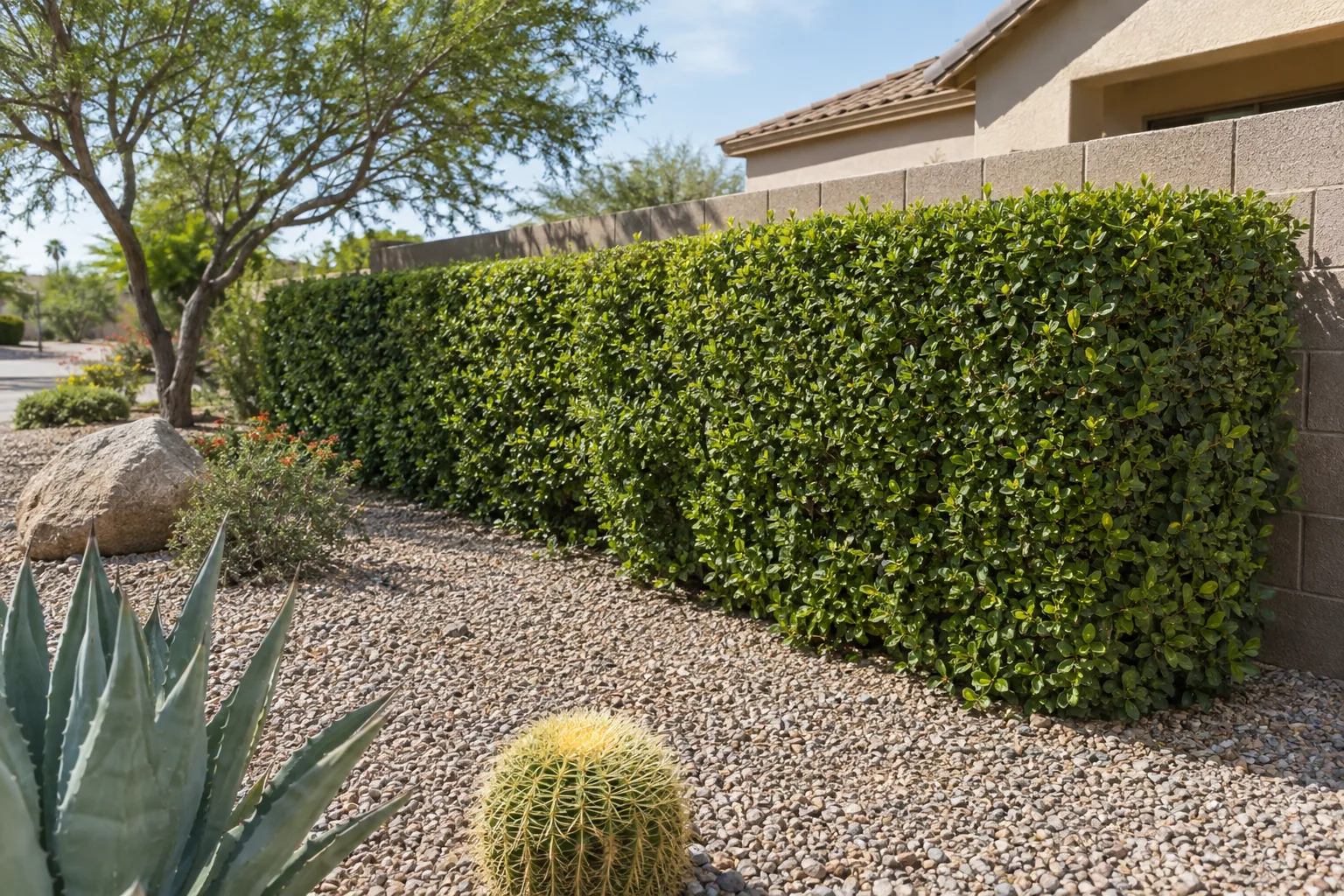
The best boxwood alternatives for Arizona are xylosma, dwarf pittosporum, dwarf myrtle, rosemary, Indian hawthorn, Texas sage, natal plum and feathery cassia. All eight handle alkaline soil and 110°F summers, and several shear into the clean lines boxwood is known for.
Key takeaways
- Boxwood struggles in the low desert because of summer highs above 110°F, soil pH that often runs 7.5 to 8.5, and caliche that limits its roots.
- Xylosma, dwarf pittosporum, dwarf myrtle and rosemary take regular shearing, while Texas sage, feathery cassia, Indian hawthorn and natal plum look best in loose, rounded shapes.
- Plant from late September through early November or from late February through March, and skip June through August.
- Set the root ball about 1 inch above the surrounding soil, because drainage matters more than rich soil here.
- Space shrubs by their mature width, not by the size of the container they came in.
Why does boxwood struggle in the Arizona low desert?
Boxwood (Buxus sempervirens and its relatives) comes from cool, humid woodlands in Europe and Asia. It wants moderate summers and moist, well-drained soil, and the East Valley offers almost the opposite.
Summer highs stay above 110°F for weeks, June humidity can fall under 10 percent, and our native soil is alkaline with caliche, a cement-like layer of calcium carbonate, somewhere below the surface. Boxwood shows tip burn first, then yellowing branches. Root rot can follow when monsoon rain pools above caliche. A few gardeners keep boxwood going in deep shade with constant watering, but the plant looks tired most of the year.
What should a good boxwood replacement offer?
A good replacement is evergreen, dense, tolerant of alkaline soil and able to live on deep, infrequent watering once its roots settle in. That settling period usually takes 6 to 12 months.
Heat tolerance matters as much as looks. Reflected heat off a block wall or driveway pushes the air around a shrub well past the official temperature, so plants rated only for moderate heat tend to scorch. Mature size is the other filter. Plenty of desert shrubs reach 8 feet or more, and a shrub that outgrows its spot means constant pruning. Pick for the height you want in five years.
Which shrubs replace boxwood best in Queen Creek?
Eight shrubs cover most hedge, border and foundation needs in the East Valley. These are varieties we commonly carry, though availability changes week to week and season to season.
Xylosma (Xylosma congestum)
Xylosma has small, glossy, light green leaves that take on a bronze cast in cool weather. Left alone it reaches 8 to 10 feet, but it shears well into a 4 to 6 foot hedge. It wants full sun and low to moderate water once established. The drawback is upkeep. Plan on shearing 2 to 3 times a year to hold hedge height.
Dwarf pittosporum (Pittosporum tobira ‘Wheeler’s Dwarf’)
This compact form makes a dense, dark green mound 2 to 3 feet tall, which suits low borders and foundation beds. It does best in full sun to part shade, with afternoon shade helping on hot west walls. Water is low to moderate after the first year. The drawback is that the full-size species of pittosporum reaches 8 to 10 feet, so check the plant tag for the dwarf form.
Dwarf myrtle (Myrtus communis ‘Compacta’)
Dwarf myrtle comes closest to boxwood in leaf size and sheared shape, with small, glossy, aromatic leaves and white spring flowers. Expect roughly 2 to 4 feet at maturity. Give it morning sun and afternoon shade or filtered light, with moderate water. The drawback is slow growth and scorched leaf edges when it sits against a hot western exposure.
Rosemary (Salvia rosmarinus)
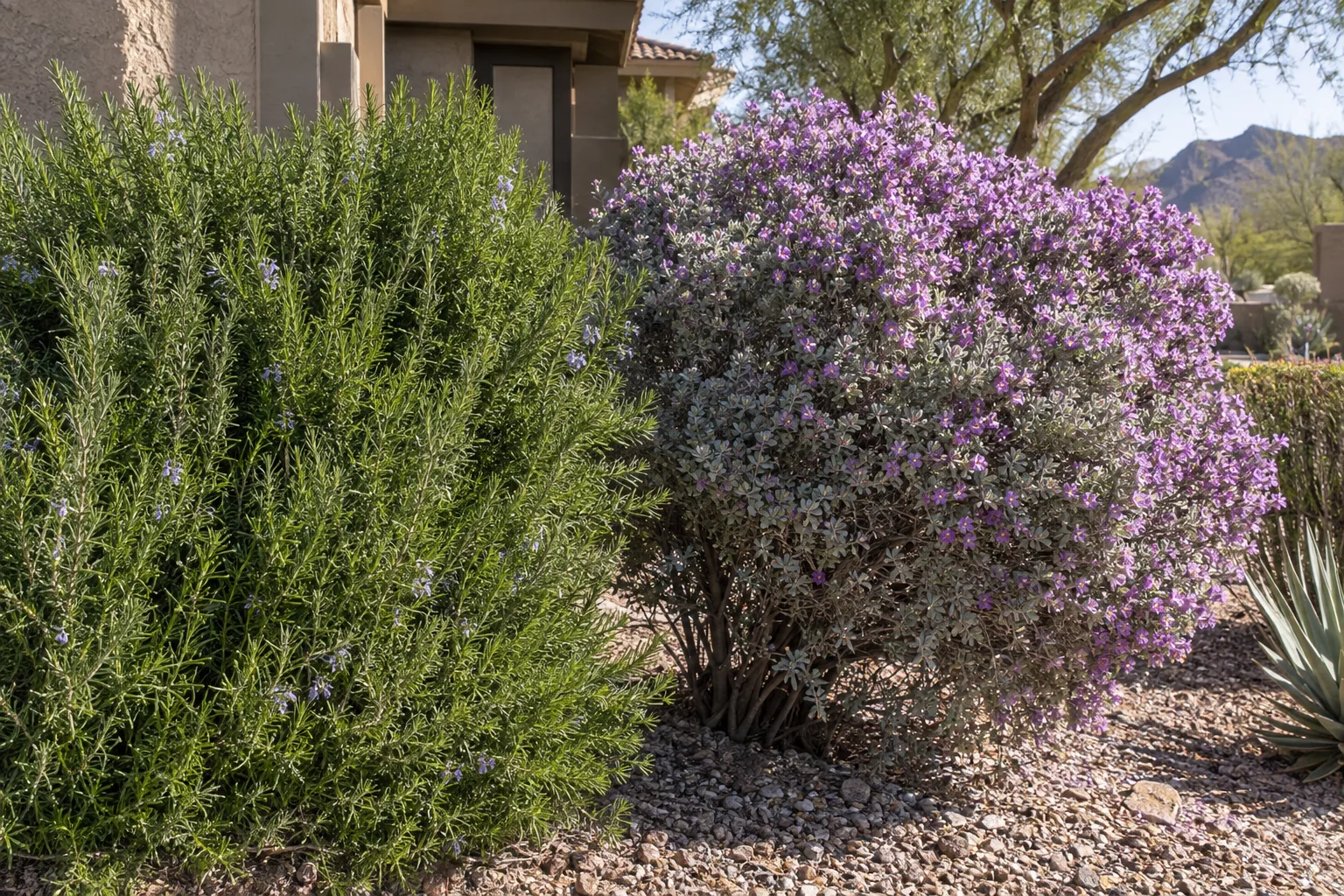
Upright types of rosemary shear into fragrant, tidy hedges 3 to 5 feet tall and ask for full sun and very little water once established. The needle-like foliage looks finer than boxwood, but it still reads as clean and structured. The drawback is drainage. Rosemary rots in soil that stays wet, especially during monsoon, so plant it high and never in a low spot.
Indian hawthorn (Rhaphiolepis indica)
Compact Indian hawthorn forms a rounded 3 to 4 foot mound of leathery dark leaves with pink or white blooms in late winter to spring. It rarely needs shearing and takes sun to part shade with low to moderate water. The drawback is that leaves can yellow in alkaline soil or with overwatering, so watch for that in your first year.
Texas sage (Leucophyllum frutescens)
Texas sage makes a silver-gray, rounded shrub 4 to 6 feet tall and wide, and it blooms purple after humid weather or rain. It takes full sun, reflected heat and very little water. Light shaping keeps it attractive. The drawback is that tight, formal shearing removes flower buds and can leave it stiff and gappy.
Natal plum (Carissa macrocarpa)
Dwarf natal plum varieties such as ‘Tuttlei’ stay near 2 to 3 feet, with glossy leaves and fragrant white flowers. They like full sun to light shade and moderate water. The thorns suit a barrier planting but are unkind near walkways. The drawback is frost sensitivity, so choose a spot out of cold air that settles in low areas.
Feathery cassia (Senna artemisioides)
Feathery cassia is a soft, gray-green shrub 4 to 6 feet tall with yellow flowers in late winter to spring. It needs full sun and very little water once established. It suits natural borders. The drawback is a loose, open habit that does not shear into crisp shapes, and heavy pruning into old wood can leave it sparse.

How do these eight shrubs compare?
This table sorts the shrubs by size, sun and shearing so you can match one to your space. Sizes are typical ranges and vary with variety and pruning.
| Shrub | Typical height | Sun | Water once established | Takes formal shearing |
|---|---|---|---|---|
| Xylosma | 4 to 10 feet | Full sun | Low to moderate | Yes |
| Dwarf pittosporum | 2 to 3 feet | Sun to part shade | Low to moderate | Yes |
| Dwarf myrtle | 2 to 4 feet | Morning sun, afternoon shade | Moderate | Yes |
| Rosemary (upright) | 3 to 5 feet | Full sun | Very low | Yes |
| Indian hawthorn | 3 to 4 feet | Sun to part shade | Low to moderate | Light only |
| Texas sage | 4 to 6 feet | Full sun | Very low | Light only |
| Natal plum (dwarf) | 2 to 3 feet | Full sun to light shade | Moderate | Light only |
| Feathery cassia | 4 to 6 feet | Full sun | Very low | No |
When and how should I plant a new hedge here?
The best windows are late September through early November and late February through March. Roots grow in cool soil, and the shrub has months to settle before the first summer. Planting between June and August stresses new roots in soil that can top 90°F.
Start by digging a test hole 18 to 24 inches deep, because caliche decides how well anything drains. A thin layer under about 4 inches can be broken with a breaker bar, and a thicker layer may call for a rented jackhammer or a raised bed. Dig the hole 2 to 3 times wider than the root ball and no deeper.
Set the top of the root ball about 1 inch above grade and backfill with mostly native soil. Heavy compost can create a soft pocket that holds water. Build a basin of soil 3 to 4 inches high around the plant, add a 2 to 3 inch layer of mulch, and keep it off the stems. Place drip emitters at the edge of the root ball, then move them outward as the plant grows.
Water new shrubs every few days for the first two weeks, then taper to about weekly through the first summer, adjusting for soil and weather. Established shrubs on this list usually need a deep soak every 1 to 3 weeks, with the longer gaps in winter. Space plants by mature width. A young hedge looks sparse for a season, but crowded shrubs compete for water and hold moisture in monsoon humidity.

Should I shear a formal hedge or leave a natural shape?
Shear xylosma, dwarf pittosporum, dwarf myrtle and rosemary for a formal edge, and leave Texas sage, feathery cassia, Indian hawthorn and natal plum in their natural rounded forms. Matching the plant to the shape keeps maintenance low.
Formal hedges suit modern architecture, entry courtyards and crisp property lines. Trim lightly and often, and keep the base slightly wider than the top so lower leaves get light. Natural forms fit a desert-style yard and need only a trim once or twice a year. Prune most of these shrubs in late winter or early spring, and avoid heavy cuts in May through August, when every leaf is helping the plant handle heat.
If you need tall screening above 8 feet, take a look at our evergreen trees, since many shrubs here would need constant pruning to stay that large and narrow.
What should I do about frost, monsoon and caliche?
Frost, monsoon rain and caliche each affect different shrubs on this list. Most handle our typical winter lows near 28°F to 32°F, with natal plum the most likely to show tip damage. Plant it on a protected side of the house.
Monsoon season, roughly July through September, is when drainage problems appear. Rosemary and hawthorn are the most likely to suffer in standing water, so do not add fertilizer then and cut back drip schedules after storms. For a seasonal view of watering and feeding, our gardening calendars lay out the year month by month.
Frequently asked questions
Can these shrubs take full western sun?
Texas sage, feathery cassia, rosemary and xylosma handle full western sun and reflected heat once established. Dwarf myrtle and dwarf pittosporum do better with afternoon shade. Whatever you choose, plant in the cooler months so roots have a full season to spread before the first summer hits a west wall.
How long until these shrubs fill in as a hedge?
Fast growers such as xylosma can fill a 4 to 6 foot run in about 2 to 3 growing seasons with steady irrigation. Slower shrubs, including dwarf myrtle and Indian hawthorn, can take 3 to 5 years. Fall planting gives the quickest start because roots grow through winter before summer heat arrives.
Can I grow these shrubs in pots?
Rosemary, dwarf pittosporum, dwarf natal plum and dwarf myrtle can live in large containers. Choose a pot with drainage holes and room for roots, since dark, small pots heat up fast in July. Containers dry out sooner than ground beds, so expect to water more often. Browse our pottery and planters for sizes.
Does any of this list need as much water as boxwood?
No, established plants on this list generally need less water than boxwood does in our summers. Dwarf myrtle and natal plum sit at the higher end, with moderate needs. Rosemary, Texas sage and feathery cassia need the least. Every shrub needs regular deep watering during its first year while roots spread.
Should I pull out my boxwood all at once?
Replace it in the cooler planting windows, not in midsummer. If the boxwood is still partly green, you can leave it until fall or late winter and then remove the stump and roots. Check the planting hole for caliche before the new shrub goes in, since old roots can hide drainage problems.
Is a boxwood alternative right for your yard?
For most East Valley yards, yes. Xylosma, rosemary and dwarf pittosporum are the closest match for a formal hedge, and Texas sage or Indian hawthorn suit looser beds. Skip the swap if you love sheared geometric topiary in deep shade, because nothing here copies boxwood exactly. If you are weighing the options, come by our plant department and the Queen Creek nursery team will help you match a shrub to your wall, sun and soil.
