Bolting lettuce in Arizona cannot be reversed, so harvest the usable leaves right away, save seed from one or two healthy plants, pull the rest, and prepare the bed for what follows. Spring heat in the low desert typically ends the lettuce season in March or April.
Key takeaways
- Once the center stalk starts to stretch, you usually have about 5 to 10 days of usable leaves before bitterness takes over.
- Cut whole heads at the base as soon as the stalk lengthens, then refrigerate them in a damp paper towel.
- Seed from open-pollinated lettuce comes true next fall. Seed from F1 hybrids does not.
- Pull spent plants and cover empty beds with 3 to 4 inches of mulch if soil is already hot in April.
- Planting transplants in late September or October gives you the longest harvest before spring heat arrives.
Why does lettuce bolt so fast in the Arizona low desert?
Lettuce bolts when days lengthen and temperatures climb, and both happen quickly here. By late March, daytime highs are often in the 80s, and April can bring the 90s. Cool-season greens are working against that clock all winter.
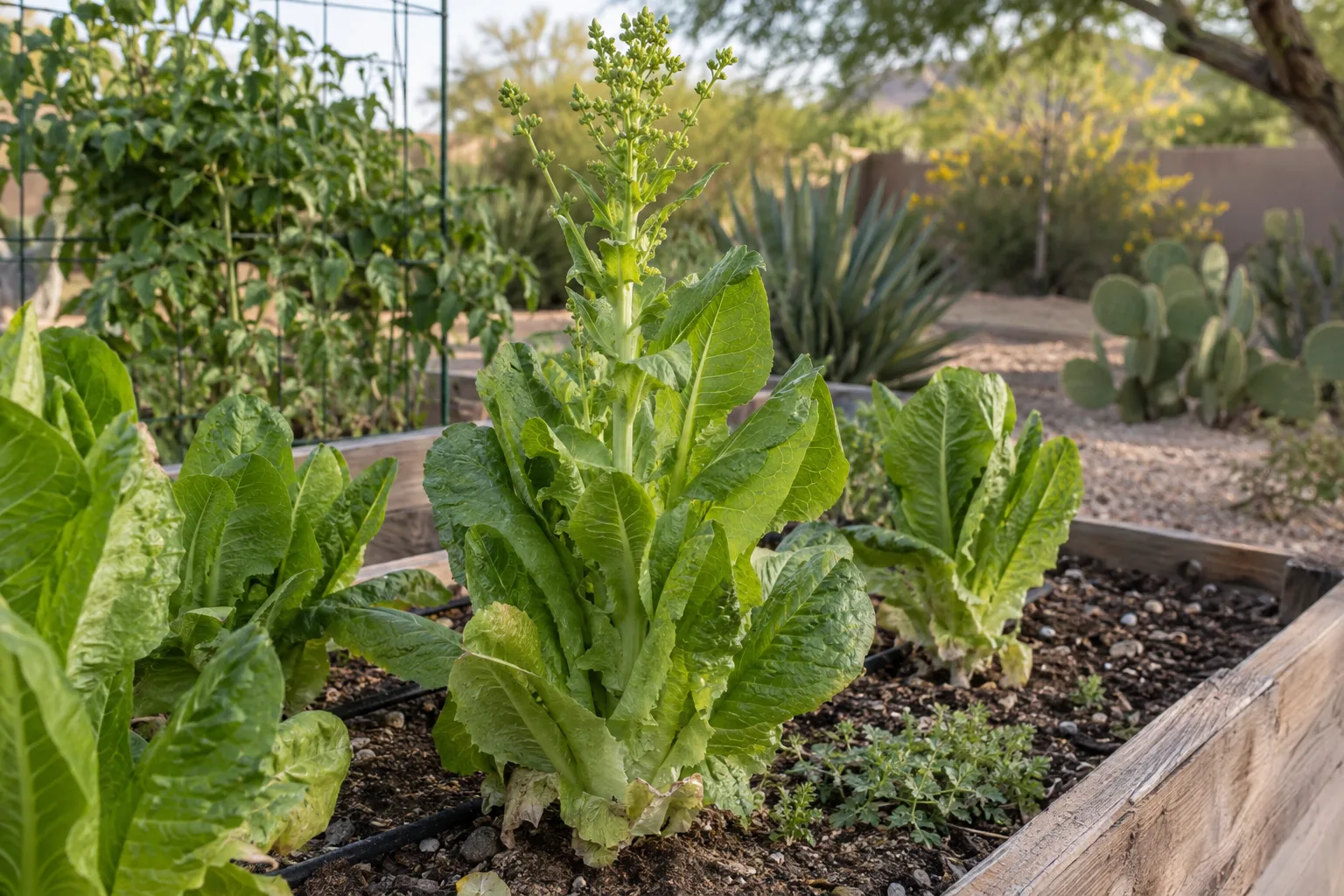
Bolting is the plant switching from leaf growth to flowering and seed. The central stalk stretches, new leaves turn narrow and pointed, and the plant makes more of the milky sap that tastes bitter. Water and shade cloth can slow the process, but neither reverses it once the stalk is up.
Coastal gardens warm gradually over several months. In Queen Creek, a January frost can be followed by 100°F weather within a few months, which compresses the whole season.
How can I tell my lettuce is starting to bolt?
The first sign is a center that rises instead of spreading. Check your beds every day or two in March, because the change can happen in a single week.
- Taller center: the middle of the plant lengthens, sometimes an inch or more in a night.
- Narrow new leaves: leaves near the top are smaller and arrow-shaped.
- Bitter taste: a leaf from the center tastes sharper than one from the outer ring.
- Loose heads: romaine and butterhead heads that were tight begin to open.
- Yellow buds: small daisy-like buds mean seed is on the way.
If you see only the first two or three signs, you still have a short harvest window. Buds mean you are mostly in seed-saving territory.
How do I harvest bolting lettuce before it turns bitter?
Harvest as much as you can the same day you notice the stalk. Outer and lower leaves are milder than the young leaves near the stalk tip, so strip those first and discard the bitter tops.
Soaking leaves in cold water for 20 to 30 minutes takes some of the edge off. Mixing them with sweeter greens or a tangy dressing helps further. For head types, cut the whole head at the base, wrap it in a damp paper towel and refrigerate it. Cold slows the bitterness, though it does not stop it.
Don’t hold back on imperfect plants. A half salad of slightly sharp leaves beats watching the whole bed go to seed in 105°F heat.
Can I save seed from bolted lettuce?
Yes, if the lettuce is open-pollinated or an heirloom. Seed saved from F1 hybrids will not grow true to the parent, so check the packet for an F1 label before you invest the effort.
Choose one or two of your healthiest plants and tag them with a stake so nobody pulls them by accident. Let the flower heads form and dry until they look like tiny fluffy tufts. Cut the seed heads into a paper bag and let them dry another week in a cool, shaded spot. Shake the bag, then blow gently to separate the light chaff from the heavier seed.
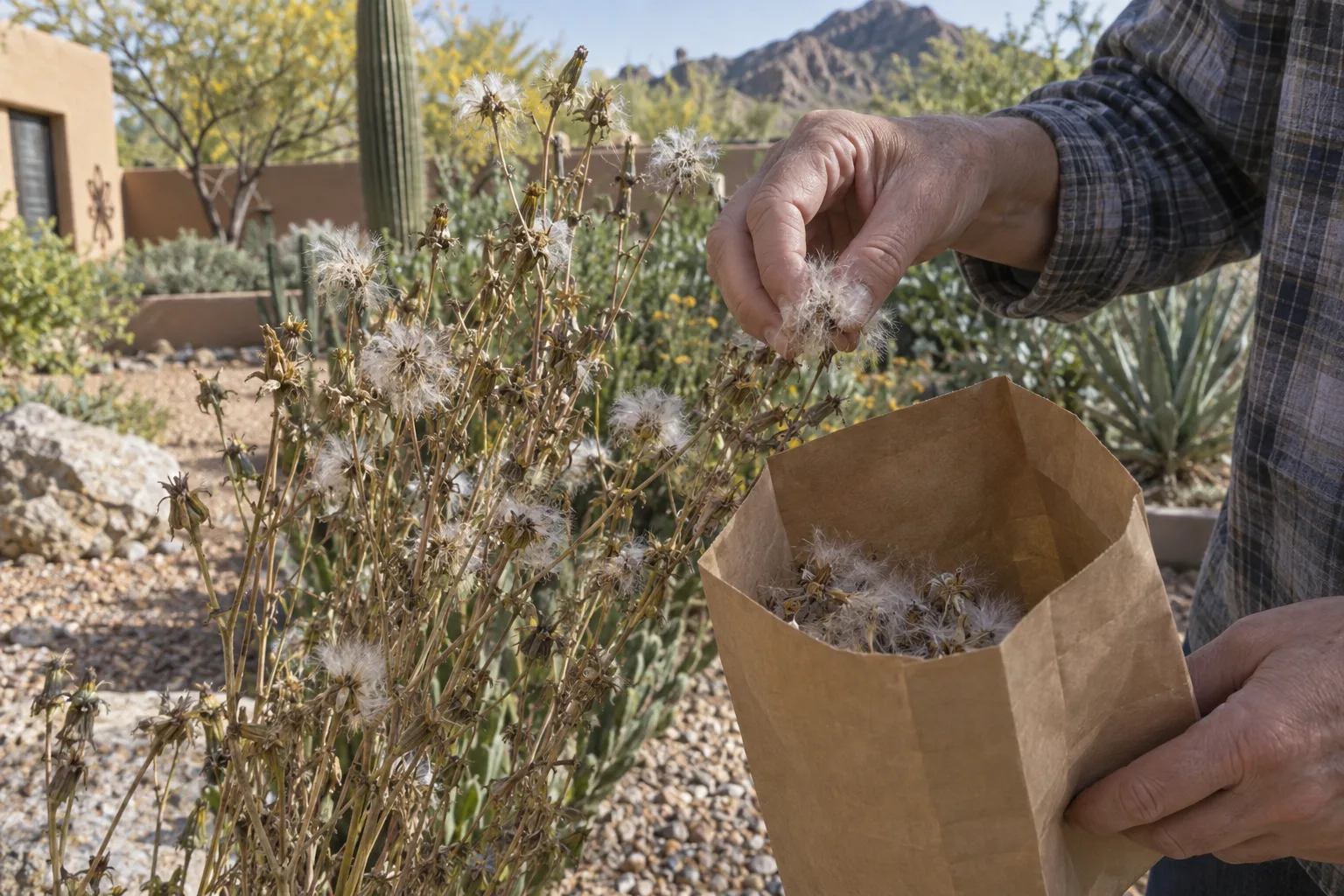
Store seed in a labeled paper envelope inside an airtight container in the refrigerator. Heat shortens seed life, and cold storage keeps lettuce seed viable for roughly three to four years.
What are the steps for clearing a bolted lettuce bed?
Work through the bed in order, starting with harvest and ending with a decision about what to plant next.
- Walk the bed and sort plants into early bolting (stalk just starting) and fully flowering.
- Harvest outer leaves from every plant that still looks fresh, and cut any head that has not yet opened up.
- Pick your seed plants and tag them.
- Pull the remaining plants by the roots. Spent plants take up space and can harbor aphids and whiteflies.
- Chop the plant material and add it to compost, or bury it in a trench in the bed.
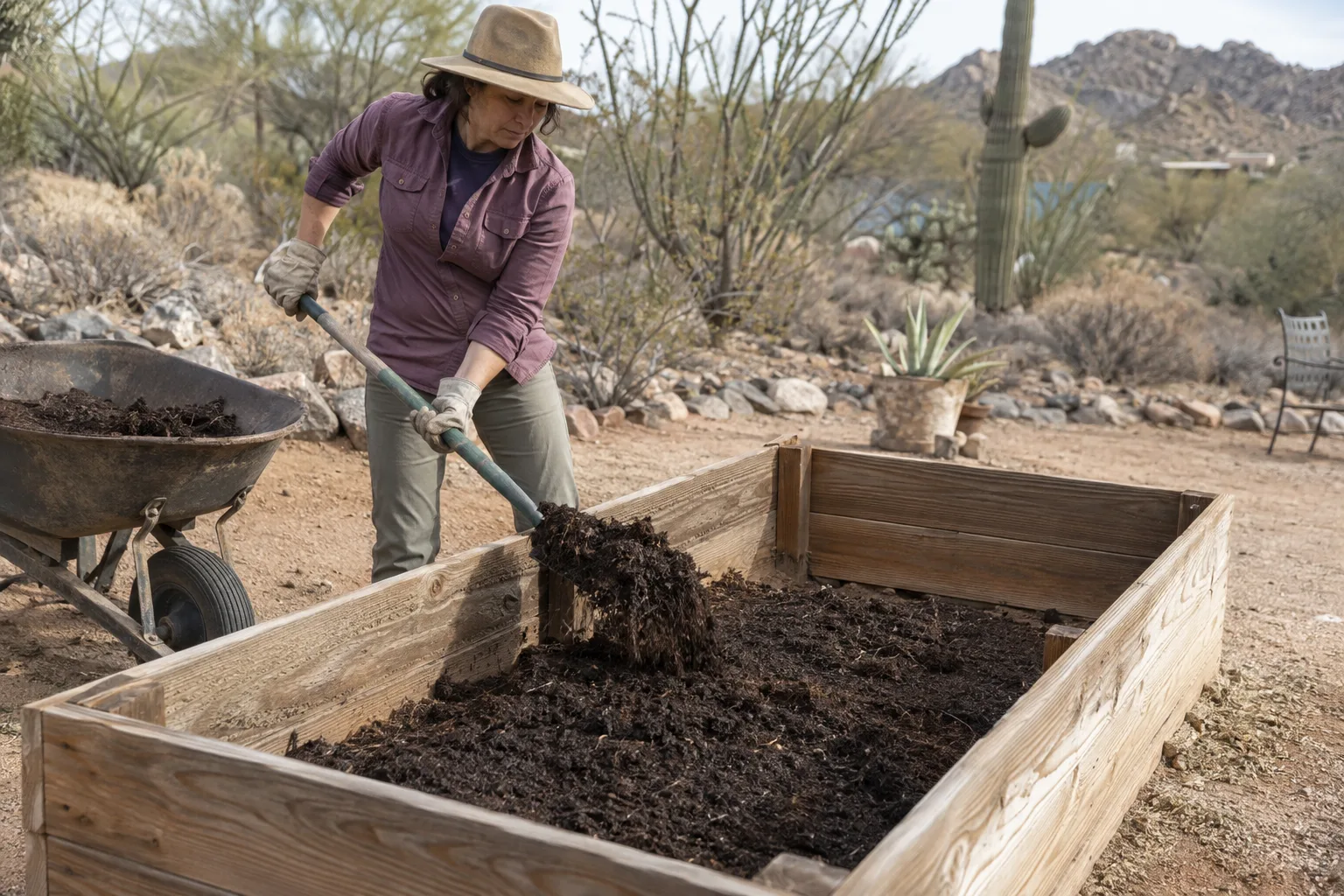
- Work in 2 to 3 inches of compost, forking it 6 to 8 inches deep.
- Choose the next crop, or mulch the bed if it is too hot to plant.
What should I do with the soil after lettuce?
Add compost first. A winter of leafy growth draws down nutrients, and 2 to 3 inches of compost forked in 6 to 8 inches deep restores organic matter before summer planting begins.
Queen Creek soil is alkaline and often sits on caliche, a cemented mineral layer that blocks drainage and roots. If water pools in the bed after irrigation, caliche may be within the top 18 inches or so. Breaking it up before planting helps water move down. Our hard irrigation water also adds salts over time, so deep, occasional watering helps flush them below the root zone.
Some gardeners add elemental sulfur to lower pH. Results are slow and depend on your soil, so test first. Our herbs, vegetables and berries department is a good place to ask about amendments.
What can I plant after lettuce in the low desert?
Plant heat-lovers once the soil has warmed. Timing matters more than the crop list, because transplants set into 90°F surface soil in late April often stall.
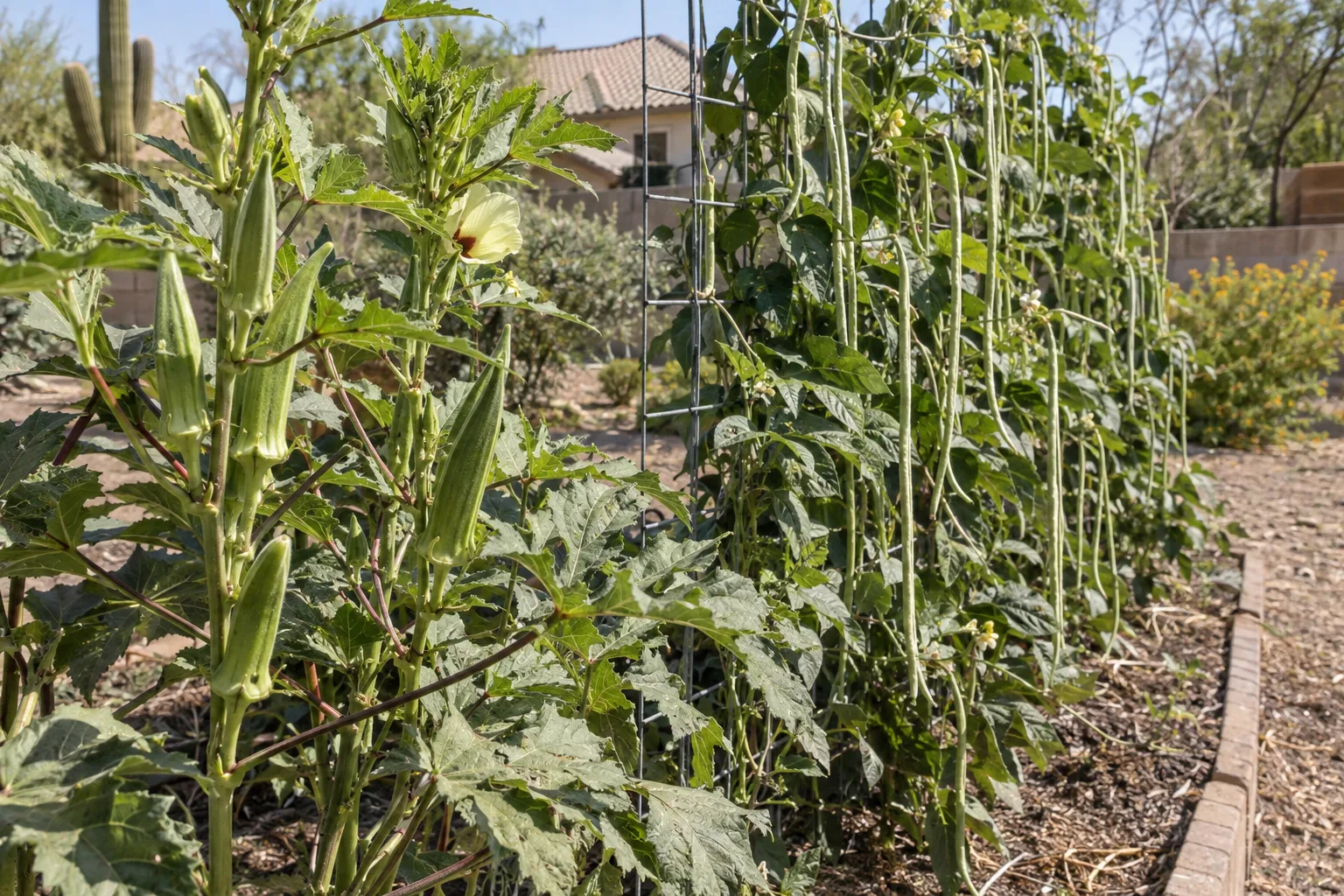
Abelmoschus esculentus (okra)
Okra is a seed-sown summer vegetable that keeps producing through July and August heat. Sow in late March or April. It slows when monsoon humidity arrives.
Vigna unguiculata subsp. sesquipedalis (yard-long beans)
These climbing beans take triple-digit heat well. Sow seed in April. They need a trellis, which is the main drawback in a small bed.
Cucumis melo (Armenian cucumber)
This long, ribbed fruit is a melon that eats like a cucumber and tolerates extreme heat. Transplant from late March through April and keep watering consistent.
Ipomoea batatas (sweet potato)
Plant slips from April into May. The vines shade the soil, but they spread widely, so give them room.
Ocimum basilicum (basil)
Basil wants warm nights and sulks in cool soil, so wait until nights stay above about 60°F. It wilts fast in July afternoons.
Basella alba (Malabar spinach)
A climbing vine with glossy leaves that grows faster as temperatures rise. It needs a trellis and steady water.
These are varieties we commonly carry, but availability changes week to week and season to season. The UA Cooperative Extension vegetable planting calendar for Maricopa County lists planting windows for each crop.
How can I delay bolting next season?
Plant earlier, choose slow-bolting varieties and add shade. Start transplants in late September or October, once nights stay below about 75°F, so plants reach harvest size by January or February and give you a full season before March heat.
Look for varieties labeled slow to bolt or heat tolerant. They buy a couple of extra weeks but do not stop bolting. A 30% shade cloth over the bed from late February can lower temperatures a few degrees and extend harvest into April in a mild year.
Our gardening calendars show planting windows by month for the low desert.
Frequently asked questions
Can I eat lettuce after it has bolted?
Yes, if bolting has just begun. Outer leaves are milder, and a cold-water soak softens bitterness. Once the plant is fully flowering, leaves turn tough and sharp. Those can go into cooked dishes, where bitterness is less noticeable, or into the compost pile.
Should I pull every bolting plant right away?
No, leave one or two of your best open-pollinated plants for seed. Pull the rest after harvesting. Spent plants give you no food, and they can attract aphids and whiteflies while taking up space you need for summer crops.
How do I know whether my lettuce is hybrid or open-pollinated?
Check the seed packet for an F1 label, which marks a hybrid. Open-pollinated and heirloom packets usually say so. If the packet is gone, search the variety name. Seed from hybrids produces unpredictable offspring, so skip saving it.
Is it too hot to transplant in April?
Often yes. Soil surface temperatures can approach 90°F in full sun, and many transplants stall. Mulching the empty bed and waiting for cooler summer conditions often works better. Seeds of okra and beans handle that heat better than transplants of tender crops.
Can I put bolted lettuce in the compost?
Yes. Lettuce breaks down fast, and bitterness does not harm compost. Chop it first so it decomposes quickly. Leave out any plants carrying visible pests or disease, and keep the pile damp in dry spring weather.
Is saving bolted lettuce worth the effort?
For most gardeners, yes. Harvesting what is left costs nothing, and pulling the bed starts your summer prep early. Seed saving pays off only if you grow open-pollinated types and have a cool spot to store seed. If you grow hybrids, skip the seed and focus on the soil. Stop bothering with shade cloth if your lettuce is already flowering, because it cannot undo bolting. Come see us at the nursery in Queen Creek and we can help you plan your next planting.