
The best greens to plant in Arizona in February are arugula, mustard, loose-leaf lettuce, spinach, chard and kale. Sow or transplant them early in the month, because highs climb toward 90°F by April and cool-season greens turn bitter once the heat arrives.
Key takeaways
- Plant arugula, mustard greens and loose-leaf lettuce first, since they can be ready to harvest in roughly 30 to 60 days.
- Work 2 to 3 inches of compost into the top 6 to 8 inches of soil, or use a raised bed at least 12 inches deep over caliche.
- Water in-ground beds about every 2 to 3 days and containers daily, checking that the soil is damp 2 inches down.
- Cover seedlings with frost cloth on any night forecast to fall below 30°F.
- Add 30% to 40% shade cloth in March to stretch the harvest by 2 to 4 weeks.
Why does February matter for planting greens in Arizona?
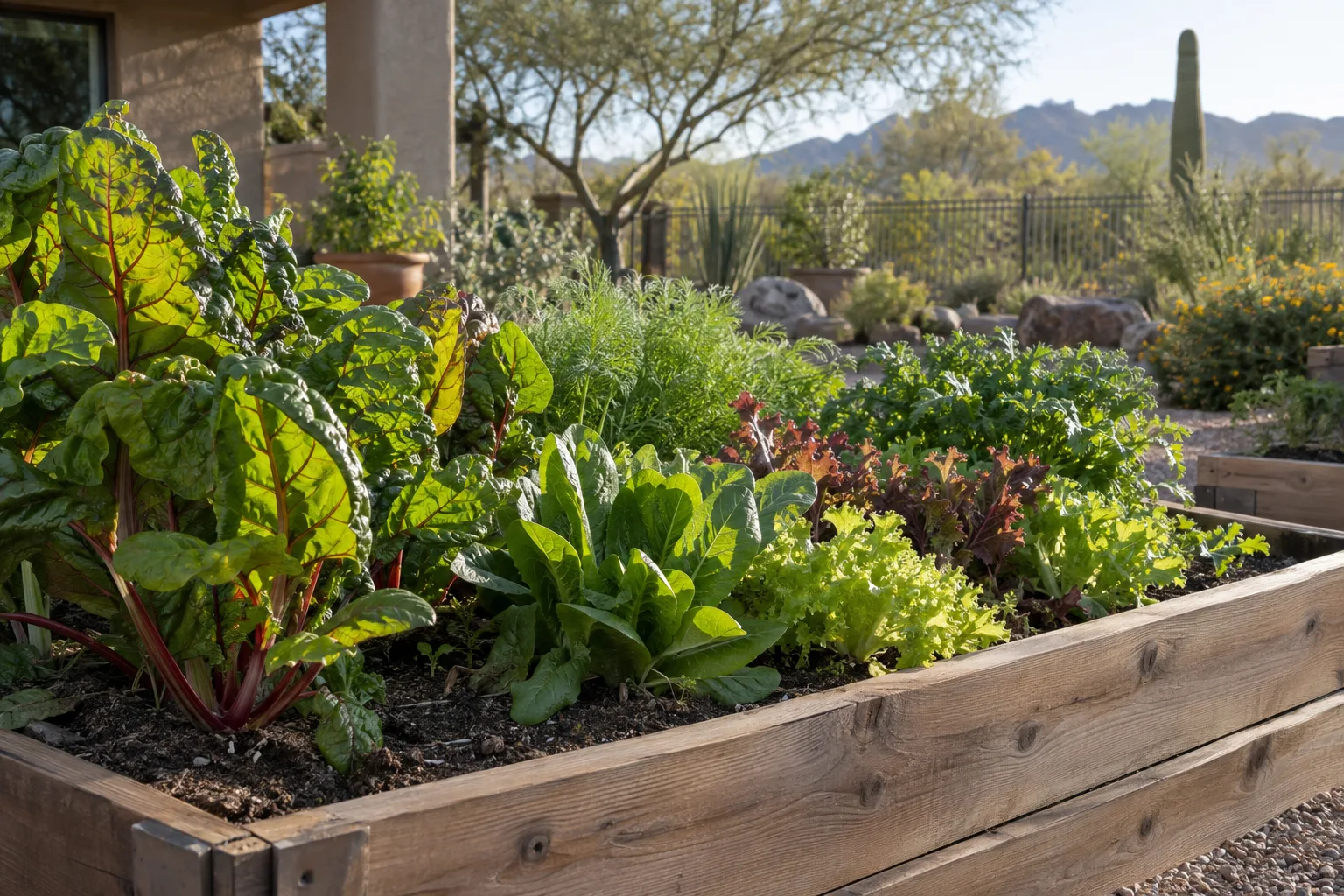
February is one of the last months when cool-season greens still have enough cool weather to finish a harvest in the low desert. Daytime highs in Queen Creek typically sit in the 60s to low 70s, and nights can still dip near freezing. Greens planted in early February have roughly 6 to 10 weeks before heat pushes them to bolt, which is when a plant sends up a flower stalk and the leaves turn bitter.
By April highs approach 90°F, and by May most of these crops are finished. Early February beats late February. A fast crop planted on time gives you a full harvest, while a slow one planted late may give only a few weeks of picking. The University of Arizona Cooperative Extension publishes a vegetable planting calendar for Maricopa County with sowing windows for each crop, and it is worth checking against the advice here.
Which greens should I plant in Arizona in February?
Arugula, mustard greens and loose-leaf lettuce give the fastest return, while spinach, chard and kale produce longer if they get a head start from transplants. Our herbs, vegetables and berries department is the place to look for starter plants in late winter. These are the kinds of greens we commonly carry, and availability changes week to week and season to season.
Arugula (Eruca vesicaria)
Arugula is the quickest, often ready to cut 30 to 40 days after sowing. Scatter seed thinly, cover it with about 1/4 inch of soil and keep the surface damp until it sprouts. Cut the outer leaves and the plant keeps producing. The drawback is that it bolts fast once afternoons pass the low 80s.
Mustard greens (Brassica juncea)
Mustard greens can be ready in 30 to 45 days and shrug off a light frost. Sow seed directly in the bed and thin to 6 to 8 inches apart. The leaves get hotter in flavor as the weather warms, so pick them young for salads and save larger leaves for cooking.
Loose-leaf lettuce (Lactuca sativa)
Loose-leaf lettuce is ready in about 40 to 60 days, and you harvest the outer leaves while the center keeps growing. Transplants save several weeks over seed. Heading types such as iceberg need more cool weather than a February planting allows, so skip them.
Spinach (Spinacia oleracea)
Spinach germinates well in cool soil and is ready in roughly 40 to 55 days. Sow seed about 1/2 inch deep and thin to 4 to 6 inches apart. It bolts as days lengthen, so choose varieties labeled slow-bolting or bolt-resistant and expect a shorter harvest than a fall planting gives.
Swiss chard (Beta vulgaris subsp. cicla)
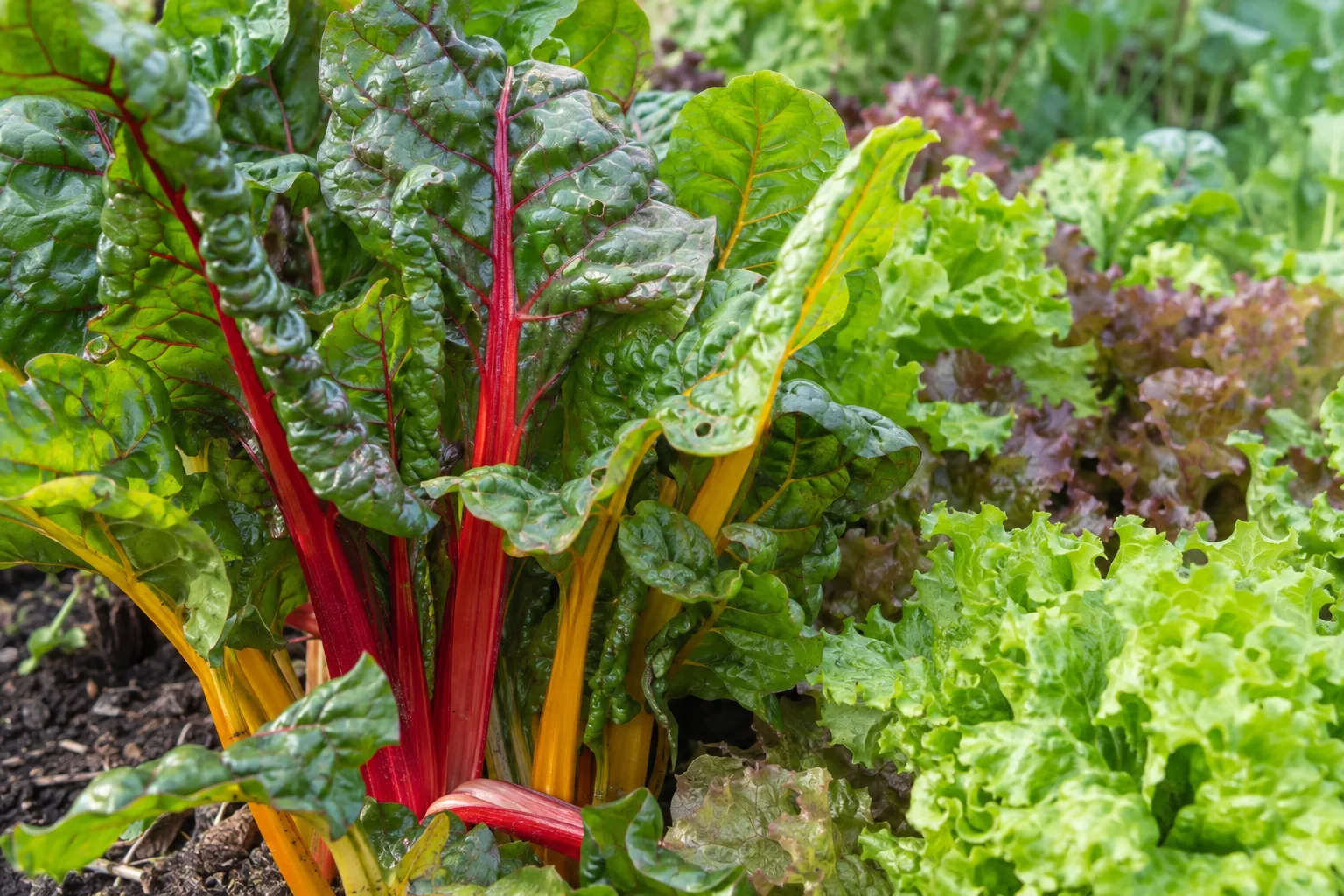
Chard handles cold nights and some warmth, and it often keeps producing after lettuce and spinach have given up. Give each plant 8 to 12 inches of room. Harvest outer stalks and leaves, and keep the growing center intact. Its drawback is size, since mature plants crowd a small container.
Kale (Brassica oleracea)
Kale is slow from seed, so a February planting works best with transplants spaced 12 to 18 inches apart. Cold nights make the leaves taste sweeter. Aphids like kale, so check the undersides of leaves every few days.
| Green | Seed or transplant | Days to harvest | Spacing |
|---|---|---|---|
| Arugula | Seed | 30 to 40 | 4 to 6 inches |
| Mustard greens | Seed | 30 to 45 | 6 to 8 inches |
| Loose-leaf lettuce | Transplant or seed | 40 to 60 | 6 to 8 inches |
| Spinach | Seed | 40 to 55 | 4 to 6 inches |
| Swiss chard | Transplant or seed | 50 to 60 | 8 to 12 inches |
| Kale | Transplant | 55 to 75 | 12 to 18 inches |
How should I prepare Queen Creek soil for greens?
Mix compost into the top 6 to 8 inches of the bed before planting, because our native soil is alkaline, low in organic matter and often sits on caliche. Native soil commonly tests around pH 7.5 to 8.5, while leafy greens do best closer to 6.0 to 7.0. Compost improves drainage and nutrient supply right away, and sulfur works too slowly to matter in one cool season.
Use 2 to 3 inches of compost. If you hit caliche within about 12 inches, build a raised bed at least 12 inches deep and fill it with a quality garden mix instead of fighting the hardpan. Hard irrigation water leaves salts behind, so water deeply and less often rather than giving shallow daily sips. About 3 weeks after planting, side-dress with a balanced fertilizer or fish emulsion, following the label rate.
How do I plant and water greens in February?
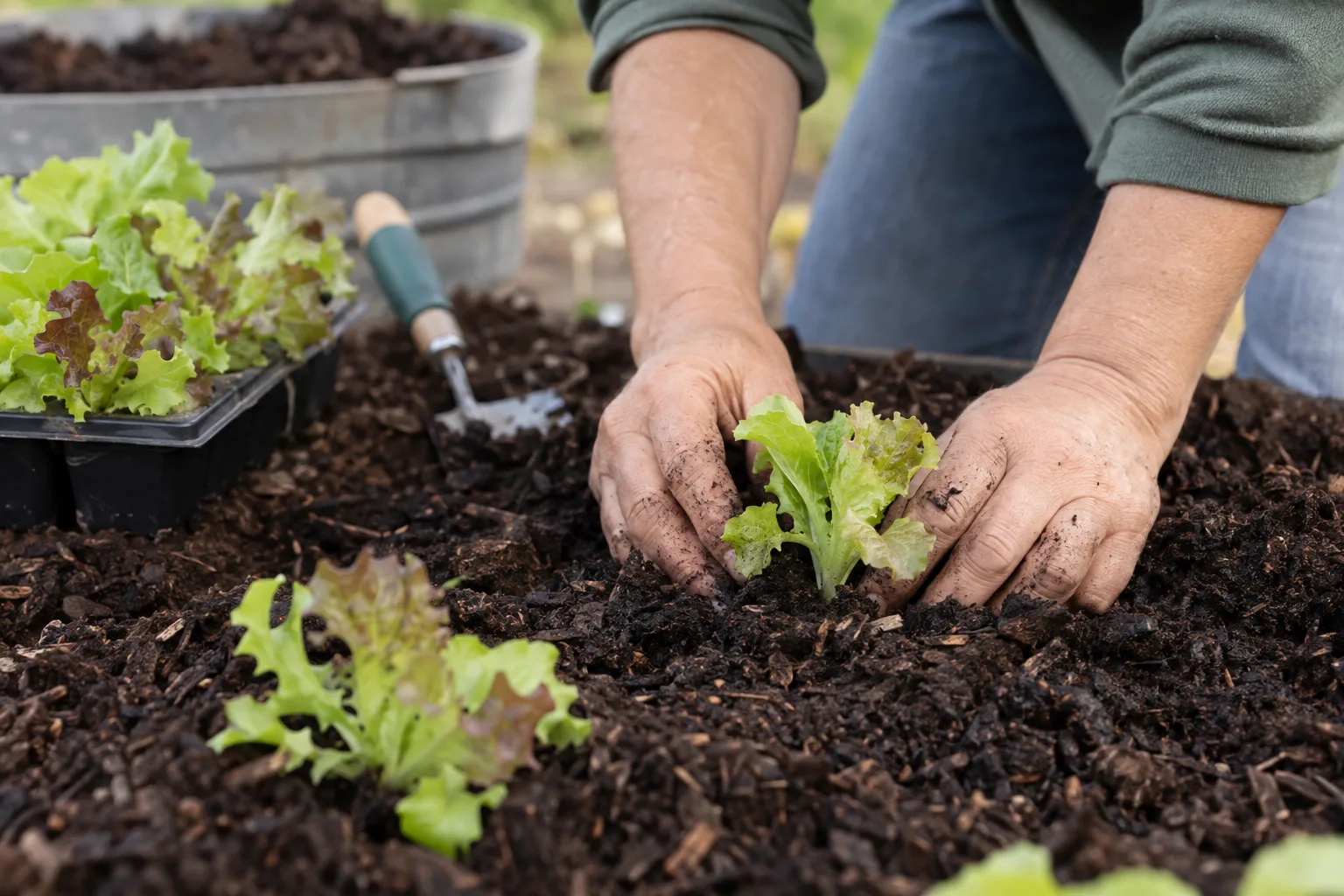
Plant seed or transplants in a sunny bed, water gently, mulch lightly and thin as seedlings grow. Winter greens need about 4 to 6 hours of direct sun, and a spot with morning sun and some afternoon shade holds up longest as March warms up.
- Loosen the soil and rake the surface smooth after mixing in compost.
- Sow small seed, such as arugula, 1/4 inch deep. Sow spinach and mustard about 1/2 inch deep.
- Set transplants at the same depth they grew in the nursery pot, and keep the crown above the soil line.
- Water with a gentle spray so seed stays put, and keep the surface damp until sprouts appear, usually within 5 to 10 days.
- Spread about 1 inch of straw or shredded bark mulch around seedlings, not on top of them.
- Thin seedlings to the spacing in the table once they have two true leaves.
- Start picking outer leaves when they are 3 to 4 inches long.
Once plants are established, water in-ground beds about every 2 to 3 days. Push a finger 2 inches into the soil first, and water only if it feels dry. Drip lines or soaker hoses keep leaves dry and cut down on fungal problems, and cool soggy soil can rot roots, so back off after a rainy spell.
How do I keep greens producing into April?
Harvest often, shade the bed from afternoon sun and pull plants that start to bolt. Together these steps can add 2 to 4 weeks to the season.
Shade cloth rated at 30% to 40% shade lowers the temperature around plants by a few degrees. Put it on a simple hoop frame or on the south and west sides of the bed once highs reach the 80s in March. Cutting outer leaves every few days keeps plants busy making new foliage.
When the center of a lettuce or spinach plant starts to stretch upward, harvest the whole plant that day. Flavor drops quickly after bolting begins. Pull the plant, compost it and use the space for something else.
Can I grow February greens in containers?
Yes, containers work well for lettuce, arugula, mustard and spinach, and they let you move plants out of afternoon sun as March warms up. Choose pots at least 8 inches deep for those greens and 12 inches or deeper for chard and kale. Browse our pottery and planters for pots with drainage holes.
Fill them with a good potting mix, never native soil, which packs down and drains poorly. Containers dry out faster than beds, so check them daily and water when the top inch feels dry. Pots on a patio can run a few degrees warmer than the ground, particularly against a block wall, so give them morning sun and afternoon shade.

What should I leave alone in February?
Leave heading lettuce, heavy nitrogen feeding and extra watering for another season. Each one wastes effort in a short cool window.
Skip iceberg and other heading lettuces, which need more cool days than February offers. Do not overfeed, since too much nitrogen as weather warms gives soft leafy growth that bolts and attracts aphids. Do not water on a schedule without checking the soil, because cool, wet roots rot. And do not tear out frost-nipped leaves in a panic, since most greens recover from light frost within days.
When the greens wind down, our gardening calendars show what to plant as the soil warms. Our classes and events page lists workshops if you want hands-on help with a vegetable bed.
Frequently asked questions
Will frost hurt greens planted in February?
Light frost rarely damages established greens, but young seedlings are more tender. Spinach, kale, mustard and arugula handle temperatures around 28°F to 32°F. Cover new plantings with frost cloth or a sheet on any night forecast to fall below 30°F, and remove the cover by mid-morning so plants do not overheat.
Can greens grow in partial shade?
Greens grow well with 4 to 6 hours of direct winter sun, and a shadier spot also works. Arugula, spinach and lettuce tolerate as little as 3 to 4 hours, though growth is slower. Afternoon shade becomes an advantage in March, because it delays bolting when temperatures climb into the 80s.
Is it too late to plant greens in March?
Early March still works for the fastest crops, but the harvest window is short. Arugula, mustard and baby lettuce can be ready in 30 to 45 days, though they may bolt as highs reach the 80s. Use shade cloth and pick young leaves. After that, switch to warm-season crops.
Why do my greens taste bitter?
Bitterness comes from heat, long days and bolting, and sometimes from dry soil. Plants stressed by warm afternoons or irregular watering make harsher-tasting leaves. Pick leaves young, keep the soil evenly damp, shade plants in March and pull any plant with an elongating center stalk.
What pests bother winter greens?
Aphids are the most common pest on winter greens, and they cluster on the undersides of leaves. Knock them off with a firm spray of water every few days. Caterpillars on kale and mustard can be picked off by hand. If a problem keeps coming back, bring a leaf to us and we can suggest options.
Are February greens worth planting in a small yard?
Yes, if you want fast salad and cooking greens from a bed or a few pots. A 4 by 4 foot bed or three containers can feed a household for several weeks. Skip them if you cannot water every few days or have no spot with at least 4 hours of winter sun. Come see what greens we have in Queen Creek this month.