
The easiest fruit trees for beginners in Arizona are fig, pomegranate, citrus, jujube, loquat, and low-chill peach, plum, and guava. They tolerate summer highs above 110°F and alkaline soil, and each one needs only basic care once its roots are established.
Key takeaways
- Plant bare-ground fruit trees from October through November or February through March, so roots settle in before the first 110°F summer.
- Peaches and plums must be low-chill varieties, usually rated at roughly 150 to 300 chill hours, or they will bloom poorly here.
- Dig the hole 2 to 3 times as wide as the root ball and no deeper, and keep mulch 4 to 6 inches away from the trunk.
- Water deeply and less often rather than a little every day, and cut back in winter when trees are semi-dormant.
- Yellow leaves with green veins on citrus point to iron deficiency, which is common in alkaline East Valley soil.
Which fruit trees are easiest to grow in Arizona?
Fig, pomegranate, citrus, and jujube are the most forgiving. Loquat, guava, and low-chill peach and plum take a little more attention. You can browse the fruit trees at Desert Horizon Nursery to see what is growing in the yard. Many of these are varieties we commonly carry, though availability changes week to week and season to season.
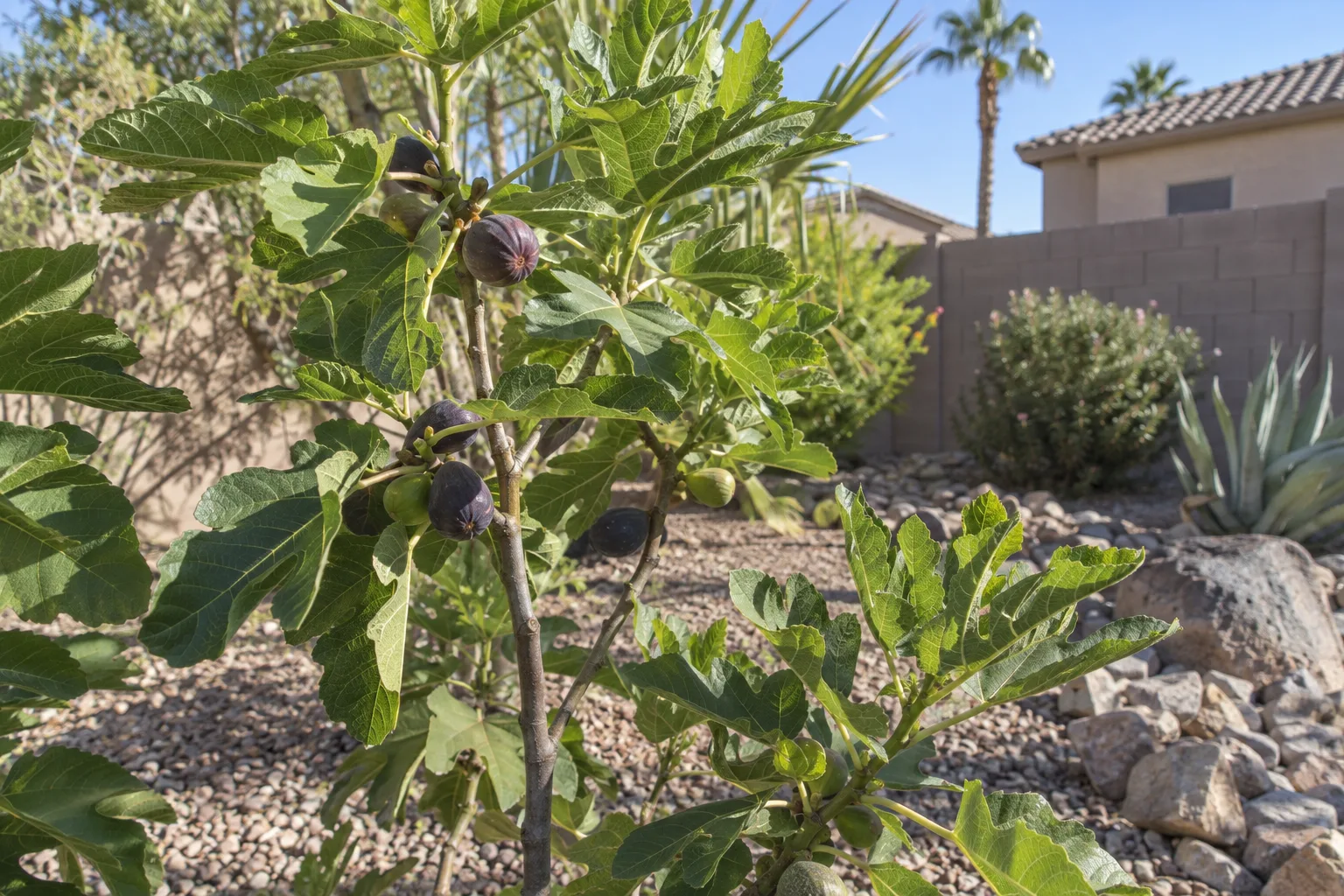
Fig (Ficus carica)
Mature size is 10 to 20 feet tall and as wide, in full sun. Once established, a fig handles deep watering every one to two weeks in cool weather and more often in summer. Figs tolerate alkaline soil well and often give a small early crop plus a main crop later. The drawback is size: a fig sprawls, and birds go after ripe fruit quickly.
Pomegranate (Punica granatum)
Expect 8 to 15 feet in full sun. Pomegranates like heat, accept infrequent deep watering, and bloom in spring with orange-red flowers before fruit ripens in fall. Wide swings between dry soil and a heavy soak can split the fruit. Plan on pulling suckers from the base each year.
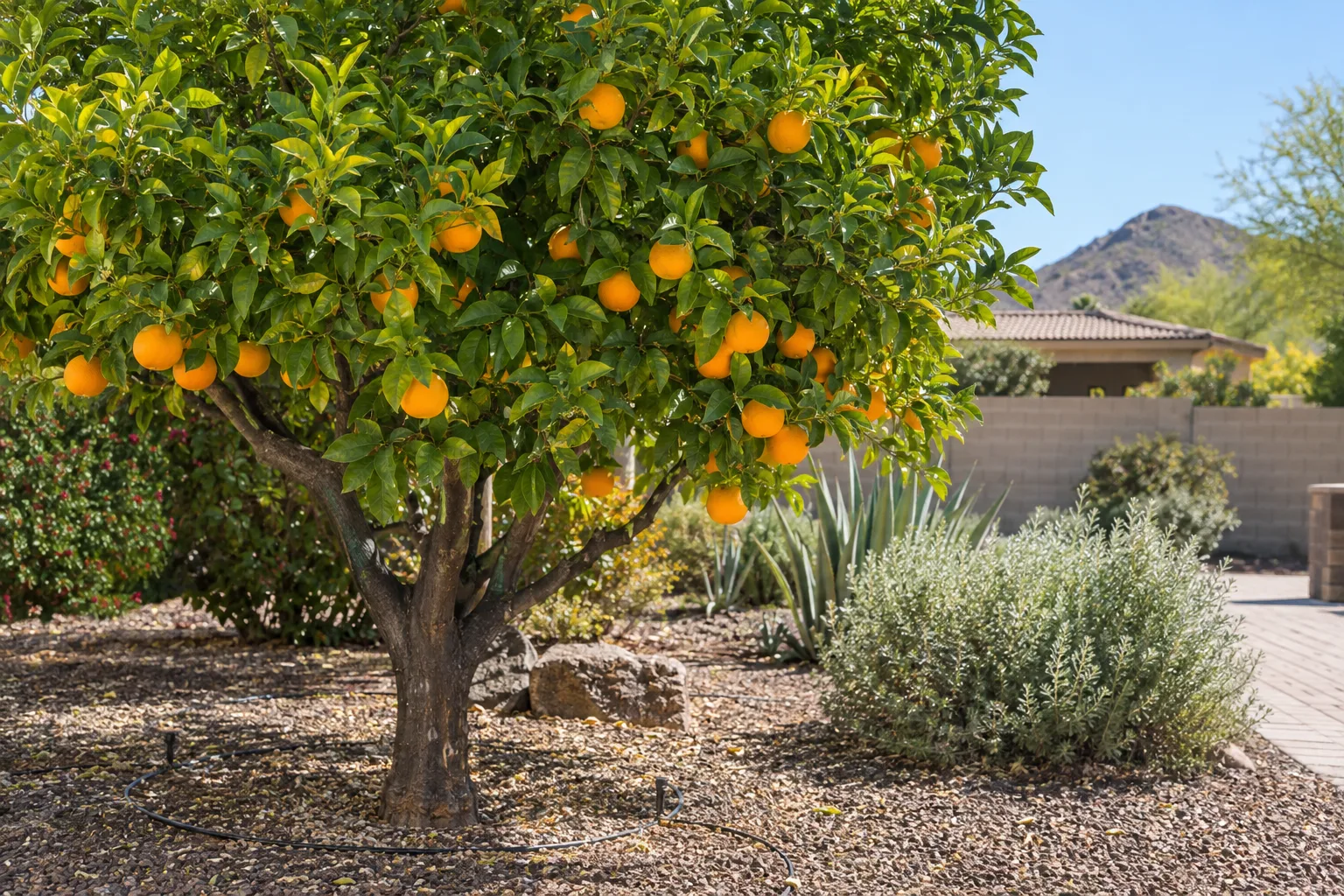
Citrus (Citrus spp.)
Dwarf trees reach about 8 to 12 feet and standard trees 15 to 25 feet, all in full sun. Oranges, grapefruit, lemons, limes, and mandarins all grow in the East Valley, and our citrus tree selection covers the common types. Citrus wants regular deep watering and an iron supplement when leaves yellow between the veins. The drawback is cold: young citrus can be damaged by a frost night, so protect it in low spots.
Jujube (Ziziphus jujuba)
Jujube grows 15 to 25 feet tall in full sun and handles alkaline soil and heat with little fuss. Sweet, crisp fruit ripens from late summer into fall. It drops its leaves in winter and leafs out late in spring, so do not assume a bare tree in March is dead. It also sends up suckers.
Loquat (Eriobotrya japonica)
This evergreen reaches 15 to 25 feet and likes full sun with a little afternoon shade in the hottest exposures. Fruit ripens in late winter into spring, when little else is producing. Loquats bloom in fall, so a hard frost can cost you the crop. The fruit also holds large seeds and only a thin layer of flesh.
Low-chill peach (Prunus persica)
Expect 12 to 15 feet in full sun, kept lower with pruning. Standard peaches need far more winter cold than we get, so look for varieties bred for the low desert, which ripen from roughly April into May. Peaches need yearly pruning, thinning of fruit, and protection from sunscald. The drawback is that they are the most work on this list.
Low-chill plum (Prunus salicina)
Japanese plums grow 12 to 18 feet in full sun and bloom in late winter. Many varieties set a heavier crop with a second compatible plum nearby. Early blossoms can be hit by a late frost. Ripe fruit arrives from about May into June, so pick promptly before the heat softens it.
Guava (Psidium guajava)
Guava reaches 10 to 20 feet in full sun and fruits in summer and fall. Look through our tropical fruit trees if you want one. It is the most frost-tender tree here, and a hard freeze can cut it to the ground. Plant it near a south-facing wall for warmth.
When should I plant a fruit tree in Arizona?
Plant from October through November or from February through March. Fall planting gives roots a full mild winter to spread before summer arrives. Spring planting works but demands closer watering through the first summer. Avoid planting in June through August when soil and air are both very hot.
Our gardening calendars list monthly tasks for the East Valley, and the University of Arizona Cooperative Extension publishes planting calendars for Maricopa County. Frost risk runs from roughly December through January, so hold off on fertilizer after October to avoid tender new growth.
How do I plant a fruit tree in caliche and alkaline soil?
Dig a wide, shallow hole, check how well it drains, and break through any caliche layer before planting. Caliche is a cemented, chalky layer that blocks roots and water, and it often sits 12 to 18 inches down in Queen Creek yards. If you cannot break through, plant on a low mound. Soil here usually tests alkaline, often around pH 7.5 to 8.5.
- Dig the hole 2 to 3 times as wide as the root ball and only as deep as the root ball.
- Fill the hole with water and watch it drain. If it still holds water after a day, the caliche needs breaking or you need a mound.
- Loosen any circling roots and set the tree so the root flare sits at or just above ground level.
- Backfill with native soil mixed with some compost, firming gently to remove air pockets.
- Build a soil berm 4 to 6 inches high around the drip line to hold water.
- Spread 3 to 4 inches of wood chips, keeping them 4 to 6 inches from the trunk.
- Water slowly and deeply, then connect drip emitters or a bubbler before summer.

How often should I water a new fruit tree?
Water new trees every 1 to 3 days for the first few weeks, then stretch the interval as roots spread. Check the soil 12 to 18 inches down with a probe or long screwdriver. It should feel moist but not soggy. Overwatering kills as many trees as drought does.
Established trees need much less in winter, often one deep soak every two weeks. Summer above 110°F may call for a soak every few days, particularly in sandy soil. Monsoon storms from July through September help but rarely replace irrigation. Water at the drip line, not at the trunk.
How do I protect fruit trees from summer heat?
Mulch the root zone, shade young trunks, and keep watering steady. Wood chips 3 to 4 inches deep keep soil cooler and slow evaporation. Young thin-barked trees such as citrus and peach can sunscald on the southwest side, so a trunk wrap or diluted white interior latex paint helps. A 30 to 40 percent shade cloth can protect a first-summer tree.

Remove shade cloth by October when the heat breaks. Keep paint and wraps off the root flare itself.
What mistakes trip up beginners?
The most common are planting too deep, planting in summer, and choosing high-chill varieties. Burying the root flare invites rot at the base. A peach or plum rated for far more winter chill than we get will leaf out and bloom poorly.
- Ignoring yellow leaves. Pale leaves with green veins call for chelated iron, not more water.
- Watering in short daily bursts, which keeps roots shallow.
- Piling mulch against the trunk, which holds moisture on the bark.
- Fertilizing late in fall, which pushes frost-tender growth.
Frequently asked questions
How long until a new fruit tree produces?
Most trees on this list give a small first harvest in two to three years, with fig, guava, and jujube sometimes sooner. Heavy crops usually take three to five years. Pull off fruit in the first year or two on young peaches and plums so the tree puts its energy into roots and branches.
Do I need two trees for pollination?
Fig, pomegranate, most citrus, and jujube set fruit alone. Many plums and some peaches give a better crop with a second compatible variety nearby. Check the tag or ask staff whether a variety is self-fertile before you buy, because pollination needs differ even within one kind of fruit.
When and how should I fertilize?
Most fruit trees do well with a fruit and citrus fertilizer in late winter, again in late spring, and lightly in early fall. Choose one with micronutrients, since alkaline soil ties up iron and zinc. Follow the label rate, water it in, and stop after October.
Can I grow fruit trees in containers?
Yes, for fig, dwarf citrus, pomegranate, and guava. Use a large pot, around 20 gallons or more, with drainage holes and a fast-draining mix. Containers dry out quickly in summer, so expect to water more often, and keep pots out of reflected heat from walls.
When should I prune fruit trees?
Prune most deciduous fruit trees in late winter, around late January to February, before growth starts. Shape young trees lightly and remove dead or crossing branches. Avoid hard pruning in summer, since newly exposed bark can sunscald. Citrus needs only light shaping, best done after frost danger passes.
Is a fruit tree right for your Queen Creek yard?
If you have a spot with 6 to 8 hours of sun and you will water on a schedule, one of these trees will likely suit you. Fig, pomegranate, citrus, and jujube are the safest starts. Skip peaches and plums if you do not want to prune and thin every year, and skip guava if cold pockets worry you. Stop by our Queen Creek nursery and talk through your yard with us.