

Baking soda rarely helps an Arizona lawn in November. Our soil and water are already alkaline, and sodium can harm soil structure. A weak spray may slow powdery mildew on ryegrass, but most November lawn problems are better fixed with watering changes.
Key takeaways
- Most East Valley soil tests above pH 7.5, and baking soda (sodium bicarbonate) pushes pH higher still.
- Dry baking soda spread on soil adds sodium, which can break down soil structure and stress grass roots over time.
- The most a gardener should try is a spray of about 1 tablespoon per gallon of water, on a small test patch first, and only for early powdery mildew.
- Overseeded ryegrass usually needs lighter, less frequent watering once seedlings are up, because wet blades and cool nights invite fungus.
- Yellow grass in alkaline soil more often points to an iron shortage or overwatering than to low pH, so identify the cause before treating.

Does baking soda help an Arizona lawn in November?
Rarely, and only in narrow cases. Baking soda is sodium bicarbonate, a mild alkaline salt with a pH of roughly 8. Gardeners spray dilute solutions on roses, squash and other plants with powdery mildew, and some try the same on turf, though the evidence for lawns is thin. It has no value as a fertilizer, soil conditioner or weed control.
November brings the question up because Bermuda lawns are slowing toward winter dormancy while overseeded ryegrass is germinating under regular irrigation. Cool nights, dew and wet blades create the damp surface conditions that fungus favors. Our gardening calendars give a month-by-month view of the other fall jobs on the low desert list.
Why is baking soda a poor soil amendment in Queen Creek?
Our soil is already alkaline, so adding an alkaline product pushes it further the wrong way. Most East Valley soil tests above pH 7.5, and caliche, a cemented layer of calcium carbonate, sits close to the surface in many yards. Lawn grasses generally grow best at a pH of about 6 to 7.
Sodium is the larger worry. It can displace calcium and magnesium on soil particles, and in finer soils that leads to crusting and slower drainage. Hard irrigation water already delivers dissolved salts with every cycle, so extra sodium adds to a load that caliche makes hard to flush out of the root zone.
A low-pH patch in a Queen Creek lawn is unusual. A soil test shows your actual pH and salt level, and it is worth running before you add any amendment to the lawn.
Can a baking soda spray control lawn fungus in November?
It may slow early powdery mildew, though it will not cure an established disease. Powdery mildew looks like a white to gray dusty film on grass blades and tends to appear in shaded, humid spots with poor airflow. Straw-colored or dead patches have other possible causes, including Pythium, brown patch and dollar spot, and baking soda has weaker support against those.
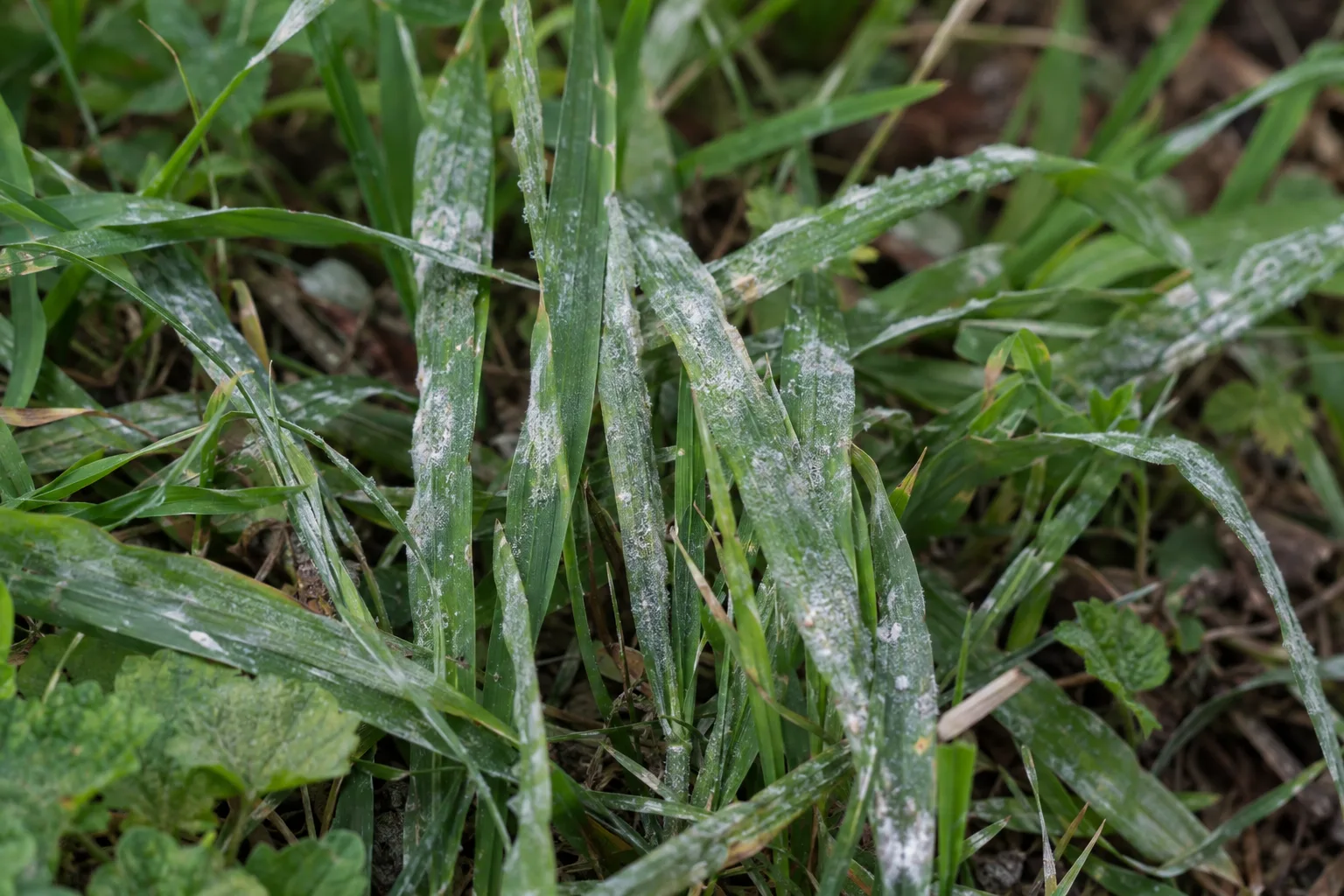
If you want to try a spray, garden references commonly cite about 1 tablespoon per gallon of water. Test it on a small patch first and wait 5 to 7 days to check for leaf burn. Apply it in the early morning so blades dry before dusk. Leave young ryegrass seedlings alone until they are established, since their roots are shallow and easily stressed.
Patches that spread over a few days, grass that looks slimy or greasy, and large dead areas need a proper diagnosis. If a fungicide is needed, choose one labeled for turf and follow the label exactly. You can send us a photo through our contact page to start the conversation.
What should I do for my lawn in November instead?
Water, mow and feed according to which grass you have. Those three jobs prevent most fall lawn trouble, and each grass type needs something different at this point in the season.
Overseeded ryegrass lawns
Once seedlings are up, water less often but keep the top inch of soil moist until roots establish. Early morning is the best time, since blades then dry by midday. Mow when the grass reaches about 2 to 3 inches, removing no more than a third of the blade height, and keep the mower blade sharp. If blades turn pale yellow with green veins, an iron product labeled for lawns may help, and the label sets the rate. Follow the fertilizer label for a winter lawn feed.
Dormant Bermuda lawns
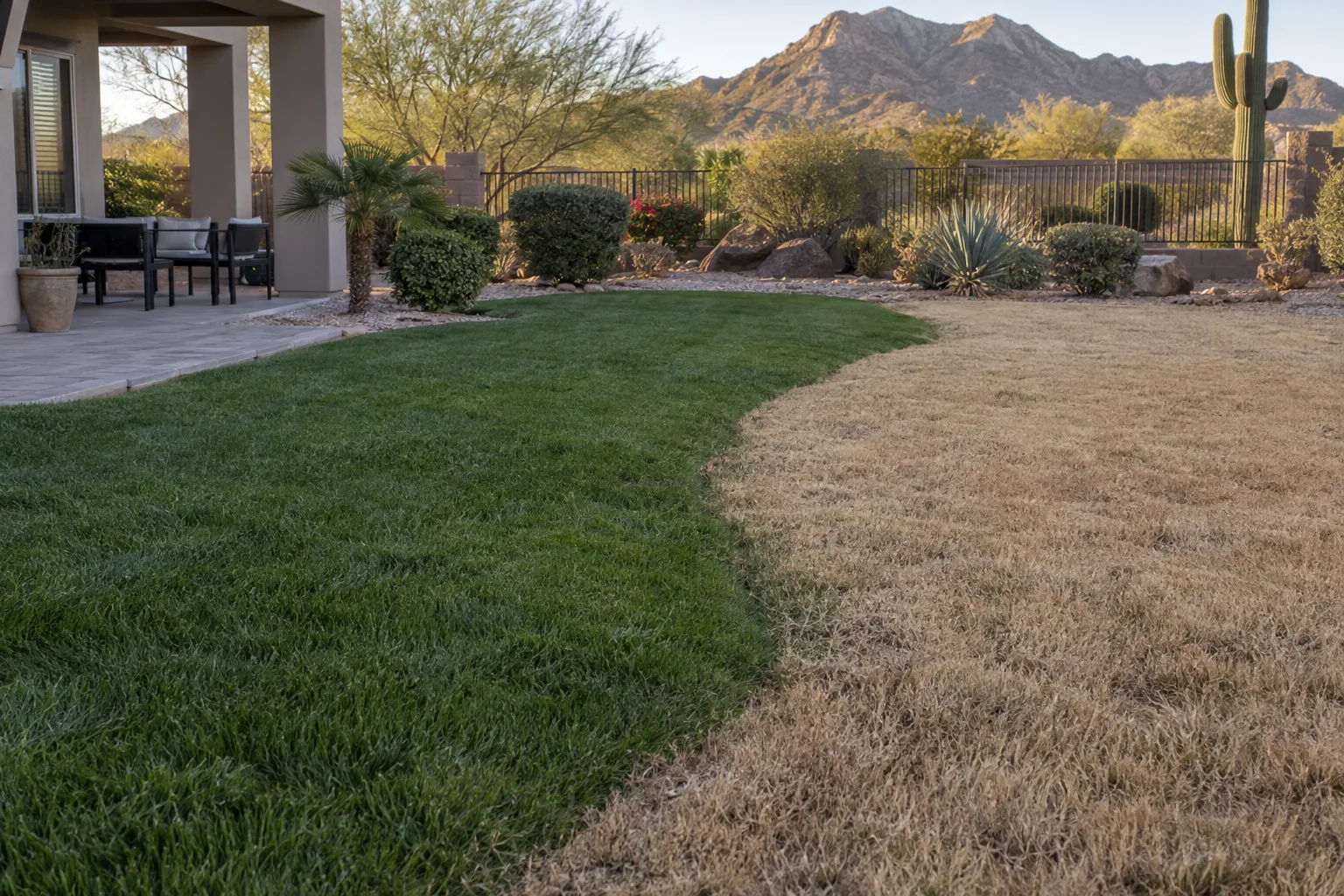
Bermuda turns tan after several cool nights, and that color change is normal. Skip nitrogen feeding while it sleeps, since there is little growth to use it. Dormant roots still need some water through winter, though far less than in summer, so a deep soak during dry spells works better than daily sprinkling.
How do I tell what is wrong with yellow or patchy grass?
Match the pattern to the likely cause before you buy anything. Test before treating.
- Even yellowing with green veins on ryegrass blades, often alongside yellow new growth on nearby shrubs, points to iron shortage in alkaline soil.
- Straw-colored patches that spread, with matted wet grass and heavy morning dew, point to fungus and overwatering.
- A tan Bermuda lawn after cool nights is normal winter dormancy.
- Thin, uneven ryegrass often traces back to sprinkler gaps, shade or seed that was spread unevenly.
Shady strips where grass keeps thinning may suit shade-tolerant shrubs or groundcovers instead. Browse our plants departments for ideas, and keep in mind that availability changes week to week and season to season.
Which lawn jobs should I leave alone in November?
Overseeded lawns and dormant Bermuda are both sensitive to a few common November mistakes, and most of them involve adding something the lawn does not need.
- Dry baking soda scattered over soil, which adds sodium to ground that already carries salts.
- Heavy nitrogen on dormant Bermuda, which has no active growth to use it.
- Scalping ryegrass below about 1 inch, since cool-season blades need leaf area to make food.
- Evening watering, which leaves blades wet through the cool night.
- Herbicides on new seedlings, unless the label says the product is safe for them.
These can all wait. Lawn care topics may come up during the season, so check our classes and events page for upcoming sessions.
Frequently asked questions
Is baking soda safe for pets and children on the lawn?
Baking soda in small amounts is generally considered low in toxicity, but large amounts can make pets sick. Keep dogs and children off a treated area until it has dried, and store the box out of reach. For specific concerns about your animal, call your veterinarian, since we cannot give medical advice.
Can I use baking soda to kill weeds in my lawn?
Baking soda is not a dependable weed killer on lawns. It can burn grass along with weeds, and repeated use adds sodium to soil that already carries salts. For winter weeds, hand pulling or a herbicide labeled for your grass type works better, applied exactly as the label directs.
Can I mix baking soda with fertilizer or iron?
Apply baking soda, fertilizer and iron on separate days, and follow each product label. No reliable guidance supports mixing sodium bicarbonate into fertilizer or iron blends, and a combined spray makes it hard to tell which product helped or caused leaf burn. Spacing treatments a few days apart gives you a clear read on your lawn.
Where can I get my lawn soil tested?
A commercial soil lab can report pH, salt levels and nutrients, usually in more detail than a home kit. Collect several samples from the root zone, usually the top few inches, mix them, and follow the lab’s instructions. The University of Arizona Cooperative Extension publishes guidance on sampling and reading results.
Does hard water matter for a winter lawn?
Hard water leaves dissolved salts and carbonates in the root zone, and they build up over months of shallow watering. A deep soak every so often moves salts below the roots, while winter rain helps flush them. A white crust on the soil surface or on sprinkler heads is a sign of buildup.
Is baking soda worth trying on your Arizona lawn?
For most East Valley lawns, no. Skip it if you have not tested your soil, if ryegrass seedlings are still tiny, or if pets and children play on the lawn daily. A test-patch spray is reasonable for early powdery mildew in a shady, humid corner, and that covers its useful range. Water on a cool-season schedule, mow at the right height, and confirm the cause of yellow grass before treating it. Visit our nursery in Queen Creek and bring a photo or sample of the problem area.
