
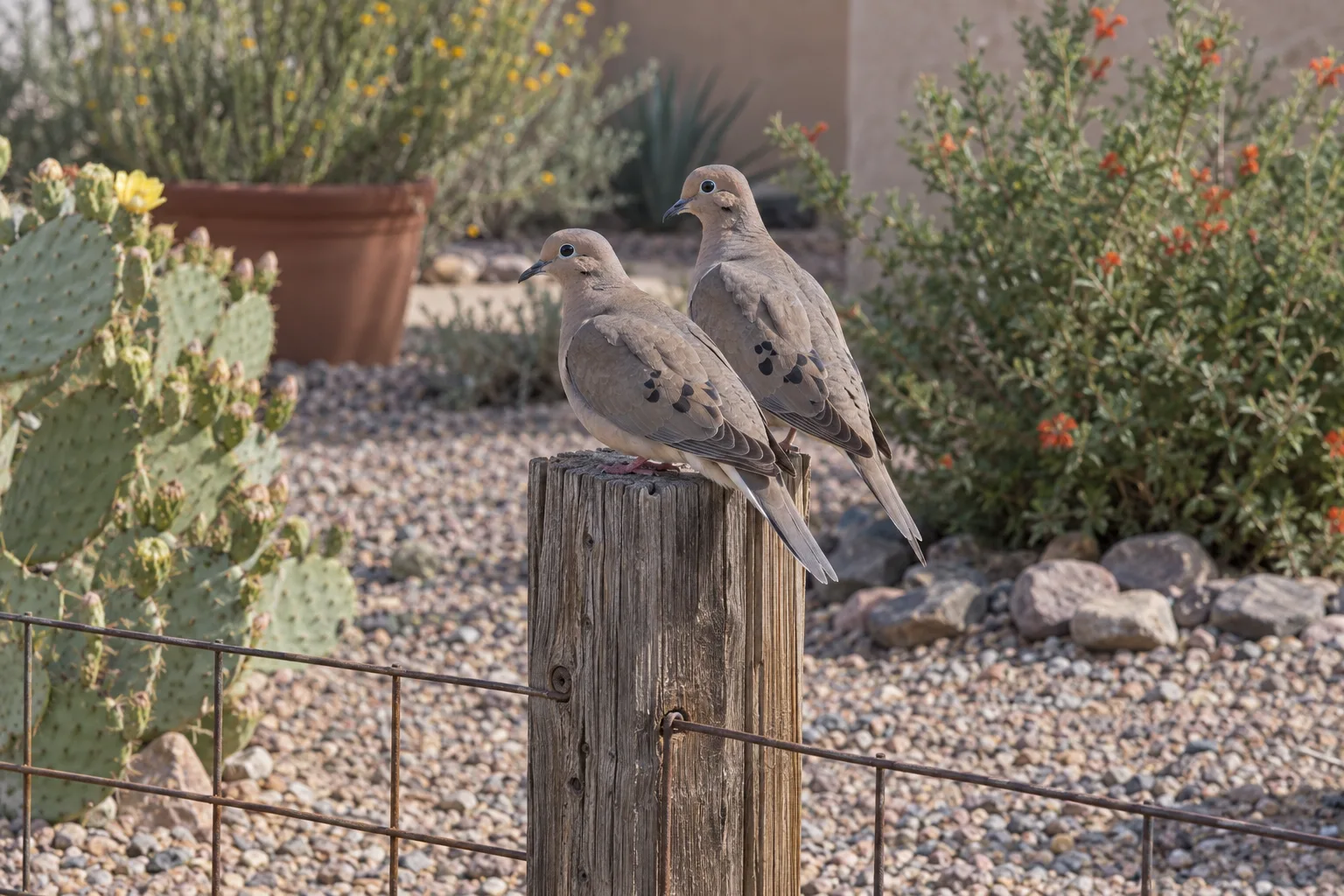
Water, a ground feeding spot with white proso millet, open ground, low native cover and safe perches will attract mourning doves to an Arizona yard. Doves already live year-round across the East Valley, so these eight changes mostly make your yard easier and safer to use.
Key takeaways
- Put out water first, in a basin with a gently sloping edge and about 1 to 2 inches of depth at the drinking point.
- Offer white proso millet on a low tray or clean bare ground, with 6 to 10 feet of open space around it.
- Keep part of the yard as bare soil or decomposed granite, with low native plants within about 10 feet for quick cover.
- Refresh water daily in summer, when highs pass 110°F, and throw out wet seed after monsoon storms (roughly July through September).
- Add one change at a time and wait 5 to 7 days before the next.

When is the best time to start attracting mourning doves?
Start in late winter, around February, if you can. Mourning doves in the low desert begin courting and nesting early in the year and can raise several broods before the season ends in late summer or fall, so a yard that already offers water and seed gets used right away.
Water and a feeder work in any month. Plants follow a different calendar: fall, roughly October and November, is the usual planting window for native shrubs and perennials here, because roots settle in before summer heat above 110°F. Our gardening calendars are a handy place to check planting windows month by month.
Summer is when water matters most. A dependable source in July and August gives doves a place to cool off and drink several times a day.
What do you need before you begin?
You need a shallow basin, a low tray or clear patch of ground, white proso millet, a few low plants and an open spot with good sightlines. Most of the work is placement. Doves feel safest where they can see in every direction, so choose a spot with 6 to 10 feet of open ground around the feeder and a shrub or small tree within about 10 feet to retreat to.
Plants round out the setup, and desert-adapted plants that produce seed and stay low are the most useful. We go through specific choices below. Everything else on the list is easy to find and takes an afternoon to put together.
What are the eight changes, in order?
Work through these in order, adding one about every week. Doves are wary of sudden changes, and a 5 to 7 day pause between additions gives them time to adjust.
- Add shallow water. Doves drink by keeping the bill submerged and sucking water up, so they favor basins with a gently sloping edge and about 1 to 2 inches of depth. A flat rock or a layer of pea gravel turns a deep birdbath into a usable one. A dripper or small fountain adds moving water, which birds notice from a distance.
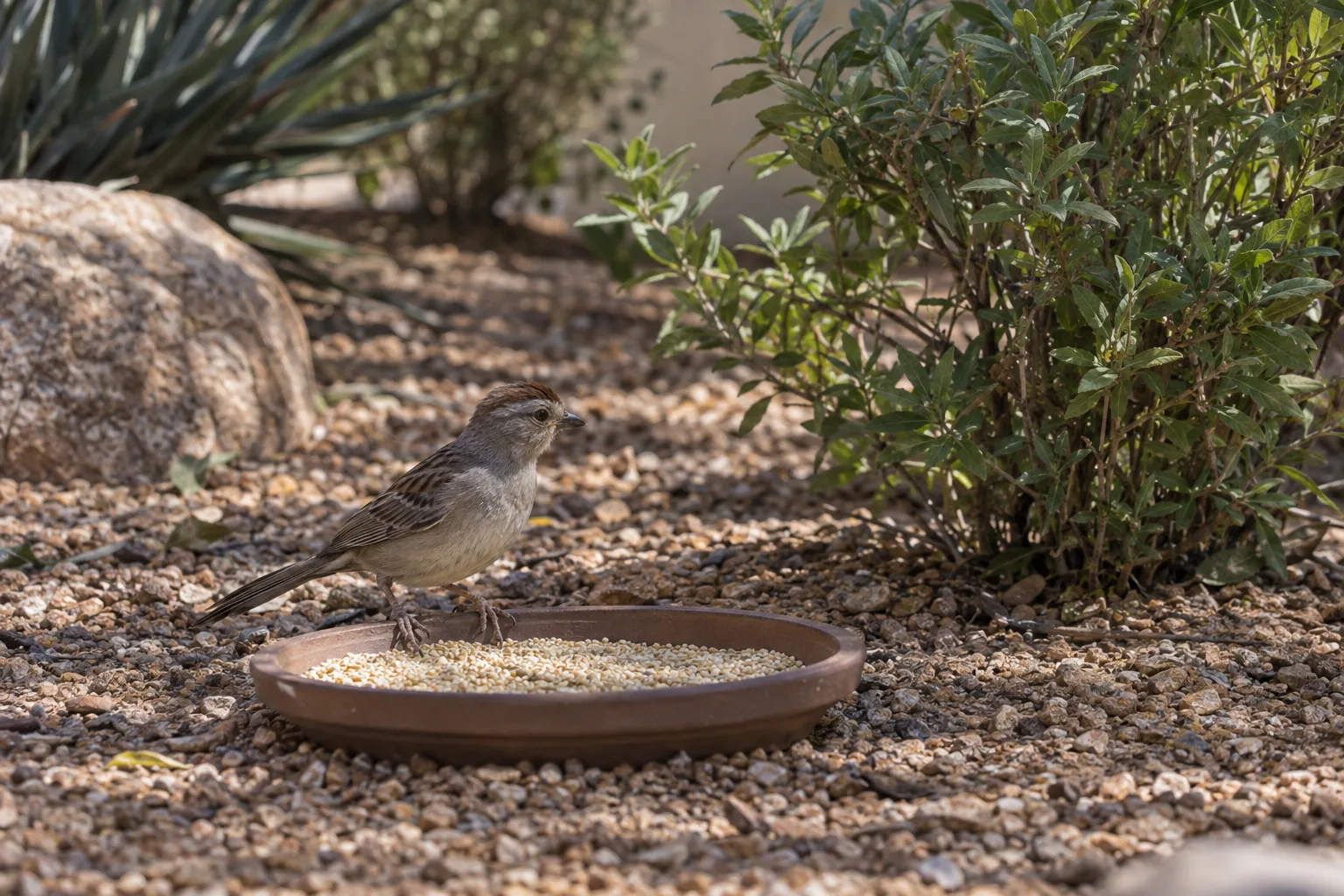
- Set up a ground feeding spot. Doves forage on foot, so use a wide tray within a few inches of the ground, or scatter seed on a clean patch of bare soil or decomposed granite. Keep it in the open and away from dense shrubs where cats and hawks can hide.
- Fill it with white proso millet. It is the seed doves favor most, and a plain millet offering wastes less than mixes padded with filler grains. Put out a small amount each morning rather than a full tray.
- Plant low native cover. Low, seed-bearing perennials and shrubs within about 10 feet of the feeder give doves somewhere to duck when a hawk passes. Space them so open ground remains between plants.
- Leave open ground. Doves forage by walking, so thick groundcover and deep mulch leave them little to work with. Seed is also easy to spot against bare decomposed granite, so resist planting every patch.
- Add perches at several heights. A tree is ideal, and a fence, an arbor or a T-post about 5 to 6 feet tall works near the feeder. Males call from high perches during the breeding season, which starts early in the year in the low desert.
- Offer nesting sites. Doves build thin twig platforms in tree forks, on ledges and in wide shrubs. A flat wooden platform with a low rim, set in a tree or on a post 6 to 15 feet up, is sometimes used. Leave an open view of the sky above it.
- Lower the predator risk. Keep pet cats indoors at dawn and dusk, and give doves a clear view of at least 15 feet in each direction. Cooper’s hawks are part of the neighborhood and will pass through now and then, so a nearby shrub or tree to dive into matters.
What should you put in the dove feeder?
White proso millet is the best starting seed, and offering it straight beats a mixed bag. Doves pick out the millet from generic blends and leave the rest to spoil on the ground, which adds to the mess. The table below shows how common seeds compare.
| Seed | Appeal to doves | Notes |
|---|---|---|
| White proso millet | High | The best single seed to start with |
| Sunflower (hulled or chips) | Medium to high | Easier to eat than seed in the shell |
| Cracked corn | Medium | Draws other ground-feeding birds too |
| Nyjer (thistle) | Low | Better suited to finches |
| Generic mixed birdseed | Low to medium | Doves sort out the millet and skip the rest |
In July and August, offer only what doves finish in a day, because seed sitting in afternoon sun spoils faster and can draw rodents. A spot with morning sun and afternoon shade keeps it fresher. After monsoon storms, throw out any wet or clumped seed.
Which plants give doves seed and cover in the low desert?
Native trees, shrubs and perennials give doves seed, shade and nesting sites, and they handle alkaline soil and summer heat once established. Planting them is the longest-lasting change on this list, since a feeder only works while someone refills it.
Trees come first. Blue palo verde (Parkinsonia florida) and velvet mesquite (Prosopis velutina) offer high perches and afternoon shade, and doves nest in the branches of many desert trees. Mesquite grows wide, so allow roughly 20 to 30 feet of space. Browse our desert trees to compare sizes and shapes.
Lower down, desert marigold (Baileya multiradiata), globe mallow (Sphaeralcea ambigua) and brittlebush (Encelia farinosa) produce seed and stay low enough to keep sightlines open. Desert marigold and globe mallow bloom over long stretches with occasional deep watering once established. Brittlebush grows quickly, though it looks sparse in the heat of summer.
These are varieties we commonly carry, and availability changes week to week and season to season.
What mistakes keep doves away?
The most common mistakes are a feeder that sits too high, water that is too deep and a yard with no open ground. Each one is easy to fix.
- Hanging tube feeders are a poor fit, because doves prefer to feed at ground level or on a low, wide tray.
- Deep, steep-sided birdbaths go unused by doves unless you add gravel or a flat rock to make a shallow edge.
- A feeder tucked under dense shrubs gives cats and hawks cover to ambush from.
- Stale water turns warm within hours in 110°F heat and can breed mosquitoes within about a week, so rinse and refill the basin every day in summer.
- Mulching or planting every inch of ground removes the open walking space doves need to forage.
- Adding everything at once can send wary birds elsewhere for a while.
Frequently asked questions
How long does it take for doves to find a new feeder?
Most yards see their first doves within a few days to two weeks. Doves forage over wide areas and spot seed on open ground from the air, and water often draws them sooner than food does. Keeping the setup in the same place and the supply steady helps visitors turn into regulars that return at similar times each day.
Do mourning doves leave Arizona in winter?
Many stay in the low desert all year, though numbers shift with the seasons. Some birds move through or arrive from other areas in cooler months, so you may see larger flocks at the feeder from roughly November through February. Keep water and seed going through winter, and check basins on the rare frost mornings.
Will a ground feeder attract rodents?
It can if seed piles up. Put out only what doves finish in a few hours, rake up spilled seed and hulls each evening, and rinse the tray weekly. Clean ground and dry seed give rodents little reason to visit. If you notice droppings or burrows near the feeder, pause feeding for a week or two.
Do doves nest in hanging baskets and on ledges?
They do, and they often pick spots under eaves, on wreaths, in baskets or on flat ledges. The nest is a thin platform of twigs. If a pair settles in near your door, give the area some space and avoid disturbing it, since nesting pairs can abandon a nest when startled repeatedly.
Should I stop feeding during the monsoon?
No, but feed in smaller amounts and check the tray after every storm. Wet seed can mold within a day or two in warm, humid weather, so toss anything damp or clumped. A tray with drainage holes, or a spot under a wide eave, keeps seed drier between storms.
Is a dove-friendly yard worth setting up?
Yes, for most East Valley yards. A shallow basin, a patch of open ground and a scoop of millet take an afternoon to set up, and the plants you add bring shade and seed for other desert birds too. Skip it if free-roaming cats visit your yard, since ground-feeding doves are easy targets, or if you dislike seed hulls and droppings near a patio. Everyone else can start with water first. Stop by Desert Horizon Nursery in Queen Creek when you are ready to choose plants.