

Arizona river rock is a rounded, long-lasting ground cover that cuts watering, suppresses weeds and suits low desert yards. It works best 2 to 3 inches deep over well-prepped soil, with drip irrigation underneath.
Key takeaways
- Spread river rock 2 to 3 inches deep so it covers the soil evenly and stays put.
- Replacing turf with rock and drip-watered plants is where the biggest water savings come from.
- Rock holds heat and releases it after sunset, so keep it a few inches back from trunks and stems.
- Grade the ground to slope away from the house before spreading rock, so monsoon storms (roughly July through September) drain off.
- Fall through early spring is the easier season to install, for you and for new plants.
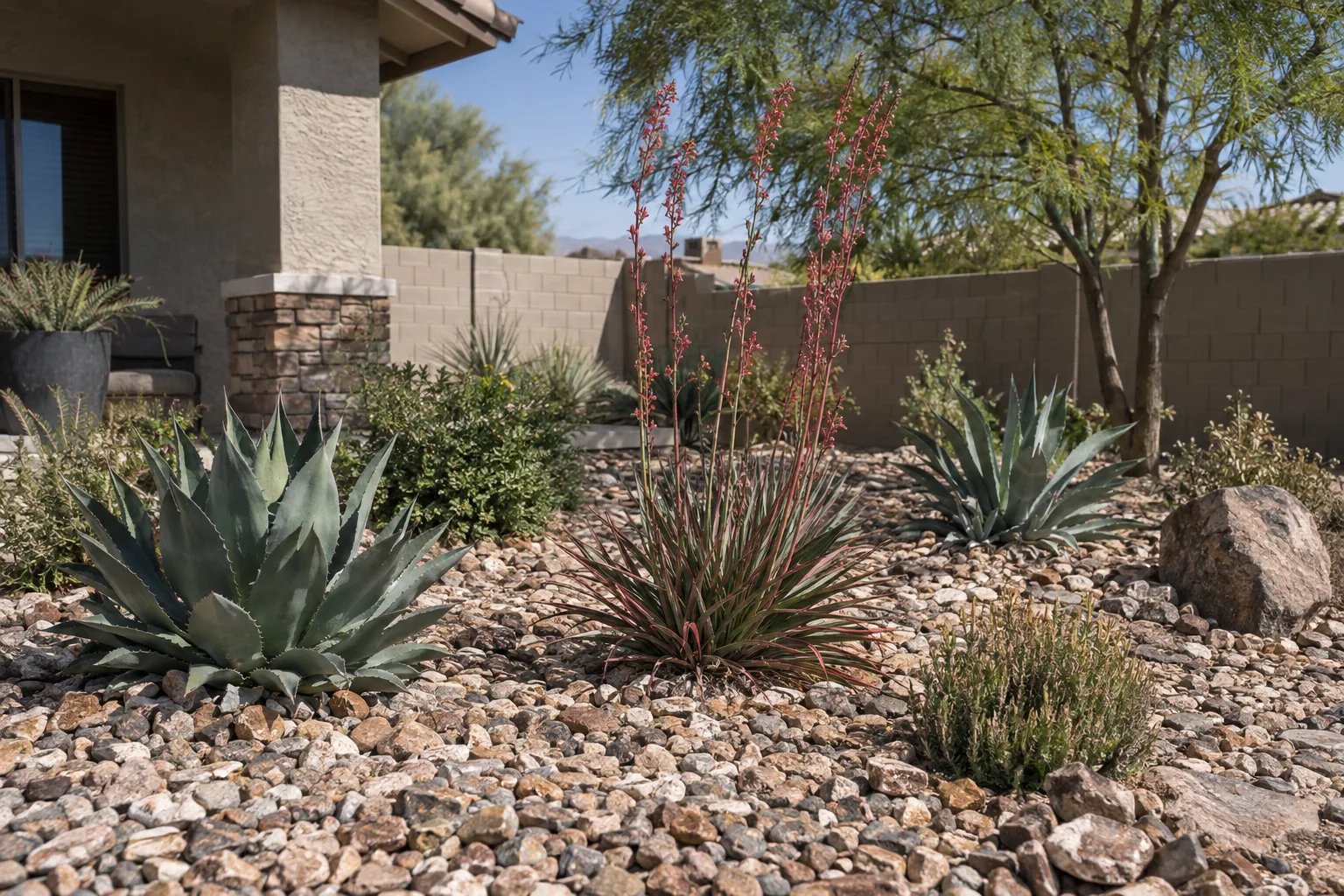
What is Arizona river rock, and where does it work best?
Arizona river rock is stone that moving water has rounded smooth, usually sold in blends of tan, brown, red and gray. Sizes run from about 3/4 inch to cobbles of 3 inches or more, and 1 to 2 inch rock is a common choice for general ground cover.
It works well in front-yard lawn conversions, around shrubs and cacti, along walls and in dry creek beds that carry monsoon runoff. Pair it with low desert plants for shape and color, since rock alone looks flat. Small stones shift underfoot, so keep heavy foot traffic on paths.
Does river rock save water in a low desert yard?
Yes, mainly because it replaces turf. A lawn in the low desert needs frequent irrigation through summer, when highs pass 110°F, while a rock bed with drip-watered shrubs and succulents needs a small fraction of that water. The savings depend on the plants you keep, so a bed packed with thirsty annuals saves much less.
Rock also slows evaporation from the soil surface and keeps monsoon rain from crusting bare ground. The plants in and around it still need irrigation, especially during their first two summers. Drip lines do the work.
Does river rock make a yard hotter?
It can. Rock absorbs sun all day and releases that heat after sunset, so the area beside a rock bed stays warmer in the evening than shaded soil or a layer of organic mulch. Many people assume rock keeps the whole yard cooler, and it does not. A 2 to 3 inch layer does shade the soil beneath from direct sun, which helps roots compared with bare ground, but the stone surface itself gets very hot.
Mid-tone and darker blends throw back less glare than white or very light stone, which matters near west-facing windows. Keep rock a few inches back from trunks and stems. A desert tree such as a palo verde that shades the bed in the afternoon cools it far more than a change in rock color.

Will weeds still grow through river rock, and how much upkeep is there?
A few will. Windblown seed lands in the dust that collects between stones and sprouts there, and Bermuda grass can creep in from a neighboring lawn. Weeds in a rock bed are shallow-rooted and easy to pull while small, so a quick walk-through every couple of weeks during the growing season keeps the bed clean.
Woven landscape fabric under the rock blocks weeds from below and keeps stones from sinking into the soil. It does nothing for seed that sprouts on top, and dust builds up over the fabric with time, so expect to pull some weeds even with it in place.
Other upkeep is light. Rake displaced stones back after a monsoon storm, and use a leaf blower to clear dust and debris. Rock does not rot, so there is no yearly refill, though you may top off thin spots every few years.
How does river rock compare with other ground covers?
River rock is the longest-lasting of the common options and the least forgiving to walk on, while the others trade durability for comfort or cost. Choose by how the area will be used.
| Material | Look | Holds up over time | Main drawback |
|---|---|---|---|
| River rock | Rounded, natural, mixed tones | Does not break down | Loose underfoot and can shift in heavy runoff |
| Decomposed granite | Fine, tan, packs firm | Compacts and needs topping off | Washes out in downpours and tracks indoors |
| Crushed granite | Angular, tan to gray | Locks together well | Sharp edges are rough on bare feet |
| Wood mulch | Dark and soft | Breaks down in one to two years | Needs regular replacement |
Rock costs more up front than decomposed granite or mulch, and that cost evens out because you do not refill it every year. Wood mulch feeds the soil as it breaks down, which makes it the better choice around vegetables and young trees in a garden bed.
Which plants look good with river rock?
Plants with strong shapes and low water needs suit rock best, because they hold up to reflected heat and stand out against the stone. These are varieties we commonly carry, though availability changes week to week and season to season.
- Desert spoon (Dasylirion wheeleri) forms a rounded rosette of narrow, toothed leaves and grows slowly. Plant it where nobody brushes past the leaf edges.
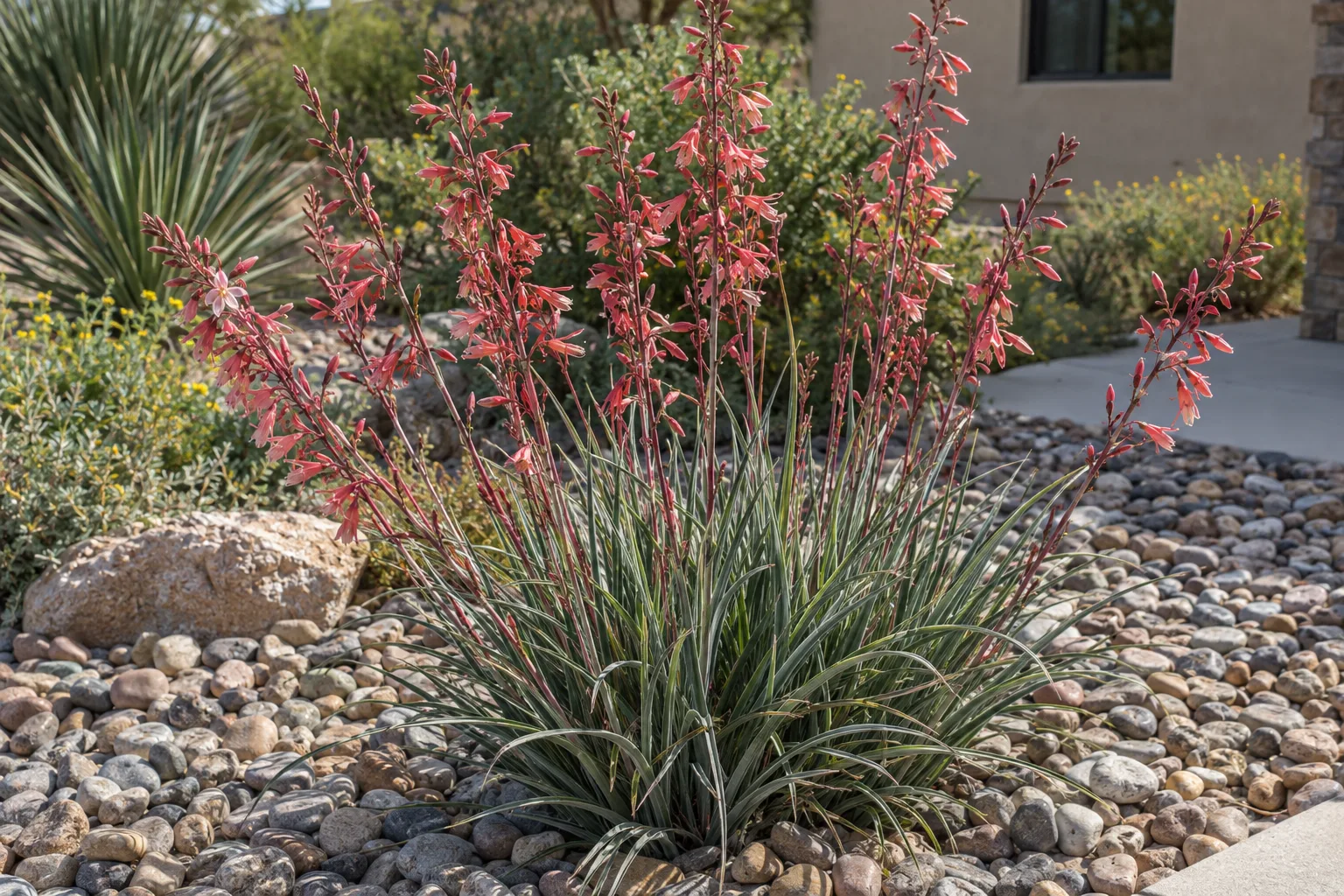
- Red yucca (Hesperaloe parviflora) is a clumping plant with grassy leaves and coral flower spikes that hummingbirds visit from spring into summer. It is not a true yucca.
- Brittlebush (Encelia farinosa) has silvery leaves and yellow flowers in late winter and spring. It can look ragged in the hottest weeks of summer.
- Agave (Agave americana and smaller species) gives bold form with almost no care. Large types need room, and some species are damaged by frost.
- Globe mallow (Sphaeralcea ambigua) fills gaps with orange or pink flowers in spring and often reseeds. It looks sparse after bloom.
Where there is no planting soil, such as a patio corner, pottery and planters can add height above the rock.
How do I install river rock in a low desert yard?
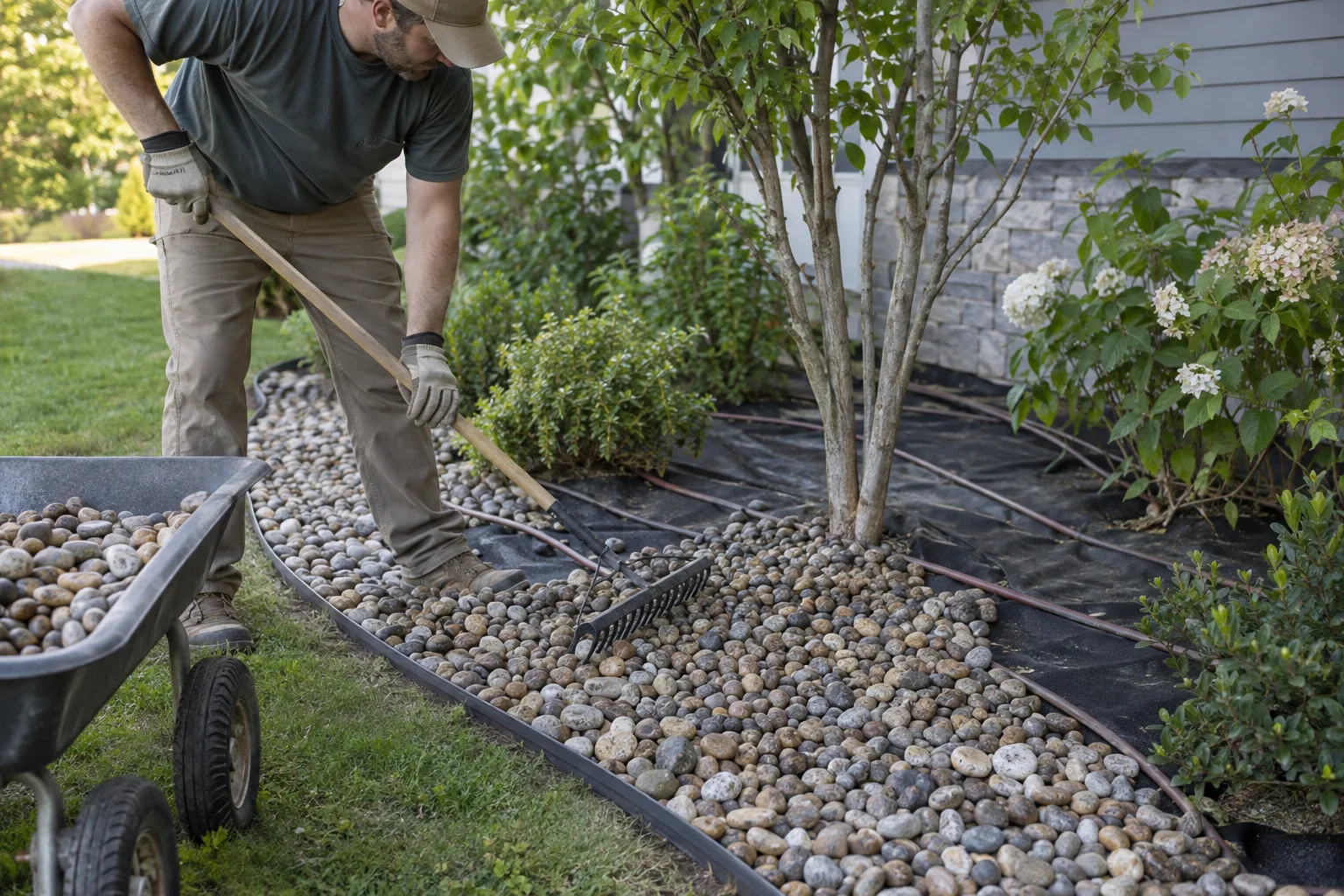
Clear, grade, plant, water lines, then rock, in that order. Fall through early spring is easier on you and on new plants than summer heat, and our gardening calendars help with planting timing. You need a rake, a wheelbarrow, edging, woven landscape fabric, drip tubing and gloves.
- Remove existing turf and weeds, digging out as many roots as you can, especially Bermuda grass.
- Check the grade. The ground should slope gently away from the house, and low spots that hold water need filling.
- Install edging so the rock stays in the bed and does not drift onto paths or lawn.
- Lay woven fabric with overlapping seams, pin it down, and cut an X at each planting spot.
- Plant shrubs and succulents through the slits. Break up caliche at the bottom of any planting hole so water can drain.
- Run drip tubing and set emitters at each plant, then test the system before covering anything.
- Spread rock 2 to 3 inches deep with a rake and keep it a few inches away from stems and trunks.
What mistakes should I avoid with river rock?
Most problems trace back to skipped prep. Fixing them later means pulling up rock, which is heavy work.
- Piling rock against trunks and stems, which holds heat and moisture against the bark.
- Spreading it too thin, so soil shows through within a season.
- Skipping the grade check, which lets monsoon runoff pool against a foundation.
- Choosing white or very light stone next to windows and pools, where glare is strong.
- Laying solid plastic sheeting under the rock, which blocks water and air from reaching roots.
Our classes and events page lists upcoming workshops if you want to learn more about low-water planting.
Frequently asked questions
How much river rock do I need?
Multiply the area in square feet by the depth in feet to get cubic feet, then divide by 27 for cubic yards. A 500 square foot bed at 2 inches deep needs about 83 cubic feet, or roughly 3 cubic yards. Add about 10 percent for uneven edges, and ask your supplier how their rock converts to tons.
Can drip irrigation run under river rock?
Yes, drip tubing can run under or on top of the rock. Lines under the rock stay hidden and are shielded from sun, while emitters set near each plant keep water at the roots. Check emitters a few times a season, since dust and hard water scale can clog them, and lift the rock to reach them.
Is river rock a good choice around a pool?
Rounded rock is a comfortable choice near a pool, with some limits. Larger sizes stay put better than small gravel, which sticks to wet feet and ends up in the water. Leave a clean paved or planted gap between the rock and the pool edge so stones stay out of the skimmer.
How do I clean dusty river rock?
A leaf blower and a hose handle most of it. Blow loose dust and leaves off on a dry day, then rinse in sections. White crust from hard water is mineral scale, and a diluted vinegar spray can loosen it. Test a small patch first and keep it off plant leaves.
Can I put river rock over existing grass?
No, remove the grass first. Bermuda grass spreads by runners and rhizomes and can push up through fabric and rock. Cut out the sod, dig out roots as far as you can, and pull any shoots that appear in the weeks after spreading rock while they are still small.
Is river rock right for your yard?
River rock is a good fit if you are replacing a lawn, lining a drainage path or surrounding drip-watered desert plants, and you want a ground cover that does not break down. Skip it if you want a cool, soft yard, if a tree drops leaves across the bed all year, or if you plan to grow vegetables in the ground, where soil-building mulch serves better. Stop by our Queen Creek nursery and we will help you match plants to your rock bed.
