
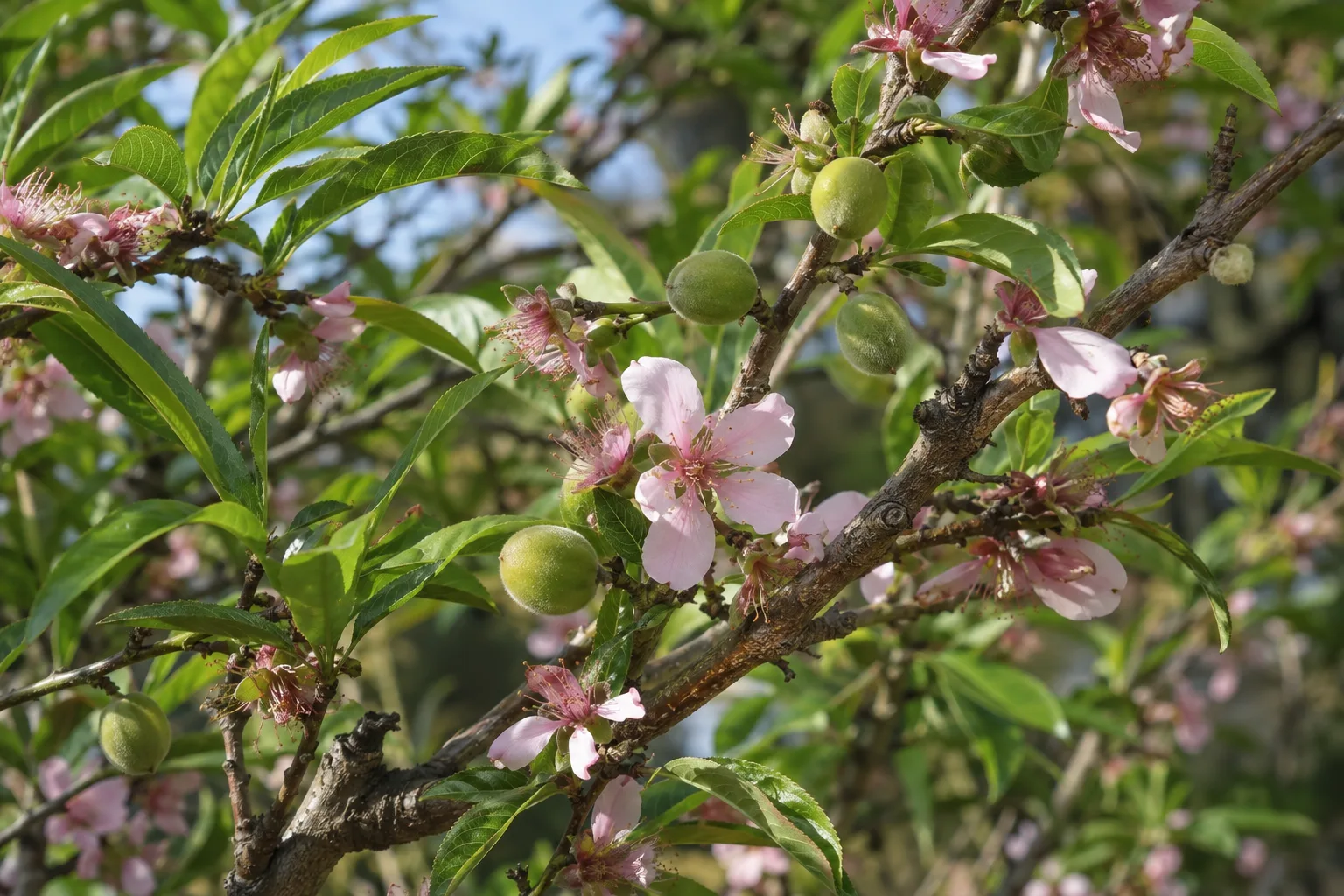
Arizona peach trees need deep watering, fruit thinning, a thick layer of mulch and a regular check for pests in April. That work carries the crop through the heat of May and June.
Key takeaways
- Soak the soil 24 to 36 inches deep every 5 to 7 days in April, with the watering basin reaching the edge of the canopy.
- Thin peaches to one fruit every 4 to 6 inches along a branch, ideally when they are marble sized.
- Spread 3 to 4 inches of wood chip mulch, kept 4 to 6 inches away from the trunk.
- Stop high-nitrogen fertilizer by about May 1, before highs pass 105°F.
- Limit April pruning to dead, broken or borer-damaged wood and save structural cuts for winter.
How much water do peach trees need in April?
Most mature peach trees do well with a deep soak every 5 to 7 days in April, wetting the soil 24 to 36 inches down. Shallow daily watering keeps roots near the surface, where summer heat reaches them first.
Feeder roots spread to the edge of the canopy and past it, so build a basin at the drip line and run water slowly enough that it soaks in instead of running off. On caliche or heavy clay, water less often but for longer, and pause partway through a cycle so moisture can move past the hard layer. Hard irrigation water leaves salts behind, and a deep soak pushes them below the roots.
Check the result the day after watering. A long screwdriver should slide in easily to about 24 inches.
- Too much water: yellowing older leaves, soggy soil near the trunk, wilting while the soil is wet.
- Too little water: scorched leaf edges, small hard fruit, afternoon wilting that does not recover overnight.
As afternoons climb toward 95 to 100°F late in the month, shorten the interval toward 5 days and keep the depth the same. If you are shopping for a tree, our fruit trees page shows the kinds we commonly carry, though availability changes week to week and season to season.
Should I thin peaches in April?
Yes. Thinning to one peach every 4 to 6 inches along a branch gives you larger, sweeter fruit and lighter limbs. The best time is when the fruit is about marble sized, roughly 0.5 to 1 inch across. In the low desert that stage often arrives in March or early April, so earlier is better, but thinning in April still helps a loaded tree.
A tree shares a limited supply of water and sugars among every fruit it carries. Leave a heavy crop and you get many small, bland peaches, plus branches that can bend or snap under the weight. Pulling off a third to half of the green fruit feels wasteful, and that hesitation is the most common reason home crops come out small.
Take off fruit that is misshapen, marked by insects or touching another peach first. Twist or pinch each one off and avoid tugging the twig.
Should I fertilize peach trees in April?
A light feeding in early April is reasonable if the tree has not been fed since winter, and nitrogen should stop by about May 1. Use a balanced fruit tree fertilizer at the label rate, spread under the canopy and watered in deeply. Late nitrogen pushes soft new growth that scorches once highs pass 105°F.
Our soil is alkaline, often with a pH of 7.5 to 8.5, and that ties up iron even when plenty is present. Leaves that turn yellow while the veins stay green point to iron chlorosis. A chelated iron product made for alkaline soil, applied by the label, usually greens new leaves over a few weeks.
Fertilizer will not rescue a tree that is short on water. Fix the watering first.

What pests and diseases show up on peaches in April?
Peach twig borer, brown rot and powdery mildew are the problems to watch for in April. Walk the tree twice a week and look closely at shoot tips and young fruit.
Peach twig borer
The larvae of the peach twig borer (Anarsia lineatella) tunnel into new shoots, and the tips wilt and bend over in what growers call flagging. Cut flagged shoots back to healthy wood and throw the clippings away. Later in the season the larvae can enter ripening fruit.
Brown rot and powdery mildew
Brown rot (Monilinia fructicola) shows up as soft brown spots on fruit, sometimes with gray-tan spores, after damp weather. Remove affected fruit and keep fallen fruit and leaf litter cleaned up beneath the tree. Powdery mildew leaves a white coating on leaves and shoots, and thinning crowded branches improves airflow.
Products containing spinosad, copper or sulfur are commonly used on peaches, but read the label for the target pest, temperature limits and the wait before harvest. Sulfur can burn leaves in heat. If you cannot tell what you are seeing, bring a photo or a sample shoot and contact us before you spray anything. The University of Arizona Cooperative Extension also publishes guidance on tree fruit pests.
How does mulch help peach trees before summer?
A 3 to 4 inch layer of wood chips or shredded bark cools the soil by several degrees, slows evaporation and holds back weeds that compete for water. Spread it from the drip line in toward the trunk and stop 4 to 6 inches short, so the bark stays dry and crown rot has less chance to start.
Skip gravel and decomposed granite under the canopy. Rock soaks up afternoon sun and gives it back after dark, which is the opposite of what a peach tree needs when highs reach 110°F. As the chips break down they also add organic matter to our low-organic desert soil, a slow benefit that builds over several seasons.

Can I prune a peach tree in April?
Light pruning is fine in April, but heavy cuts should wait. Take out dead or broken wood, crossing branches and shoots hurt by borers, and leave the rest of the canopy alone.
The leaves are feeding the fruit right now, and large cuts expose bare wood to rising heat. Do structural pruning and size reduction in winter while the tree is dormant, and write down what needs fixing so you remember. If you would like to learn the cuts in person, watch our classes and events page for workshops.
What should I do each week in April?
Spread the work across the month so nothing gets rushed. The table below gives a simple order, and our gardening calendars cover the rest of the year.
| Timing | Task |
|---|---|
| Early April | Inspect shoots, fruit and leaves. Water deeply and probe the soil to confirm depth. Thin fruit if you have not already. |
| Mid April | Apply a light balanced feeding if needed. Add chelated iron if leaves show chlorosis. Spread mulch. |
| Late April | Shorten the watering interval as highs near 100°F. Cut back flagged shoots. Remove any rotting fruit. |
| End of April | Stop high-nitrogen fertilizer. Add shade cloth on the west side of a young tree if it needs it. |

Which peach varieties suit the low desert?
Choose low-chill peaches, which are bred to set fruit with the mild winters we get here. Chill hours are the hours below 45°F a tree needs each winter, and a variety rated for far more than our winters supply will bloom poorly. Check the chill rating on the tag against your part of the East Valley.
Low-chill varieties we commonly carry include Desert Gold, Flordaprince, Tropic Snow and the dwarf Bonanza, though availability changes week to week and season to season. The usual drawback is a short harvest, since most ripen within a few weeks of each other and the fruit does not store long.
April is late to plant a new tree, because its roots have little time to settle before the heat. Fall planting from October through November gives a better start, and browse our deciduous trees when you are ready.
Frequently asked questions
Why are my peaches dropping in April?
Some drop is normal, because a tree sheds extra fruit on its own. Heavy drop after that usually points to uneven watering, heat stress or a very heavy crop. Check how deep your last watering reached, thin what remains and look at the shoot tips for borer damage. A modest number of small green fruit on the ground needs no action.
How can I tell when a peach is ripe?
Look for the green background color to turn yellow or gold, and smell the stem end for a sweet fragrance. A ripe peach gives slightly under gentle pressure and comes away with a light twist. Red blush alone is unreliable, because sun exposure changes it. Ripening dates vary by variety and by how warm the spring has been.
What is the white powder on my peach leaves?
It is most likely powdery mildew, a fungus that forms a white to gray coating on leaves and shoots. It tends to appear when days are warm and nights are cool. Remove badly affected shoots and thin crowded branches for airflow. If you use a fungicide, read the label for temperature limits, since sulfur products can burn foliage in heat.
Is gum oozing from my peach bark a sign the tree is dying?
Usually not. Gummosis is a stress response to borers, bark damage or disease, and a single amber bead is common. Several oozing spots, or gum mixed with sawdust-like frass, point to borers and deserve a closer look. Keep the tree watered, and bring a photo or sample if the oozing spreads.
Do peach trees need shade in summer?
Mature trees usually handle full sun, but young trees with thin bark can sunburn on the west side. Shade cloth on that side or a trunk wrap are common protections. Mulch and deep watering keep the roots cooler. Ask us about options for your particular tree and exposure.
Is April care worth it for a backyard peach tree?
Yes, for most backyard trees. Deep watering, thinning and mulch take a few hours across the month and decide whether you pick full-sized fruit or a pile of small ones. The routine suits anyone with a low-chill peach already in the ground. It suits a tree in deep shade less well, and a gardener who will not thin fruit may be happier with a lower-maintenance tree. Stop by our nursery in Queen Creek and we will talk through your tree.