Herb gardening in Arizona works best when you match the herb to the season: cilantro, parsley and dill from October to March, rosemary, Mexican oregano and lemongrass through summer, and basil in spring and fall, all in fast-draining soil with deep, infrequent watering.
Key takeaways
- Plant cool-season herbs (cilantro, parsley, dill) from October to mid-November, and heat-tolerant perennials in March and April.
- Rosemary, Mexican oregano and lemongrass are the most reliable herbs for summers above 110°F.
- Drainage matters more than soil pH. Dig 12 inches down and check for caliche before you plant.
- Water deeply and let the top 2 inches of soil dry out between waterings, especially for Mediterranean herbs.
- Skip fertilizer in July and August, and give soft-leafed herbs afternoon shade from May through September.
When should I plant herbs in Arizona?
Plant cool-season herbs from October to mid-November and heat-tolerant perennials in March and April. The low desert has two growing windows, and most herb failures here come from planting in the wrong one.
The cool season runs from roughly mid-October through April. Nights fall into the 40s and 50s, days stay in the 60s and 70s, and cilantro, parsley, dill and fennel grow fast. Once daytime highs stay above 100°F, usually by mid-May in Queen Creek, soft-leafed herbs bolt, scorch or die.
The warm season, May through mid-October, belongs to a short list of tough perennials. Planting anything new between mid-June and early September demands daily attention and shade cloth, so most gardeners wait. The University of Arizona Cooperative Extension publishes a vegetable planting calendar for Maricopa County that is a useful cross-check for sowing dates, and our gardening calendars lay out the month-by-month rhythm.
Which herbs grow best in the Arizona low desert?
Rosemary, Mexican oregano, lemongrass and thyme handle the low desert best, while cilantro, parsley and dill do their best work from fall through early spring. Our herbs, vegetables and berries department covers these, and availability changes week to week and season to season, so ask what is in right now.
Summer survivors
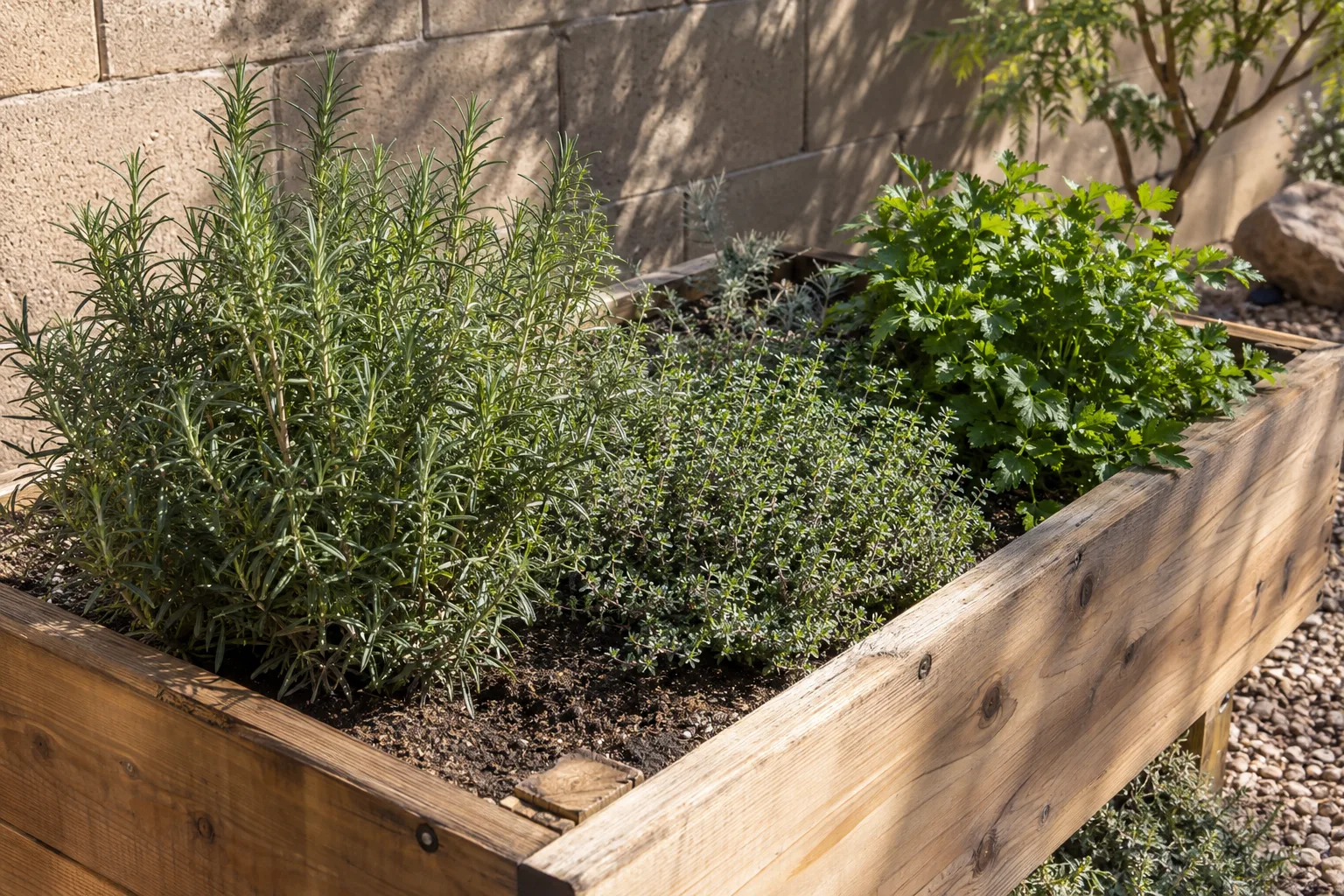
Rosemary (Rosmarinus officinalis) tolerates alkaline soil and dry heat once its roots are established, and upright types can reach 3 to 5 feet wide over several years. Its one weakness is wet feet. Mexican oregano (Lippia graveolens) is a different plant from Greek oregano, with a stronger, more citrusy flavor. It loves heat and can become a small shrub.
Lemongrass (Cymbopogon citratus) forms big clumps in full sun and needs regular deep watering in summer. Cut it back in late winter for fresh growth. Thyme (Thymus vulgaris) prefers lean, sharply drained soil and does best with afternoon shade from June through September.

Cool-season herbs
Cilantro (Coriandrum sativum) dislikes root disturbance, so sow seed directly and repeat every 3 weeks from October to January. Dill (Anethum graveolens) and parsley (Petroselinum crispum) follow the same schedule. They stop producing when highs hit the mid-80s to 90s.
Basil sits in the middle
Basil (Ocimum basilicum) wants warmth but not July heat. Plant it in March and April for a spring run, and again in late August through September for fall. Thai types often tolerate heat a little better than sweet Italian basil. Give any basil afternoon shade once highs pass 100°F.
How do I prepare Arizona soil for herbs?
Dig 12 inches down to check for caliche, then amend with compost or move to raised beds if the hardpan sits shallow. Our native soil is alkaline, often with a pH of 7.5 to 8.5, low in organic matter and slow to drain.
Caliche is the whitish, cement-like layer that blocks roots and water. If you hit it within about 8 inches of the surface, break through it with a digging bar so water can pass, or build a raised bed instead.
For in-ground planting, mix 3 to 4 inches of compost into the top 12 inches. Sulfur lowers pH slowly over months, but most herbs do fine in alkaline soil when drainage is good. A raised bed filled with topsoil, compost and coarse perlite gives you the most control. Test drainage by soaking the bed deeply, and water should be gone within an hour or so.

Hard irrigation water adds to the alkalinity over time, so a yearly top-dressing of compost helps buffer the soil.
How often should I water herbs in the low desert?
Water deeply and let the soil dry between waterings, because the interval depends on the herb, the season and whether it grows in a pot or in the ground. Mediterranean herbs prefer drying out, while basil and cilantro want steadier moisture.
| Herb | Summer interval (starting point) | Cool-season interval (starting point) | Note |
|---|---|---|---|
| Rosemary | Every 5 to 10 days | Every 10 to 21 days | Established plants need little |
| Mexican oregano | Every 5 to 10 days | Every 10 to 14 days | Very heat tolerant |
| Thyme | Every 4 to 7 days | Every 7 to 10 days | Needs sharp drainage |
| Basil | Every 2 to 3 days | Every 4 to 5 days | Wilts fast in heat |
| Lemongrass | Every 2 to 4 days | Every 5 to 7 days | Thirsty in summer |
| Cilantro | Not grown in summer | Every 3 to 5 days | Keep evenly moist |
Treat those numbers as starting points and check the soil. Push a finger 2 inches down, and if it feels damp, wait another day. Rosemary, thyme and oregano rot faster from too much water than they wilt from too little.
Water at the base of the plant rather than overhead. A drip line on a timer keeps moisture steady through a 115°F week when you would otherwise forget.
Should I grow herbs in pots or in the ground?
Grow perennial herbs like rosemary and lemongrass in the ground if your soil drains, and use pots for basil, thyme and anything you want to move out of summer sun. Both methods work here.
Containers give you total control over the soil mix and let you shift plants with the seasons. They also dry out quickly. A small pot in direct sun at 110°F can be bone dry in a day, and dark pots can overheat roots.
Choose light-colored or terracotta pottery and planters with drainage holes, and size up. A single rosemary is comfortable in a pot holding about 5 gallons. Setting a nursery pot inside a larger decorative one adds an air gap that buffers root temperature.

Where should herbs go for sun and shade?
In the cool season, give herbs 6 to 8 hours of direct sun. From May through September, move soft-leafed herbs to a spot with morning sun and afternoon shade, such as an east-facing wall or under a mature palo verde.
Full sun in July can push soil surface temperatures far beyond what roots tolerate. Rosemary and lemongrass cope with it, while basil and chives need relief by early afternoon.
Watch radiant heat as well. A south or west block wall holds heat after sundown, so keep sensitive herbs about 3 feet away from it. In winter, the opposite problem shows up: pale, leggy growth signals that a shaded bed is getting under 6 hours of light.
How do monsoon storms affect an herb garden?
Monsoon storms from roughly July through September can drown Mediterranean herbs and raise humidity enough to cause fungal leaf problems. Good drainage and open spacing handle most of the risk.
A storm can drop half an inch of rain in 20 minutes. Rosemary, thyme and oregano struggle if the soil stays saturated, so raise them in a mound or bed if your yard holds water.
Powdery mildew and leaf spot show up on basil and other broad-leafed herbs when plants are crowded. Thin them, water at the base, and remove affected leaves promptly. Check soil moisture 2 to 3 inches down after a storm, since the surface can look wet while the root zone is already dry. Sunscald, which looks like bleached, papery patches, appears on leaves that get hit by direct afternoon sun. New growth comes in fine once shade is added.
Frequently asked questions
Can I grow basil year-round outdoors?
No, outdoor basil does not last year-round here. It stalls when nights drop below about 50°F, frost kills it, and July and August heat above 110°F stresses it. Plant in March and April and again in late August through September, with afternoon shade during the hottest weeks.
Why does my cilantro bolt so fast?
Cilantro bolts when days lengthen and temperatures climb, usually by March or April in the East Valley. Sow every 3 weeks from October through January so new plants replace old ones. Let the last plants set seed, then collect the coriander to cook with or replant in fall.
Why are my herb leaves yellow with green veins?
That pattern is usually iron chlorosis, common in alkaline soil where iron is locked up. A chelated iron product used according to its label usually helps, and regular compost buffers the soil over time. Overwatering also yellows leaves, so check soil moisture first before adding anything.
Do herbs need fertilizer here?
Herbs need very little. Mix compost into the bed at planting, and feed lightly once in February or March as growth resumes. Skip fertilizer in July and August, since high nitrogen in extreme heat pushes soft growth that burns easily. Excess feeding also dulls the flavor of many herbs.
How much can I harvest at once?
Take up to about a third of the plant at a time, starting when it reaches 6 to 8 inches tall. Cut just above a pair of leaves so the plant branches. Regular harvesting keeps basil bushy and helps delay bolting in cilantro and dill, though it cannot stop it.
If you want to learn hands-on, check our classes and events for upcoming gardening sessions.
Is an herb garden worth starting in the East Valley?
Yes, if you cook often and will harvest regularly. A winter bed of cilantro, parsley and dill grown from seed is inexpensive, and a mature rosemary or Mexican oregano asks for little. An herb garden is a poor fit if you cannot water on a schedule or have only an all-day-sun bed with no pots or shade to work with. Start with three or four herbs and add from there. Stop by our nursery in Queen Creek and we will help you match herbs to your yard.