
Eight Arizona groundcovers crowd out weeds in the low desert by shading bare soil, where many weed seeds sprout: desert marigold, trailing rosemary, trailing lantana, damianita, rock purslane, blackfoot daisy, desert zinnia and trailing indigo bush.
Key takeaways
- Fall planting, roughly October through November, lets roots settle before summer highs pass 110°F.
- Most of these plants need one to two growing seasons to close gaps, so plan on hand-pulling weeds weekly through the first season.
- Spread 2 to 3 inches of mulch between young plants and pull it back from the stems.
- New plants need water every 2 to 3 days at first. Established plants in summer often do well with a deep soak every 10 to 14 days.
- Clear Bermuda grass before planting, because it grows up through new groundcovers and is very hard to remove later.

How do groundcovers keep weeds out in Arizona?
Groundcovers keep weeds out by shading bare soil and taking up the water and nutrients weed seedlings need to get started. A dense planting leaves little open ground, and the shade cools the soil surface. Our plants department is a good place to start looking for low, spreading options, though availability changes with the season.
Landscape fabric under gravel is the usual first attempt. Within a couple of years, windblown dust and leaf litter collect on top of it, weed seeds sprout in that thin layer, and their roots grow down through the fabric. Sunlight also breaks old fabric into strips that are tedious to remove when you replant.
A living cover keeps growing, so it keeps closing gaps. Until then, expect to hand-pull.
What makes a good groundcover for the low desert?
A good low desert groundcover handles reflected heat, alkaline soil and fast drainage while still spreading to cover bare ground. Walls, concrete and gravel push surface temperatures well above the air temperature, and summer highs here pass 110°F. Many Queen Creek yards have alkaline soil with caliche, a hard layer of calcium carbonate, a foot or so below the surface. Plants sitting in water above that layer develop root rot.
Good candidates also cover ground within one to two growing seasons and stay dense through the cooler months. Check the mature spread on the tag, since it sets your spacing.
Which Arizona groundcovers work best against weeds?
Eight work well in the Queen Creek area, from native wildflowers to trailing shrubs. These are varieties we commonly carry, though availability changes week to week and season to season. Sizes below are typical ranges and shift with soil, water and exposure. Every one of them wants full sun.
Desert marigold (Baileya multiradiata)
This native wildflower forms silver-gray clumps 1 to 2 feet tall and wide, with yellow blooms from spring into fall, and it reseeds into bare gaps on its own. It needs very little water once established. The drawback is a short life, so expect seedlings to replace tired plants every few years. Space transplants about 18 inches apart.
Trailing rosemary (Salvia rosmarinus ‘Prostratus’)
Trailing rosemary grows 1 to 2 feet tall and spreads 4 to 8 feet, making dense woody mats along walls and slopes. It takes low water and fast drainage, and its pale blue flowers draw bees. The drawback is root rot in soggy soil, so keep it off lawn sprinklers. The centers also turn woody with age.

Trailing lantana (Lantana montevidensis)
Trailing lantana grows 1 to 2 feet tall and 3 to 5 feet wide, rooting where stems touch the soil and flowering in lavender-purple through the warm months. It takes low to moderate water once established. Frost burns the foliage. Wait until late February to cut back damaged growth, then expect fast regrowth.
Damianita (Chrysactinia mexicana)
Damianita forms a tight, aromatic evergreen mound 1 to 2 feet tall and 2 to 3 feet wide, with yellow daisy flowers in spring. It needs very little water once established. It grows slowly, so plan on two seasons of weeding before it closes ranks, and give it sharp drainage.
Rock purslane (Calandrinia spectabilis)
Rock purslane is a sprawling plant with fleshy gray-green leaves, about 1 foot tall and 2 to 3 feet wide, topped with magenta flowers over much of the year. It takes full sun to light afternoon shade and low to moderate water. Frost can damage it, and it fills in unevenly unless plants go in fairly close together.
Blackfoot daisy (Melampodium leucanthum)
Blackfoot daisy makes neat mounds 6 to 12 inches tall and 12 to 24 inches wide, covered in white, yellow-centered flowers from spring into fall. It needs very little water once established. It rots in heavy, wet soil. The centers of older plants thin after a few years, so replace them as needed.
Desert zinnia (Zinnia acerosa)
Desert zinnia is a low, wiry native 6 to 10 inches tall and 10 to 18 inches wide, with small white flowers across the warm season and very little water needed once established. Plants are small, so set them in groups of five or more, about 12 to 18 inches apart. It fills slowly.
Trailing indigo bush (Dalea greggii)
Trailing indigo bush grows 1 to 2 feet tall and 4 to 8 feet wide, with silver-green leaves and purple flowers in spring, and it takes low water once established. One plant covers a lot of ground, so it crowds smaller neighbors and wastes space in a narrow bed. Young plants look sparse in their first season.
How do the eight groundcovers compare side by side?
Desert zinnia and blackfoot daisy stay lowest, while trailing rosemary and trailing indigo bush cover the most ground per plant. Use the table to match a plant to the space you have. Ranges are typical and vary by site.
| Plant | Height | Spread | Water once established | Southwest native? |
|---|---|---|---|---|
| Desert marigold | 1 to 2 ft | 1 to 2 ft | Very low | Yes |
| Trailing rosemary | 1 to 2 ft | 4 to 8 ft | Low | No |
| Trailing lantana | 1 to 2 ft | 3 to 5 ft | Low to moderate | No |
| Damianita | 1 to 2 ft | 2 to 3 ft | Very low | Yes |
| Rock purslane | About 1 ft | 2 to 3 ft | Low to moderate | No |
| Blackfoot daisy | 6 to 12 in | 12 to 24 in | Very low | Yes |
| Desert zinnia | 6 to 10 in | 10 to 18 in | Very low | Yes |
| Trailing indigo bush | 1 to 2 ft | 4 to 8 ft | Low | Yes |
How do I plant groundcovers so they cover quickly?
Plant in fall, roughly October through November, or in early spring after frost danger has passed, and clear the weeds first. Roots need time to spread before 110°F days arrive. Our gardening calendars lay out what to do in each month.
- Remove existing weeds, roots included. Bermuda grass and nutsedge often need repeated digging, and if you use an herbicide, follow the label directions and wait the interval it states before planting.
- Check drainage by filling a test hole with water. If it is still standing after a few hours, choose a slightly raised spot or break through the caliche.
- Set plants at the spacing for their mature spread. Closer spacing fills faster, and wider spacing leaves gaps that need weeding longer.
- Plant with the top of the root ball slightly above the surrounding soil so water drains away from the stems.
- Spread 2 to 3 inches of mulch between plants, pulled back from the stems. Decomposed granite suits the drought-tolerant natives.
- Water deeply at planting, then follow the schedule in the next section.
- Hand-pull any weeds weekly through the first season, before they set seed.

How much water do new groundcovers need?
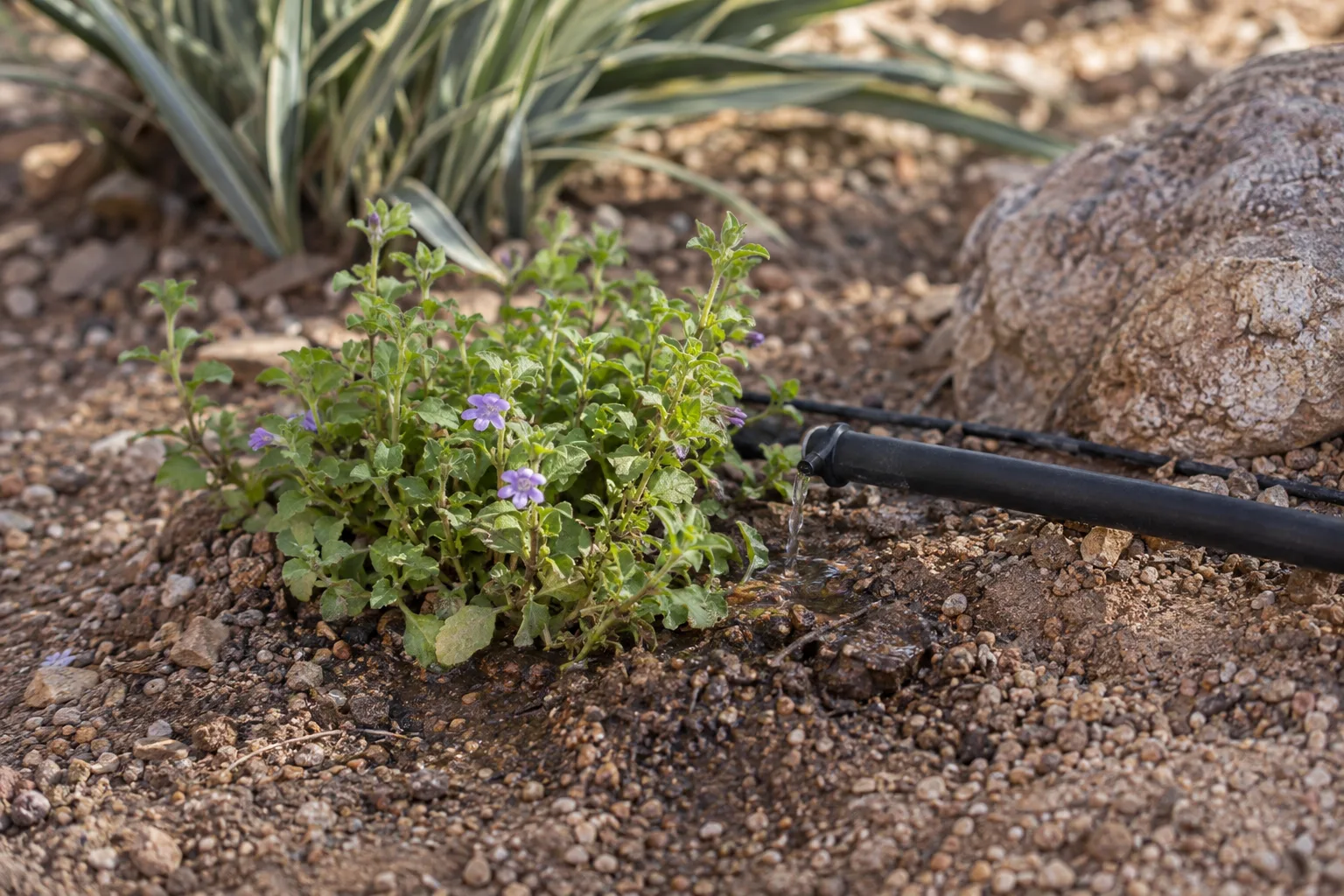
New groundcovers need water every 2 to 3 days for the first few weeks, then deeper soaks spaced further apart as roots grow. Shallow, frequent watering keeps roots near the surface and encourages weed seeds to sprout in constantly damp soil. Once plants are established, summer watering every 10 to 14 days is a common starting point, and winter watering every 3 to 4 weeks often suffices.
Drip emitters placed near each plant put water where roots can use it and keep the surrounding soil surface drier. During the monsoon, roughly July through September, skip a cycle after a soaking rain. Adjust to your soil, because sandy ground drains faster than clay.
Are any of these groundcovers invasive in Arizona?
None of the eight is a plant we know to be a problem, but the shrubby, multicolored Lantana camara is considered invasive in several warm regions, which is why we point gardeners to trailing lantana instead. Before planting near natural desert or a wash, read the state’s Arizona noxious weed list and ask local authorities about current rules. Lists change, so this post offers general guidance only.
What mistakes keep groundcovers from filling in?
Most failures come from a short list of avoidable problems, and all of them show up in the first year. Our classes and events page shows any workshops on the calendar.
- Planting in midsummer on a normal schedule. Transplants face highs above 110°F, so they need more frequent watering for the first few weeks, or wait for fall.
- Leaving Bermuda grass in the bed. It runs through new plantings and cannot be removed without damaging them.
- Watering established plants like lawn. Overwatering rots roots, especially in clay, and the natives do worst.
- Planting in deep shade. All eight want full sun and grow thin and open without it.
Frequently asked questions
How long do groundcovers take to cover bare soil in the low desert?
Most of these need one to two growing seasons to close gaps. Trailing lantana, rock purslane, trailing rosemary and trailing indigo bush tend to spread fastest, while damianita and blackfoot daisy fill in more slowly. Fall planting gives roots the cool months to establish before the first summer, so coverage usually comes sooner.
Can I plant groundcovers under desert trees?
Yes, if the light and water match. Most of these want full sun, so they work best at the edge of a canopy or under thin-canopied trees. Keep mulch and plants away from the trunk, and remember that a tree on infrequent deep watering may leave a groundcover short of water.
Will these groundcovers survive winter frost in Queen Creek?
Most handle our usual winter lows, though a hard frost can damage some. Trailing lantana and rock purslane are the most frost sensitive and may burn back, usually regrowing in spring. Leave damaged growth in place until late winter, since it shields the plant from later cold, then trim back to healthy tissue.
Can I walk on these groundcovers?
No, none of the eight handles regular foot traffic well. Stems break and the planting thins where people cross. Set stepping stones or a decomposed granite path through the bed, and keep the plants in areas you only need to reach for occasional weeding.
Are groundcovers the right fix for your weed problem?
Yes, if you have open ground in full sun, can water through the first summer and will clear existing weeds before planting. Once plants fill in, weeding drops to an occasional chore. Skip it if the area is a walkway, if Bermuda grass is established and you will not remove it first, or if you cannot water new plants regularly for the first few months. Stop by our nursery in Queen Creek and we will help you match plants to your spot.