
The cheapest Arizona food gardening ideas are growing from seed, planting in both seasons, mulching thickly, making your own compost, and choosing crops that like low desert heat. Each one cuts a recurring cost, and most take only a few hours to set up.
Key takeaways
- Sow beans, squash, cucumbers, carrots, beets and radishes directly from seed, and buy transplants only for slow crops like tomatoes, peppers and eggplant.
- Use two planting windows: cool-season crops from roughly September through February, and warm-season crops from late winter through summer.
- Cover beds with 3 to 4 inches of mulch and water deeply but less often to cut your water use.
- Build raised beds at least 12 inches deep to sit above caliche, and use cardboard, compost and free wood chips to build soil.
- Okra, Armenian cucumber, sweet potato and tepary beans keep producing when summer highs pass 110°F.
When should you plant a budget food garden in the low desert?
Plant in two windows: cool-season crops in fall and winter, and heat-loving crops from late winter through summer. Our herbs, vegetables and berries department covers both seasons. These are varieties we commonly carry, though availability changes week to week and season to season.
1. Use both growing seasons
One bed, one drip line and one soil investment can produce food twice a year. Leafy greens, broccoli, cabbage, carrots, beets, peas and onions go in from roughly September through November. Tomatoes, peppers, beans and squash follow from late January through March.
Tomato flowers often drop when daytime highs climb into the mid 90s, so spring plantings need a head start. The University of Arizona Cooperative Extension publishes a vegetable planting calendar for Maricopa County with exact dates for each crop, and it is worth keeping on the fridge. Our gardening calendars give a month-by-month view as well.
Summer is the slow stretch. Most crops stall from June through August, but okra, sweet potato and Armenian cucumber carry on. Use the gap to build compost and prepare beds for fall.
How can you cut the cost of seeds and starts?
Grow most crops from seed and buy transplants only for the few that need a long head start. A seed packet holds dozens of seeds, while a transplant gives you a single plant.
2. Sow directly what dislikes transplanting
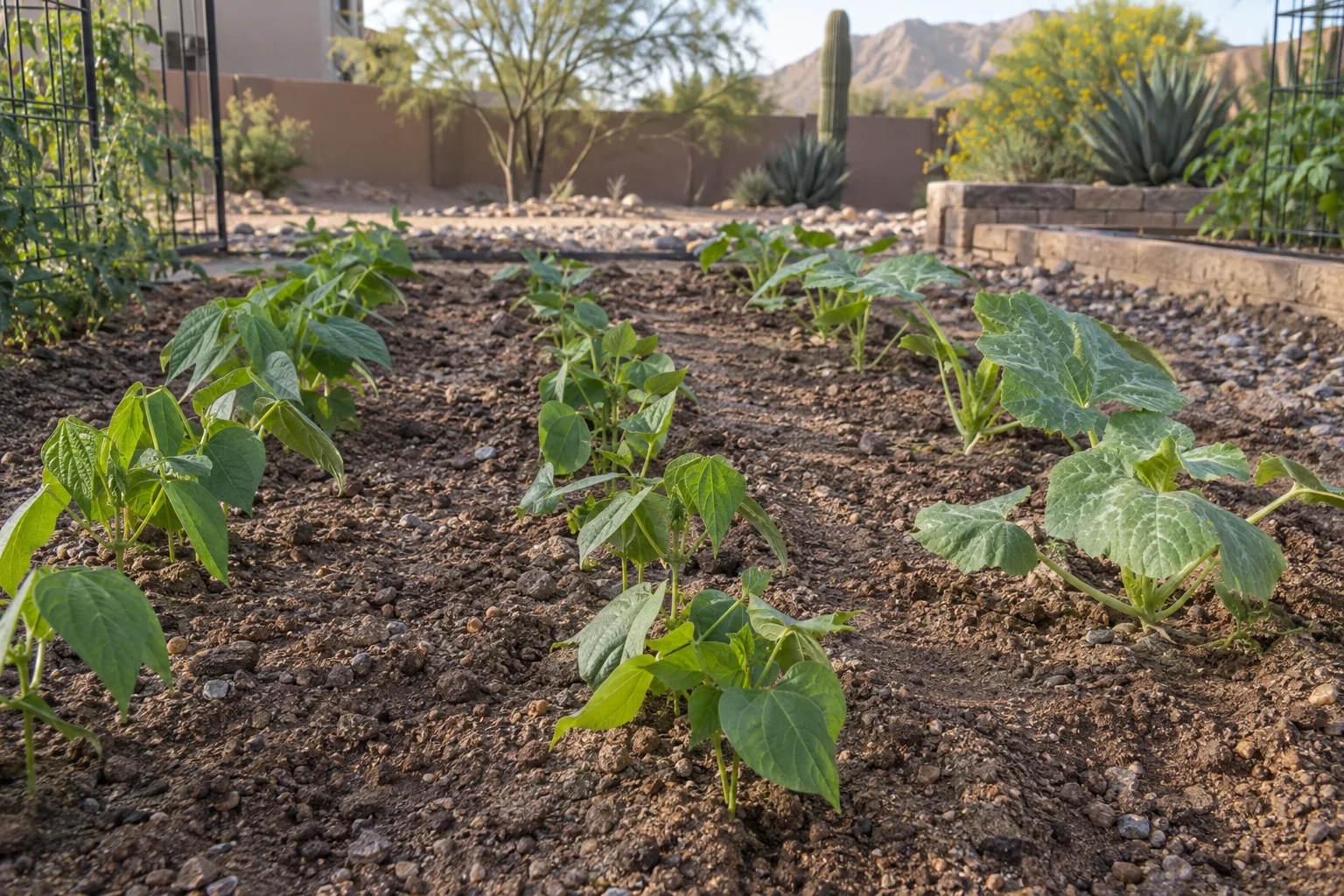
Beans, squash, cucumbers, radishes, carrots, beets and most greens do well sown straight into the bed. Carrots and beets in particular resent root disturbance. Keep the top inch of soil moist until sprouts show, then thin to the spacing printed on the packet. Crowded plants compete for water and produce less.
Store leftover seed in a sealed jar in a cool, dry spot. Many vegetable seeds stay viable for 2 to 4 years, so one packet can cover several seasons.
3. Buy starts only for slow crops
Tomatoes, peppers and eggplant take months to reach harvest, so a transplant buys you weeks you would otherwise lose before summer heat arrives.Cherry tomato varieties usually keep setting fruit longer into spring than large slicers. Everything else can start from seed.
How do you build good soil without buying much?
Make your own compost, mulch with cardboard and wood chips, and build up instead of digging down. Queen Creek soil is alkaline and often sits on caliche, a cemented layer of calcium carbonate that roots and water struggle to pass through.
4. Compost kitchen and yard waste
A bin built from scrap pallets or wire mesh costs little. Kitchen scraps, coffee grounds, dry leaves and shredded cardboard all go in. Heat speeds breakdown, so a damp, regularly turned pile can finish in a couple of months. Work 2 to 3 inches of finished compost into the top 6 to 8 inches of a bed each season. Organic matter helps both sandy and clay soils hold moisture and nutrients.
5. Sheet mulch with cardboard and wood chips
To turn a weedy patch into a bed, lay plain overlapping cardboard, soak it, and cover it with 4 to 6 inches of wood chips. The cardboard smothers weeds and breaks down over a few months. Many tree-trimming crews will drop off fresh chips if you ask. Use them as a top mulch rather than mixing them into the soil.
6. Build up over caliche
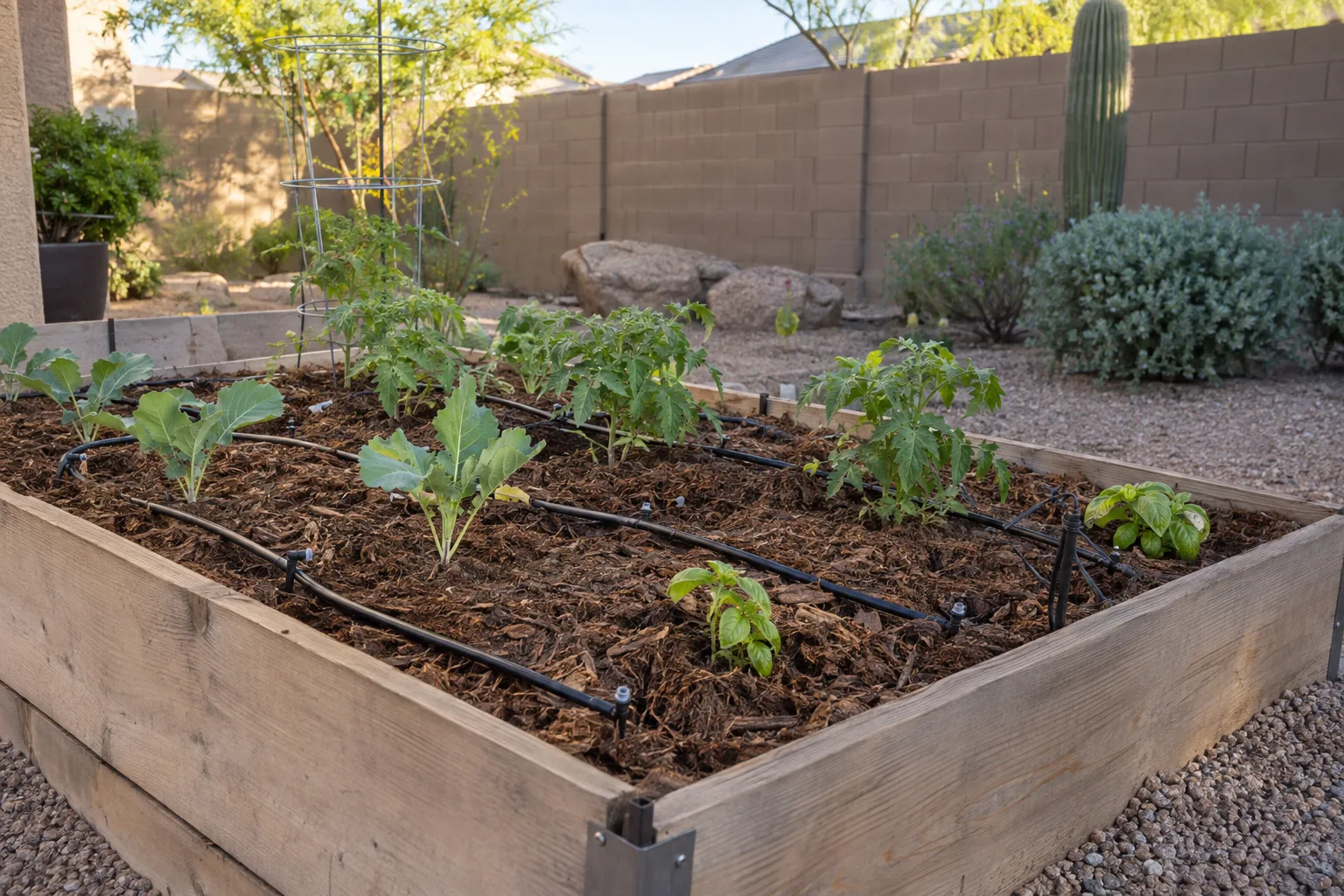
A raised bed at least 12 inches deep filled with a good soil mix lets roots grow above the caliche. Untreated lumber or concrete blocks cost less than cedar. For an in-ground bed, a digging bar can open a few drainage holes through the layer, which is slow work but free.
What containers work on a budget?
Reused food-safe buckets, fabric grow bags and half barrels all work, as long as they have drainage holes and enough volume for the crop. Decorative pots are not needed for a productive garden.

7. Reuse containers and match the size to the crop
Herbs are fine in 1 to 3 gallons. Tomatoes and peppers want 5 gallons or more, and squash and cucumbers do best in 10 gallons or larger. Fabric bags breathe and drain well, but they dry out quickly in summer. Dark containers in full afternoon sun can overheat roots, so place them where they get morning sun and some afternoon shade. If you want something sturdier, browse our pottery and planters.
How do you lower the water bill for a food garden?
Mulch the soil, water deeply instead of often, and put the water at the roots with drip irrigation. Water is the largest ongoing cost for most East Valley food gardens.
8. Mulch and water deeply
Spread 3 to 4 inches of straw or wood chips over beds, keeping them a few inches from plant stems. Mulch slows evaporation, so the soil stays moist longer. Push a finger or trowel 3 to 4 inches down to check moisture before you water. Shallow daily sprinkling keeps roots near the surface, where they dry out first.
Our irrigation water is hard, so an occasional deep soaking helps flush salts below the root zone.
9. Install drip with a timer
A basic drip kit with a battery timer can water a 4 by 8 foot bed with little waste. Run it early in the morning, when evaporation is low and plants have water before the day heats up. Unglazed clay pots buried in the bed (ollas) are a low-cost option for small plantings. A rain barrel can store monsoon runoff, but check your city and HOA rules before installing one.
Which crops give the most food for the least effort?
Crops matched to the season give the best return, and several handle our heat well enough to need little care.

10. Pick crops built for low desert conditions
- Armenian cucumber (Cucumis melo var. flexuosus): a melon relative that grows as a sprawling vine and produces long, mild fruit in heat. Give it room or a trellis.
- Okra (Abelmoschus esculentus): sow seed in warm soil and pick pods every day or two while they are small. Pods turn tough fast if you wait.
- Sweet potato (Ipomoea batatas): plant slips in late spring. It needs loose soil, so use a deep container or a mounded bed.
- Tepary bean (Phaseolus acutifolius): a Sonoran Desert crop that tolerates heat and dry spells. It produces small seeds best used dried.
- Swiss chard (Beta vulgaris) and kale (Brassica oleracea): cool-season greens you can cut repeatedly from fall into spring.
- Rosemary (Salvia rosmarinus): a long-lived perennial herb that wants fast drainage and little water once established. Plant it in the ground or a large pot.
What mistakes waste money in a first food garden?
Most wasted money comes from planting at the wrong time, overwatering and starting too big. These are the ones to avoid:
- Setting out tomatoes in May, when heat blocks fruit set, instead of in late winter.
- Building a large garden before you know how your yard’s sun and shade move.
- Watering on a fixed schedule all year instead of checking soil moisture.
- Reaching for a spray at the first sign of insects.
On that last point, many broad-spectrum products also kill beneficial insects. Try hand-picking or a strong spray of water first, and read the label of anything you do buy. The Cooperative Extension can help identify a pest.Our classes and events are another way to learn local timing before you spend money.
Frequently asked questions
Can you grow vegetables year-round in the East Valley?
Almost, with a pause in the hottest months. Cool-season crops carry the garden from fall through early spring, tomatoes and beans fill late winter and spring, and heat-lovers such as okra and sweet potato cover summer. Most other crops stall from June through August, so use that gap to build compost and prepare beds for fall.
How big should a first budget garden be?
Start with one 4 by 8 foot bed or four to six containers. That size grows a steady supply of greens, herbs and a few tomato or pepper plants, and it is small enough to water and weed in a few minutes a day. Expand after one full season, once you know how your yard’s sun and shade move.
Do vegetables need fertilizer in desert soil?
Compost covers most of what greens and root crops need. Heavy feeders such as tomatoes, squash and okra benefit from a light organic fertilizer during the growing season, applied at the rate on the label. Alkaline soil can lock up iron, so new leaves that turn yellow with green veins deserve a closer look.
Is growing your own food cheaper than buying it?
It depends on the crop. Herbs, salad greens, chard, cherry tomatoes and prolific vines such as Armenian cucumber return the most for the space and water they use. Crops that need a lot of room for a small harvest, such as sweet corn, usually cost more to grow than to buy.
Can you grow food in a shady yard?
Most fruiting crops need at least 6 hours of direct sun, but greens and herbs tolerate afternoon shade. In summer, a 30 to 50 percent shade cloth over beds protects tender seedlings from intense sun. Put tomatoes and peppers in the brightest spot you have, and save the shadier corners for lettuce, chard and herbs.
Is a budget food garden worth starting in your yard?
Yes, if you can give it a few minutes a day and you start small. Herbs, greens, cherry tomatoes and heat-tolerant vines repay a modest effort, and homemade compost and free mulch keep costs low. It is a poor fit if you travel all summer with no one to check the irrigation, or if your yard gets less than 6 hours of sun. Come by our Queen Creek nursery and talk through your yard with us.