
The Arboretum at Flagstaff earns a place on your Arizona travel list because it is a 200-acre native plant garden at 7,150 feet, where summer afternoons run far cooler than the East Valley. You leave with plant names and ideas.
Key takeaways
- The Arboretum sits at about 7,150 feet on roughly 200 acres, so summer afternoons are often 25 to 35°F cooler than in Queen Creek.
- Expect about 2.5 to 3 hours of driving each way from Queen Creek, north on I-17, so plan an early start.
- The garden is seasonal and typically open from about April to October, so confirm dates and hours on its website before you go.
- Allow 2 to 3 hours on the grounds, and pack layers, sunscreen and more water than you expect to drink.
- Penstemon, sideoats grama and Apache plume have low-desert counterparts, but ponderosa pine and Gambel oak do not belong in Queen Creek.

What is the Arboretum at Flagstaff?
It is a nonprofit botanical garden on the west side of Flagstaff, set in ponderosa pine forest at about 7,150 feet. The grounds cover roughly 200 acres and focus on plants of the Colorado Plateau and nearby mountain regions. It opened in the early 1980s and also carries out conservation work. The air smells of pine.
Staff and volunteers propagate rare plants, collect seed and help restore native plant communities in the region. Interpretive signs list common and botanical names, and explain why a plant grows where it does, which suits gardeners who like the reasoning behind a planting as much as the flowers.
How long is the drive from Queen Creek?
Plan on roughly 2.5 to 3 hours each way from Queen Creek, depending on traffic through the Valley. From central Phoenix the drive is closer to 2 hours. You take I-17 north and climb more than 5,000 feet, so saguaro and creosote give way to juniper grassland and finally ponderosa pine.
The Arboretum is southwest of downtown Flagstaff. Save the location on your phone before you leave, because cell coverage can be patchy on the final stretch. Flagstaff has plenty of restaurants and gas stations, so you can eat and fuel up before or after your visit.
When is the best time to visit the Arboretum?
Visit in July or August for the coolest escape from low-desert heat, or in May and September for fewer storms and milder days. The garden is seasonal, so check the opening calendar before picking a weekend.
| Months | What to expect | Plan for |
|---|---|---|
| April to May | Early bloom, cool mornings, late frost or snow possible | Warm layers and a jacket |
| June | Dry, warm days before the monsoon | Sun protection and extra water |
| July to August | Monsoon moisture, summer wildflowers, afternoon storms | A morning visit and a rain layer |
| September to October | Cooler days, fall color, frost possible near the end | Layers and a check of the closing date |
When Queen Creek tops 110°F, Flagstaff days often sit in the 70s or low 80s. Storms build in the afternoon during the monsoon, which runs roughly July through September. Go early.
What is there to see on the grounds?
Expect wildflower gardens, forest trails and, on scheduled days, live raptor programs. Budget at least 2 to 3 hours, and more if you like to read every sign and photograph plants for later identification.
Native wildflower and demonstration gardens
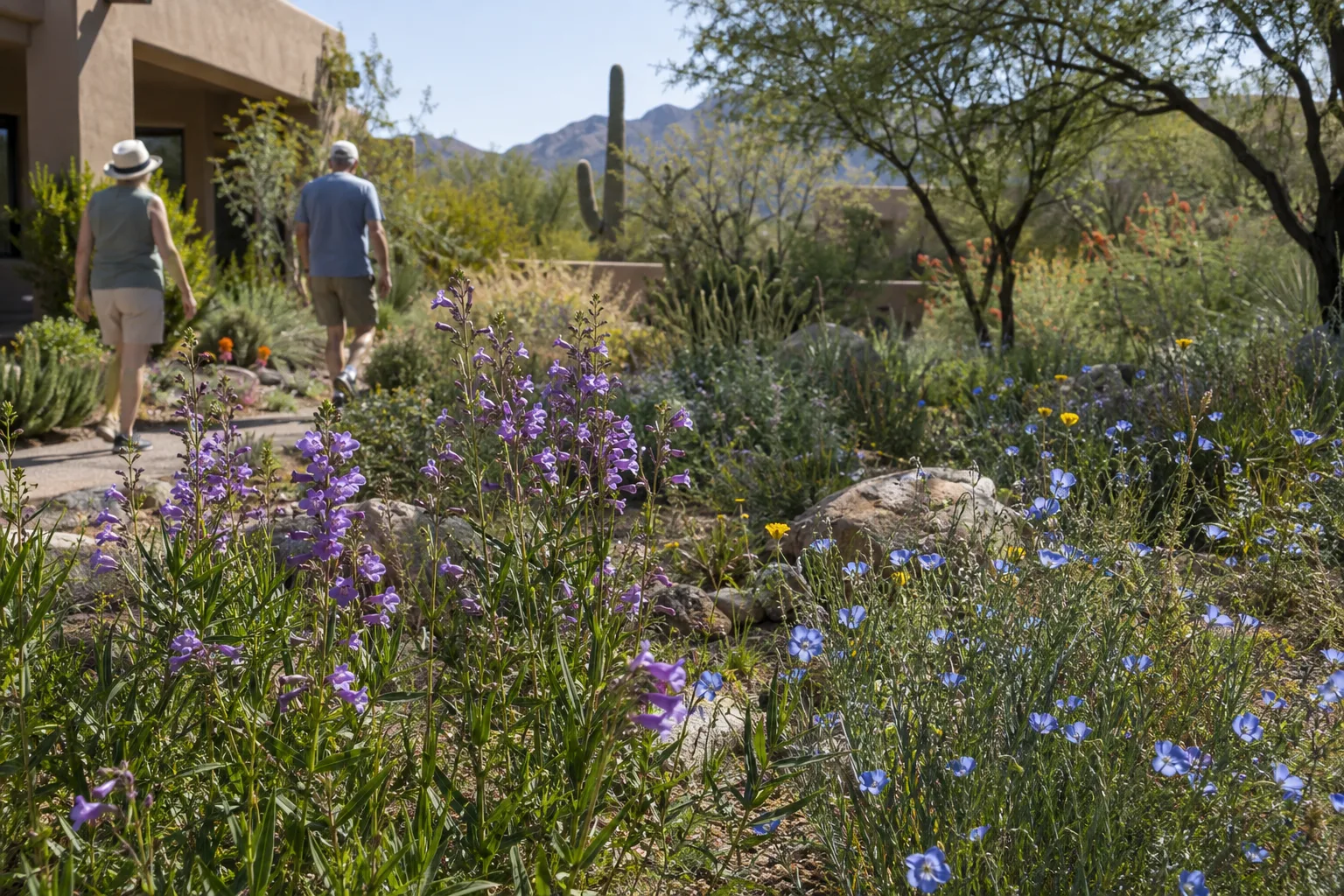
These beds show plants of the Colorado Plateau in groups, with signs on pollinators, seed dispersal and traditional uses. Summer is the best time for color, and you may see Rocky Mountain penstemon (Penstemon strictus) and blue flax (Linum lewisii), though what blooms depends on the week.
Forest trails
Trails wind through ponderosa pine forest and explain forest ecology, fire and the pressures on high-elevation plant communities. Some paths are natural surface with uneven ground. Wear sturdy shoes, and leave the sandals in the car.
Raptor programs
The Arboretum has offered live birds of prey in free-flight demonstrations, and these run on set schedules. Check the website for the program times on your date, then plan your walking around them, because schedules can change with the season and staffing.
Which Arboretum plants can I grow in Queen Creek?
Many of the genera you see have low-desert relatives, but the mountain species themselves usually fail in our heat. Think of the garden as a source of names and ideas, then look for the lower-elevation cousins that handle alkaline soil, hard water and summer highs above 110°F.
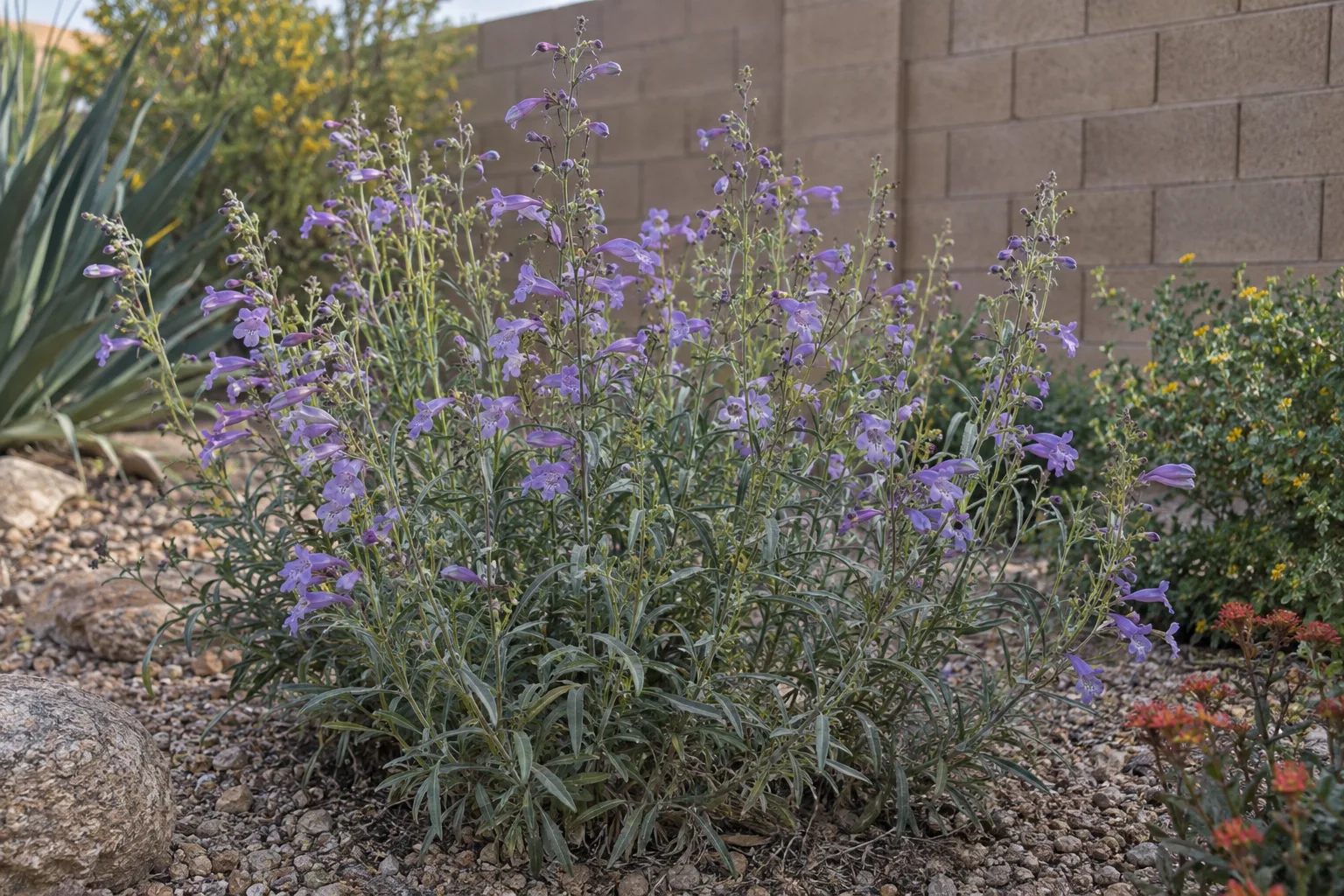
Penstemons are the clearest example. Parry’s penstemon (Penstemon parryi) and desert penstemon (Penstemon pseudospectabilis) are native to the low desert and bloom in late winter and spring, attracting hummingbirds. Sideoats grama (Bouteloua curtipendula) and Apache plume (Fallugia paradoxa) also adapt to lower elevations, though they need good drainage and a first season of regular watering.
Ponderosa pine and Gambel oak (Quercus gambelii) are the plants to admire and leave behind. They expect cold winters, summer rain and far more moisture than Queen Creek receives. Browse our plant selection for low-desert alternatives. These are varieties we commonly carry, but availability changes week to week and season to season.
What can a mountain garden teach a desert gardener?
It shows how plant communities work in layers, a pattern you can copy at a smaller scale in a Queen Creek yard. Tall trees give shade, shrubs fill the middle, and grasses and wildflowers cover the ground. Each layer shades the soil and holds moisture below it.
Many desert yards have single plants scattered over bare gravel. Grouping plants with similar water needs and filling the gaps with low-water groundcovers reduces bare soil and heat radiating from rock. Flagstaff receives roughly 20 or more inches of precipitation a year compared with about 8 to 9 here, so the lesson is the structure, not the water budget.
Plan the planting at the right time of year with our gardening calendars. If you want hands-on help, check our classes and events for sessions on native and desert-adapted plants.
How do I plan the day trip?
Work backward from the opening time, and keep the plan simple. These steps cover most visits.
- Check the Arboretum’s website for opening dates, hours, ticket details and the raptor schedule.
- Leave Queen Creek early, around 6:00 to 6:30 AM, so you arrive close to opening and miss the afternoon storms.
- Dress in layers. Mornings at 7,000 feet can be cool even in summer.
- Pack water, snacks, sunscreen and a hat, since the sun is strong at elevation and food options on site may be limited.
- Walk the gardens first, then the forest trails, and photograph every sign with a botanical name.
- Eat in Flagstaff, then drive home before dark.

Mistakes to avoid
- Assuming the garden is open year-round when it follows a seasonal calendar.
- Arriving at midday in monsoon season, when storms are most likely.
- Skipping layers because it is 110°F at home.
- Trying to collect seed or plants without permission.
Frequently asked questions
Can I visit the Arboretum as a day trip from Queen Creek?
Yes, if you leave early. The round trip is roughly 5 to 6 hours of driving, and the garden needs 2 to 3 hours on top of that. Leaving by 6:30 AM gets you there close to opening and home before dark. A lunch in Flagstaff stretches the day, so an overnight stay makes it less rushed.
How long should I spend at the Arboretum?
Plan on 2 to 3 hours for a relaxed walk, or up to 4 if you read the signs and take photos. Trails are natural surface in places, so wear sturdy shoes. Check the raptor program time first and build your walk around it, since programs run on set schedules and may not be offered every day.
Will mountain wildflower seed grow in Queen Creek?
Most will not. Plants adapted to 7,000 feet expect cold winters, summer rain and 20 or more inches of precipitation a year, while Queen Creek gets about 8 to 9 inches and summer highs above 110°F. Look for low-desert relatives in the same genus, such as penstemon, and plant them in fall so roots establish before summer.
Do I need a jacket in summer?
Bring a light layer even in July. Mornings at 7,000 feet can be cool, and monsoon storms can drop the temperature quickly in the afternoon. The sun is strong at elevation too, so pack sunscreen and a hat. Carry plenty of water, because dry air and altitude dehydrate you faster than you expect.
Can I bring photos and plant names to the nursery?
Yes. Photos and botanical names from your trip help us point you toward low-desert relatives that suit your yard. Availability changes week to week and season to season, so ask what is available when you visit and what we would suggest as a substitute. You can also reach us through our contact page before you come in.
Is the Arboretum at Flagstaff worth the drive from the East Valley?
Yes, if you enjoy walking, reading plant labels and cooler air. It gives you names, layered planting ideas and a summer break from 110°F heat. Skip it if you dislike long drives, want to see desert plants specifically, or cannot manage uneven trails. The roughly 5 to 6 hours of round-trip driving is the main cost, so go on a day with an early start. When you come home with photos and plant names, stop by our nursery in Queen Creek and we will help you find low-desert versions.