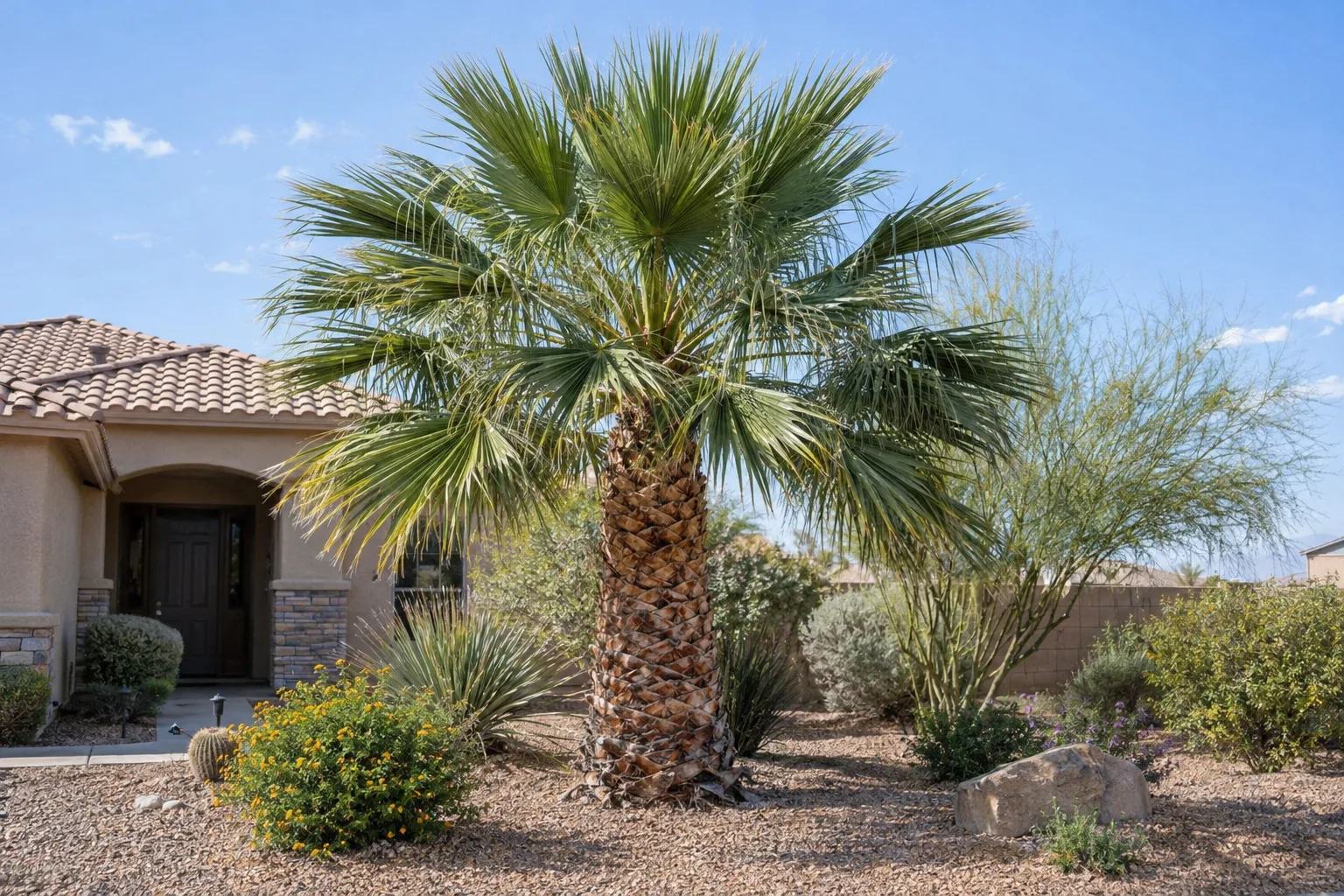
The one April palm care mistake in Arizona is cutting off green fronds. Palms use those leaves to feed the crown, so in April remove only fully dead fronds and spent fruit stalks, and leave anything that still has green in it.
Key takeaways
- Remove only fronds that are fully brown and dead; green or partly green fronds are still feeding the palm.
- Fronds above the horizontal (the 9 o’clock to 3 o’clock line) should stay unless they are completely dead.
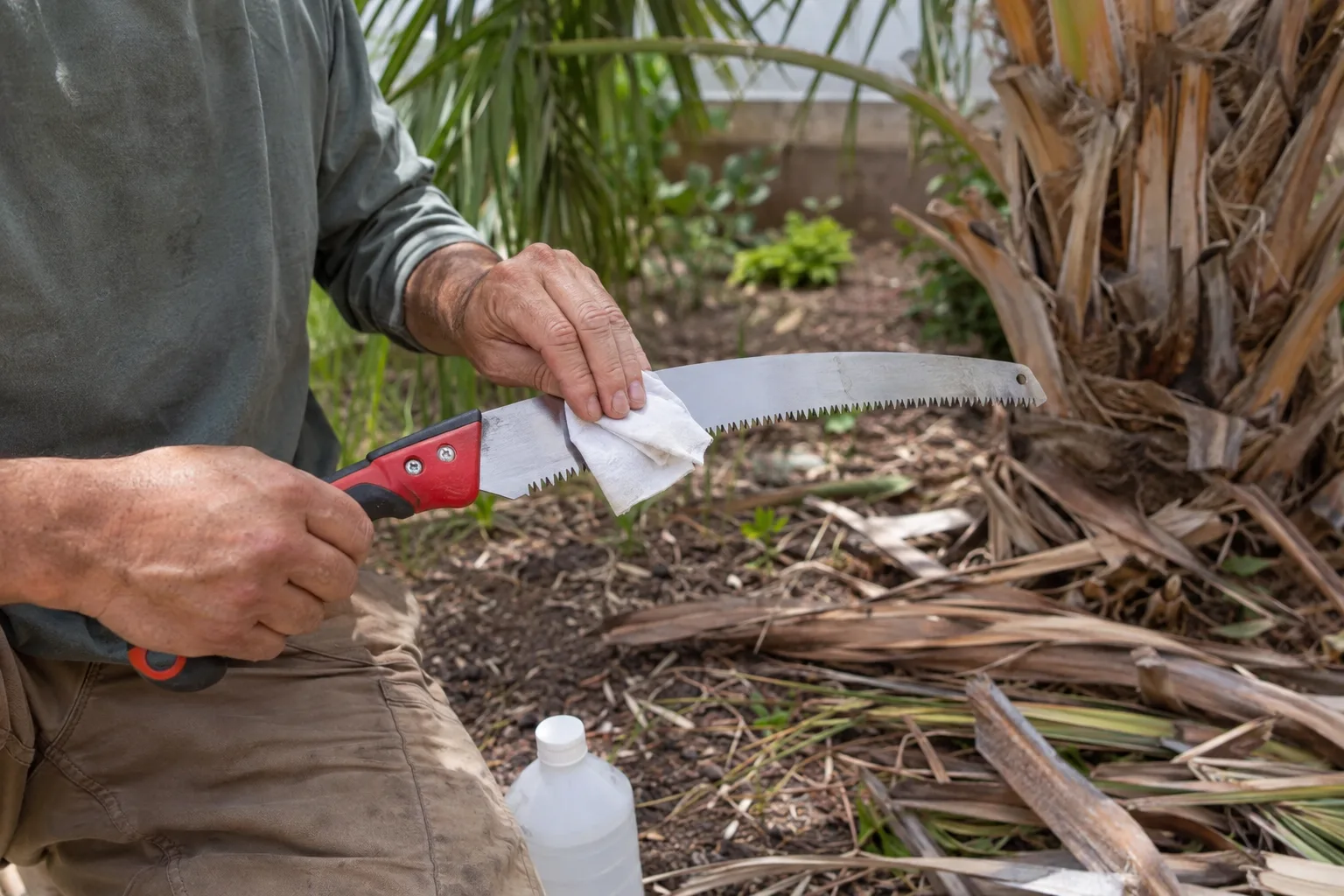
- Clean pruning tools with rubbing alcohol or a diluted bleach solution between palms to avoid spreading disease.
- Alkaline low-desert soil often causes yellow or frizzled fronds from locked-up nutrients, so a palm-specific fertilizer with micronutrients helps more than extra water.
- As April heat builds, water deeply and slowly at the drip line rather than adding short, frequent sprinklings.
Why is cutting green palm fronds a mistake?
Green fronds are working leaves, and even a yellowing one is still passing nutrients back to the palm as it ages. Take it off early and the tree loses that supply right when it is pushing new growth ahead of summer.
Palms are not like a shade tree. They grow from a single growing point at the top of the trunk, often called the heart or bud. A palm cannot branch around damage, and it cannot regrow a lost crown. That is why heavy trimming is harder on a palm than on most landscape trees.
April tempts people because the weather is pleasant, the yard is waking up, and a shaggy palm stands out. If you are picking out a palm for your yard, our palm trees department is a good place to see the range of sizes and shapes that suit different spaces.
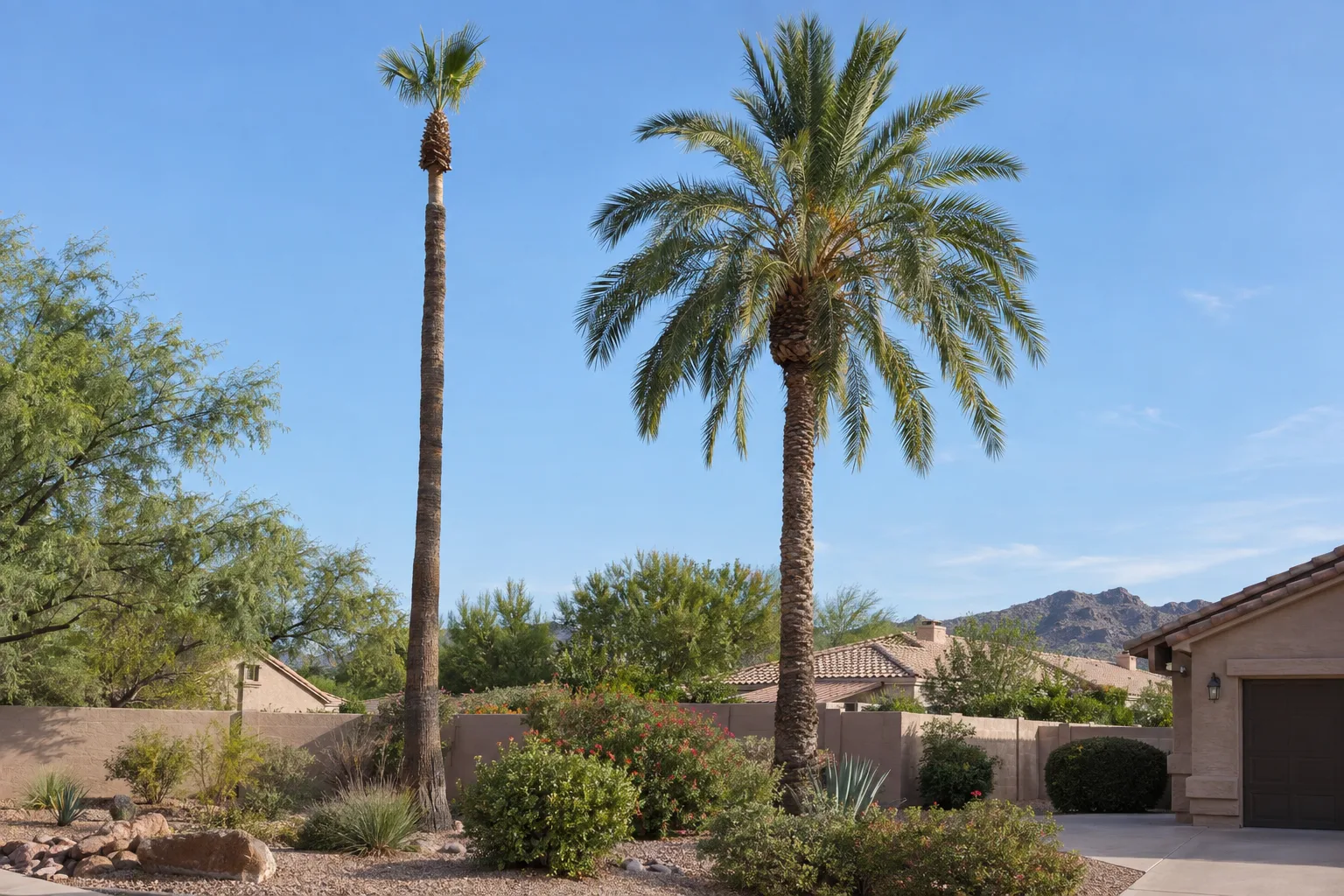
What is hurricane cutting, and what does it do to a palm?
Hurricane cutting means trimming a palm so hard that only a small tuft of fronds is left at the top. It is sometimes sold as a way to make a palm look tidy or to help it handle monsoon wind.
Many arborists advise against it. A palm with a full canopy has more leaf area to make food, and flexible fronds bend in wind instead of fighting it. A palm trimmed down to a tuft has less to work with and often looks poor for a long time while it recovers.
Commonly reported effects of heavy trimming include:
- A narrowed section in the trunk where the palm lived on reduced reserves.
- Slower growth and a thinner crown for one or more seasons.
- Sun exposure on the crown during the long run of 110°F days.
- More stress overall, and stressed palms are more open to rot and insect trouble.
Repeated heavy cuts, year after year, can wear a palm down for good.
How do I prune a palm in April the right way?
Remove only what is fully brown and dead, plus spent flower or fruit stalks, and leave every frond that still shows green. Light, careful cleanup in April is fine; heavy shaping is what to avoid.
Here is a simple order of work:
- Walk around the palm in morning light and sort the fronds into fully dead, partly green and healthy.
- Wipe your saw or loppers with rubbing alcohol before the first cut and again before moving to the next palm.
- Cut dead fronds cleanly, leaving a short stub of the leaf base rather than slicing flush against the trunk.
- Leave fronds that sit at or above the horizontal line unless they are completely dead.
- Take off old fruit or flower stalks if the palm has them.
- Bag or haul away the debris; a pile of old fronds against the house invites pests.
On tall palms, leave the work to a trained, insured professional. Climbing a 30-foot trunk with a saw is a safety job, not a weekend project.
Can pruning spread palm disease?
Yes. Some palm diseases, including Fusarium wilt, which mainly affects Canary Island date palms, can travel on dirty saw blades from one tree to the next, even when the first tree shows no symptoms.
If you hire a tree service, ask whether they clean their tools between palms. A reputable crew will not mind the question. If you do the work yourself, the cleaning step above takes a minute and protects every palm on your street, not just your own.
Wounds at the base of a trunk can also let in rot fungi. That is another reason to avoid hacking at the trunk and to keep string trimmers and mowers away from it.
How should I feed and water palms as spring heat builds?
Feed with a slow-release fertilizer made for palms, and water deeply at the drip line. In April, lengthen each watering rather than shortening the gap between them too far.
Our alkaline soil and hard irrigation water tie up manganese, iron and magnesium, so palms often turn yellow or grow frizzled new fronds even when they get plenty of water. Look for a palm formula that lists potassium, magnesium and micronutrients, and follow the label for rates. Keep it off the trunk and away from the lawn fertilizer pile. Our gardening calendars are a handy way to track seasonal feeding.
For established palms on drip, deep watering roughly every 7 to 14 days in April is a reasonable starting point, tightening up as heat arrives. Sandy soil dries faster, and clay or caliche holds water longer. Push a long screwdriver into the soil at the drip line before irrigating; if it slides in easily and comes out damp, wait. Young palms need more frequent water than established ones.
What does a stressed palm look like, and when should I call a professional?
A stressed palm shows yellowing, frizzled or stunted new fronds, or fronds that brown on one side. Slow decline in the crown, soft or leaning new growth, or a foul smell means it is time for an arborist.
Nutrient problems usually show as a pattern across many fronds. Potassium shortage tends to show on older fronds, manganese shortage on new ones that come out frizzled, and magnesium shortage as yellow bands on the leaf edges. Disease and rot tend to look lopsided or fast-moving, and fertilizer will not fix them.
When in doubt, call a certified arborist, and do it early. Our classes and events page lists upcoming sessions where you can ask plant care questions in person.
Frequently asked questions
When is the best time to prune palms in the Arizona low desert?
There is no single perfect month, because it depends on the species. In general, remove dead fronds as they appear and do heavier cleanup once frost danger has passed. Confirm timing for your palm type with a certified arborist or University of Arizona Cooperative Extension guidance before doing anything heavier than dead-frond removal.
Can a palm recover from hurricane cutting?
Often yes, if the cut was a one-time event and the palm is otherwise healthy. Recovery can take a season or more, and the palm may look sparse in the meantime. Feed it properly, water deeply, and stop removing green fronds so it can rebuild its canopy.
Should I remove the dead skirt of fronds on a fan palm?
It is a matter of preference and safety. Dead fronds are not harmful to the tree, but a thick skirt can shelter roosting birds, rodents and other pests close to a home, and it is a fire risk. Remove only fully dead fronds, and hire a professional for tall palms.
Why are my palm’s new fronds yellow and frizzled?
That pattern usually points to a micronutrient problem, most often manganese, which alkaline soil makes hard for roots to take up. A palm-specific fertilizer with micronutrients, applied at the label rate and watered in deeply, is the usual fix. Expect slow improvement over several months, since existing damaged fronds will not turn green again.
Is it okay to use lawn fertilizer on palms?
It is not ideal. Lawn fertilizers are heavy on nitrogen and often short on the potassium, magnesium and micronutrients palms need. Excess nitrogen can also push soft growth. If palms grow near turf, keep granular lawn products off the root zone under the palm and use a palm formula instead.
Should you trim your palm yourself this April?
If your palm only has dead fronds and old fruit stalks, a careful trim with clean tools is fine for most people with a short palm. If you want the green fronds gone for looks, hold off; the palm will look better and grow stronger with them. Skip DIY work on tall trunks, and call a professional for anything near power lines. Stop by our Queen Creek nursery, and we will help you sort out palm questions.