An April irrigation check means running every zone and watching it work, fixing clogged emitters and misaligned heads, and raising run times before highs pass 100°F. Do it in April, while afternoons are still in the 80s and 90s, so repairs are done before summer heat arrives.
Key takeaways
- Start the check in April, six to eight weeks before highs routinely reach 110°F.
- Watch every zone run its full cycle. A working drip emitter wets the soil around it within 10 to 15 minutes.
- Place tree emitters at the drip line, the edge of the canopy, and move them outward as the tree grows.
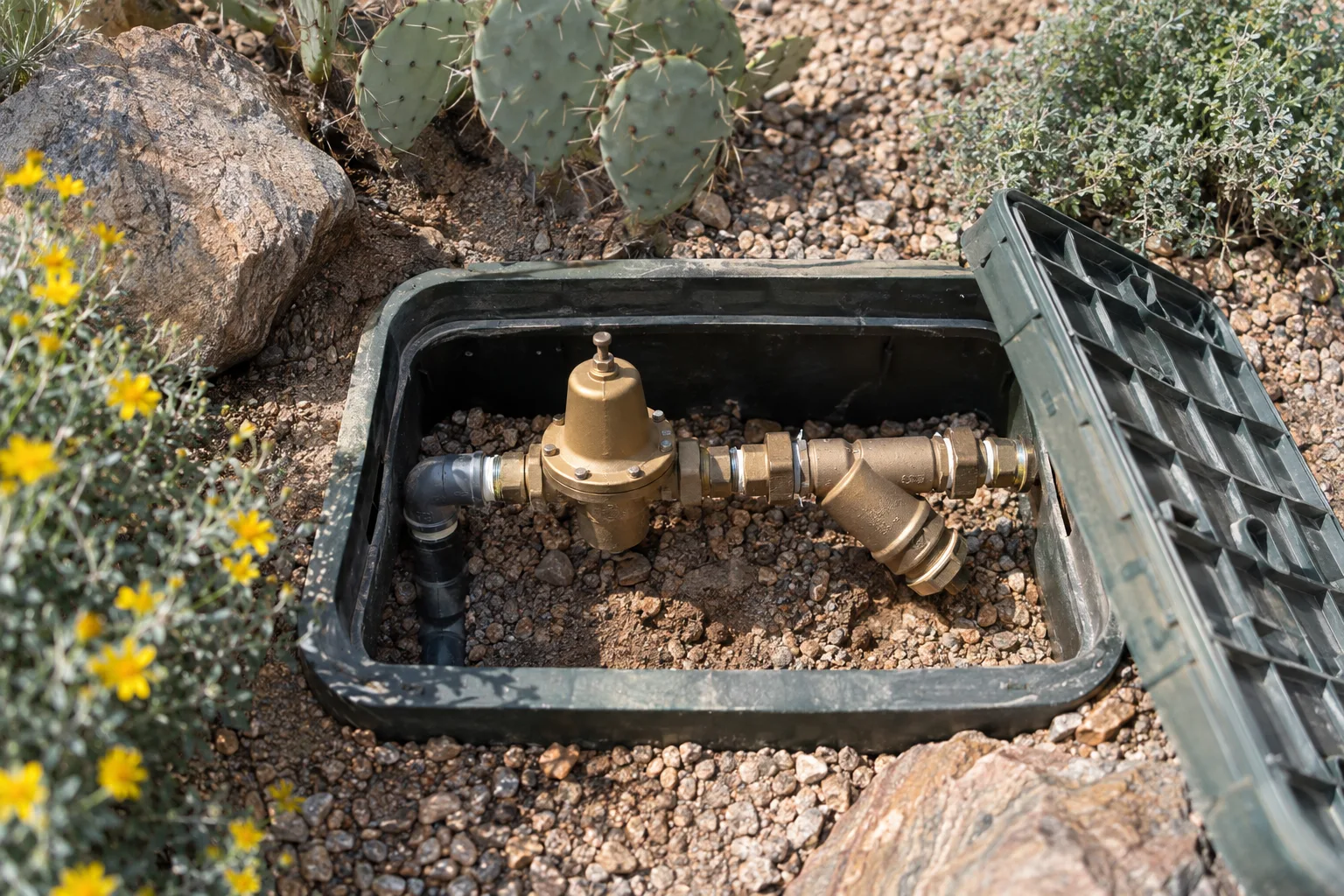
- Drip systems are usually designed for about 20 to 30 PSI, so install a pressure regulator if your static pressure is higher.
- Raise run times in steps, in April, mid-May and early June, instead of making one big change.

When should I check my irrigation system in Arizona?
Check it in April, ideally by the middle of the month. Highs in the East Valley usually sit in the 80s and low 90s then, and within six to eight weeks they pass 100°F and soon after reach 110°F, so any repair you find still has time to be finished before the stress arrives.
Plants that lose water during an early heat spike can drop leaves, scorch and lose fine roots, and young trees take the hardest hit. Many yards are still on a winter schedule in April, with run times cut by a third or more, while plants are growing and building the roots they need for July. Our gardening calendars list the other April jobs worth doing the same weekend.
What tools and parts do I need for an irrigation check?
A small kit covers almost every April repair, and most of it costs little. Gather these before you head outside:
- Flat-head screwdriver and needle-nose pliers
- Tubing cutter and an emitter punch
- Replacement emitters, commonly in 1, 2 and 4 gallons per hour
- Goof plugs to cap holes you no longer use
- Spare filter screens
- A pressure gauge that threads onto a hose bib
- Marking flags and your phone for photos
Block out two to three hours on a weekend morning. Start early, before the afternoon warms up and the work gets uncomfortable.
How do I inspect an irrigation system step by step?
Work through the system in this order, one zone at a time, and write down every problem as you find it.
- Photograph your controller settings, then confirm the date, time and current schedule are correct.
- Check the main shutoff and the backflow preventer for leaks or mineral buildup around the fittings.
- Run each zone manually for a minute or two to confirm the valve opens and the controller is working.
- Walk the first zone while it runs for its full cycle. Crouch down, move mulch or decomposed granite aside, and confirm water is coming out of every emitter or head.
- Flag each problem spot with a marker so you can find it again.
- Open the valve boxes and look for standing water, debris, roots and insect nests. Check the wire insulation for chew marks.
- Unscrew the Y-filters and rinse the screens, since they collect sediment that clogs emitters over time.
- Move emitters outward on any tree or shrub that has grown since the system was installed.
- Set the April schedule and add calendar reminders for mid-May and early June.
- Record the number and size of emitters on each zone and keep a simple zone map.
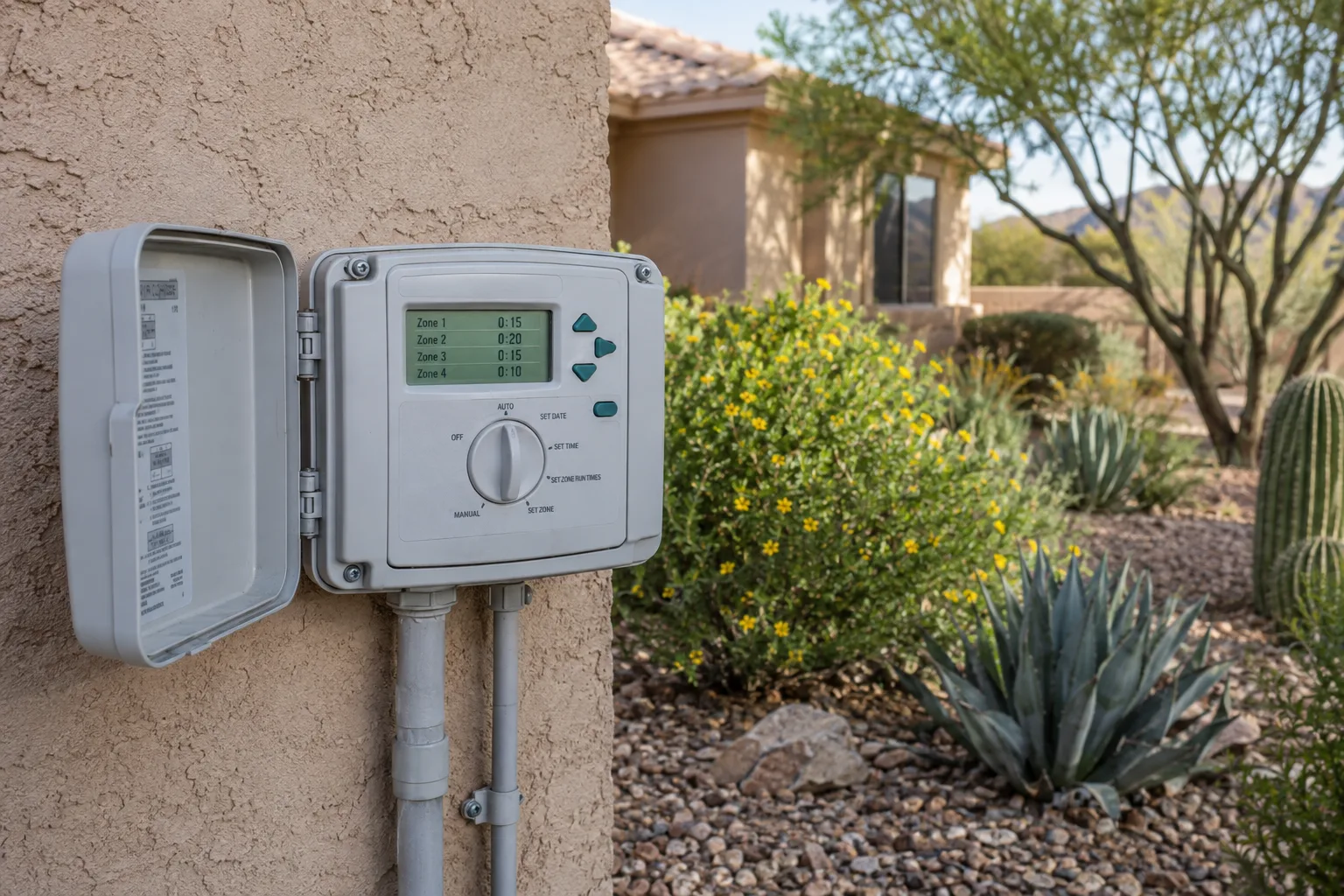
That record pays off in July, when a failure at 112°F needs a quick diagnosis and you would rather not trace buried lines from memory.
What should I look for in drip emitters and spray heads?
Drip systems fail in a few predictable ways, and each one shows up if you watch the zone while it runs.
Drip emitters and tubing
Look for emitters that are blocked, with bone-dry soil around them, and emitters that have popped off the tubing and are flooding one spot. Check for tubing that has been crushed by a rock or foot traffic, and for emitters buried under several inches of decomposed granite. Rodents and sun-brittle plastic also split tubing, so run your hand along exposed lines.
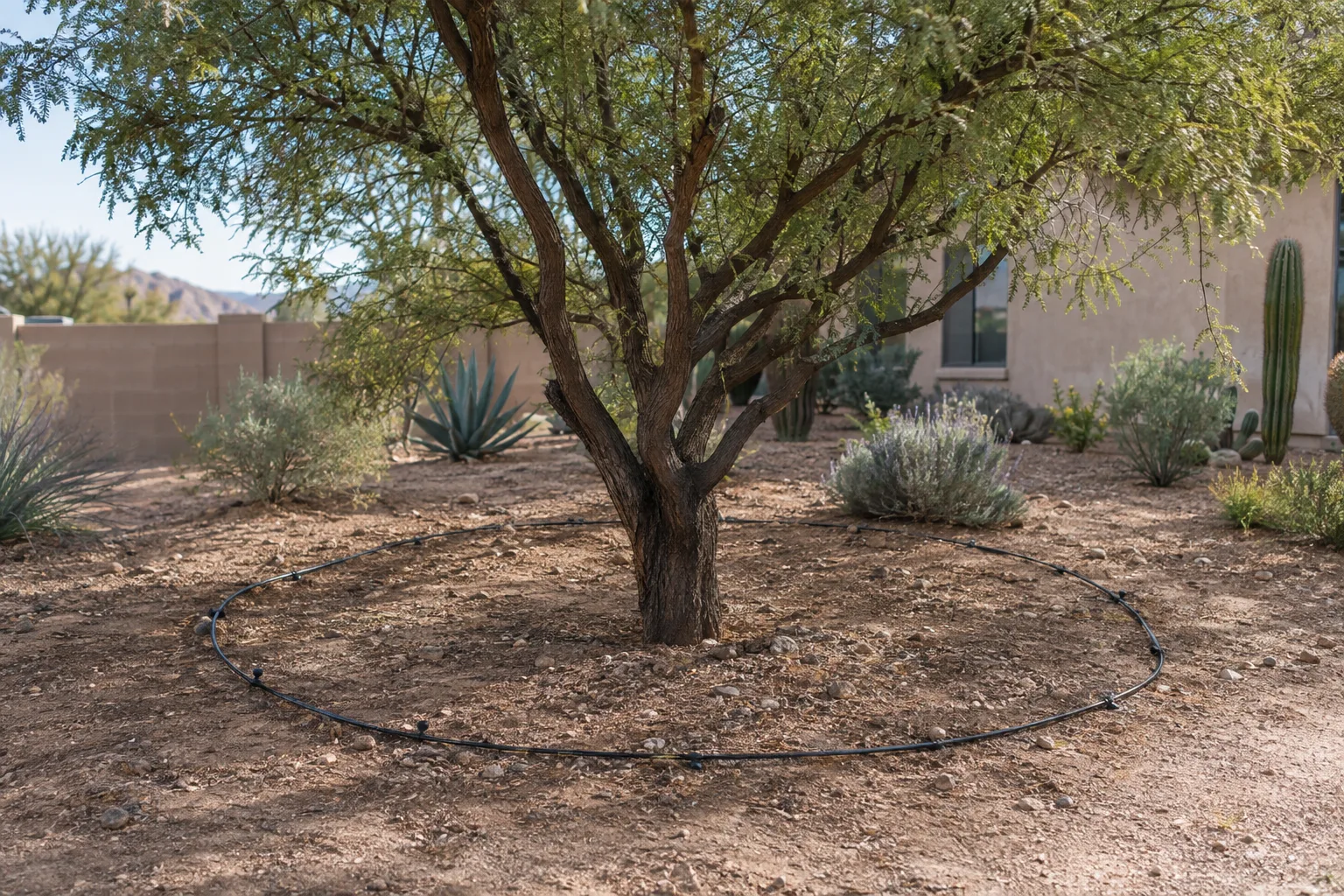
For established trees, emitters belong at the drip line or slightly beyond it, where feeder roots are active. A tree whose canopy has widened over three years may have emitters sitting a couple of feet inside the new drip line, wetting roots that no longer do much of the work.
Spray heads and rotors
Run each spray zone in daylight at least once. Look for heads that do not pop up fully, heads tilted into a skewed pattern, clogged or missing nozzles, and arcs that now reach a wall, driveway or sidewalk. Overspray onto hardscape wastes water and leaves white mineral stains from our hard water. Photograph each problem before you fix it, so you can confirm the repair worked.
How should I adjust my watering schedule as it heats up?
Raise run times in steps as the heat builds, starting in April and adjusting again as highs hold above 100°F. Following the forecast works better than following the calendar, because the first 100°F stretch can arrive in April or in late May.
| When | What to change |
|---|---|
| April | Move off the winter schedule, test every zone and repair what you find |
| Mid-May | Lengthen run times once highs hold above 100°F |
| Early June | Raise run times again before highs reach 105°F to 110°F, and recheck tree emitters |
| July to September | Skip or shorten cycles after a soaking monsoon storm |
| October | Cut back as nights cool |
Program cycles for the early morning, finishing before sunrise, because water applied then loses the least to evaporation. Many homeowners use a window between 2 a.m. and 6 a.m. Check your city or water provider for any watering-hour guidance that applies to your address.
Should every plant share the same irrigation zone?
No. Group plants by water need and give trees their own zones, because deep infrequent soaks suit a tree while shallow beds and annuals need shorter, more frequent runs.
A Texas sage (Leucophyllum frutescens) and a hibiscus (Hibiscus rosa-sinensis) have very different needs, yet they often share one drip zone. Established desert natives such as blue palo verde (Parkinsonia florida) want long, infrequent soaks once their roots are deep. Citrus trees need steadier moisture through fruit set and summer. If two plants with opposite needs share a valve, adding a zone in April costs far less than replacing a mature plant in August.
You can browse our desert trees, citrus trees and annual flowers and foliage to see how different their water needs are. These are varieties we commonly carry, and availability changes week to week and season to season.
How do caliche, hard water and high pressure affect my system?
All three shorten the life of a drip system if you ignore them. Many Queen Creek yards have alkaline, caliche-layered soil that absorbs water slowly, so a long single run can pool at the surface or run off before it reaches the root zone.
Cycle and soak scheduling fixes that. Program two or three shorter cycles on the same zone with about an hour between them, so each round soaks in before the next arrives. Most modern controllers support it.
Hard water leaves mineral deposits inside emitters and on filter screens, which is why rinsing the screens belongs on your April list. Pressure is the third check. City pressure at the house can be well above what drip tubing and emitters are rated for, and the usual symptoms are emitters blowing off tubing and spray heads misting instead of making droplets. Thread your gauge onto a hose bib to read static pressure, and add a regulator at the valve or the connection point if the number is high.
What irrigation mistakes should I avoid in April?
Most spring problems come from skipping a step that takes five minutes. Avoid these:
- Glancing at the controller without watching each zone run for its full cycle
- Leaving the winter schedule in place because the weather still feels mild
- Keeping tree emitters against the trunk instead of at the drip line
- Skipping the rain sensor test, which can leave the system running after every monsoon storm
- Forgetting the controller backup battery, so a summer power outage erases your programming
- Running one long cycle on compacted or caliche soil instead of splitting it
Soggy conditions cause root rot in desert-adapted plants, so overwatering after a storm is as costly as underwatering before one.
Frequently asked questions
How deep should I water an established tree?
Established trees need the soil wetted about 18 to 24 inches deep, and large trees may need more. A slow, long soak every couple of weeks in summer reaches the feeder roots. Short, frequent sprinkles wet only the top few inches and encourage shallow roots. The day after watering, push a long screwdriver into the soil near the drip line to see how far the water went.
Is a smart irrigation controller worth it?
A smart controller is worth it if you do not want to adjust the schedule by hand. It uses local weather and evapotranspiration data to lengthen runs in a heat wave and shorten them after a monsoon storm. It still depends on working emitters and correct zone settings, so finish your inspection first and review its settings monthly.
Can cactus share a zone with flowering shrubs?
Cactus and most succulents should not share a zone with flowering shrubs. Shrubs want more water in summer, and the same schedule leaves cactus roots wet long enough to rot. If you cannot add a valve, set the schedule for the driest plants and hand water the thirstier ones during the hottest weeks.
When should I call a professional?
Call a licensed irrigation or landscape contractor for a cracked mainline, a valve that will not close, or wiring faults. Those repairs involve digging and electrical testing. Emitter swaps, filter cleaning, head adjustments and controller changes are reasonable weekend jobs. If you are unsure, a contractor visit usually costs less than replacing a mature tree.
Where can I learn more about drip irrigation?
Start with the instructions for your controller and the parts in your system, then see what is on our classes and events page. Topics and dates change, so check ahead before you plan a trip. A photo of your controller screen and a rough sketch of your zones will help if you ask a staff member for advice.
Is a do-it-yourself irrigation check enough for your yard?
For most yards with a drip system and a controller, yes. Two or three hours in April catches the clogged emitters, misaligned heads and outdated schedules that cause most summer losses. Skip the DIY approach if you find a leaking mainline, failed wiring or a layout that needs new zones dug in. If you water only containers by hand, you can skip the audit and just watch each pot. Stop by our nursery in Queen Creek and we will talk through your yard.