

Portulaca, vinca, lantana, gaillardia, pentas, angelonia and celosia are the flowers that handle April planting best in the Arizona low desert. Their roots settle in before summer highs pass 110°F, and all seven keep blooming through the heat.
Key takeaways
- Plant in April so roots have several weeks to settle before highs regularly pass 100°F in late May and June.
- Portulaca, lantana and gaillardia need the least water once established, while vinca, pentas, angelonia and celosia want moisture every 2 to 3 days.
- Water new transplants every day or two for the first 2 weeks, then taper by plant type.
- Lantana berries are toxic if eaten, so place it away from pets and small children.
- Wait about 3 weeks before fertilizing, and plant in the early morning to reduce transplant stress.
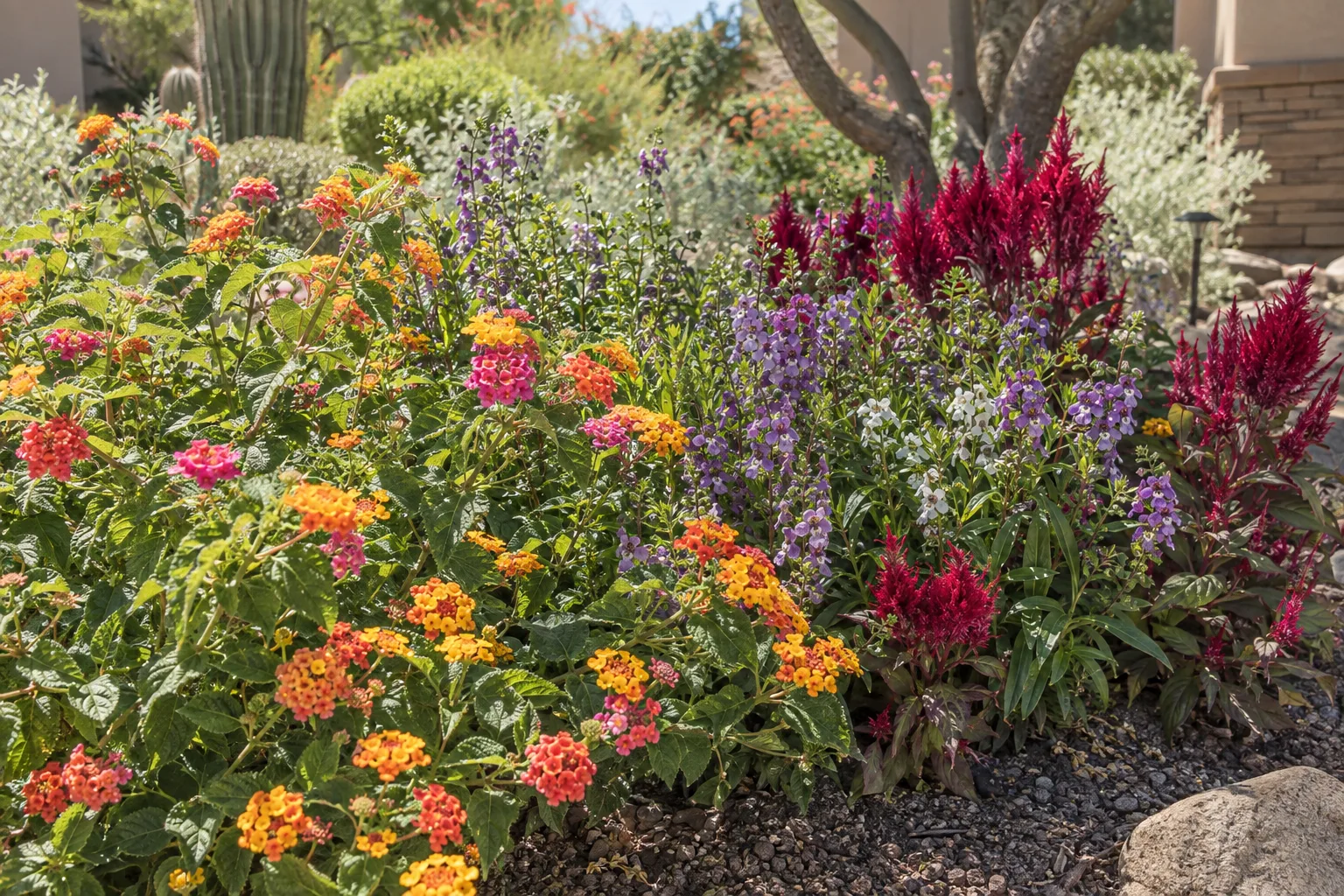
Why is April a good time to plant summer flowers in the low desert?
April gives new plants warm soil and moderate air temperatures at the same time. East Valley highs commonly sit in the 80s and 90s°F that month, so transplants can build roots for several weeks before the 110°F days of summer arrive.
Heat-loving flowers stall in cold soil, and a late frost can still nick tender ones such as pentas and angelonia, so check the forecast before you plant. Plants that are well rooted by June handle the heat better, and they are ready for the monsoon, which runs from roughly July through September. Timing matters.
Queen Creek soil is alkaline and often sits on a layer of caliche, a hard calcium carbonate layer that slows drainage. Mixing compost into the planting area and checking how fast water drains will help every flower below. Our gardening calendars show what to plant in each month if you want to plan beyond April.
Which seven flowers handle Arizona summers after April planting?
These seven bloom through summer when planted in April, and each has a drawback worth knowing before you buy. They are varieties we commonly carry in our annual flowers and foliage department, though availability changes week to week and season to season.
Portulaca (Portulaca grandiflora)
Portulaca, also called moss rose, is a low, spreading succulent annual that grows 4 to 8 inches tall and spreads 12 to 18 inches. It wants full sun and little water, with a soak every 3 to 5 days while it roots in. Flowers come in pink, orange, red, yellow and white. The drawback is that blooms close in shade and on cloudy days, and the plant rots in soil that stays wet.
Annual vinca (Catharanthus roseus)
Annual vinca is a different plant from the Vinca minor groundcover. It grows 10 to 18 inches tall in white, pink, rose and lavender, and it takes full sun with moderate water. Many varieties drop spent flowers on their own, so deadheading is minimal. The drawback is fungal root and stem disease in soil that stays wet, so water at the base and let the top inch dry between soaks.
Lantana (Lantana camara)
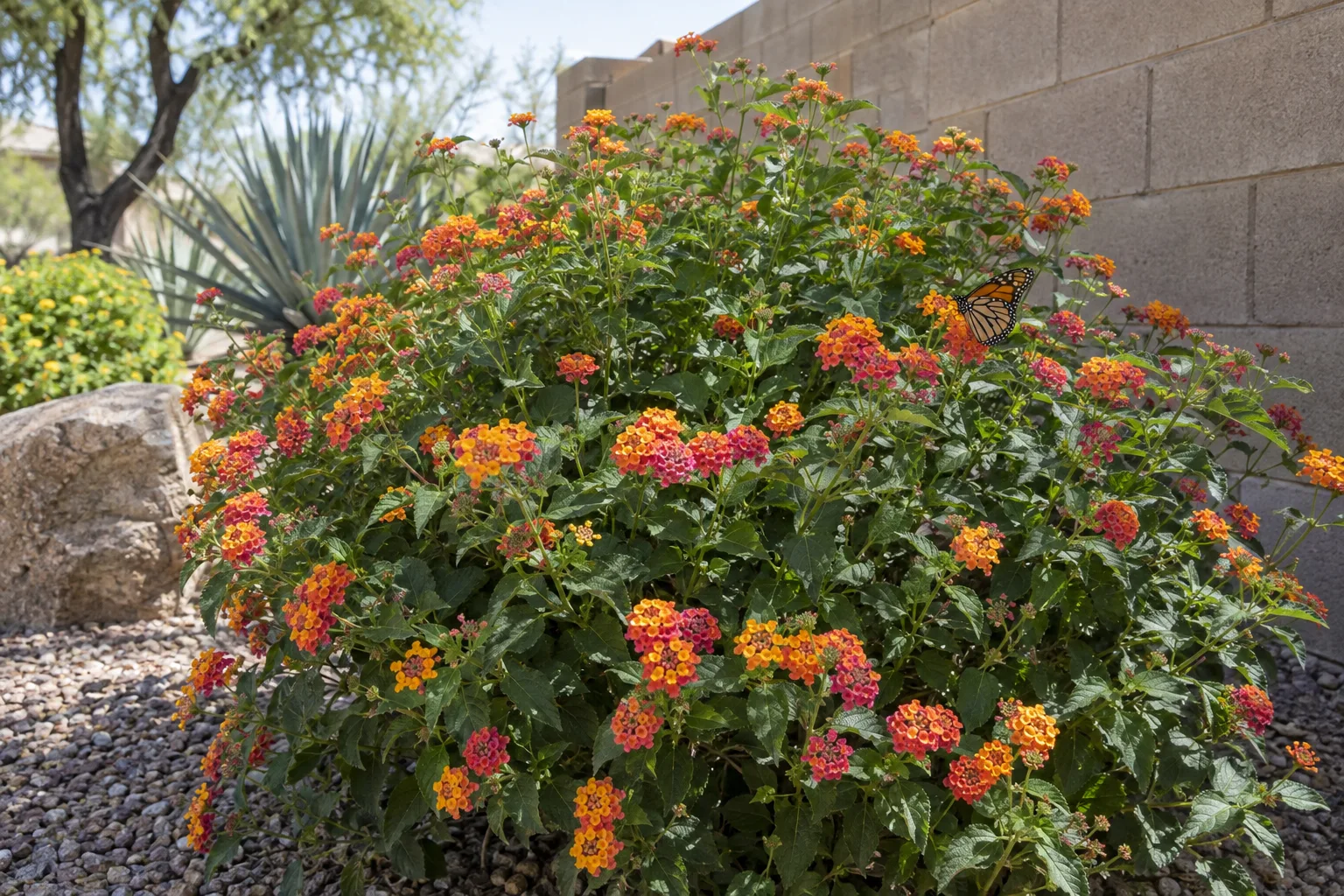
Lantana forms a mounding shrub 2 to 4 feet tall and wide, with flower clusters in yellow, orange, pink, red and lavender that attract butterflies. It needs full sun and low water once established, and it often returns after mild winters. Prune it in late February or March once frost danger has passed. The drawback is that the berries are toxic if eaten, and a hard frost can freeze it to the ground. You can browse perennials like this one on our plants page.
Gaillardia (Gaillardia pulchella)
Gaillardia, or blanket flower, is a native of the southern United States that produces red, orange and yellow daisy-like blooms on plants 1 to 2 feet tall. It wants full sun and low water, and it does best in lean, well-drained soil with little fertilizer. Deadhead to keep flowers coming. The drawback is a short life, since many plants last only a few seasons, and they rot quickly if the soil stays soggy.
Pentas (Pentas lanceolata)
Pentas makes clusters of star-shaped red, pink, white or lavender flowers that draw hummingbirds and butterflies, on plants 1.5 to 3 feet tall. It likes sun but looks better with some afternoon shade on south and west exposures in July and August. Water it regularly. The drawback is frost tenderness and a higher thirst than the others, and leaves can yellow in alkaline soil.
Angelonia (Angelonia angustifolia)
Angelonia, sometimes called summer snapdragon, sends up upright spikes of purple, pink, white or bicolor flowers on plants 12 to 24 inches tall. It needs full sun and moderate water, and it is a good fit for pots and raised beds. It blooms without much deadheading. The drawback is that it wilts fast when the root zone dries out, and it gets leggy and flowers poorly in shade.
Celosia (Celosia argentea)
Celosia adds texture with feathery plumes or ruffled crests in red, orange, yellow, pink and purple, on plants from 1 to 3 feet tall depending on the variety. It takes full sun and moderate water, plus light feeding about once a month. It may reseed in the bed. The drawback is that it lasts one season, and overwatering can cause stem rot at the base.
How do I plant flowers in April in Queen Creek soil?
Loosen the soil wider than the root ball, mix in compost, plant at the right depth and water well. The steps below work for all seven.
- Pick the spot. Six or more hours of direct sun suits all seven, and pentas does best with shade from the hottest afternoon sun.
- Loosen the soil 12 inches deep and about twice as wide as the pots, and look for caliche. If water pools in the hole and drains very slowly, plant in a mound or raised bed instead.
- Mix compost into the native soil, roughly one part compost to two or three parts soil. Portulaca and gaillardia prefer leaner soil, so use less for them.
- Set each plant so the top of the root ball sits level with or slightly above the surrounding soil.
- Water slowly and deeply right away to settle the soil around the roots.
- Spread 1 to 2 inches of mulch and keep it a few inches from the stems.
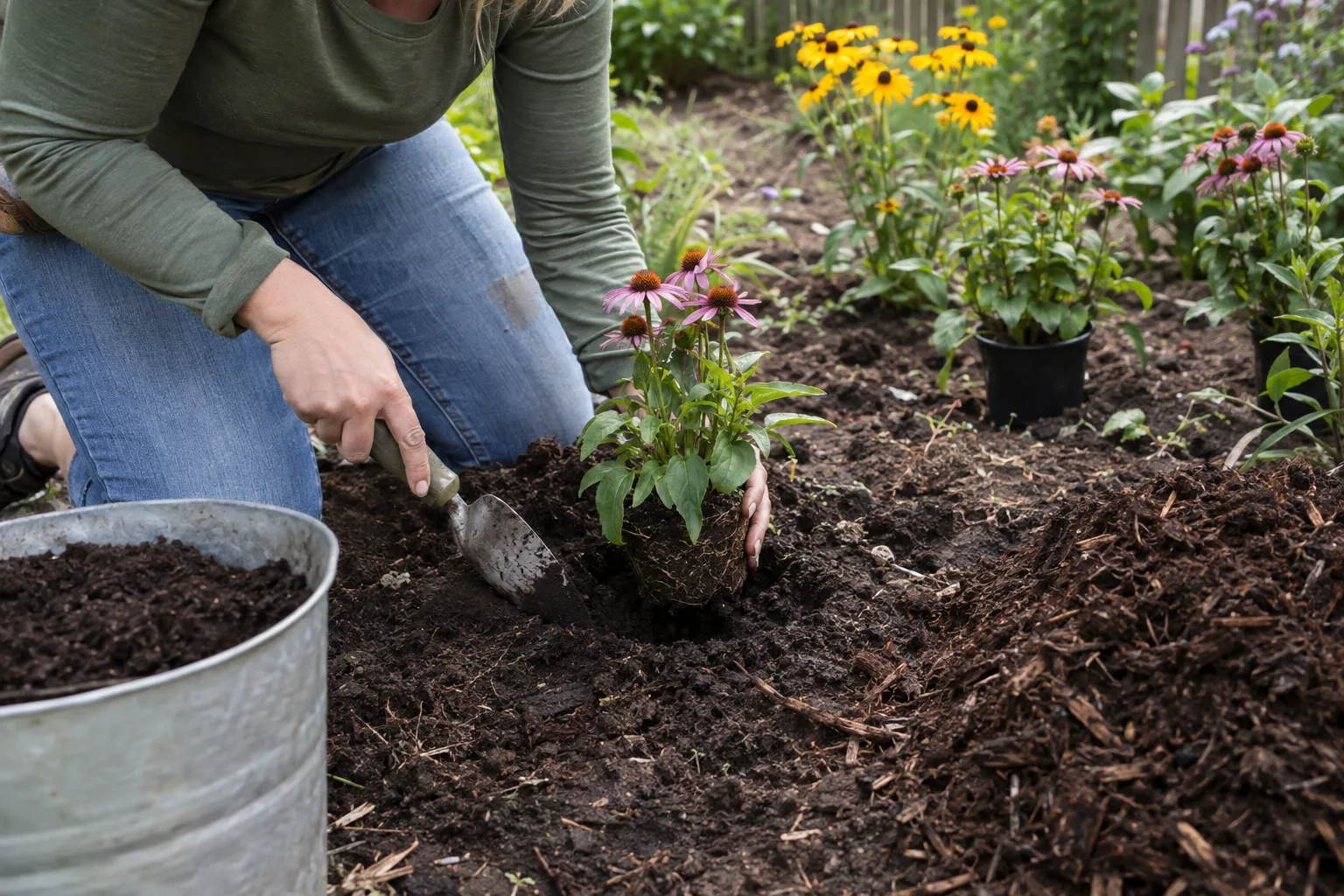
Plant in the early morning, because transplants set out in afternoon heat wilt before the roots reach surrounding moisture. Skip fertilizer at planting. Space plants according to the tag, since crowded plants stay damp and invite disease. If you want help getting started, see what is coming up on our classes and events page.
How do the seven compare at a glance?
| Flower | Water once established | Sun | Comes back next year? |
|---|---|---|---|
| Portulaca | Low | Full sun | Treated as an annual, may reseed |
| Annual vinca | Moderate | Full sun | Treated as an annual |
| Lantana | Low | Full sun | Usually, may freeze back in frost |
| Gaillardia | Low | Full sun | Often, but short-lived |
| Pentas | Moderate | Sun, afternoon shade in hot spots | Sometimes, frost tender |
| Angelonia | Moderate | Full sun | Treated as an annual |
| Celosia | Moderate | Full sun | Annual, may reseed |
How much water do new summer flowers need?
New transplants need water every day or two for the first 2 weeks. After that, taper by plant type.
Portulaca, lantana and gaillardia can move to a deep soak every 3 to 5 days by week 3 or 4, while vinca, pentas, angelonia and celosia usually want water every 2 to 3 days. In July and August, plants in the ground may need a deep soak more often, and the water should reach 6 to 8 inches down rather than wet only the surface. Check the soil with a finger or a probe before you add more.
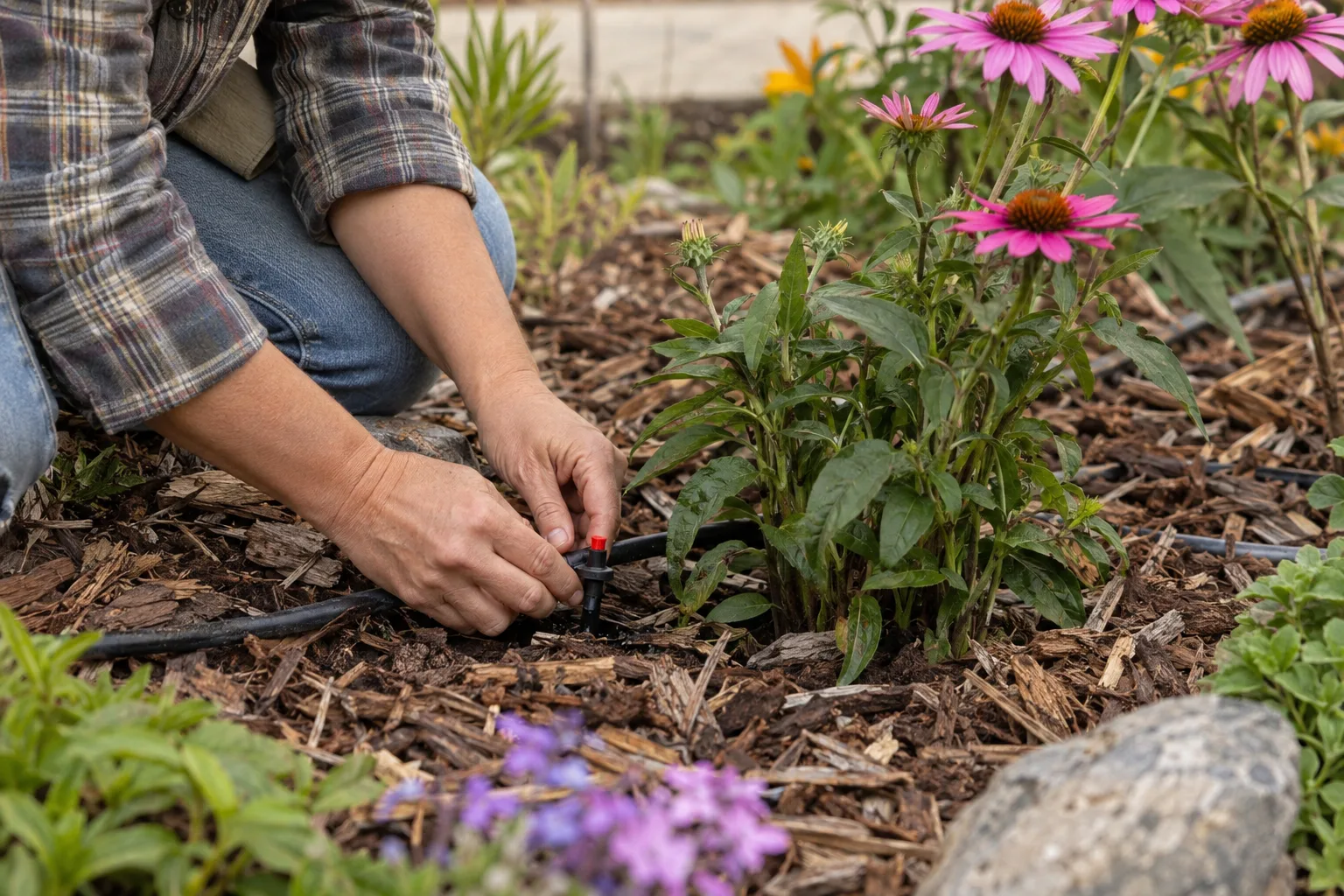
Hard irrigation water leaves salts in the soil over time. A drip emitter at the base of each plant delivers water to the roots, and an occasional deep soak helps flush those salts below the root zone.
What happens to these flowers during monsoon season?
Most of them handle monsoon rain well if the soil drains. Standing water is the danger.
Portulaca, gaillardia and vinca are the most likely to rot when soil stays saturated, so plant them where water does not pool, or raise the bed 6 to 8 inches. Humid air can also bring fungal spots on leaves, and good spacing and watering at the base help. Many plants slow down in the hottest weeks of June and July and flower more heavily again as the monsoon humidity arrives.
Frequently asked questions
Can I still plant these in May?
Yes, early May still works for most of the seven, but each week of delay shortens the time roots have before highs reach 105°F. Plant in the early morning, water daily for the first week or two, and consider 30 to 40 percent shade cloth over transplants at first. Expect more watering than an April planting needs.
Do these flowers grow in containers?
Yes, all seven can grow in pots, and angelonia, pentas, portulaca and celosia suit them well. Use a pot at least 12 inches wide with drainage holes, and choose light colors, since dark pots heat the roots. Expect to water daily in summer. Browse our pottery and planters for options.
Are any of these flowers a problem for pets?
Lantana is the one to place with care. The ASPCA lists it as toxic to dogs, cats and horses, and the berries are the main concern. Check the ASPCA plant list for each of the others before planting near a pet that chews, and call your veterinarian if an animal eats any plant.
When should I fertilize new summer flowers?
Wait about 3 weeks after planting, until you see new growth, then use a balanced slow-release fertilizer at the label rate. Fertilizer at planting can stress roots. Portulaca, gaillardia and lantana need little feeding, and extra nitrogen gives them leaves instead of flowers. Vinca, pentas, angelonia and celosia take feeding every 4 to 6 weeks.
Why do my flowers slow down in the hottest weeks?
A short slowdown in the hottest weeks of June and July is normal for several of these, especially gaillardia. Keep watering deeply, trim leggy stems by about one third, and flowering usually picks up as monsoon humidity and slightly cooler nights arrive.
Are summer flowers worth planting in April?
Yes, when your bed gets at least 6 hours of direct sun and you can water new transplants every day or two for the first 2 weeks. Grouping three or four of these seven by water need gives you a bed that keeps its color if one plant struggles. Skip them if your yard is mostly shade, if you will be away in May without irrigation, or if you want plants that never need replacing. Visit us at the nursery in Queen Creek and we will help you match flowers to your sun and watering.
