
Zinnias, Mexican sunflower, lantana, pentas, gomphrena and vinca are annual flowers that attract butterflies through Arizona summers. Plant them from March to May, give them full sun and deep watering, and they bloom through the heat.
Key takeaways
- Plant summer-blooming annuals from March through May so roots establish before daytime highs pass 100°F to 110°F.
- Give every plant 6 to 8 hours of sun, with afternoon shade for pentas on west and south exposures where walls reflect heat.
- Water deeply and let the top inch or two of soil dry between waterings. In-ground plants on drip often need water every 2 to 3 days in June.
- Choose flat or clustered blooms, such as zinnias and lantana, that give butterflies a steady place to land.
- Add one host plant, such as milkweed, and keep sprays off open blooms so butterflies stay and lay eggs.
Which annual flowers attract butterflies in an Arizona summer?
Six heat-tolerant flowers do most of the work in East Valley yards, and you can browse them in our annual flowers and foliage department. Lantana and pentas are tender perennials that most gardeners treat as seasonal color, because a hard frost can cut them back. These are varieties we commonly carry, and availability changes week to week and season to season. Each one has a drawback.
Zinnia elegans (zinnia)
Zinnias have wide, flat blooms that butterflies can stand on while they feed, which is why they top most butterfly lists. Plants reach 1 to 3 feet tall and 1 to 2 feet wide, want full sun, and need deep watering when the top inch of soil dries. Seed sown in March or April usually blooms in about 6 to 8 weeks. The drawback is powdery mildew, a white film on leaves that appears when monsoon humidity arrives, so water at the soil line instead of overhead. Plants also droop on 110°F afternoons and recover by evening when the roots have enough water.

Tithonia rotundifolia (Mexican sunflower)
Mexican sunflower throws orange-red daisy blooms on tall plants and handles heat, sun and lean soil well. It grows 4 to 6 feet tall and 2 to 3 feet wide, needs full sun, and does fine on low to moderate water once established. Butterflies work its flat flower heads from midsummer into fall. The drawback is size. It sprawls, can flop in monsoon wind, and needs a spot at the back of the bed with room to spread.
Lantana camara (lantana)
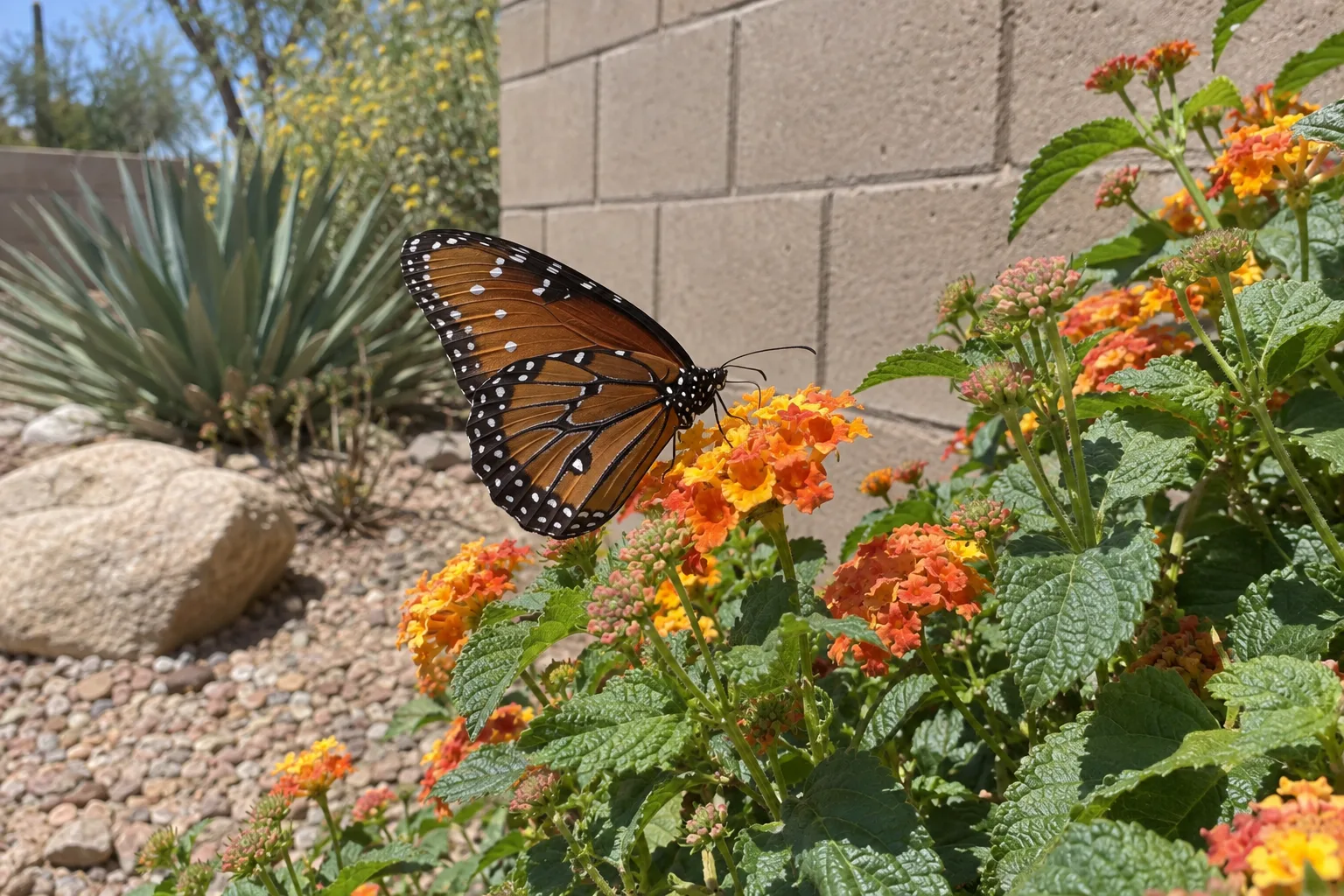
Lantana covers itself in clusters of small flowers in orange, yellow, pink, red and mixed tones, and each cluster gives butterflies many nectar sources in one stop. It grows 2 to 4 feet tall and wide, takes full sun and reflected heat from block walls, and needs only occasional deep watering once established. Frost can burn it back in winter. The drawback is that it gets large and woody, so expect to cut it back hard after the last frost to keep it blooming and tidy.
Pentas lanceolata (pentas)
Pentas carries star-shaped flower clusters in red, pink, lavender and white that attract butterflies and hummingbirds. Plants grow 1 to 3 feet tall and wide, prefer morning sun with afternoon shade on hot west and south exposures, and need more regular water than the others here. Frost damages them. The drawback is thirst and sun scorch: pentas in a reflected-heat corner will wilt and burn without shade and steady moisture.
Gomphrena globosa (globe amaranth)
Globe amaranth makes round, clover-like flower heads in purple, pink, magenta and white that bloom for months in hot weather. It grows 1 to 2 feet tall and wide, wants full sun, and gets by on low to moderate water. Skippers and other small butterflies visit the heads regularly. The drawback is scale. Individual plants look modest, so plant a group of three or more to give butterflies a visible target.
Catharanthus roseus (vinca)
Vinca produces flat, five-petaled flowers in white, pink, red and lavender, and it tolerates hot, dry conditions that wilt many bedding plants. It grows 8 to 18 inches tall, handles full sun to light afternoon shade, and rots quickly in wet soil, so give it good drainage and water only when the top inch is dry. The drawback is a smaller butterfly draw than zinnia or lantana. Use it as a low edging in front of taller plants.
| Plant | Mature height | Sun | Water once established | Best spot |
|---|---|---|---|---|
| Zinnia | 1 to 3 feet | Full sun | Moderate | Middle of the bed |
| Mexican sunflower | 4 to 6 feet | Full sun | Low to moderate | Back of the bed |
| Lantana | 2 to 4 feet | Full sun | Low | Beside block walls and pavement |
| Pentas | 1 to 3 feet | Morning sun, afternoon shade | Regular | East-facing beds and shaded patios |
| Globe amaranth | 1 to 2 feet | Full sun | Low to moderate | Mass plantings |
| Vinca | 8 to 18 inches | Full sun to light shade | Low to moderate | Front edge and pots |
When should I plant butterfly annuals in the low desert?
Plant from March through May for summer bloom, and aim for March or April if you can. Plants set out early have 4 to 8 weeks to root before daytime highs pass 100°F, and stronger roots handle July far better than transplants dropped in during late May. Set them out early. Zinnia, Mexican sunflower and globe amaranth can be seeded directly once the soil warms, while lantana and vinca tolerate later planting because they like warm soil.
Plant transplants in the early morning or evening, water them in deeply, and spread 2 to 3 inches of mulch, keeping it a couple of inches back from the stems. Our gardening calendars lay out what to plant each month.
How much water do summer annuals need in the low desert?
They need deep, infrequent watering that wets the root zone 8 to 10 inches down, followed by a pause until the top inch or two of soil dries. Drip emitters at each plant deliver that without wetting the leaves. In June, in-ground annuals on drip often need water every 2 to 3 days, and sandy or exposed spots may need it daily during the worst July heat. Check with a finger. Dry at 2 inches means water. During the monsoon, rain can be brief and patchy, so test the soil before you skip an irrigation.
Our hard irrigation water leaves mineral salts behind, and an occasional long, slow soak moves them below the roots.
How do I prepare alkaline soil and caliche for annual flowers?
Mix 2 to 3 inches of compost into the top 8 to 12 inches of soil, and make sure water drains. Queen Creek soil is alkaline and often sits on caliche, a hard calcium carbonate layer that holds water and stops roots. Zinnias, lantana, vinca and the others here tolerate alkaline soil, so you do not need to chase pH.
Test drainage before you plant. Fill a 12-inch hole with water. If it is still standing the next day, break through the caliche with a digging bar or build a raised bed 12 to 18 inches high instead. Compost also helps sandy pockets hold moisture between waterings.
Can I grow butterfly annuals in pots on a hot patio?
Yes, as long as the pot is large and drains well. Choose containers 14 to 16 inches wide or bigger, in light colors where possible, because dark pots hold heat that cooks roots in summer. Lantana, vinca and globe amaranth handle pot life best, and Mexican sunflower is too large for most pots. Pots in full sun can need water daily, and sometimes twice a day in July. Browse our pottery and planters, and group pots together so they shade each other’s sides.

Which butterflies will visit, and do they need host plants?
You can expect queens, painted ladies, gulf fritillaries, swallowtails and skippers, and nectar flowers alone will bring most of them to feed. Host plants are what make them lay eggs. Queens use milkweed, gulf fritillaries use passionvine, and black swallowtails use fennel, dill and parsley. Giant swallowtail caterpillars feed on the leaves of citrus trees.
One potted host plant beside your flower bed is enough to start, and you can see what is available in our plant departments. Chewed leaves on a host plant mean the garden is working, so leave the caterpillars alone.

How do I keep plants healthy and butterflies safe through the monsoon?
Water at the soil line, deadhead every few days, and keep sprays off open blooms. The monsoon, roughly July through September, brings humidity that encourages powdery mildew, especially on zinnias. Spacing plants 12 to 18 inches apart improves airflow, and removing spent flowers keeps new buds coming.
Aphids and whiteflies can build up on soft new growth. A strong stream of water from the hose knocks most of them off. Many systemic insecticides carry label warnings about pollinators, so read the label before using any product near flowers, and ask us if you are unsure what to choose.
Frequently asked questions
Will these flowers come back next year?
Lantana usually returns, because frost cuts it back and it regrows from the base in spring. Pentas may return after a mild winter. Zinnias, Mexican sunflower and globe amaranth finish at the end of the season, though some self-seed. Vinca often reseeds too. Plan on replanting the annuals each spring.
Can I plant butterfly annuals in August?
You can, but expect a shorter season, because young roots face the hottest weeks with little reserve. September, once nights start to cool, is usually a better window for fall color. If you plant in August, shade new transplants for the first week and water deeply every day or two until they settle.
Do butterflies need a water source?
Yes, butterflies sip moisture and minerals from damp surfaces. A shallow dish filled with sand and kept damp gives them a place to do it. Set it in part shade near your flowers and refill it daily in summer, since the sand dries fast in 100°F weather.
Which of these plants works best against a west-facing wall?
Lantana and vinca handle reflected heat best of the six. Globe amaranth and zinnias do well too if you water deeply. Pentas needs afternoon shade, so use it on the east side of the yard instead. Keep plants a foot or so off the wall to allow airflow.
Should I fertilize butterfly annuals?
Feed lightly, because heavy feeding produces leaves instead of flowers. A balanced or bloom-formula fertilizer at the label rate or less, applied every 4 to 6 weeks, is plenty for most beds. Zinnias and Mexican sunflower in compost-amended soil often need very little. Water the soil well before and after feeding.
Is a butterfly garden of summer annuals right for your yard?
It is right if you have at least 6 hours of sun, can water on a steady schedule, and are willing to leave a few chewed leaves for caterpillars. It is not a good fit for deep shade, for yards where you rely on systemic insecticides, or for anyone who cannot water through June and July. Start with three plants, such as zinnia, lantana and vinca, and add more once you see who visits. Stop by the nursery in Queen Creek and talk plants with us.