

Plant summer bulbs in April in the Arizona low desert, once soil has warmed past roughly 65°F and before May highs approach 100°F. Cannas, gladiolus, crinum, rain lilies and a few others use those weeks to root in before summer arrives.
Key takeaways
- Plant from late March through about the first week of May so roots establish before daytime highs pass 100°F.
- Dig 12 to 18 inches deep to check for caliche, and mix 2 to 3 inches of compost into the top 8 to 10 inches of soil.
- Mulch with 2 to 3 inches of wood chips, kept an inch or two away from emerging shoots.
- Water deeply and let the top 2 inches of soil dry between waterings, because rot in poorly drained soil kills more bulbs than heat does.
- Match the bulb to the spot: crinum, agapanthus and rain lilies handle dry spells, while elephant ears and caladiums need steady moisture and shade.

When should I plant summer bulbs in the Arizona low desert?
April is the best month, with late March to early May as the workable range. Soil is warm enough to wake the bulbs, and air temperatures are still moderate enough that young roots are not stressed.
By June, highs regularly pass 110°F and the top inch of bare soil gets far hotter than the air. A bulb planted then has to root and survive at the same time. A bulb planted in April gets several weeks of milder weather to build roots first, and those roots are what carry it through July.
Our spring is short. Here in Queen Creek, March is mild, April is warm, and May can already feel like summer. If you want a month-by-month view of what else belongs in the ground, our gardening calendars lay it out.
The bulbs below are varieties we commonly carry in our plant department, though availability changes week to week and season to season. Ask what is on hand before you plan a bed around one kind.
How should I prepare alkaline soil and caliche for bulbs?
Dig test holes first, then loosen the soil and add compost. East Valley soil is alkaline, often with a pH of 7.5 to 8.5, low in organic matter, and frequently sitting on caliche, a cemented calcium carbonate layer that can begin 6 inches to 2 feet down.
Caliche blocks drainage, and bulbs sitting in a bowl of wet soil rot. Dig at least 12 to 18 inches in several spots. If you hit a hard white or gray layer, break through it with a digging bar over an area about a foot wide, or build a raised bed above it.
Mix 2 to 3 inches of compost into the top 8 to 10 inches of the bed. Compost improves drainage in clay and holds moisture in sandy ground. Skip adding plain sand to clay, which can set up like concrete.
Yellow leaves with green veins are common here. That pattern, called iron chlorosis, comes from high pH locking up iron in the soil. Chelated iron helps.
Which summer bulbs grow best in Queen Creek and the East Valley?
Eight bulbs and bulb-like plants suit our conditions: cannas, dahlias, gladiolus, agapanthus, crinum, caladiums, elephant ears and rain lilies. Some are true bulbs, and others grow from rhizomes, tubers or corms, but all are planted the same way in April. Each has one limit worth knowing before you buy.
Cannas (Canna x generalis)
Cannas reach 3 to 6 feet tall and want full sun and regular water. Plant the rhizomes 3 to 4 inches deep with the growing eye up and space them 18 to 24 inches apart. Bold leaves and bright flowers can run from early summer into fall. The drawback is thirst: they wilt fast when the soil dries out, and a hard winter frost cuts them back to the ground.
Dahlias (Dahlia hybrids)
Dahlias grow 2 to 4 feet tall and prefer morning sun with shade after about 2 p.m. Set tubers 4 to 6 inches deep in well-amended soil. Smaller types such as ball and pompon forms cope with heat better than dinner-plate types. Expect a flush in late spring, a pause in peak heat, and possibly a second round in fall. Dahlias are the most heat-sensitive bulb on this list.
Gladiolus (Gladiolus hybrids)
Gladiolus reach 3 to 4 feet and need full sun and moderate water. Plant corms 4 inches deep and 4 to 6 inches apart. Blooms usually open roughly 70 to 90 days after planting. Planting a batch every two weeks in spring stretches the show. Tall flower spikes flop in wind and monsoon storms, so stake them or plant them near a wall.

Agapanthus (Agapanthus africanus)
Agapanthus, or lily of the Nile, forms clumps 1.5 to 3 feet tall with blue or white flower balls in late spring and summer. It grows from fleshy rhizomes and does best with morning sun and afternoon shade. Water moderately once established. Its drawback is slow growth: a new clump may skip flowering the first year, and it looks tired in full afternoon sun.
Crinum lily (Crinum species and hybrids)
Crinum forms large clumps 3 to 5 feet tall and wide, with fragrant white to pink flowers in spring and summer. It tolerates full sun but looks better with afternoon shade. Plant so the neck of the bulb sits at or just above the soil line. Crinum takes up a lot of room and resents being moved once settled.
Caladiums (Caladium bicolor)
Caladiums stay 1 to 2 feet tall and are grown for painted leaves in white, pink, red and green. They want shade or bright filtered light and regular water. Plant tubers 1 to 2 inches deep, knobby side up, once the soil is warm. Caladiums die back in winter and can rot if the soil stays cold and wet, so many gardeners grow them in pots.
Elephant ears (Colocasia esculenta)
Elephant ears reach 3 to 6 feet with leaves that can span 2 feet or more. They like part shade and heavy watering, so plant them near a drip line or a low spot where runoff collects. Mulch helps. The drawback is water use, since they droop quickly in dry soil, and they do not belong in a low-water bed.
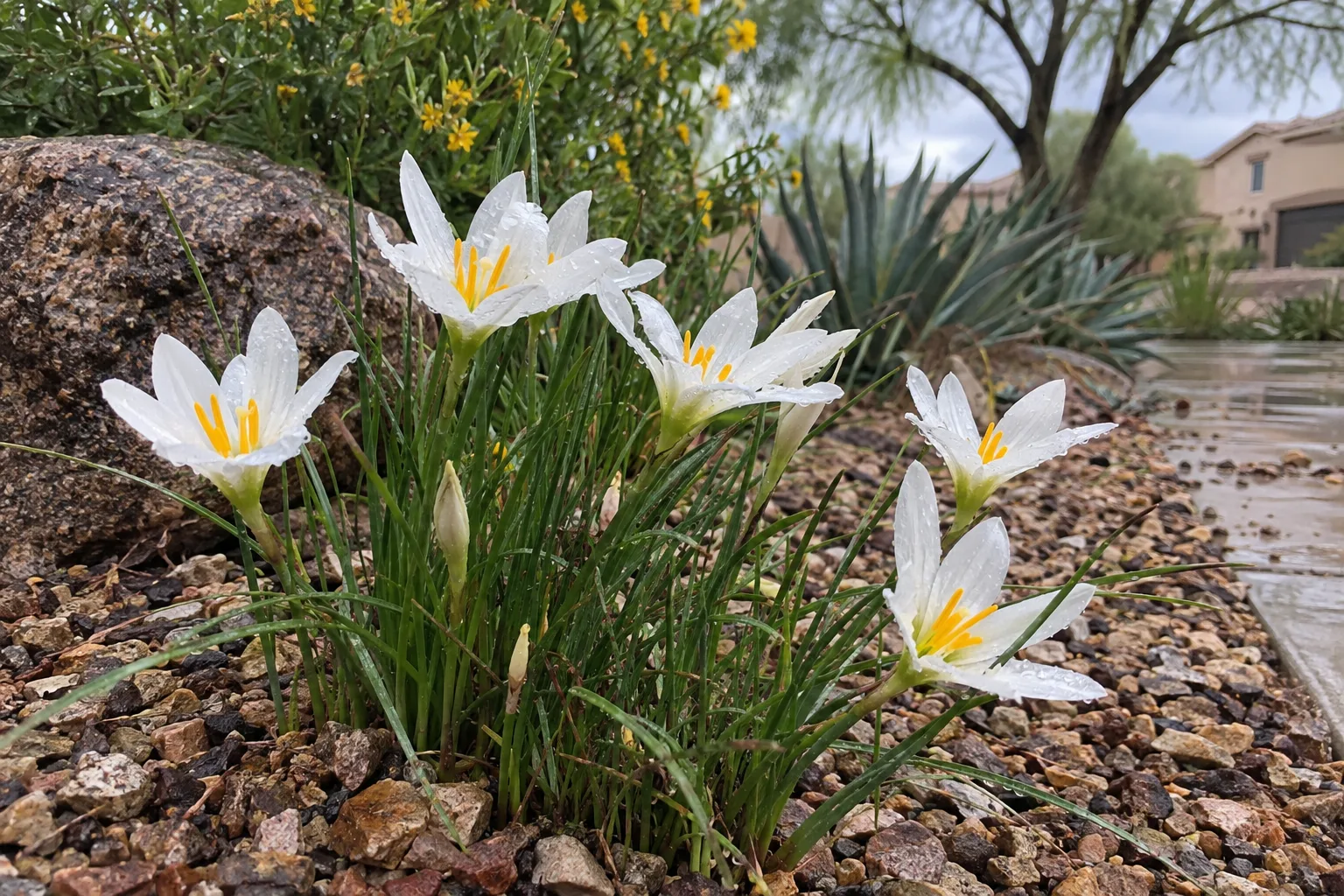
Rain lilies (Zephyranthes species)
Rain lilies stay 6 to 12 inches tall and open white, yellow or pink flowers within a day or two of summer rain or a deep irrigation. Plant bulbs 2 to 3 inches deep in full sun, about 4 to 6 inches apart. They need little care and spread slowly. The flowers are small and short-lived, so plant them in clusters for impact.
Which bulb fits which spot in my yard?
Match sun and water first, then bloom timing. A west-facing bed with reflected heat suits agapanthus, crinum and rain lilies, while a shaded courtyard suits caladiums. The table compares the eight at a glance.
| Bulb | Sun | Water | Display |
|---|---|---|---|
| Canna | Full sun | Regular | Early summer to fall |
| Dahlia | Morning sun, afternoon shade | Regular, well drained | Late spring, again in fall |
| Gladiolus | Full sun | Moderate | About 70 to 90 days after planting |
| Agapanthus | Morning sun, afternoon shade | Moderate | Late spring to summer |
| Crinum | Sun to part shade | Moderate | Spring to summer |
| Caladium | Shade | Regular | Foliage all summer |
| Elephant ear | Part shade | Heavy | Foliage all summer |
| Rain lily | Full sun | Low to moderate | After summer rain |
How do I plant and water summer bulbs in April?
Plant at a depth of two to three times the bulb’s width unless the plant notes say otherwise, then water deeply and mulch. The steps below work for all eight.
- Loosen the soil 12 to 18 inches deep and mix in compost.
- Set the bulb, tuber or rhizome at its listed depth with the growing tip or eye facing up.
- Backfill and press the soil down lightly to remove large air pockets.
- Water slowly until the soil is wet 8 to 10 inches down.
- Spread 2 to 3 inches of mulch, keeping it an inch or two from the shoots.
- Mark the spot so you do not dig into it while the bulb is still underground.
After the first soaking, water again only when the top 1 to 2 inches of soil feel dry. Early weeks call for a bit more frequent watering, and mature plants can go longer between deep soakings. Drip irrigation with emitters a few inches from the plant keeps the crown dry. Run it early in the morning.
Pots work well for dahlias and caladiums because you can control the soil and move them out of afternoon sun. Browse our pottery and planters and choose a pot with drainage holes at least 12 inches deep.

What does the monsoon do to summer bulbs?
The monsoon, which runs roughly from July through September, helps most of these bulbs. Humidity rises, nights cool a little, and afternoon storms deliver free irrigation. Rain lilies often bloom within a day or two of a storm, and cannas and elephant ears put on fast growth.
Dahlias and caladiums are the ones to watch. Warm, wet weather invites leaf spots and crown rot, so give them room for airflow and cut back irrigation when storms arrive. Check beds after a heavy rain. Water that stands for more than a few hours means the drainage needs work, either with a small channel or a raised bed.
What mistakes kill summer bulbs?
Planting into poorly drained soil, skipping mulch and overwatering are the three biggest causes of loss. Each is easy to avoid once you know it.
- Planting too late. Bulbs set in June have little time to root, so aim for April.
- Skipping mulch. Bare soil gets far hotter than the air in summer, and mulch cools it noticeably.
- Feeding with high nitrogen in midsummer. Soft new growth scorches in heat. Fertilize at planting and again lightly in early fall.
- Digging up slow starters. Crinum and agapanthus can take weeks to show growth, so mark them and wait.
If you want to learn more in person, our classes and events page lists what is scheduled.
Frequently asked questions
Do I need to dig up bulbs after summer?
Most can stay in the ground in the low desert. Cannas, agapanthus, crinum, rain lilies and elephant ears usually come back, though a hard frost may cut the tops back to the ground. Dahlias and caladiums are less reliable. Mulch them heavily over winter or lift and store them in a cool, dry place until spring.
Can I grow these bulbs in pots?
Yes, and pots suit dahlias and caladiums especially well. Use a potting mix with added perlite and a container at least 12 inches deep with drainage holes. Pots dry out faster than beds in summer heat, so check the soil often. You can also shift them out of afternoon sun as temperatures climb.
Why are my bulb leaves turning yellow with green veins?
That pattern is usually iron chlorosis, caused by alkaline soil that locks up iron even when plenty is present. Chelated iron applied to the soil or leaves gives a quick green-up. Over time, compost and mulch help, and sulfur can lower pH slowly. Cannas and elephant ears often show it first.
When should I fertilize summer bulbs?
Mix a slow-release fertilizer into the planting hole in April, and give a light feeding when shoots are about 6 inches tall. Avoid heavy nitrogen in July and August, since tender new growth burns in extreme heat. A light feeding in early September supports fall growth and any second bloom.
Will deer, gophers or rabbits eat my bulbs?
Gophers and other burrowing animals can eat tubers and bulbs underground, and rabbits chew young shoots. Plant in wire baskets if gophers are active in your neighborhood, and fence new shoots until they harden. Rain lilies and crinum are less often damaged, but no bulb is completely safe.
Are summer bulbs right for your yard?
They suit you if you have a bed with decent drainage, a spot for drip irrigation, and a few free weekends in April. Crinum, agapanthus and rain lilies fit low-maintenance yards, and cannas and gladiolus suit people who want bold color. Skip them if your soil stays wet, you cannot water regularly, or you want flowers all year. Stop by the nursery in Queen Creek and we will help you match a bulb to your spot.
