

Feed most trees in the Arizona low desert from late February through mid-March, when soil warms and roots start active growth. Citrus can go in a few weeks earlier. This post covers eight trees that respond to early spring feeding in Arizona, plus how and what to apply.
Key takeaways
- Feed most trees from late February to mid-March, after the worst frost risk has passed and before daytime highs approach 100°F.
- Citrus, peaches and nectarines start growing early, so their first feeding can go on from late January through February.
- Palo verde, olive and Texas ebony need light feeding, while citrus, Arizona ash and peach use the most nitrogen.
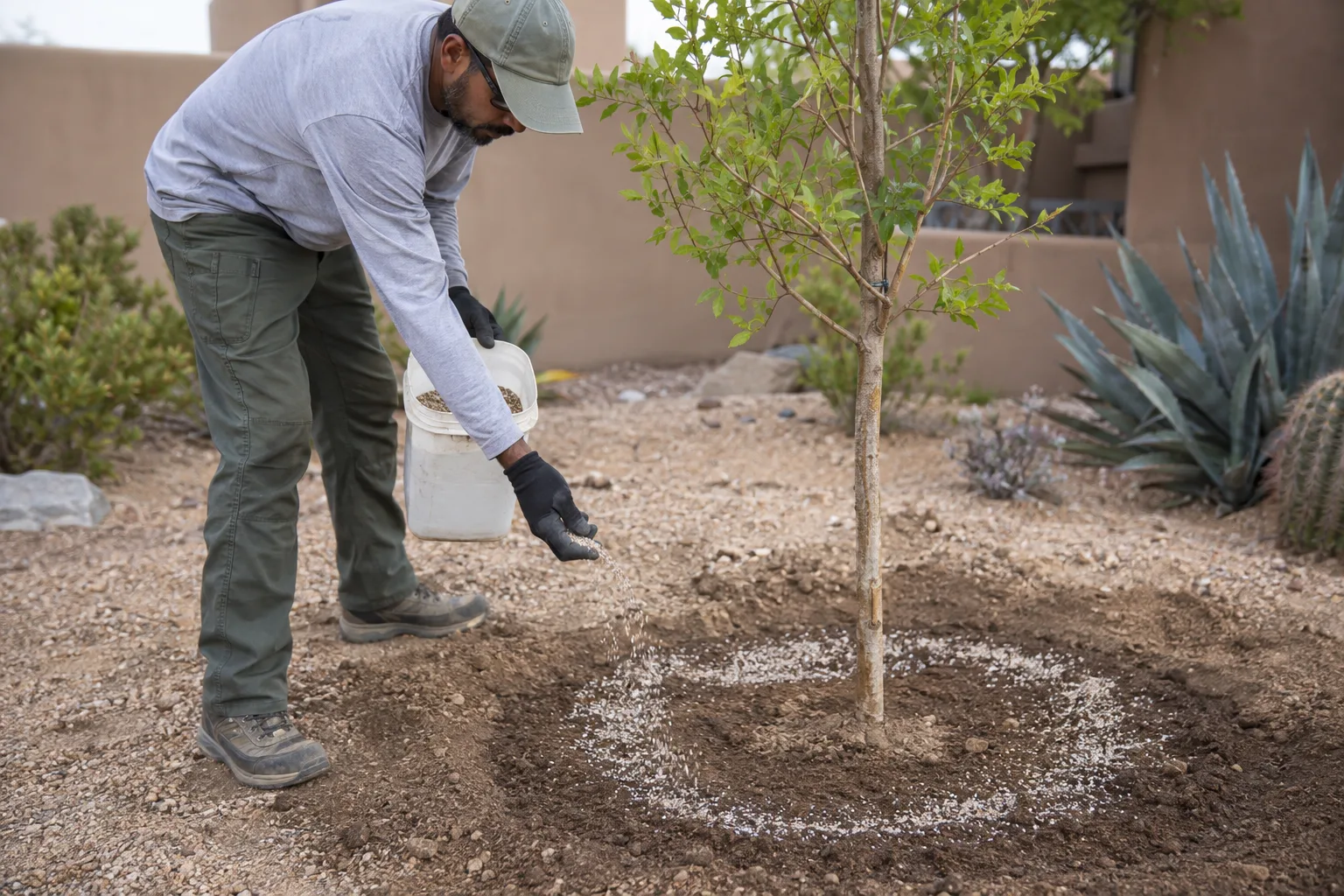
- Water deeply a day or two before and again right after spreading granules from 12 to 18 inches out from the trunk to the drip line.
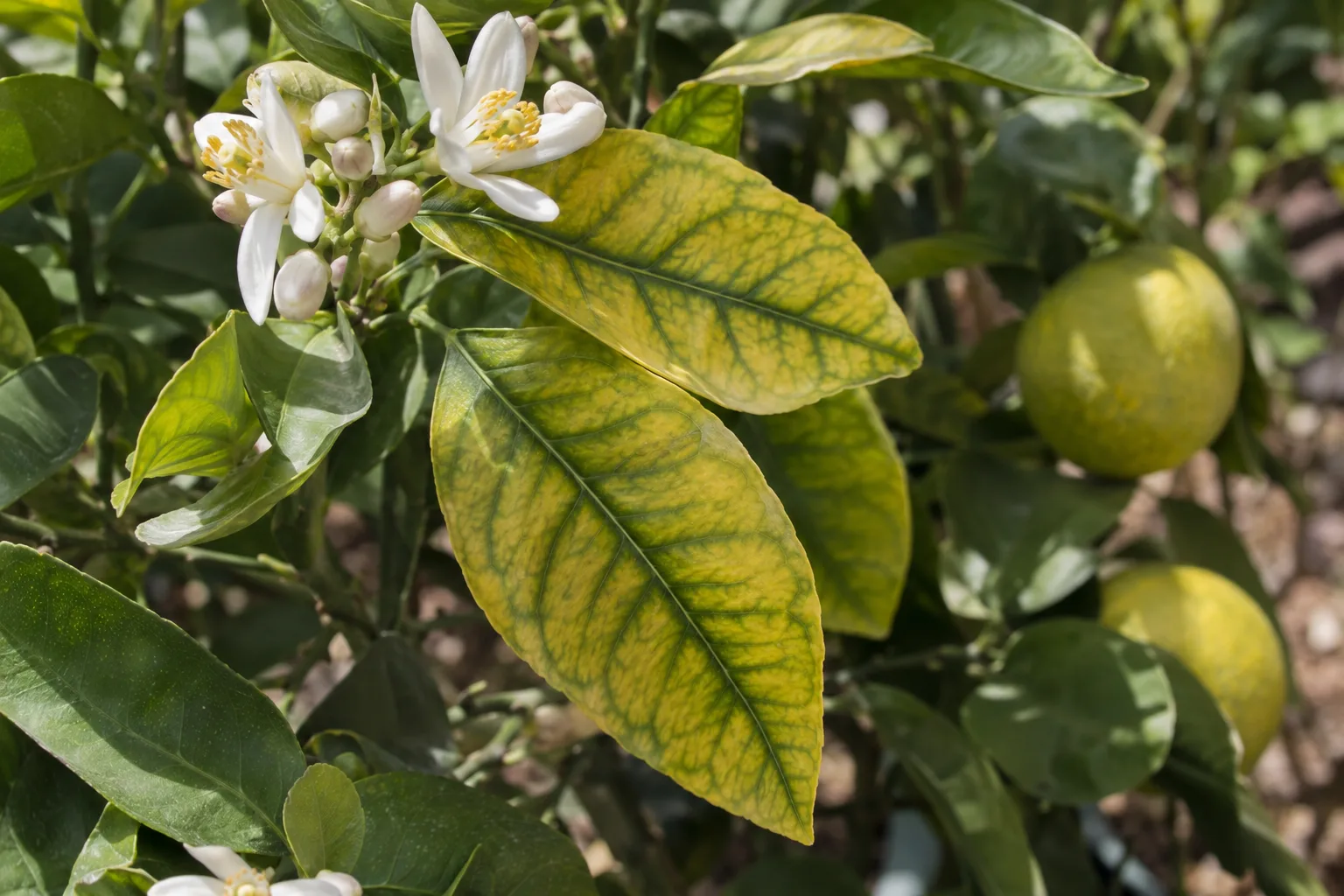
- Yellow leaves with green veins point to an iron problem in alkaline soil, which a chelated iron product made for high pH can correct.
When should I fertilize trees in early spring in Arizona?
Most trees in the East Valley do best with fertilizer between late February and mid-March. Citrus, peaches and nectarines wake up sooner, so their first feeding can go on from late January through February.
Roots slow down from November through January and pick up again as the soil warms toward the mid-50s°F. A slow-release granular product applied at that point releases over roughly 8 to 12 weeks, which lines up with the March through May growth push.
Frost sets the limit on the early side. Queen Creek can see lows near freezing into early March, and fertilizer encourages soft new growth that a cold night burns. If the forecast shows a freeze within a week, hold off.
Summer is the other limit. Feeding in June through August, when highs pass 110°F, risks salt burn on stressed roots and tender growth that sunburns. Our gardening calendars lay out the month by month timing if you want a reference to keep handy.
How does alkaline soil change early spring feeding?
Alkaline soil locks up iron, zinc and manganese, so a tree can sit in soil that contains plenty of them and still show deficiency. Queen Creek soils commonly test above pH 7.5, and hard irrigation water adds salts that keep the pH high over time.
The classic sign is iron chlorosis, which shows as yellow leaf tissue with green veins, usually on new growth. Citrus shows it first. A chelated iron product made for high-pH soil, applied as a soil drench at the label rate, often brings color back within a few weeks.
Soil sulfur lowers pH only gradually, so treat it as a long-term project rather than a spring fix. A soil test before you amend saves guesswork. Fertilizer salts add to what hard water already leaves in the root zone, so measure carefully and water deeply enough to move salts below the roots.
Which eight trees benefit most from early spring feeding?
Each tree below has a different appetite, from heavy feeders like citrus to light feeders like olive. Many are trees we commonly carry, and availability changes week to week and season to season. You can browse our tree department for more options suited to the low desert.
Citrus (Citrus species)
Mature size runs from about 8 to 25 feet tall depending on the type and rootstock. Citrus wants full sun and deep, regular watering that eases off in winter. Frost is the drawback, and lemons and limes take the most damage on cold nights. Citrus feeds heavily, so use a citrus fertilizer and split the year’s feeding into several rounds, starting in late January or February. Add chelated iron if new leaves come in yellow. Browse our citrus trees to see what is on hand.
Desert willow (Chilopsis linearis)
Expect 15 to 25 feet tall and 10 to 20 feet wide in full sun, with low water once established. The drawback is a leggy, open habit and messy seed pods unless you prune it. Give it one application of a balanced slow-release fertilizer in late February. Extra nitrogen grows leaves at the expense of the trumpet-shaped flowers that open from late spring into summer. Go light. See more in our flowering trees.

Blue palo verde (Parkinsonia florida)
Plan for 20 to 30 feet tall and wide, in full sun, with low water once established. The drawback is litter, because yellow petals, twigs and seed pods drop every year, and overwatered trees can topple in monsoon winds. Palo verdes are legumes and often need little or no fertilizer in the ground. A light spring feeding helps young trees or those in compacted fill soil. The hybrid ‘Desert Museum’ has similar needs. Find related choices among our desert trees.
Arizona ash (Fraxinus velutina)
Arizona ash grows 30 to 50 feet tall with a similar spread, in full sun, with regular deep watering. The drawback is a shorter life than many desert trees, and stressed trees attract borers and mistletoe. It leafs out hard in spring and pulls a lot of nitrogen then, so feed it at leaf-out with a slow-release nitrogen product. Spread it from about 18 inches out from the trunk to well past the drip line, since the fibrous roots reach far beyond the canopy.
Peach and nectarine (Prunus persica)
Kept pruned, these stay 10 to 15 feet tall and wide, in full sun with regular deep watering. The drawback is chill hours, because only low-chill varieties set fruit here and early blossoms can lose to a late frost. Apply a balanced fruit tree fertilizer in late January to February as buds swell, then feed again after harvest to support next year’s fruit buds. Thin fruit for bigger peaches. Our fruit trees page shows more options.
Chinese pistache (Pistacia chinensis)
This shade tree reaches 25 to 40 feet tall and 25 to 35 feet wide, in full sun, with low to moderate water once established. The drawback is a lanky shape when young that needs structural pruning, and fall color in our mild autumns varies from tree to tree. Young trees in their first few years respond to a balanced slow-release feeding at the drip line. Established trees need only a light application, mostly when they grow in compacted soil near pavement.
Texas ebony (Ebenopsis ebano)
Texas ebony is a slow-growing evergreen, 15 to 30 feet tall and wide, in full sun, with low water once established. The drawbacks are slow growth and small thorns, so plant it away from walkways. Apply a modest balanced fertilizer that includes micronutrients in late February. Alkaline soil limits iron and zinc, so chelated micronutrients help more than extra nitrogen does.
Olive (Olea europaea)
Olives reach 20 to 30 feet tall and wide, in full sun, with low water once established. The drawback is that fruiting types drop messy olives onto patios, and fruitless selections such as ‘Swan Hill’ avoid that. Olives are light feeders, so one low-nitrogen application in late February or early March is plenty. Heavy nitrogen pushes soft, leafy growth. Young trees can take a slightly fuller feeding in their first few years.
How do I fertilize a tree in early spring?
Water the soil, spread measured granules from inside the canopy to just past the drip line, then water again. Follow these steps for each tree.
- Pick a stretch with no freeze in the forecast, usually late February to mid-March.
- Water deeply a day or two beforehand so the root zone is moist.
- Weigh the fertilizer and follow the label rate for the tree’s size, because over-application burns roots.
- Broadcast the granules evenly from 12 to 18 inches out from the trunk to just past the drip line.
- Rake them lightly into the top inch of soil.
- Water deeply again to carry nutrients into the root zone.
- Add chelated iron if new leaves look yellow with green veins.
- Write down the date, product and amount so you can time the next round.

Which fertilizer type fits each tree?
Always follow the label for amounts, since rates differ by product. This table shows how heavily to feed each tree and what kind of product suits it.
| Tree | Feeding level | Product type | Suggested timing |
|---|---|---|---|
| Citrus | Heavy | Citrus fertilizer, plus chelated iron if needed | Late January to February, then later rounds |
| Desert willow | Light | Balanced slow-release | Late February |
| Blue palo verde | Very light or none | Balanced, low rate | Late February, young trees only |
| Arizona ash | Heavy nitrogen | Slow-release nitrogen | Late February to early March |
| Peach and nectarine | Moderate | Balanced fruit tree fertilizer | Late January to February, again after harvest |
| Chinese pistache | Light to moderate | Balanced slow-release | Late February to mid-March |
| Texas ebony | Light | Balanced, with micronutrients | Late February |
| Olive | Light | Low-nitrogen balanced | Late February to early March |
What should I skip when feeding trees in spring?
Skip recently planted trees, summer feeding, heavy nitrogen on light feeders and any fertilizer piled against a trunk. Each of these causes damage that a good product cannot fix.
- Trees planted in the last several months are still building roots, so wait until they finish a full growing season.
- Fertilizer applied to dry soil can burn feeder roots, so water first even when rain seems likely.
- Palo verde and olive respond to heavy nitrogen with soft growth that wind and pests damage more easily.
- Granules touching the trunk can damage bark, so keep them out in the root zone.
Frequently asked questions
Should I fertilize a tree I planted last fall?
Wait until the tree has finished a full growing season, though a light feeding in its first spring is reasonable if it has pushed healthy new growth. New transplants put energy into root establishment first. Focus on deep watering and a 3 to 4 inch layer of mulch, kept a few inches back from the trunk, until then.
Is organic or synthetic fertilizer better for desert trees?
Either works, and many gardeners combine them. Slow-release synthetic granules give predictable nutrient ratios, while compost and aged manure add organic matter to soil that is naturally low in it. A balanced slow-release product plus a 1 to 2 inch compost topdressing over the root zone covers both needs. Keep compost off the trunk.
Can I fertilize a tree growing over caliche?
Yes, but water placement matters more than fertilizer placement. Caliche is a cemented calcium carbonate layer that blocks drainage and roots, so surface fertilizer may never reach deep roots. Water slowly and deeply so moisture moves down and outward, and measure fertilizer carefully. When planting, breaking through the layer makes long-term feeding easier.
Do palms need the same early spring feeding?
Palms generally wait for warmer weather, so hold palm feeding until late spring when soil and nights are warm. Many palms stall in cool soil and use fertilizer better once growth is steady, typically from about May through summer. They also need nutrients such as potassium and magnesium, so use a palm-specific product.
What if a frost is forecast after I fertilize?
A freeze after fertilizing rarely harms the tree directly, but it can burn the soft new growth that feeding encourages. Cover tender trees such as young citrus with frost cloth on nights forecast near freezing. Prune frost damage only after the danger has passed, when new growth shows what is still alive.
Is early spring feeding worth it for every tree in your yard?
Early spring feeding pays off for citrus, Arizona ash, peaches, nectarines and young trees of any kind. A light touch suits desert willow, Chinese pistache and Texas ebony. Established palo verde and olive in decent soil can often skip it, and any tree planted in the last several months should wait a season. Bring photos of your trees and your questions to our nursery in Queen Creek, and we will help you match a feeding plan to each one.
