

The best plants to start in Arizona in February are peas, lettuce, carrots, desert marigold, penstemon and African daisy early in the month, then tomatoes and peppers late in the month. Warm-season transplants wait until nights stay above 50°F.
Key takeaways
- Sow peas, lettuce and carrots in the first week or two of February, because they stall once daytime highs hold above 85°F, usually by late April.
- Set out tomato and pepper transplants in the last two weeks of February, and only when nights stay above 50°F.
- Keep frost cloth handy through the end of the month, since Queen Creek yards can still see a light freeze.
- Plant desert marigold and penstemon into native soil with no compost, which gives them 8 to 10 weeks of mild weather to root before summer.
- Check soil 2 to 3 inches down before every watering, because February evaporation is far lower than in May.
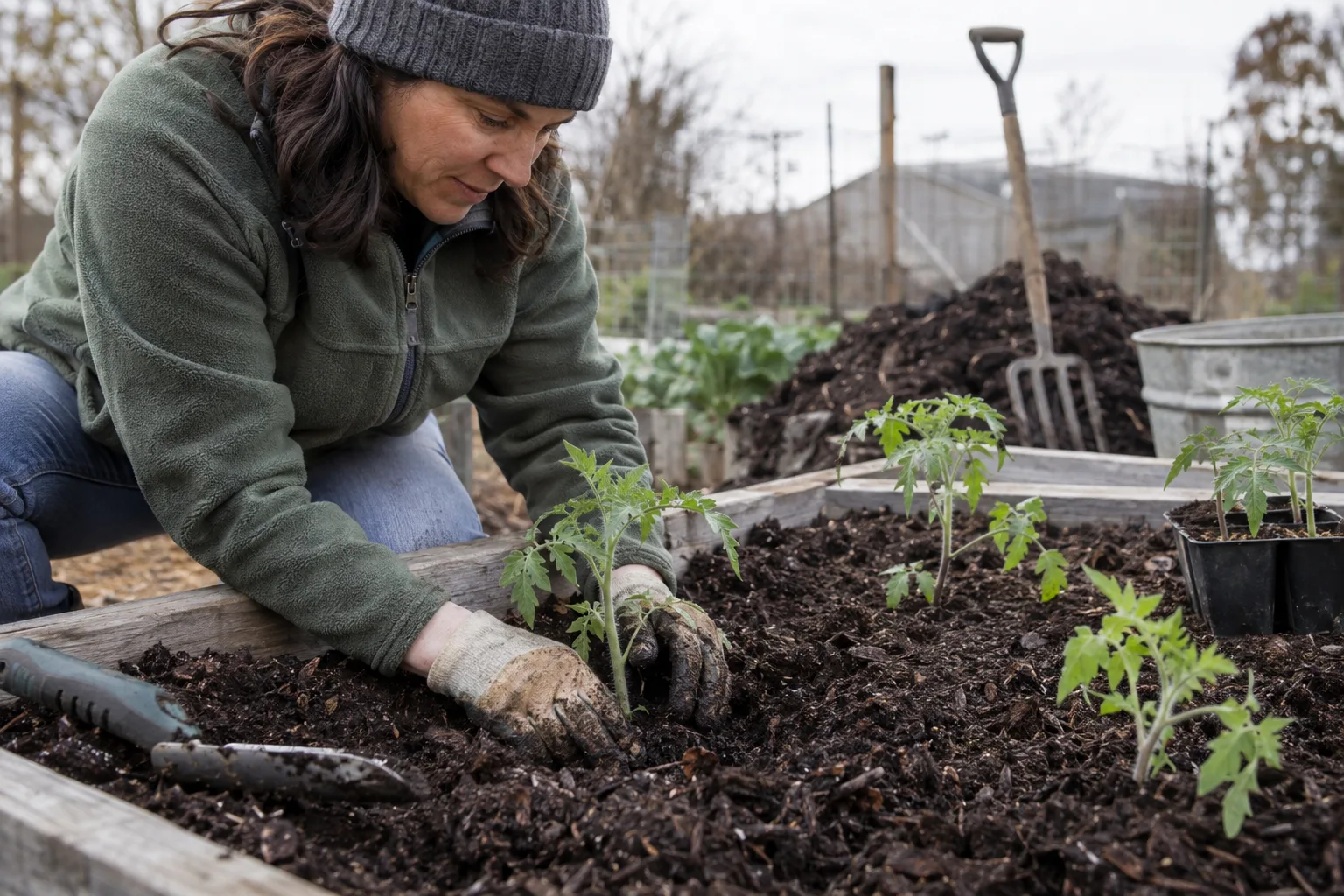
Why is February a good planting month in Queen Creek?
February sits between the cool and warm growing seasons, so it is the one month when both kinds of plants can go in. Highs run in the 60s and 70s, and roots grow well before the 110°F days arrive.
That window is short. Cool-season crops need cold nights to sweeten and set pods, while tomatoes and peppers stall in cold soil. Planting each group in its own half of the month solves both problems.
Queen Creek and San Tan Valley sit a little cooler on winter nights than central Phoenix, and open ground away from block walls loses heat fastest. A frost date on a chart is an average, so treat it as a guess and check the forecast. The University of Arizona Cooperative Extension vegetable planting calendar for Maricopa County lists the sowing and transplanting windows for each crop. Our gardening calendars page covers the other months.
Which 8 plants should I start in February?
Start peas, lettuce and carrots early in the month, tomatoes and peppers late in the month, and the three flowering plants (desert marigold, penstemon, African daisy) any time. Browse our herbs, vegetables and berries department for the edible ones. These are varieties we commonly carry, though availability changes week to week and season to season.
1. Tomatoes (Solanum lycopersicum)
Plants reach 3 to 6 feet and need full sun with some afternoon shade by May. Water deeply every few days once established. Choose varieties labeled heat-tolerant for the low desert, since many standard types drop blossoms above 95°F. The drawback is timing: a cold night before mid-February stalls the plant for weeks. Stake or cage at planting.
2. Peppers (Capsicum annuum)
Most sweet and hot peppers stay 2 to 3 feet tall and want full sun, though afternoon shade in May helps. Water when the top 2 inches of soil are dry. Peppers dislike cold soil even more than tomatoes do, so the last week of February suits them better than the first. Plants often slow in July, then flower again in September.
3. Snap peas (Pisum sativum var. macrocarpon)
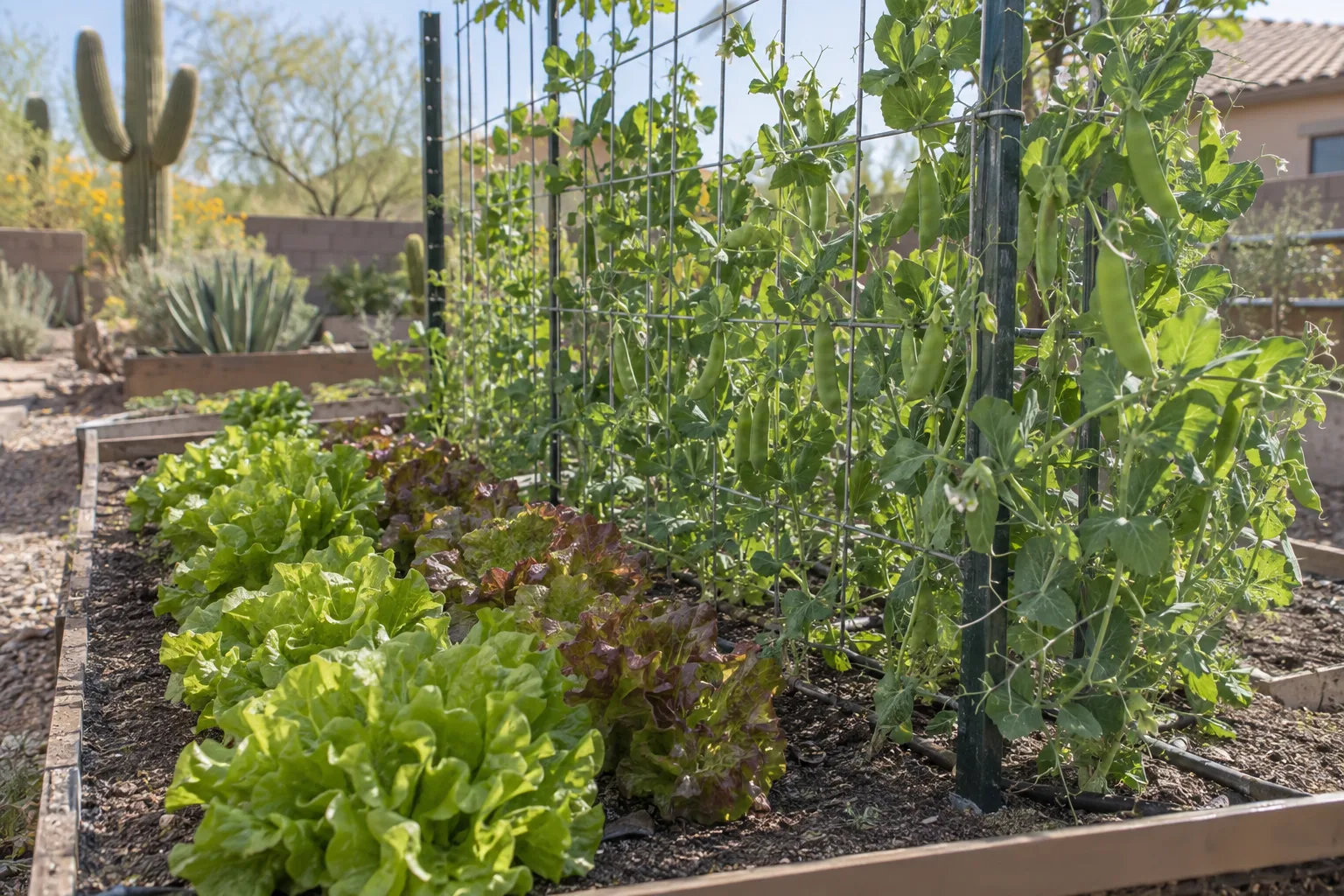
Vines climb 5 to 6 feet on a trellis and prefer full sun with cool roots. Keep the soil evenly moist. Early February is the last reasonable sowing, and the drawback is a short harvest, because pods stop once highs reach the 80s. Sow seed directly, since pea roots resent disturbance.
4. Lettuce (Lactuca sativa)
Loose-leaf types stay 6 to 12 inches tall and take full sun now, then shade by April. Water lightly every 2 to 3 days. Lettuce bolts and turns bitter once temperatures climb, so plan on 6 to 10 weeks of harvest at most. Cut outer leaves and leave the center growing.
5. Carrots (Daucus carota)
Roots reach 6 to 8 inches deep with feathery tops about a foot tall, and they need full sun and loose soil. Keep the seed bed damp until sprouts show. The drawback is that February is late for carrots, and compacted or caliche-heavy ground produces forked roots, so a raised bed is the safer choice. Sow seed directly, early in the month.
6. Desert marigold (Baileya multiradiata)
This native reaches 1 to 2 feet tall and wide, wants full sun and sharp drainage, and needs little water once established. Yellow flowers appear over a long season. It reseeds freely, which pleases some gardeners and annoys others. Overwatering is the main way to lose it.
7. Firecracker penstemon (Penstemon eatonii)
Expect 2 to 4 feet in height and about 2 feet in width, in full sun with fast-draining soil. Red tubular flowers draw hummingbirds in spring. Water every 1 to 2 weeks while young, then sparingly. Its drawback is a short life, often only a few years, and bloom fades by early summer.

8. African daisy (Osteospermum)
Plants grow 1 to 2 feet tall and spread about as wide, in full sun. Water every 3 to 4 days at first. Blooms continue until heat arrives in late April or May, and then the plant declines. Treat it as a spring color planting, not a permanent one. Find more options in our annual flowers and foliage department.
How should I prepare Queen Creek soil in February?
Test for caliche first, then amend only the vegetable beds. Push a rebar stake into the planting spot, and if it stops hard within 12 to 18 inches, water will pool there and drown roots.
Our soil is alkaline and our water is hard, so compost helps vegetables far more than any fertilizer bag. Work 3 to 4 inches into the top 8 to 12 inches of the bed. Desert marigold and penstemon go into native soil with no compost, because rich soil makes them leggy and short-lived.
Dig each hole about twice as wide as the root ball and no deeper. Set the crown slightly above the surrounding soil. Build a low berm for a watering basin, and add 2 inches of mulch kept a few inches off the stems.

How often should I water new plantings in February?
Water every 2 to 3 days for the first two weeks, then stretch the interval as roots spread. Always check the soil 2 to 3 inches down first, because a damp finger beats a calendar every time.
| Plant group | Weeks 1 and 2 | Weeks 3 to 6 | Established |
|---|---|---|---|
| Tomatoes and peppers | Every 1 to 2 days | Every 2 to 3 days | Every 3 to 4 days |
| Peas, lettuce, carrots | Every 2 days | Every 3 days | Every 3 to 4 days |
| Desert marigold, penstemon | Every 3 days | Weekly | Every 2 to 3 weeks, or rain only |
| African daisy | Every 2 days | Every 3 to 4 days | Every 4 to 5 days |
Treat these as starting points. Sandy ground drains faster, and clay holds water longer, so adjust to what your soil does. Deep, slower watering sends roots down, and that depth carries plants into summer.
How do I protect plants from a late February frost?
Cover tender transplants with frost cloth on any night forecast at or near 35°F. The cloth, draped loosely and anchored at the edges, typically adds a few degrees of protection.
Cold air settles in low spots and against walls that trap it, so one corner of a yard can run several degrees colder than the weather report. Watch the forecast for your own area, not a distant airport. Desert marigold and penstemon handle winter cold without cover, while tomatoes and peppers do not.
What should I leave alone until later?
Hold off on squash, melons, beans, okra and most herbs that love heat, and wait on lawn seed. These want warmer soil and do better from March or April plantings. Planting them in February invites stalled growth and rot.
Skip fertilizer on native plants for their first season. Nitrogen pushes soft growth that struggles in summer heat. Browse our plants department for shrubs and perennials that suit the next season.
Frequently asked questions
Can I start tomatoes from seed in February?
Seed started outdoors in February is usually too late for a spring harvest, because fruit needs to ripen before highs pass 95°F. Transplants give you a 4 to 6 week head start. If you do start seed, grow it indoors under bright light and harden it off for a week before planting.
Should I use shade cloth on February plantings?
Not in February, because the sun is mild and plants want every hour of it. Keep shade cloth of 30 to 40 percent ready for May, when afternoon sun starts to scorch tomatoes and peppers. Setting it up before the heat arrives is easier than rescuing wilted plants after.
Why do my new transplants look stunned?
Cold soil slows root growth, so plants often sit still for two to three weeks after planting. This is normal when soil stays below about 60°F. Keep the soil moist but not soggy, avoid extra fertilizer, and growth usually resumes as days warm.
Can I plant trees and shrubs in February?
Yes, February works for many desert-adapted trees and shrubs, since roots establish before summer. Frost-tender types such as citrus are better held until the danger of frost has passed. Browse our desert trees for options, and ask us about each one’s cold tolerance.
Do I need to fertilize vegetables in February?
Compost worked into the bed before planting is enough to start. Once tomatoes and peppers are growing, a balanced fertilizer every 3 to 4 weeks supports fruit. Leafy crops like lettuce need less, and desert natives need none during their first season.
Is February planting right for your yard?
February planting suits you if you can watch the forecast and cover plants on a cold night. It rewards gardeners with a sunny bed, raised soil or a spot free of caliche. It suits you less if your yard sits in a cold low spot or you travel often, because a missed frost night can set tomatoes back for weeks. In that case, wait until March. Stop by our Queen Creek nursery and we will help you match plants to your yard.
