Water deeply when the upper 1–2 inches of soil dry during active growth, allowing excess water to drain. Reduce watering substantially in cool weather. Needs more regular moisture than desert cacti, especially during flowering and fruiting.
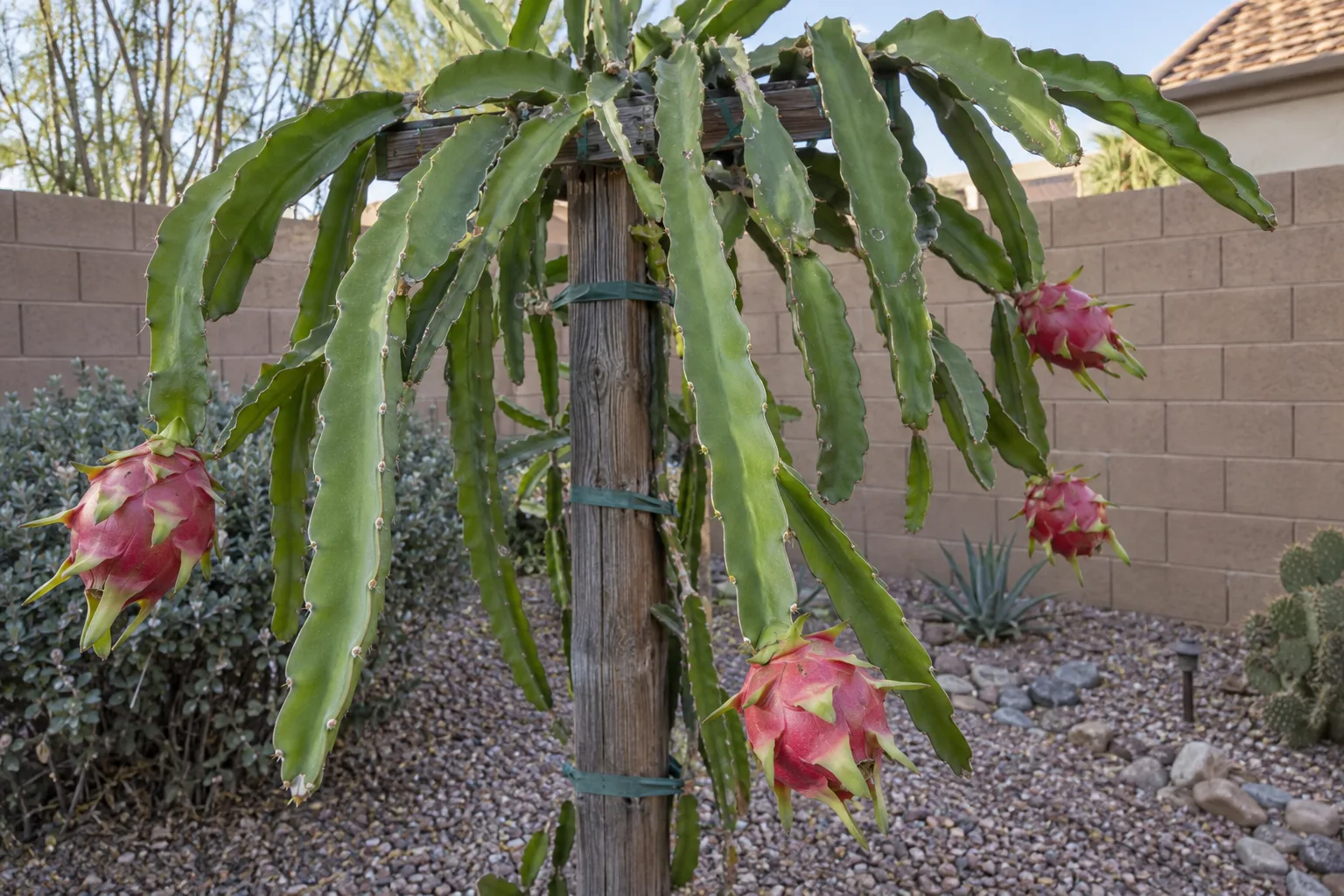
A tropical climbing cactus with three-sided green stems, spectacular night-blooming flowers, and pink-red fruit containing mildly sweet white flesh speckled with edible black seeds.
Light: Morning sun with afternoon shade in Phoenix; approximately 30–50% shade cloth helps prevent summer sunburn. Avoid exposed west-facing walls and reflected heat.
Water: Water deeply when the upper 1–2 inches of soil dry during active growth, allowing excess water to drain. Reduce watering substantially in cool weather. Needs more regular moisture than desert cacti, especially during flowering and fruiting.
Soil: Well-drained, organically enriched sandy soil or cactus mix amended with compost and pumice. Avoid heavy clay, standing water, and excessive salt buildup.
Mature size: Climbing stems can reach 15–20 feet or more if unrestricted; commonly trained on a sturdy 5–6-foot support with a canopy approximately 4–8 feet wide.
Bloom: Large flowers appear in warm-season flushes, typically late spring through fall. Each flower opens for one night and usually closes the following morning. Established cuttings may flower within 1–3 years.