

Creeping thyme for between the pavers and lemon thyme for the kitchen. Sun, sharp drainage, and the discipline not to overwater it through monsoon season.
Thyme is a Mediterranean subshrub that handles our sun and heat better than almost any other herb; what it cannot handle is wet soil in August. Get the drainage right — a raised spot, a gritty mix, a slope — and it lives for years, flowers for the bees in spring, and takes light foot traffic in paver joints. Get it wrong and it collapses in the first humid week of July.
We commonly carry two: creeping thyme, a flat, mat-forming groundcover, and lemon thyme, an upright culinary variety with a clear citrus scent. The rest of the edible benches are on our Herbs & Vegetables page.
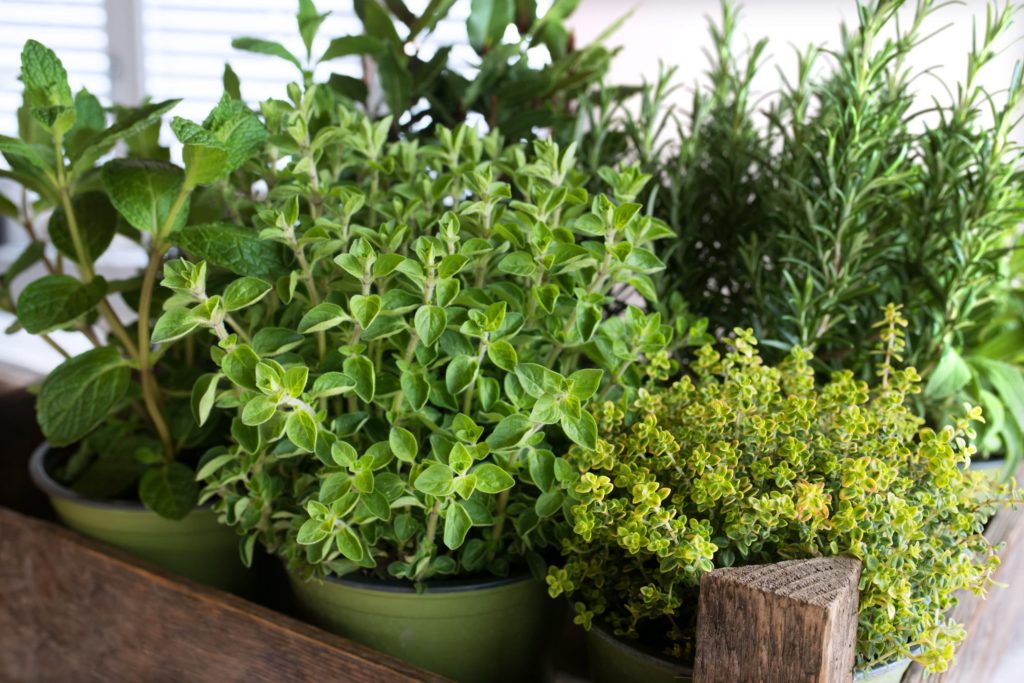
These are the thyme varieties we commonly carry. Availability changes week to week and season to season, so call (480) 987-3308 or stop in to see what’s on the bench today.
Thymus serpyllum: a flat, spreading mat two inches tall with tiny leaves and pink-purple flowers in spring. For paver joints, rock gardens and pot edges; edible but mild.
Thymus × citriodorus: an upright, bushy culinary thyme to a foot tall with a bright lemon scent, for chicken, fish and vegetables.
Looking for one that isn’t listed? Ask — we can usually suggest a close match or tell you when it tends to come around.
The care tag was written somewhere else. This is the Queen Creek version.
February through April, or October and November, so roots establish in mild weather. Fall planting is best in Queen Creek — the plant is deep-rooted by its first summer. Avoid setting out thyme in June or July.
Gritty, fast-draining soil: native soil with added sand or pumice on a raised or sloped site, or cactus mix cut with potting soil in containers. Water every three or four days for the first month, then once a week in summer and every two to three weeks in winter. In monsoon season, skip watering after rain. Root rot from wet soil kills more thyme here than heat does.
Thyme goes woody and dies out in the center after three or four years. Layer a few outer stems into the soil in spring to make replacements, or simply replant. Creeping thyme mats can be lifted, divided and reset in fall.
Full sun to afternoon shade. Thyme takes the reflected heat of a paver path or a south wall better than most plants; in shade it grows sparse and loses flavor. Creeping thyme between flagstones wants sun on the stones.
Snip stems as needed; flavor is strongest before the spring bloom. Shear the whole plant back by a third after flowering to keep it dense, and again lightly in late winter. Never cut into bare wood — it does not resprout from old stems.
Little feeding — a light balanced dose in spring at most. Spider mites in dry heat; hose them off. Fungal collapse in humid weather is prevented by drainage and spacing, not sprays. Thyme is non-toxic to pets.
Photo of the bed, how much sun it gets and what you want to eat — we’ll match varieties and planting dates to it. Advice is free.
We stock raised-bed and vegetable planting mix, compost and steer manure by the bag or the yard, organic vegetable fertilizers, tomato cages and stakes, shade cloth for the May-to-September stretch, frost cloth for January, and drip fittings. The pottery yard has half-barrels and 15-gallon pots for patio vegetables, and soil and mulch is sold by the bag or by the yard.
Wet soil during monsoon humidity, almost always. Thyme needs sharp drainage and to dry out between waterings; heavy soil and daily irrigation rot it. Replant in a raised, gritty spot.
Once a week in summer once established, every two to three weeks in winter, and skip it after monsoon rain. New plants every three or four days for the first month.
Yes — it prefers it. Afternoon shade is fine in the hottest exposures but not required.
Light traffic, yes — paver joints and stepping-stone paths. Not a lawn substitute in our heat.
Yes, it is evergreen and frost-hardy in Queen Creek.
Yes, thyme is non-toxic to cats and dogs.
Thyme live on the herb and vegetable benches; any staff member can point you to them. Locally owned, and a short drive from San Tan Valley, Gilbert, Chandler and Mesa.