

Ceropegia woodii in green and the pink-edged variegated form — heart-shaped leaves strung on threads that reach three feet. A bright shelf or an east window and it grows like a curtain.
String of hearts looks fragile — threads of stem strung with small heart-shaped leaves, silver-marbled on top and purple beneath — and is one of the toughest trailers we sell. It is a caudex-forming succulent from South Africa that stores water in a tuber at the base, tolerates the driest indoor air, and forgives a forgotten watering far better than a fern or a pilea. It also propagates from a single leaf-and-node laid on soil.
The rule in an Arizona house is light: bright indirect light, or a little direct morning sun, keeps the leaves close together on the strand; in a dim room the strands go bare and stringy. We commonly carry the green form and the variegated, pink-flushed form. The rest of the bench is on our Succulents page.

These are the string of hearts varieties we commonly carry. Availability changes week to week and season to season, so call (480) 987-3308 or stop in to see what’s on the bench today.
The classic: silver-marbled green hearts on wine-purple threads, trailing three feet or more from a hanging basket. Small pink lantern flowers in summer. Bright light; dry between waterings.
Leaves edged in cream and flushed pink, strongest in bright light. Slightly slower than the green form and wants the brighter spot to keep its color.
Looking for one that isn’t listed? Ask — we can usually suggest a close match or tell you when it tends to come around.
The care tag was written somewhere else. This is the Queen Creek version.
An east window with direct morning sun, or very bright indirect light all day, keeps the leaves dense along the strands and brings out the marbling and the pink on the variegated form. In medium light it survives but goes leggy. Direct afternoon sun through west glass in summer scorches it; outdoors it wants bright shade.
A shallow pot or basket; the tuber sits near the surface and the roots are shallow. Repot every two or three years at most. It flowers and grows best slightly root-bound. Keep the basket where the strands can hang free — they tangle and break if crowded.
Happy at room temperature; tolerant of dry heat but not frost. Outdoors it can hang on a covered patio in bright shade from March into May and October until nights near 40°F. Summer sun and monsoon downpours are both hard on it; indoors is simpler.
Let the mix dry completely, then water thoroughly and drain. Every ten to fourteen days in summer indoors, every three to four weeks in winter. The leaves go soft and slightly curled when it is ready. Soggy soil rots the tuber — a gritty, fast-draining mix (cactus mix with extra perlite) in a pot with a hole.
A balanced liquid fertilizer at quarter strength monthly from March through September. For a fuller top, coil a long strand around the soil surface and pin it down; it roots at every node. Cuttings root in water or damp mix within two weeks.
Non-toxic to cats and dogs. Mealybugs occasionally nest where strands meet the soil; a swab of rubbing alcohol and insecticidal soap handle them. Aphids on the flower stalks in summer; rinse them off.
Stretching, mushy stems, a sunburned side — snap a photo of the plant and where it lives and we’ll sort it out at the bench. Advice is free.
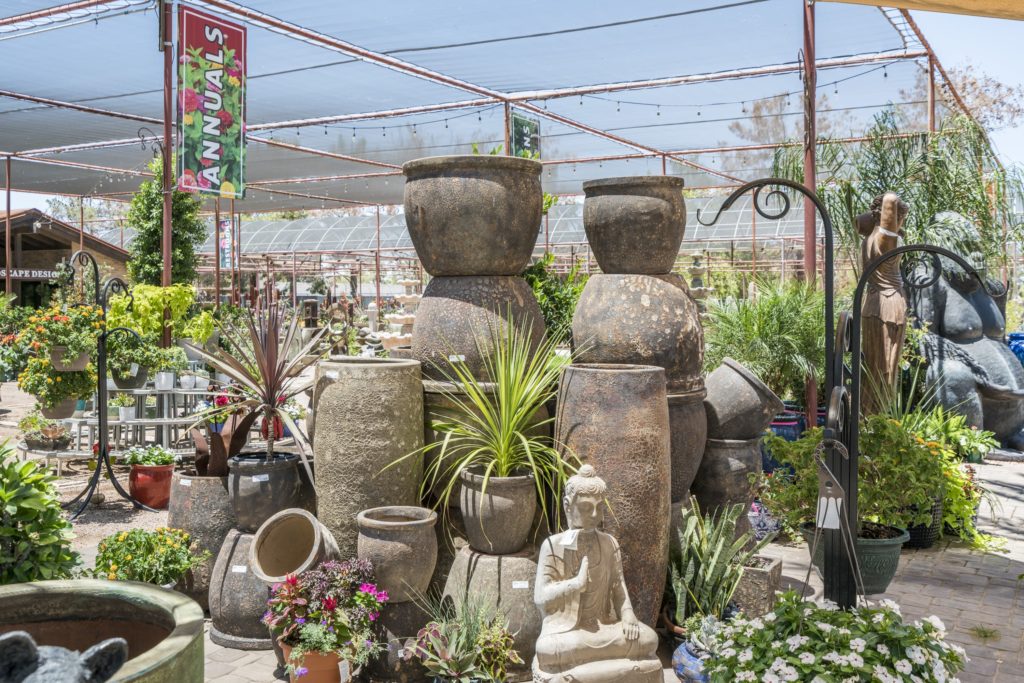
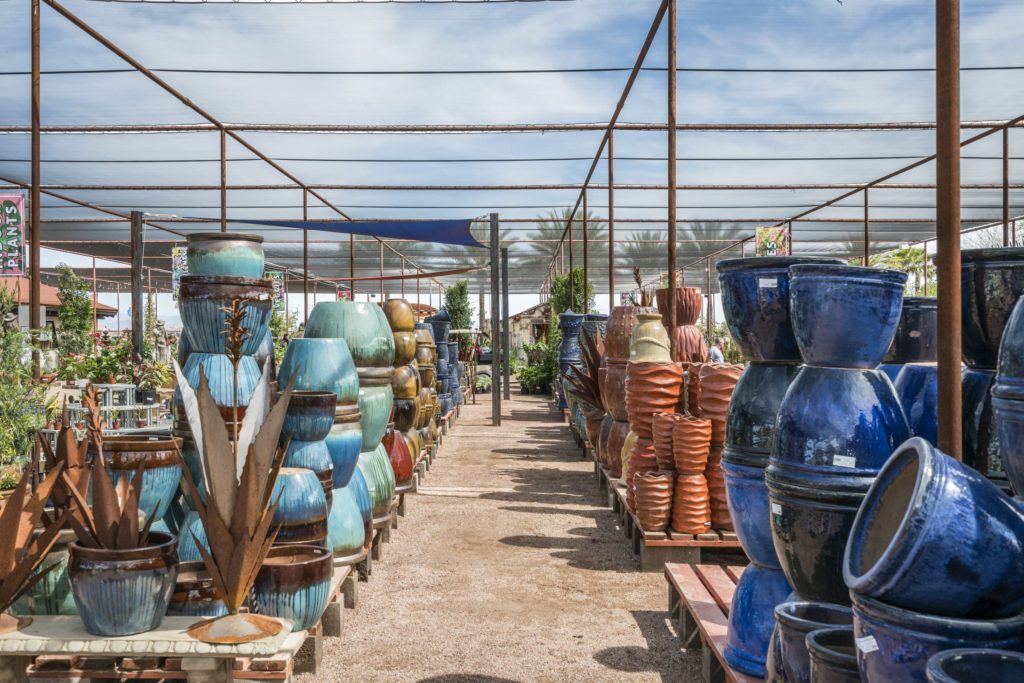
Succulents live or die on drainage. We stock cactus and succulent mix, pumice and grit to open it up further, slow-release low-nitrogen fertilizer, and the shallow terracotta and glazed pots that dry out the way they like. The pottery yard has bowls, strawberry jars and hanging baskets for the trailing types.

Too little light, usually, or old age on the oldest strands. Move it to brighter light and coil a couple of strands over the soil surface, pinning them down — they root and refill the top of the pot.
When the mix is completely dry and the leaves have gone slightly soft — every ten to fourteen days in summer indoors, every three to four weeks in winter. It stores water in a tuber and tolerates drought far better than wet feet.
Yes — it is non-toxic to cats and dogs.
Morning sun through an east window, yes, and it benefits. Afternoon sun through west glass or full sun on a patio scorches it.
Aerial tubers — small bulbils that form at the nodes. Press one onto damp soil and it grows a new plant.
On a covered patio in bright shade in spring and fall. Bring it in for summer heat and before any night near 40°F.
String of Hearts live on the succulent bench; any staff member can point you to them. Locally owned, and a short drive from San Tan Valley, Gilbert, Chandler and Mesa.