

One genus, two very different plants: the trailing string succulents — string of bananas, fish hooks, string of teardrops, string of dolphins, wax ivy — for baskets in bright shade, and the silver-leaved landscape senecios for winter beds and pots.
The senecios and their relatives the curios cover two jobs in a Queen Creek garden. The string succulents are trailing plants with leaves shaped like bananas, hooks, teardrops or dolphins that cascade from a hanging basket in bright shade — indoors or on a covered patio — and want to be watered only when the strands deflate. The silver senecios — ‘Angel Wings’, ‘Silver Gleam’ and ‘Winter Whispers’ — are felted, broad-leaved plants for cool-season beds and containers, where their white foliage sets off pansies, snapdragons and dusty miller from October through May.
We commonly carry Mexican flame vine, a vigorous orange-flowered climber for a trellis. All of these are toxic to pets if chewed. The rest of the bench is on our Succulents page.

These are the senecio & curio varieties we commonly carry. Availability changes week to week and season to season, so call (480) 987-3308 or stop in to see what’s on the bench today.
bright shade
Curio radicans: plump, curved, banana-shaped leaves on fast trailing stems to three feet. The easiest and quickest of the strings; tolerates a little morning sun.
The same species with longer, thinner, hook-shaped leaves and a more open look. Vigorous; a basket trails a yard in a season.
Curio herreianus: oval, pointed, translucent-striped leaves like teardrops on slower stems. Wants bright light and very sharp drainage.
A hybrid whose leaves curve into little leaping dolphins. Slower and a bit more particular about light.
Senecio macroglossus: waxy, ivy-shaped leaves on a twining succulent vine. Trails or climbs; small yellow daisies in winter. Tougher than it looks.
The same wax ivy with cream-and-green leaves and purple stems. Brighter light keeps the variegation.
cool-season foliage for sun
Huge, velvety, silver-white leaves up to a foot long on a mounding plant to eighteen inches. A cool-season foliage plant for pots and borders, October through May; the felt rots in monsoon humidity.
A compact silver senecio with lobed, felted leaves — the dusty-miller look at a larger scale. Full sun to afternoon shade in the cool season.
Finely cut, lacy silver-white foliage on a mounding plant, the most delicate-looking of the three. Winter beds and containers.
a climber, not a succulent
A fast twining vine with glossy leaves and clusters of bright orange daisies that age to red, from spring through fall. Full sun to afternoon shade, moderate water, a trellis or fence. Frost cuts it back; it returns from the roots.
Looking for one that isn’t listed? Ask — we can usually suggest a close match or tell you when it tends to come around.
The care tag was written somewhere else. This is the Queen Creek version.
String succulents want bright indirect light or morning sun only: an east window, or a covered patio out of the afternoon sun. Direct summer sun scorches the strands in a day. In too little light the leaves space out and the strands go thin. Indoors they do well near an east or south window set back from the glass.
Shallow baskets; the roots are shallow and the crown rots in a deep wet pot. Feed a succulent fertilizer at quarter strength monthly from March through September. Coil long strands over the soil surface and pin them down to root and thicken the top; cuttings also root laid on dry mix. Frost-tender — under cover or indoors below about 35°F.
Well-drained, amended soil in beds or a good potting mix in containers. Water when the top inch is dry — every four to six days in fall and spring, weekly in winter. Overhead watering wets the felt and invites rot; water at the base. Feed a balanced fertilizer at planting and again in February. Pinch or cut back leggy growth to keep them full.
Let the mix dry completely, then soak and drain — every ten to fourteen days in summer indoors, every three to four weeks in winter. The leaves flatten and wrinkle slightly when thirsty. Soggy soil rots the crown before you see it, so use a gritty cactus mix in a basket with drainage and never leave it standing in water. After a monsoon rain, let outdoor baskets dry out fully.
‘Angel Wings’, ‘Silver Gleam’ and ‘Winter Whispers’ are planted in October and enjoyed through May in Queen Creek. Full sun through the winter, afternoon shade by April. Their felted leaves hold water and rot in the July-to-September monsoon humidity, so treat them as seasonal foliage: pull them in June or move pots into dry shade and accept losses. They take light frost without damage.
All senecios and curios are toxic to cats and dogs if chewed. Mealybugs nest where strands meet the soil; aphids favour the silver leaves and flame-vine buds — insecticidal soap for both. Mexican flame vine wants full sun to afternoon shade, moderate water and a support; it is frost-tender to the ground but returns from the roots in spring and can reach ten feet by fall.
Stretching, mushy stems, a sunburned side — snap a photo of the plant and where it lives and we’ll sort it out at the bench. Advice is free.
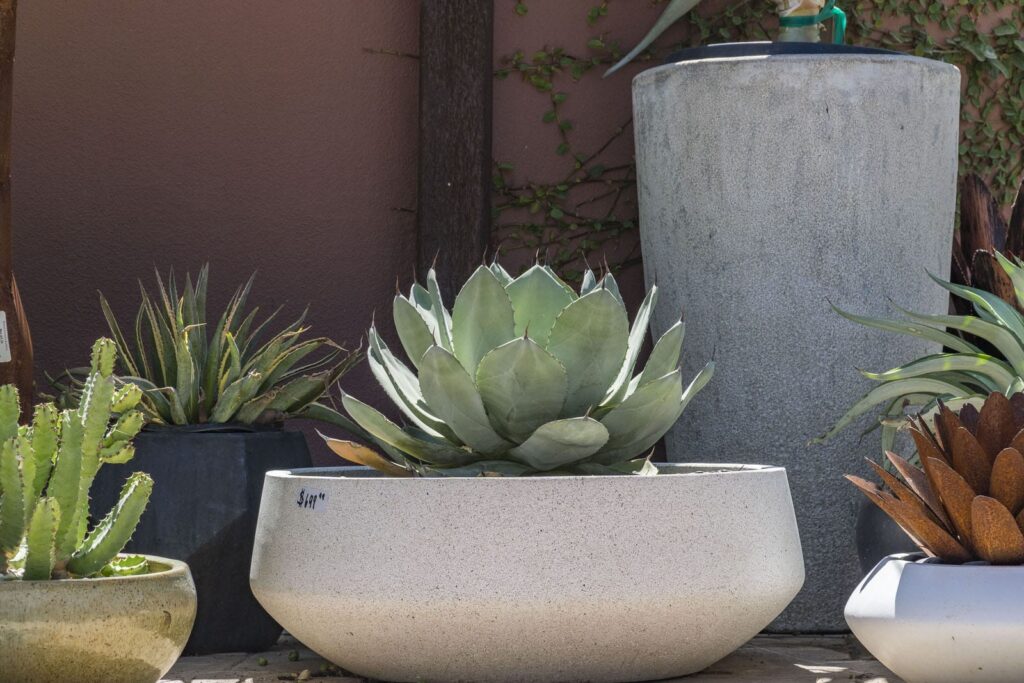
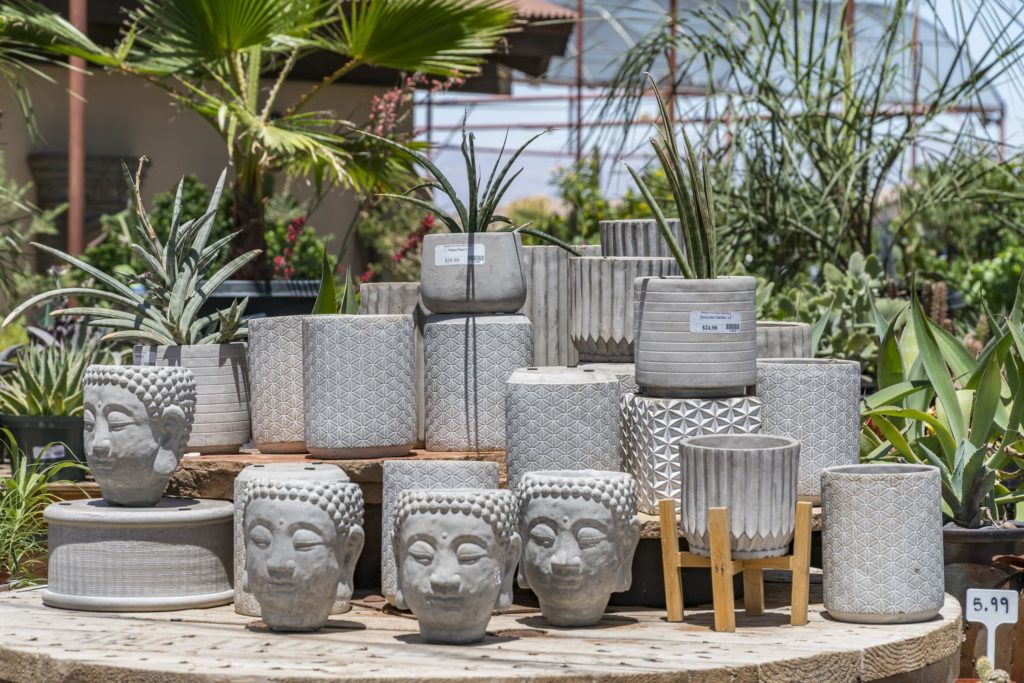
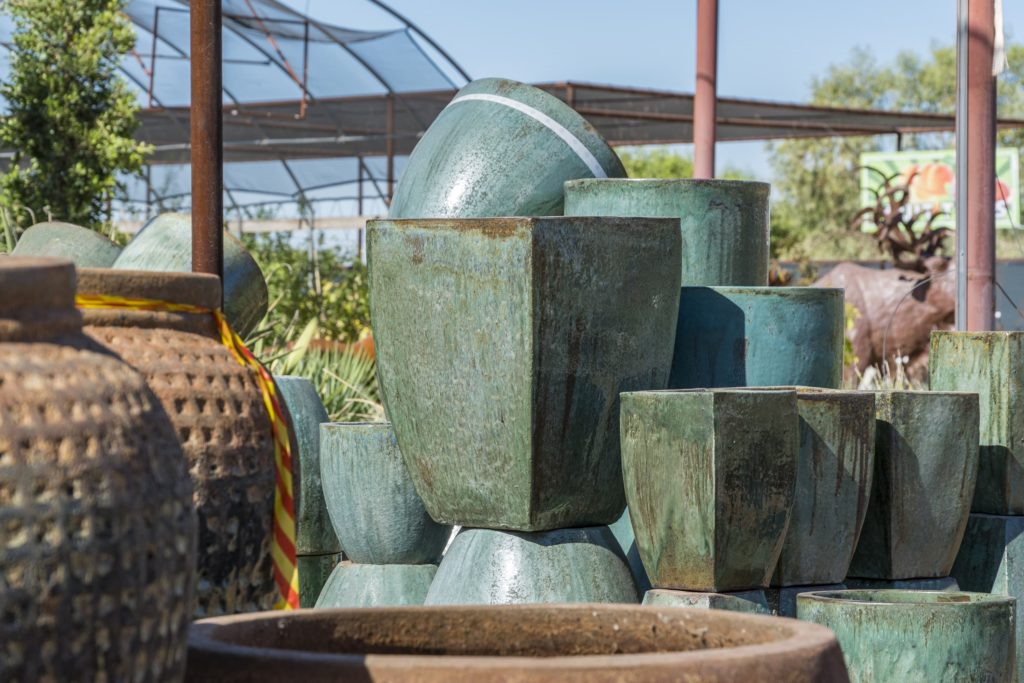
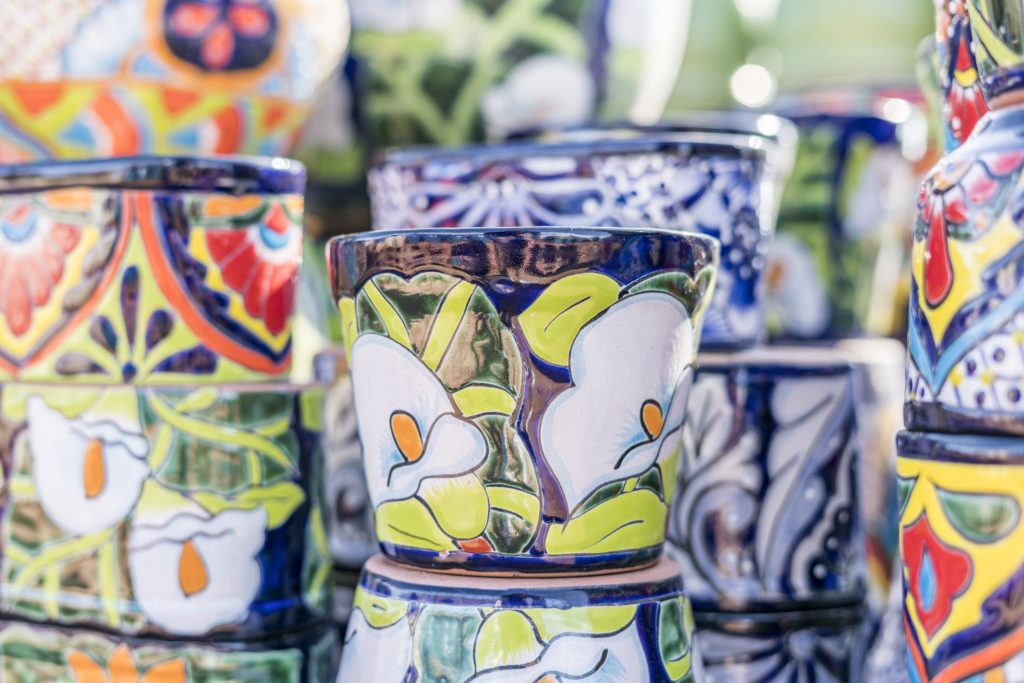
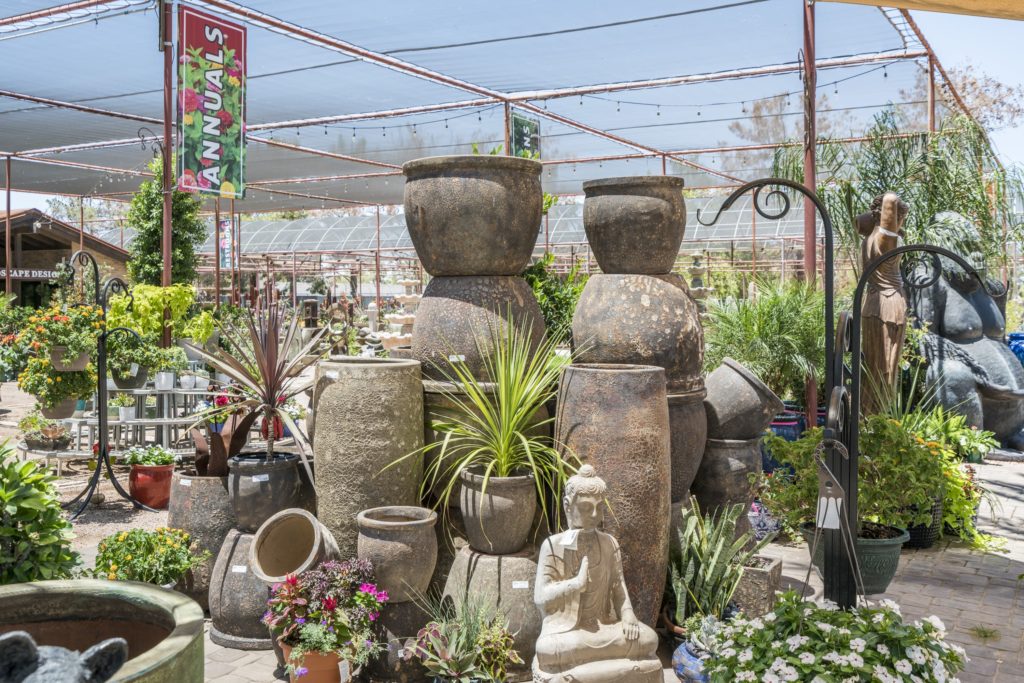
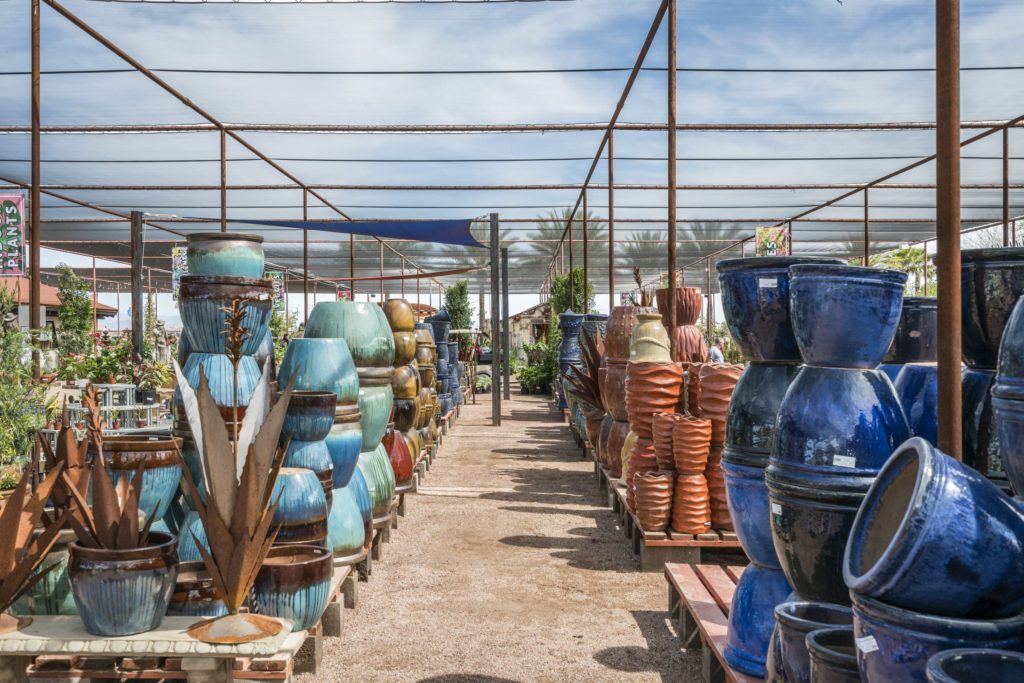
Succulents live or die on drainage. We stock cactus and succulent mix, pumice and grit to open it up further, slow-release low-nitrogen fertilizer, and the shallow terracotta and glazed pots that dry out the way they like. The pottery yard has bowls, strawberry jars and hanging baskets for the trailing types.

Not enough light, or the crown has rotted from overwatering. Move it to bright indirect light or morning sun and let the soil dry fully between waterings; coil a healthy strand over the soil surface to reroot and refill the top.
When the soil is completely dry and the leaves have flattened slightly — every ten to fourteen days in summer indoors, every three to four weeks in winter. Overwatering is how they die.
No. Senecios and curios are toxic to cats and dogs if chewed. Hang them out of reach or choose string of hearts, which is non-toxic.
Not well. Their felted leaves rot in monsoon humidity. Plant them in October, enjoy them through May, and treat them as cool-season foliage like dusty miller.
No — morning sun at most. Afternoon sun scorches them; a covered patio or an east window is right.
No, it is a fast flowering vine that botanists file under the same genus. Full sun to afternoon shade, moderate water, a trellis, and it covers itself in orange daisies from spring to fall.
Senecio & Curio live on the succulent bench; any staff member can point you to them. Locally owned, and a short drive from San Tan Valley, Gilbert, Chandler and Mesa.