

The sweet and hot peppers we commonly carry: ‘Better Belle’, mini ‘Lunch Box Orange’ and sweet ‘Banana’, and the chiles — Anaheim, poblano, jalapeño, serrano, padrón, Hungarian wax, ‘Super Chili’ and two habaneros. Peppers love our heat; they just need shade and patience in July.
Peppers are the warm-season crop that comes closest to enjoying a Queen Creek summer. Planted in March they fruit through May and June, pause setting during the worst of the heat, and — if kept alive with shade cloth and steady water — produce their biggest crop from September through November. They are also perennial: cut back and covered on frosty nights, a pepper plant comes back for a bigger second year. The chiles handle heat better than the bells, which need afternoon shade to avoid sunscald.
We commonly carry a dozen: sweet ‘Better Belle’, ‘Lunch Box Orange’ and ‘Banana’, and hot Anaheim, ancho/poblano, jalapeño, serrano, padrón, Hungarian yellow wax, ‘Super Chili’, habanero and ‘Caribbean Red Hot’. The rest of the edible benches are on our Herbs & Vegetables page.
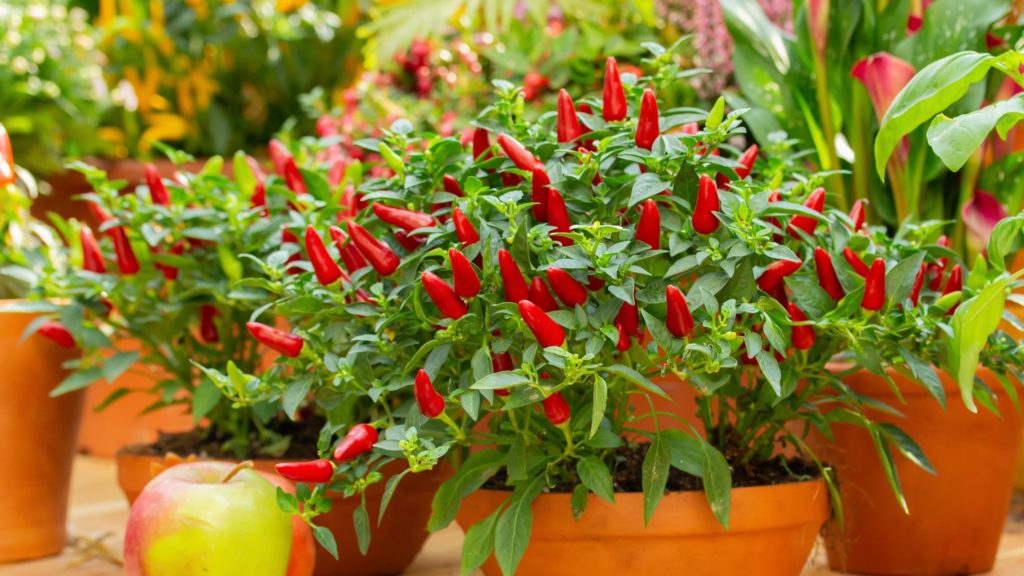
These are the pepper varieties we commonly carry. Availability changes week to week and season to season, so call (480) 987-3308 or stop in to see what’s on the bench today.
A thick-walled green-to-red bell, larger and earlier than most. Bells are the most sunscald-prone peppers — give this one afternoon shade from May.
Snack-sized sweet orange peppers in quantity on a compact plant — the best bell type for our heat because the small fruit ripens fast. Good in a large pot.
Long, tapered, pale-yellow sweet peppers that ripen orange-red; heavy yielding and heat-tolerant. For frying and pickling.
The mild, long green chile for roasting and rellenos. Productive and easy; ripens red for ristras. Sets fruit later into heat than bells.
Poblano fresh, ancho dried: broad, dark, mild chiles for stuffing and mole. A big plant that needs staking.
The all-purpose medium-hot chile; thick-walled fruit for salsa, poppers and pickling. Very productive here; ripens red and sweeter if left.
The Spanish tapas pepper: pick small and green for blistering in oil — most are mild, one in ten is hot. Prolific and heat-tolerant.
Banana-shaped pale-yellow chiles, medium hot, ripening red; for pickling and frying. Early and productive.
Small, slender, hotter than a jalapeño — the salsa verde chile. Thrives in our heat and produces by the hundred.
A compact ornamental-edible with dozens of upright, very hot, inch-long chiles that ripen from green through orange to red. Excellent in a pot.
The orange lantern-shaped habanero: fruity and seriously hot. Slow to start; peaks in September and October when the heat eases. A Capsicum chinense that appreciates afternoon shade.
A red habanero hotter than the orange, with the same fruity aroma. Same slow, heat-loving habit; best crop in fall.
Looking for one that isn’t listed? Ask — we can usually suggest a close match or tell you when it tends to come around.
The care tag was written somewhere else. This is the Queen Creek version.
Transplant from early March, once nights are reliably above 50°F, through April. Peppers planted in cold soil sulk for weeks; there is no advantage to February. A second planting is rarely needed — the same plants, kept alive through summer, produce the fall crop. In a mild winter, plants cut back and covered on frosty nights carry over for a heavier second year.
Raised beds or 5-gallon-plus containers with a rich, well-drained mix — native soil amended with a third compost. Space plants 18 inches apart; close spacing lets the leaves shade each other’s fruit. Add a balanced organic fertilizer and a handful of gypsum at planting. Stake or cage larger types — poblanos and bells snap under a fruit load in a monsoon wind.
Balanced organic fertilizer at planting, then a lower-nitrogen fertilizer every three to four weeks once flowering starts. Expect flowers to drop without setting from mid-June through August when nights stay above 75°F; that is normal. Keep watering and shading, and the plants set their heaviest crop from September to Thanksgiving.
Full sun from March into May. From late May through August, 30–40 percent shade cloth or a site with afternoon shade — chiles tolerate more sun than bells, but all peppers set more fruit and suffer less sunscald with afternoon relief. Sunscald shows as white, papery patches on fruit that faced the sun; keep the leaf canopy intact.
Drip on a timer: deep every two to three days in spring, daily in summer, in the morning. Even moisture prevents blossom-end rot and bitter fruit. Three inches of mulch keeps the shallow roots cool. Containers need daily water from May and sometimes twice a day in June and July.
Aphids and whiteflies on new growth — hose them off; leaf-footed bugs on fruit — hand-pick. Pepper weevils are rare in home gardens. Frost cloth on nights below 32°F in December and January keeps plants alive for a second year; cut them back by a third in February. Peppers are non-toxic to pets, though the hot ones are unpleasant.
Photo of the bed, how much sun it gets and what you want to eat — we’ll match varieties and planting dates to it. Advice is free.
We stock raised-bed and vegetable planting mix, compost and steer manure by the bag or the yard, organic vegetable fertilizers, tomato cages and stakes, shade cloth for the May-to-September stretch, frost cloth for January, and drip fittings. The pottery yard has half-barrels and 15-gallon pots for patio vegetables, and soil and mulch is sold by the bag or by the yard.
March and April, once nights are above 50°F. They fruit in May and June, pause in the heat, and produce their biggest crop in September through November.
Heat — pepper pollen fails when nights stay above 75°F. Keep the plants shaded and watered through July and August and they set heavily again in September.
Sunscald from direct sun on the fruit. Shade cloth from late May, keep the leaves on the plant, and space plants so they shade each other.
Yes — they are perennial if protected from frost. Cover on nights below freezing, cut back a third in February, and the second-year plant is bigger and earlier.
Deep every two to three days in spring, daily in summer, on drip in the morning, with mulch. Containers may need twice-daily water in June.
The chiles — serrano, jalapeño, Anaheim, padrón, ‘Super Chili’ — and small-fruited sweets like ‘Lunch Box’ and ‘Banana’. Large bells need afternoon shade.
Pepper live on the herb and vegetable benches; any staff member can point you to them. Locally owned, and a short drive from San Tan Valley, Gilbert, Chandler and Mesa.