Grasses & Grass-likes at Desert Horizon Nursery · Queen Creek
Ornamental Millet in Queen Creek
Corn-like foliage and fat seed plumes for fall containers: burgundy ‘Purple Baron’, bronze ‘Copper Prince’ and lime-green ‘Jade Princess’. Full sun and heat, regular water, and leave the plumes for the finches.
Ornamental millet is grain millet bred for color: broad, corn-like leaves in deep burgundy, bronze or chartreuse on a three- to four-foot plant, topped in late summer and fall with thick cattail plumes of seed that goldfinches strip clean. It is the tallest, boldest thing you can put in the middle of a fall container, and it loves the heat that finishes so much else. It is an annual — frost ends it — and it is at its best from August through November.
We commonly carry ‘Purple Baron’, ‘Jade Princess’ and ‘Copper Prince’. The rest of the bench is on the Plants pages.
These are the ornamental millet varieties we commonly carry. Availability changes week to week and season to season, so call (480) 987-3308 or stop in to see what’s on the bench today.
‘Jade Princess’
Bright chartreuse foliage under burgundy plumes on a compact two- to three-foot plant — the contrast is the point.
‘Purple Baron’
A dwarf purple millet to three or four feet with wide burgundy-black leaves and dense purple plumes; the color deepens in full sun.
‘Copper Prince’
Bronze-copper foliage and plumes on a three- to four-foot plant.
Looking for one that isn’t listed? Ask — we can usually suggest a close match or tell you when it tends to come around.
Grown here · Advice for here
Growing ornamental millet in the low desert
The care tag was written somewhere else. This is the Queen Creek version.
01
When to plant
March through September; it needs heat to grow and color. Spring plantings plume by June; the September plantings we bring in are already colored and plume through November. The first frost in late November or December ends it.
03
Water
Regular: every two to three days in beds and daily in pots through summer and early fall, weekly in November. It is a grass and wilts visibly when dry, recovering quickly. A large pot — 14 inches or more — keeps it stable and slows the drying.
05
Plumes and birds
Leave the seed plumes on the plant — that is when it looks best, and goldfinches and sparrows feed on them through fall. Cut a few for arrangements; they dry well.
02
Sun
Full sun. The burgundy and bronze colors develop only in strong light; in shade the leaves stay greenish and the plant leans.
04
Soil and feeding
Any decent potting mix or amended soil. A balanced fertilizer at half strength every three to four weeks while it grows. It is not fussy.
06
Pests and pets
Grasshoppers and caterpillars chew the leaves in late summer; usually cosmetic. Aphids on the plumes occasionally. Non-toxic to cats and dogs.
Bring us your spot
Photo of the bed or pot and its sun exposure, and we’ll match the plant and watering to it. Advice is free.
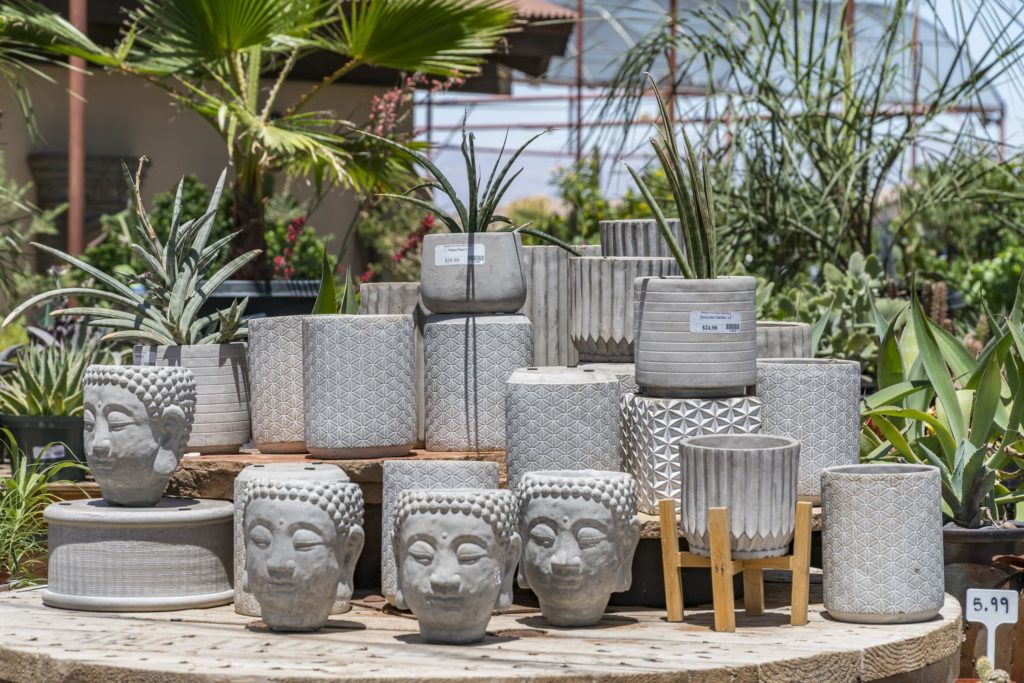
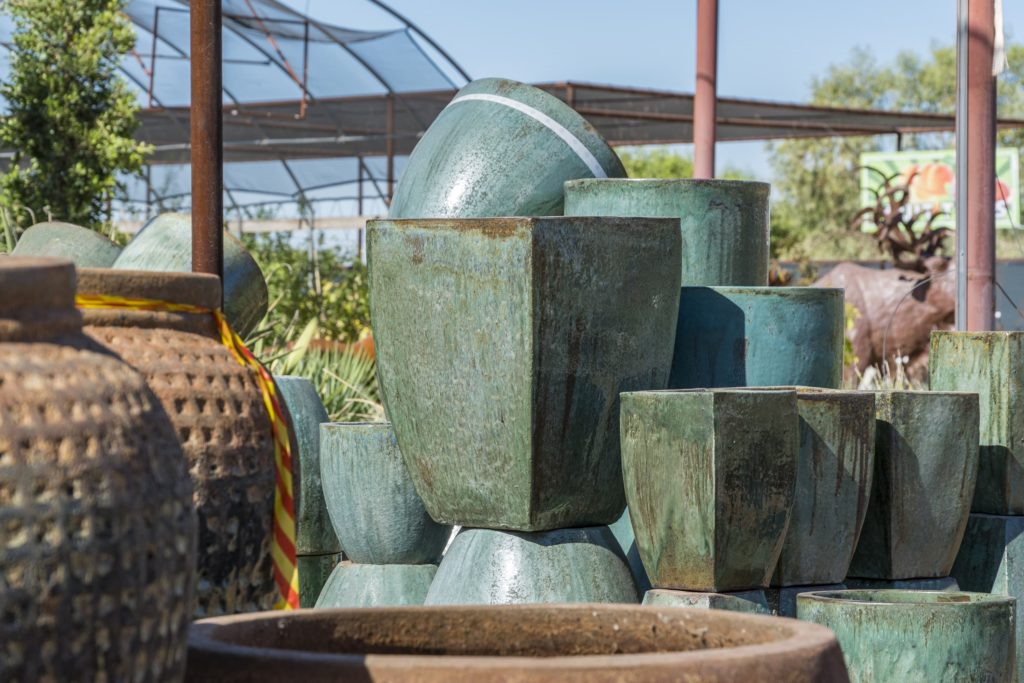
We stock planting mix and compost for beds, slow-release fertilizer, drip fittings and mulch, plus the wide glazed bowls and tall pots that show off grasses and grass-likes on a patio. See the pottery yard and soil and mulch pages.
Ornamental Millet live on the perennial and grass benches; any staff member can point you to them. Locally owned, and a short drive from San Tan Valley, Gilbert, Chandler and Mesa.