

Greek oregano (the pungent one), Italian oregano (milder, marjoram-crossed) and ‘Hot and Spicy’. A Mediterranean perennial that wants full sun, lean soil and less water than you think.
Oregano is built for our climate: a Mediterranean hillside plant that thrives in full sun, poor alkaline soil and long dry spells, and stays evergreen through most Queen Creek winters. The only way to lose it is kindness — rich soil and daily water rot the crown. Give it a sunny, well-drained spot at the dry end of the drip line and it produces for years, with a haze of pink-white flowers the bees work all summer.
We commonly carry three: Greek oregano, the intensely flavored one for pizza and grilling; Italian oregano, a milder marjoram cross for tomato sauces; and ‘Hot and Spicy’, a peppery selection. The rest of the edible benches are on our Herbs & Vegetables page.
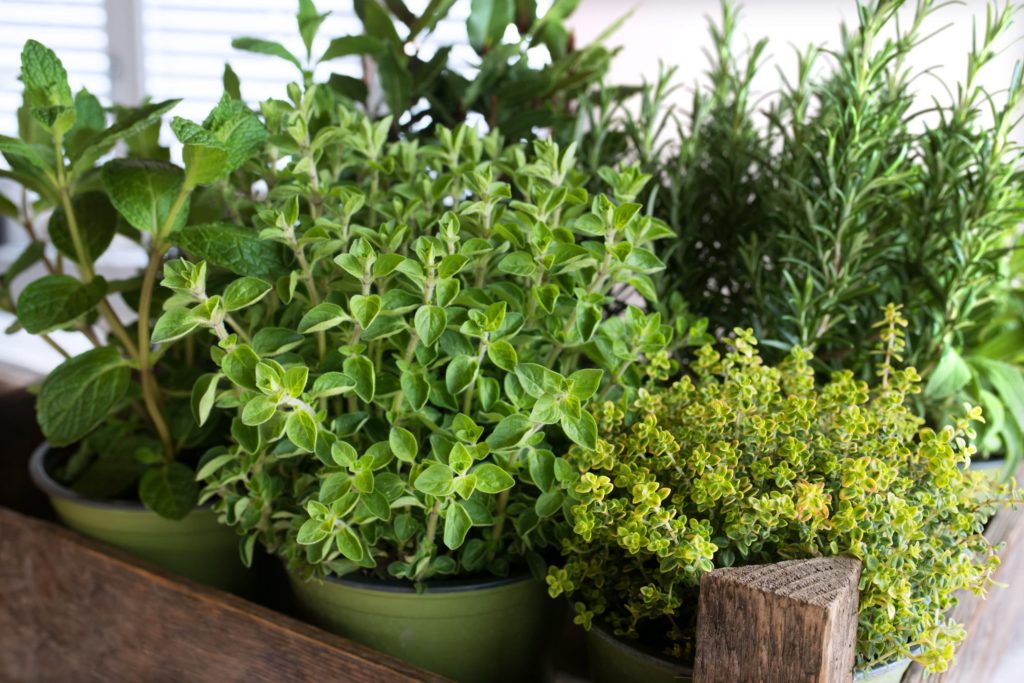
These are the oregano varieties we commonly carry. Availability changes week to week and season to season, so call (480) 987-3308 or stop in to see what’s on the bench today.
Origanum vulgare subsp. hirtum: small, fuzzy, gray-green leaves with the strongest, most peppery oregano flavor — the one for pizza, grilled lamb and drying. Low, spreading, very tough.
A selection with a warm, peppery bite beyond ordinary Greek oregano. Same easy habit.
Origanum × majoricum: a cross with sweet marjoram, milder and sweeter than Greek, for tomato sauces and fresh use. Slightly more upright and a little less cold-hardy.
Looking for one that isn’t listed? Ask — we can usually suggest a close match or tell you when it tends to come around.
The care tag was written somewhere else. This is the Queen Creek version.
Spring, from February through April, or fall, October and November — the two windows when roots establish before extreme heat or cold. Oregano planted in fall is well rooted by its first summer. Avoid planting in June and July.
Fast-draining soil: unamended or lightly amended native soil in a raised or sloped spot, or a gritty potting mix. Water new plants every three or four days for the first month, then back off: once or twice a week in summer, every two to three weeks in winter. Established plants in the ground can live on a weekly deep soak in summer. Wet feet in monsoon season are the main killer; never mulch right up to the crown.
Little or none. A light dose of balanced fertilizer in spring is plenty; rich feeding dilutes the flavor. Plants get woody in the center after four or five years; divide them in fall or replace.
Full sun for the strongest flavor, with afternoon shade acceptable in the hottest exposures. It tolerates reflected heat off block walls better than most herbs. In shade it grows lush, mild and floppy.
Cut stems any time; flavor peaks just before flowering in early summer. Shear the plant back by half after it flowers to keep it compact, and again in late winter to remove tired growth. Dry the cuttings — oregano is one of the few herbs that improves dried.
Rarely troubled. Spider mites in a hot dry corner and aphids on new growth; a hose handles both. Root rot in heavy wet soil is the only real disease. Oregano is non-toxic to pets in culinary amounts.
Photo of the bed, how much sun it gets and what you want to eat — we’ll match varieties and planting dates to it. Advice is free.
We stock raised-bed and vegetable planting mix, compost and steer manure by the bag or the yard, organic vegetable fertilizers, tomato cages and stakes, shade cloth for the May-to-September stretch, frost cloth for January, and drip fittings. The pottery yard has half-barrels and 15-gallon pots for patio vegetables, and soil and mulch is sold by the bag or by the yard.
Almost certainly too much water in monsoon season, especially in heavy soil or a mulched bed. Oregano wants sharp drainage and to dry out between waterings. Replant in a raised, gritty spot on the dry end of the drip.
Once or twice a week in summer once established, every two to three weeks in winter. New plants every three or four days for the first month.
Yes — it is evergreen through most winters and shrugs off frost. Italian oregano is slightly less hardy but rarely lost.
Greek for the classic strong flavor and drying; Italian for a milder, sweeter herb in sauces; ‘Hot and Spicy’ if you want a peppery kick.
Very well, in a gritty mix with a drainage hole. Terracotta is ideal because it dries fast. Water when the top two inches are dry.
In culinary quantities, yes. Concentrated oregano oil is not, but the plant is not a concern.
Oregano live on the herb and vegetable benches; any staff member can point you to them. Locally owned, and a short drive from San Tan Valley, Gilbert, Chandler and Mesa.