Low to moderate water once established. Water deeply, then allow the upper several inches of soil to dry. Irrigate more frequently during establishment and extreme summer heat; reduce watering in winter.
Size
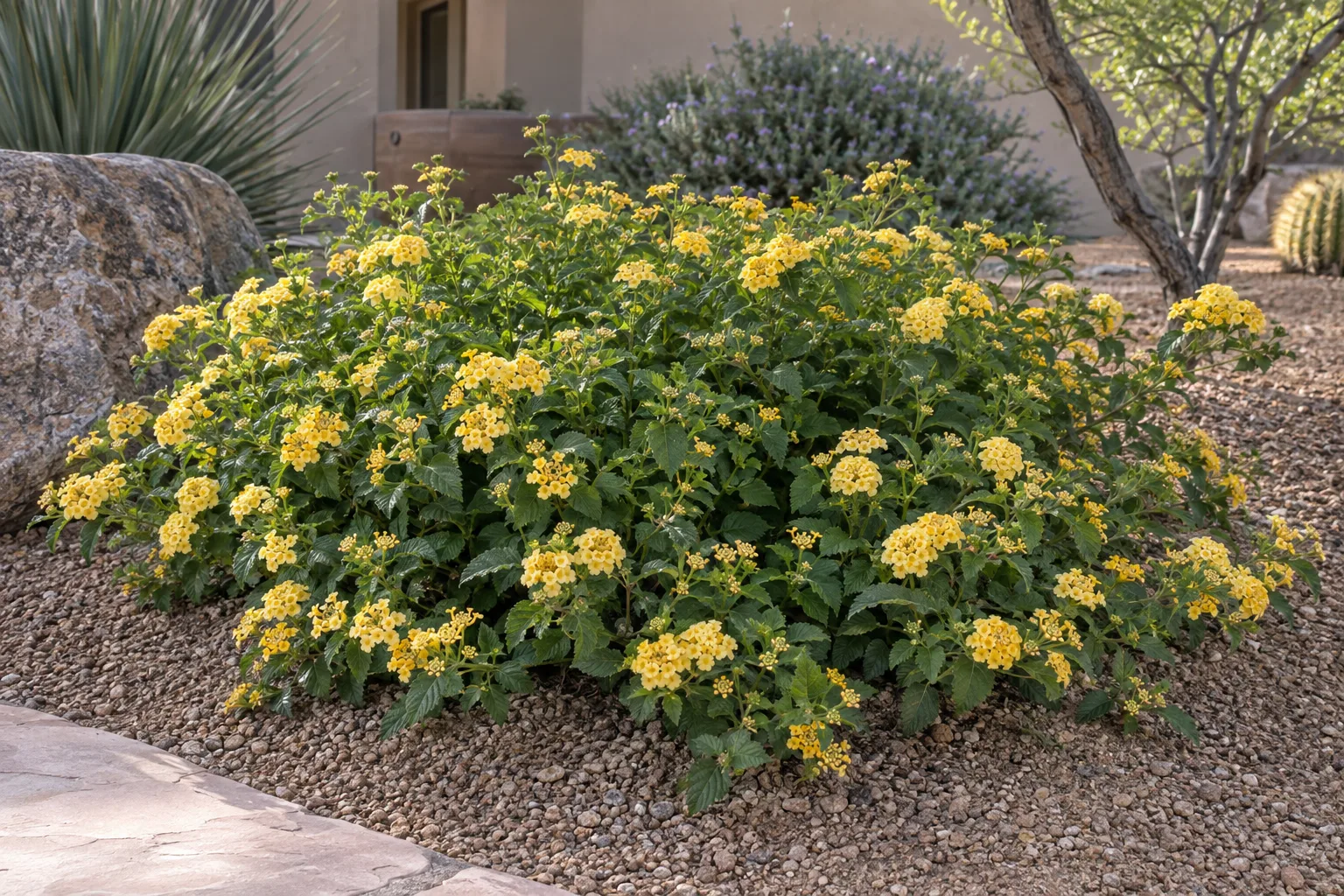
2-3 ft tall × 3-4 ft wide
Habit
Mounded – spreading shrub
Toxicity
Toxic — Pets Humans & Livestock
Description
A low-growing, spreading lantana with abundant soft yellow flower clusters and textured green foliage, well suited to Phoenix’s heat.
Autumn sage, Blackfoot daisy, Blue elf aloe, Desert marigold, Red yucca
Toxic — Pets Humans & Livestock
Toxic to pets, humans & livestock if ingested
Care Instructions
Light: Full sun for best flowering; light afternoon shade can help during extreme Phoenix summer heat.
Water: Low to moderate water once established. Water deeply, then allow the upper several inches of soil to dry. Irrigate more frequently during establishment and extreme summer heat; reduce watering in winter.
Soil: Well-drained soil; tolerates sandy, rocky, and alkaline soils. Avoid persistently wet soil and poorly drained planting sites.
Mature size: About 1.5–2 feet tall and 3–4 feet wide.
Bloom: Blooms repeatedly from spring through fall, sometimes into winter in frost-free locations. Flowering may slow during extreme heat or cold.
Evergreen / deciduous: Evergreen to semi-evergreen in mild winters; frost can cause leaf loss or stem dieback in Zone 9b.
Growth rate: Moderate to fast during warm weather with adequate irrigation.