

Shield-shaped, glossy leaves on red stems — a tough, uncommon aroid that tolerates lower light than a philodendron and stays compact. The desk plant for someone who has killed a calathea.
Homalomena rarely gets the attention of its cousins, which is a shame, because for an indoor plant in Arizona it has the right combination of traits: heart-shaped, leathery leaves that resist dry air, a compact mounding habit that never needs a pole, and a tolerance for medium light that lets it live on a desk or a bathroom counter. ‘Red’ adds wine-red leaf stems and a burgundy flush to new growth.
Treat it like a philodendron that prefers a little more consistent moisture and warmth, and keep it away from cold drafts and the AC vent — those are the only two things that make it sulk. The rest of the bench is on our Houseplants page.

This is the Homalomena ‘Red’ we commonly carry. Availability changes week to week and season to season, so call (480) 987-3308 or stop in to see what’s on the bench today.
Homalomena rubescens ‘Red’ — glossy dark green heart-shaped leaves on red petioles, forming a neat mound about a foot tall and wide. Sold. Medium to bright indirect light; evenly moist.
Looking for one that isn’t listed? Ask — we can usually suggest a close match or tell you when it tends to come around.
The care tag was written somewhere else. This is the Queen Creek version.
Homalomena manages in medium light where many aroids stretch, which makes it a good plant for a desk, a bathroom or a north-facing room. Brighter indirect light near an east window produces the deepest red stems. Keep it out of direct sun, especially west windows in summer, which scorch the leaves.
This is the one real requirement: keep it above 60°F and out of the airflow from air-conditioning and heater vents. A cold draft makes it yellow and drop leaves faster than any other mistake. Our winter nights are the risk period if the plant sits near a door or a single-pane window.
A standard indoor mix with added perlite or bark, in a pot one size larger than the root ball. Repot every two years. Feed a balanced liquid fertilizer at half strength monthly from March through October. It stays compact and never needs staking or pruning beyond removing spent leaves.
Water when the top inch of mix is dry, and don’t let it go fully dry — it wilts and drops older leaves when neglected. Every five to seven days in summer indoors, every ten days or so in winter. A well-draining mix and a pot with a hole keep “moist” from becoming waterlogged. Flush occasionally to clear hard-water salts.
The leathery leaves handle our 15–25 percent indoor humidity well. If edges start to brown, group it with other plants or set it on a pebble tray. It appreciates the summer monsoon humidity and grows fastest then.
Toxic to cats and dogs if chewed. Spider mites and mealybugs occasionally; rinse the leaves and treat with insecticidal soap. Outdoors only on a fully shaded, covered patio in the mild months — it is an indoor plant here.
Yellowing, spots, no new growth — snap a photo of the plant and its window and we’ll diagnose it at the bench. Advice is free.
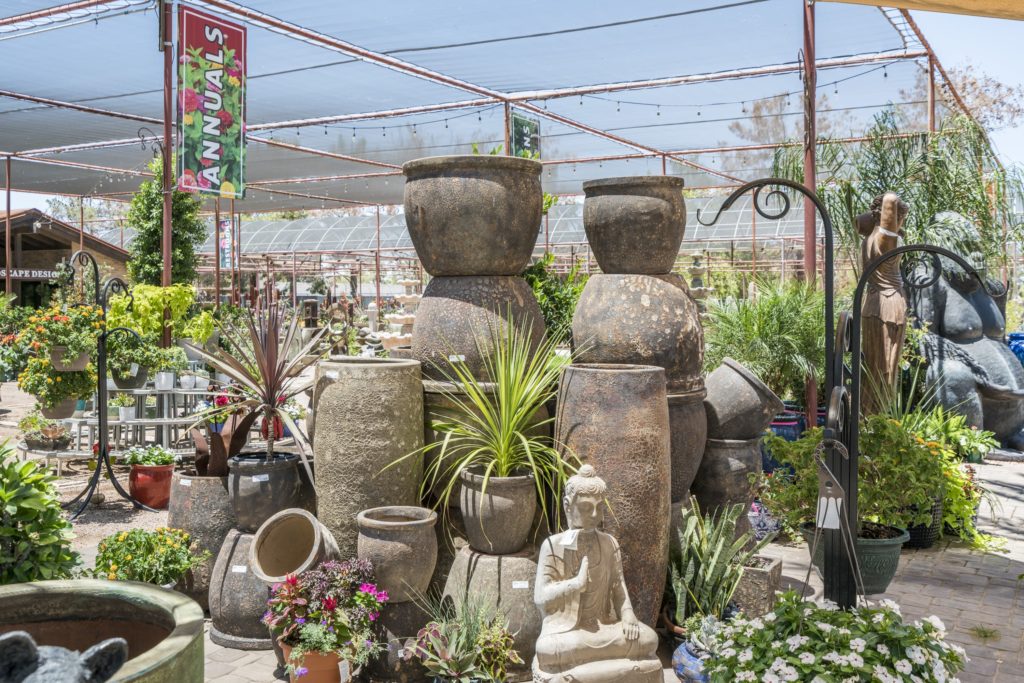
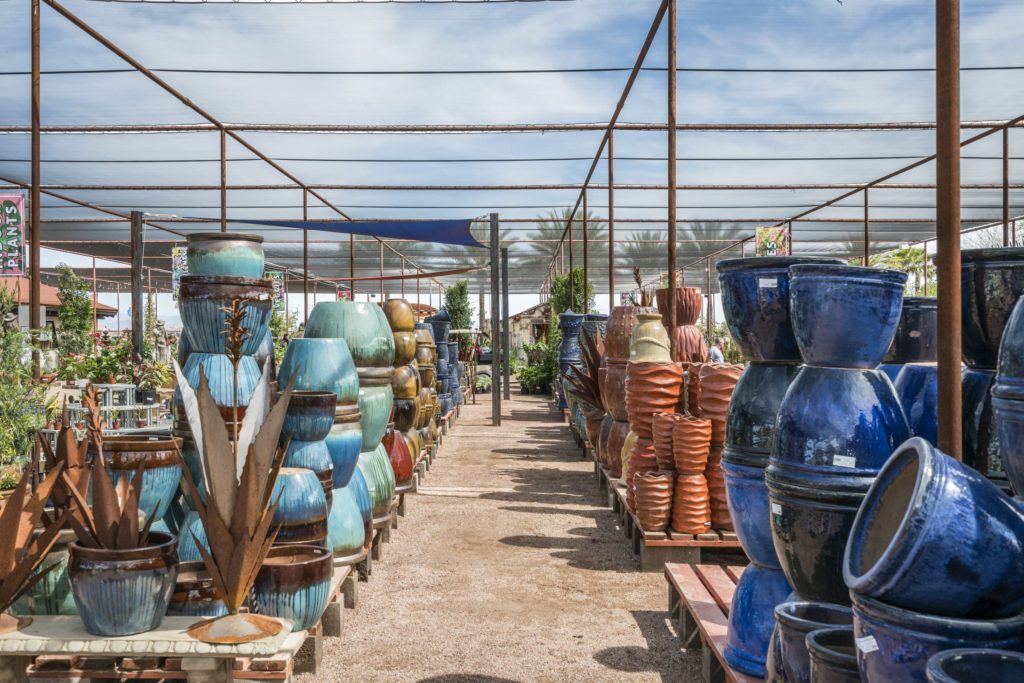
We stock indoor potting mix, orchid bark and perlite for the chunky blends aroids and epiphytes want, balanced houseplant fertilizers, insecticidal soap and neem for the usual mealybug and mite visits, and moss poles, hoops and saucers. The pottery yard has terracotta, glazed and lightweight pots from 4-inch up, plus hanging baskets and cache pots.

An aroid — related to philodendron and peace lily — from the tropical forests of Southeast Asia, grown for its glossy, heart-shaped, leathery leaves. ‘Red’ is a selection with red stems and burgundy-flushed new growth.
Almost always cold or drafts: a spot near an AC vent, a door or a cold window. Move it somewhere warm and still. Yellowing with soggy soil is overwatering; let the top inch dry between drinks.
Medium to bright indirect light. It tolerates a north room or a desk away from the window better than most aroids, but colors up best a few feet from an east window. No direct sun.
No — it contains calcium oxalate crystals like other aroids and irritates the mouth if chewed. Keep it out of reach of cats and dogs.
When the top inch of mix is dry, every five to seven days in summer indoors and about every ten days in winter. It prefers steady moisture to a wet-dry cycle.
Rarely indoors, and the small green spathe is not showy. It is grown for the foliage.
Homalomena ‘Red’ live on the houseplant bench; any staff member can point you to them. Locally owned, and a short drive from San Tan Valley, Gilbert, Chandler and Mesa.