Very low water once established. Water deeply but infrequently during prolonged hot, dry periods, allowing soil to dry completely between waterings. Keep mostly dry in winter.
Size
1-2 ft tall × 2-3 ft wide (rosette); flower stalk to 12-15 ft tall
Habit
Rosette succulent
Toxicity
Sap / Skin Irritant
Description
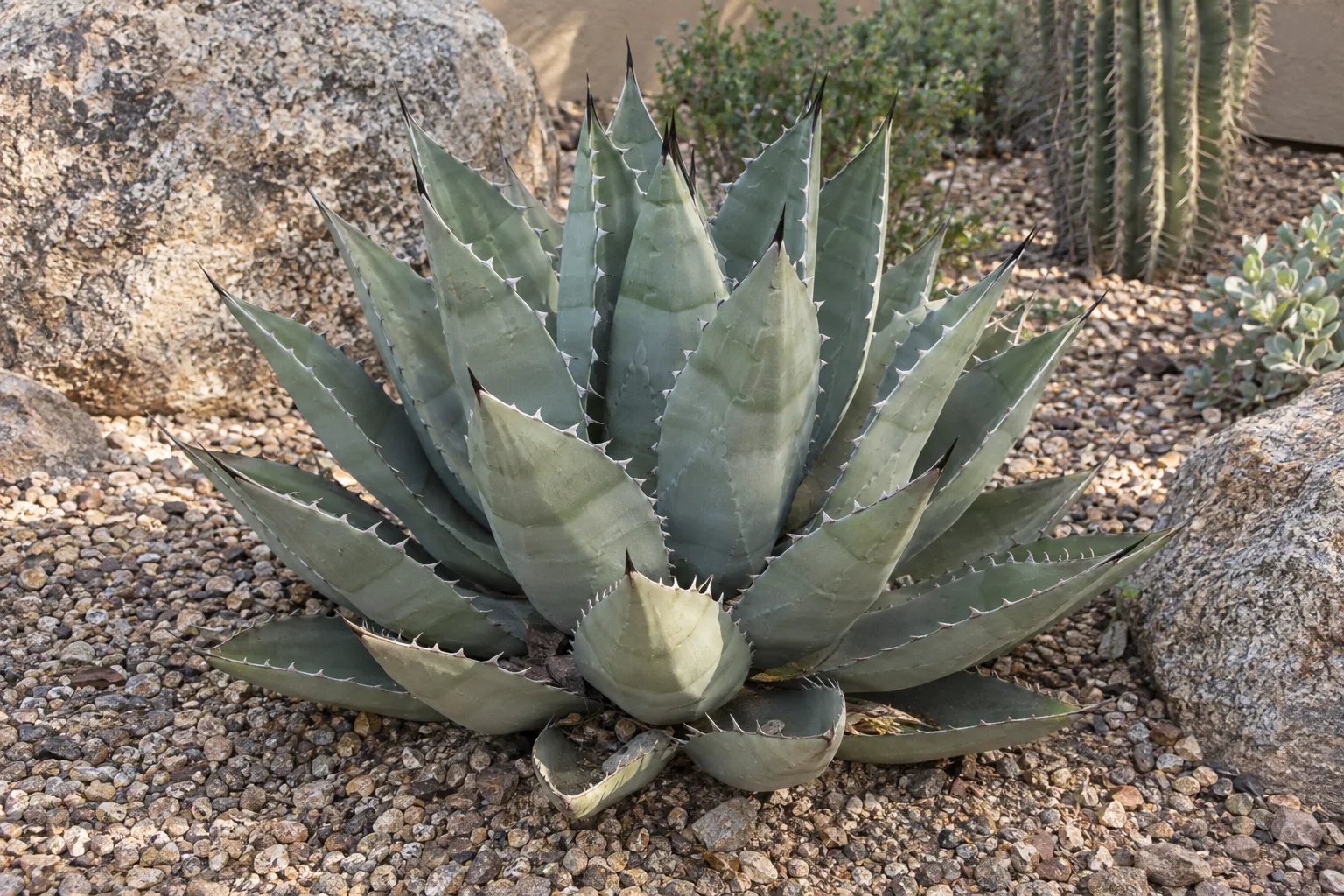
Agave deserti is a desert-native succulent with compact rosettes of thick, narrow, gray-green leaves edged with sharp teeth and tipped with stout spines.
Bloom Time
Late spring to summer; blooms once at maturity (10-25 years) / then dies.
Light: Full sun to light shade; light afternoon shade helps prevent scorching during extreme Phoenix summer heat, especially on young or newly planted specimens.
Water: Very low water once established. Water deeply but infrequently during prolonged hot, dry periods, allowing soil to dry completely between waterings. Keep mostly dry in winter.
Soil: Excellent drainage is essential; rocky, gravelly, or sandy soil is ideal. Use raised planting areas where native soil drains poorly.
Mature size: About 1–2 feet tall and 2–3 feet wide per rosette; offsetting colonies spread wider. Flower stalks can reach 6–15 feet tall.
Bloom: Blooms once after many years, often several decades, usually in late spring or summer. The flowering rosette dies afterward, but established offsets survive.