

Spring container color rather than a summer perennial in the low desert: ‘Summer Bees Red Bicolor’, ‘Darlin’, and dwarf ‘Figaro Mix’. Plant February–March, enjoy them until the 95°F days, and treat them as annuals.
Dahlias are the great late-summer flower of cooler climates, and that is exactly the season they cannot manage in Queen Creek: they stop flowering above about 95°F and the tubers cook in a summer bed. Plant them in February or March instead and they give six to ten weeks of spectacular bloom in April and May — in pots on the patio, in a spring border, or cut for the house — and then you either lift the tubers in June or let them go. Grown that way, they are an easy, generous spring annual.
We commonly carry ‘Summer Bees Red Bicolor’, the ‘Darlin’ gift dahlias ‘Burgundy Lace’ and ‘Vintage Rose’, and the dwarf bedding ‘Figaro Mix’. Dahlias are toxic to pets if eaten. The rest of the color tables are on our Annual Flowers & Foliage page.

These are the dahlia varieties we commonly carry. Availability changes week to week and season to season, so call (480) 987-3308 or stop in to see what’s on the bench today.
A dwarf, well-branched dahlia in deep burgundy with laced petal tips, sold in a pot cover as a gift plant. Repot into a 10-inch container.
‘Darlin’ in antique rose-pink.
A dwarf bedding dahlia at 12–14 inches with semi-double flowers in mixed red, yellow, orange, pink and white.
A compact single-flowered dahlia with red petals tipped white around a golden center — the open form bees prefer. About 18 inches.
Looking for one that isn’t listed? Ask — we can usually suggest a close match or tell you when it tends to come around.
The care tag was written somewhere else. This is the Queen Creek version.
Set out from mid-February, protecting from frost, through March. Dahlias planted then bloom from April into June; planted later they run straight into the heat. By late June, when highs pass 105°F, flowering stops and the plant declines — lift the tubers then and store them dry in the garage for replanting in February, or compost the plant and buy fresh next spring.
Rich, well-drained soil with compost, or a quality potting mix in a 10-inch or larger pot. Plant at the same depth as the pot. ‘Summer Bees’ and ‘Darlin’ are compact and self-supporting; anything taller than two feet needs a stake set at planting.
Pinch the growing tip when the plant is a foot tall to force branching. Cut spent flowers back to a leaf joint, or cut stems for the vase — dahlias are one of the best cut flowers of spring, and cutting encourages more bloom.
Full sun in February and March; morning sun and afternoon shade from mid-April on, which extends the bloom by weeks. A dahlia in a west-facing bed in May wilts every afternoon and finishes early.
Water every two to three days in beds and daily in pots by April, at the base; dahlias are thirsty once in bud. A bloom fertilizer (low nitrogen) every two weeks from the first buds; high-nitrogen feed gives leaves and hollow stems.
Aphids on buds, spider mites in May heat, and earwigs and snails chewing petals at night — hose, insecticidal soap, and a rolled damp newspaper trap for earwigs. Powdery mildew in the final weeks is normal. Dahlias are toxic to cats and dogs if eaten.
Snap a photo of the spot — sun direction, wall color, pot size — and we’ll pick a season-correct combination with you. Advice is free.
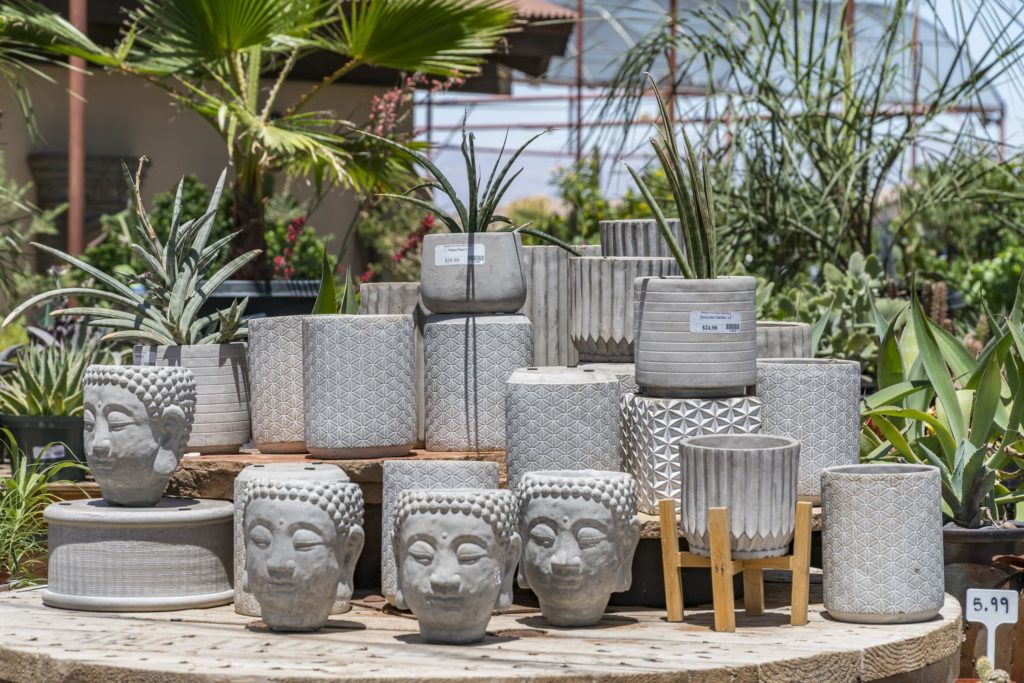
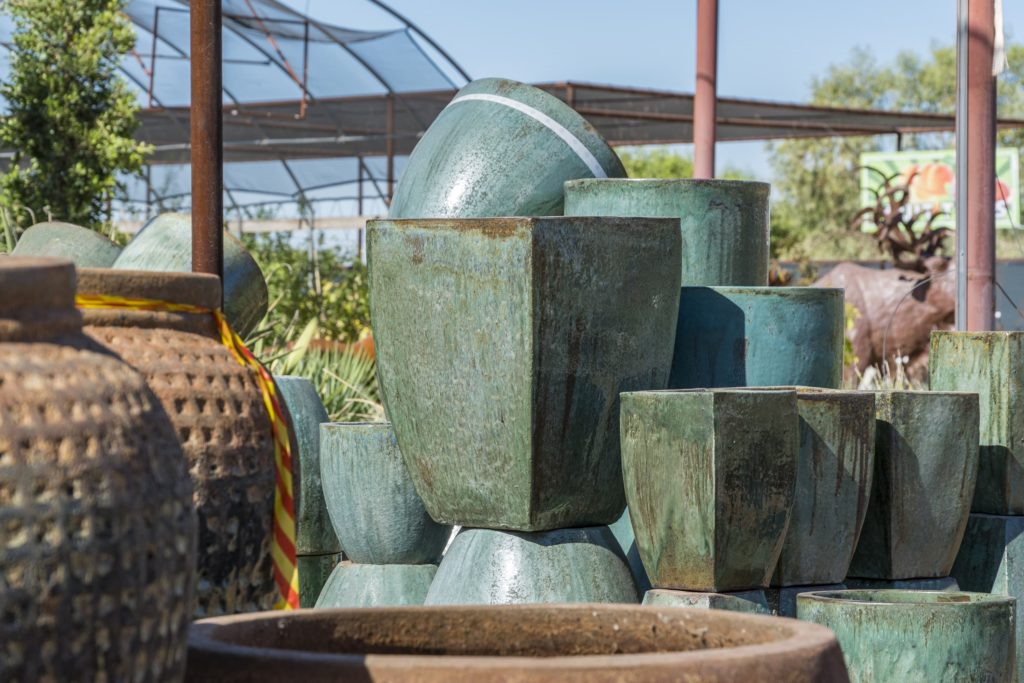
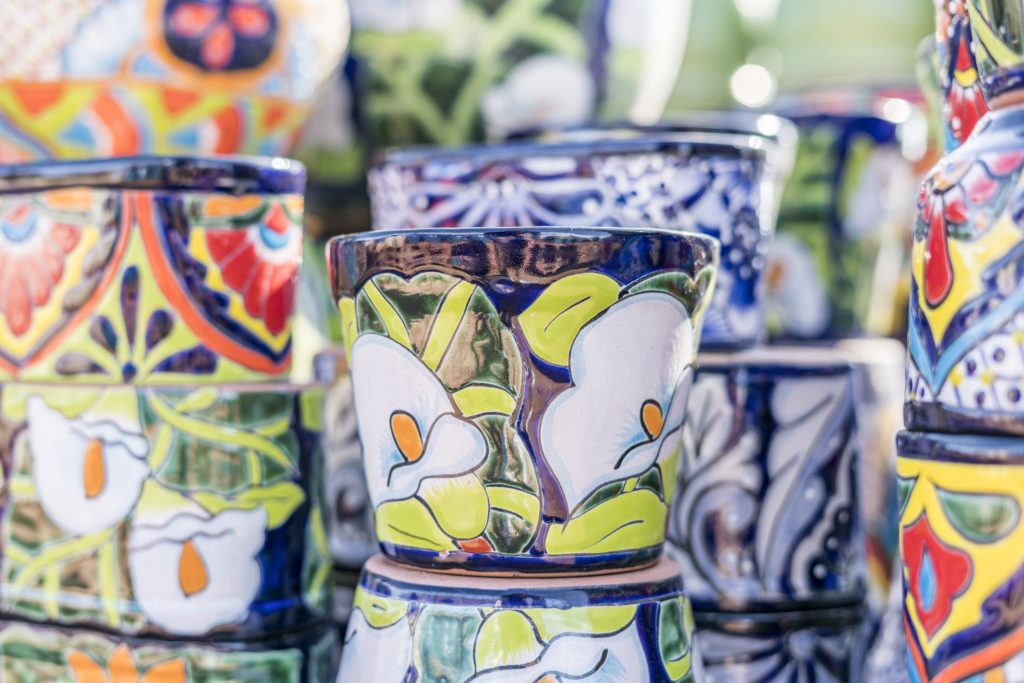
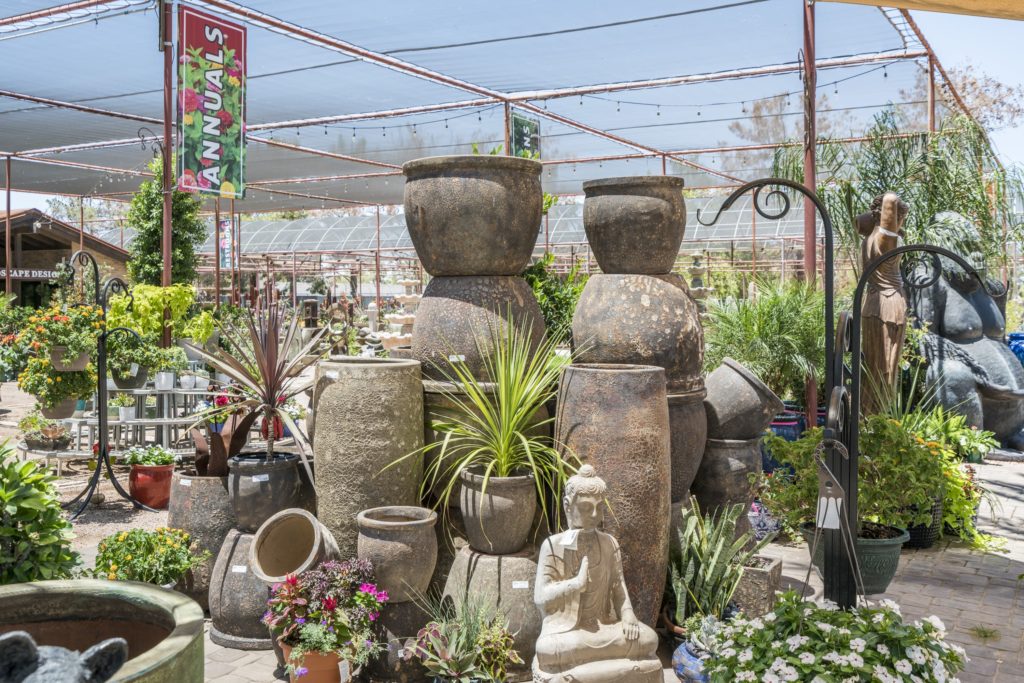
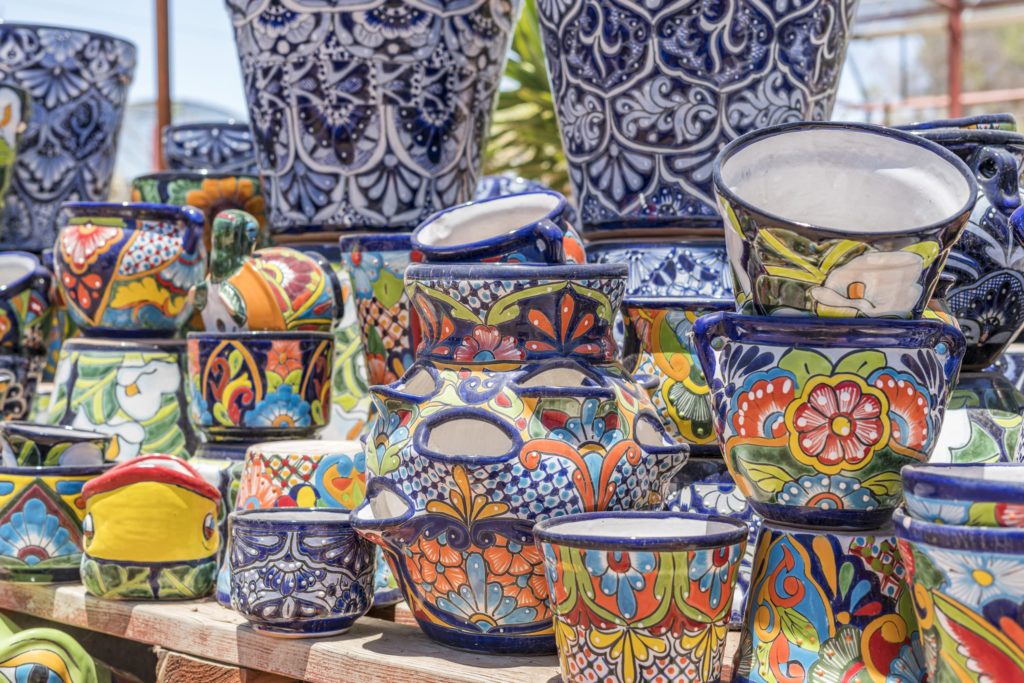
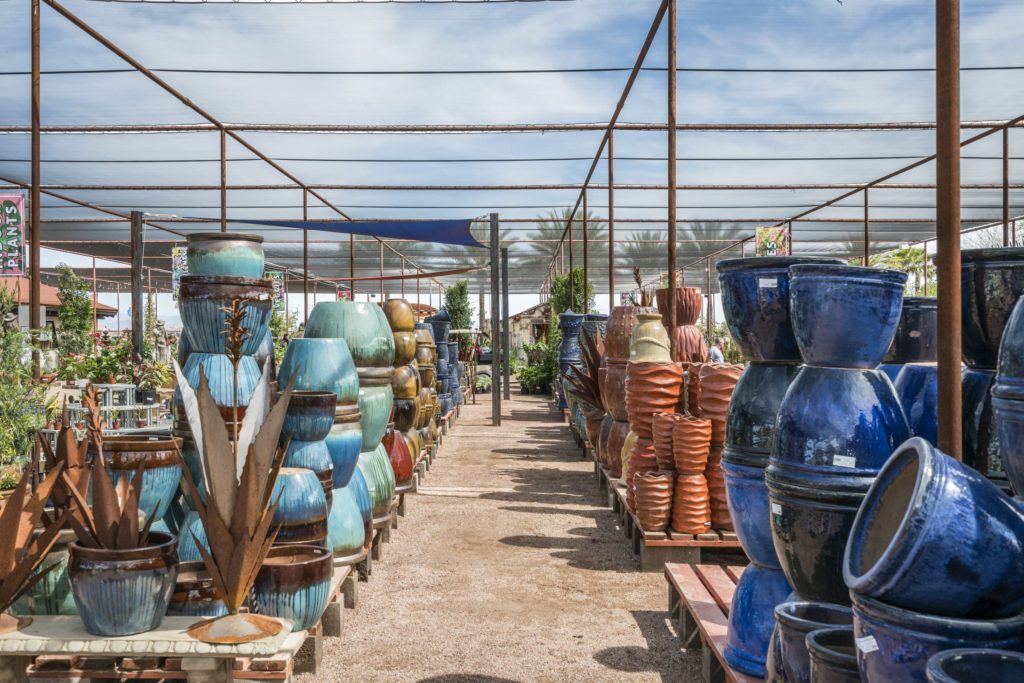
Annuals succeed or fail on what’s under them. We stock planting mix and compost for beds, potting mix for containers, bloom fertilizers including Tony’s Magic Mix and Magic Flower, starter fertilizer, drip fittings and frost cloth for the cold nights. The pottery yard has glazed and terracotta pots from 4-inch to whiskey-barrel size, window boxes and hanging baskets, and soil and mulch is sold by the bag or by the yard.
As a spring flower, yes. Plant in February or March, enjoy April and May, and expect them to quit when highs pass 95°F. They are not a summer perennial here.
Yes — lift them in June when the plant declines, dry them in the shade for a few days, and store them in a paper bag in the garage until February. Many people simply replant fresh.
Every two to three days in beds and daily in pots once they are in bud, at the base. They are thirsty in flower.
The compact types we carry mostly don’t. Anything over two feet needs a stake set at planting time.
Pinch the tip at a foot tall, feed a low-nitrogen bloom fertilizer every two weeks, and cut or deadhead constantly.
No — they are mildly toxic to cats and dogs if eaten.
Dahlia live on the annuals tables; any staff member can point you to them. Locally owned, and a short drive from San Tan Valley, Gilbert, Chandler and Mesa.