

The basils we commonly carry: Genovese and ‘Dolce Fresca’ for pesto, mildew-resistant ‘Prospera’ and ‘Rutgers Obsession’, columnar ‘Emerald Towers’, non-flowering ‘Pesto Perpetuo’, fine-leaved ‘Fino Verde’, lemon basil and the perennial pollinator plant ‘African Blue’.
Basil is the herb Queen Creek grows best and worst: it loves our heat right up to the point where it doesn’t. Planted in March in full sun it is magnificent through May; by July the same plant is bolting, sunscalded and bitter unless it gets afternoon shade and daily water. Move it, shade it, keep pinching, and it produces from March until the first frost in late November — eight months of pesto.
We commonly carry nine kinds. Two plantings matter: March through May for the main season, and a second planting in late August or September that carries you to frost. The rest of the edible benches are on our Herbs & Vegetables page.
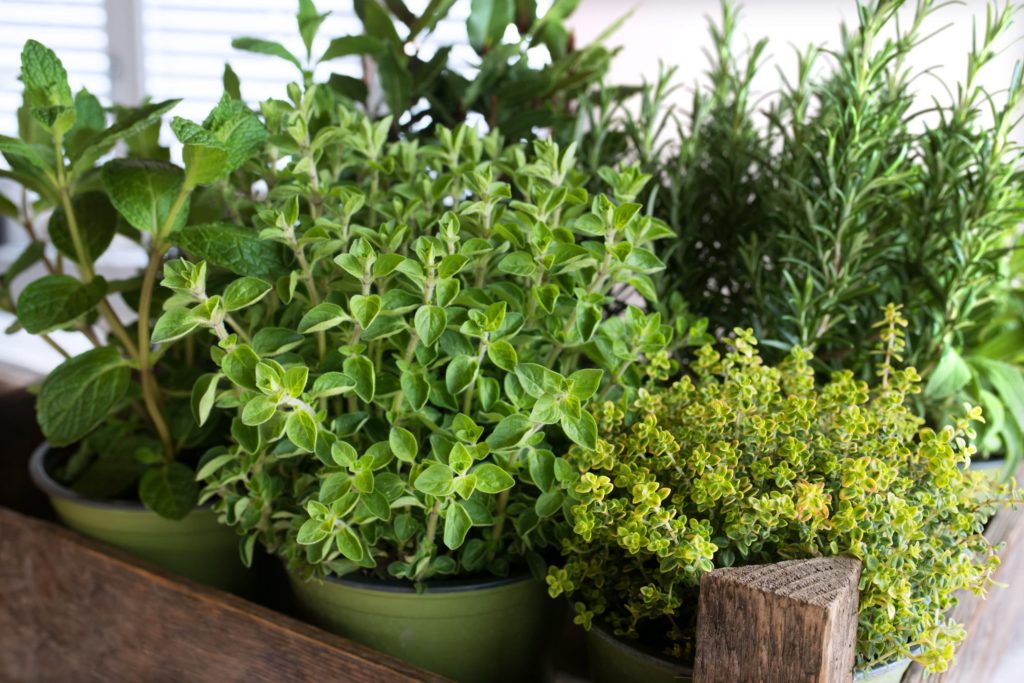
These are the basil varieties we commonly carry. Availability changes week to week and season to season, so call (480) 987-3308 or stop in to see what’s on the bench today.
the pesto and salad basils
The classic large-leaf pesto basil. Fast, fragrant, and the first to bolt in heat — pinch the tips weekly and give it afternoon shade from June.
A compact Genovese type with a sweeter, less clove-heavy flavor and a tidy mounding habit that suits pots. Slower to bolt than plain Genovese.
A Genovese-type bred for resistance to downy mildew, the disease that arrives with monsoon humidity. The one to plant for the August-to-frost season.
Another downy-mildew-resistant Genovese type, compact and slow to flower. Good flavor, long season; pairs with ‘Prospera’ for a resistant bed.
A columnar basil that grows straight up to two or three feet without flowering for months — one plant yields like three.
Variegated cream-and-green leaves on a non-flowering, upright plant: it never bolts, so it never turns bitter. Milder flavor; handsome in a pot.
A Greek-type bush basil with tiny, intensely flavored leaves on a dense dome. Ideal for a pot by the door; slow to bolt.
Lemon basil: narrow leaves with a citrus-basil scent for fish, tea and Thai dishes. Bolts quickly in heat — plant in succession and use it young.
A sterile perennial hybrid with purple-veined leaves and endless spikes of lavender flowers that bees never leave alone. Camphor-scented, more for the garden than the plate; survives mild winters here and shrugs off the heat.
Looking for one that isn’t listed? Ask — we can usually suggest a close match or tell you when it tends to come around.
The care tag was written somewhere else. This is the Queen Creek version.
Set out basil after the last frost, usually mid-February to early March in Queen Creek, and keep planting through May. A second planting in late August or September, when nights start to ease, gives fresh plants that produce until frost in late November. Basil dies at the first freeze; there is no winter basil here without a greenhouse.
Rich, well-drained soil — amended raised beds or a good potting mix — and consistent moisture: daily for pots in summer, every two to three days in beds on drip. Basil that wilts repeatedly turns bitter and bolts. Mulch beds to keep roots cool. Water at the base in the morning to keep the foliage dry.
Downy mildew — yellow leaves with gray fuzz beneath — arrives with monsoon humidity in July and August. Plant resistant ‘Prospera’ or ‘Rutgers Obsession’ for late summer, space plants for airflow, water at the base, and remove infected leaves. Grasshoppers and leaf-footed bugs chew in summer; hand-pick. Fusarium wilt means pulling the plant and rotating the bed.
From March to May, full sun. From June through September, morning sun and afternoon shade — under shade cloth, on the east side of taller plants, or in a pot you can move. Full July sun scalds the leaves and drives the plant to flower and quit. Basil in a shaded spot in summer outproduces basil in the sun.
Pinch the growing tip above a pair of leaves every week or two from the day you plant; each pinch makes two branches and delays flowering. Cut flower spikes off the moment you see them — once basil sets seed the leaves lose flavor. Harvest from the top, never by stripping lower leaves.
A balanced or fish-emulsion fertilizer every three to four weeks; too much nitrogen gives big bland leaves. Basil is non-toxic to cats and dogs.
Photo of the bed, how much sun it gets and what you want to eat — we’ll match varieties and planting dates to it. Advice is free.
We stock raised-bed and vegetable planting mix, compost and steer manure by the bag or the yard, organic vegetable fertilizers, tomato cages and stakes, shade cloth for the May-to-September stretch, frost cloth for January, and drip fittings. The pottery yard has half-barrels and 15-gallon pots for patio vegetables, and soil and mulch is sold by the bag or by the yard.
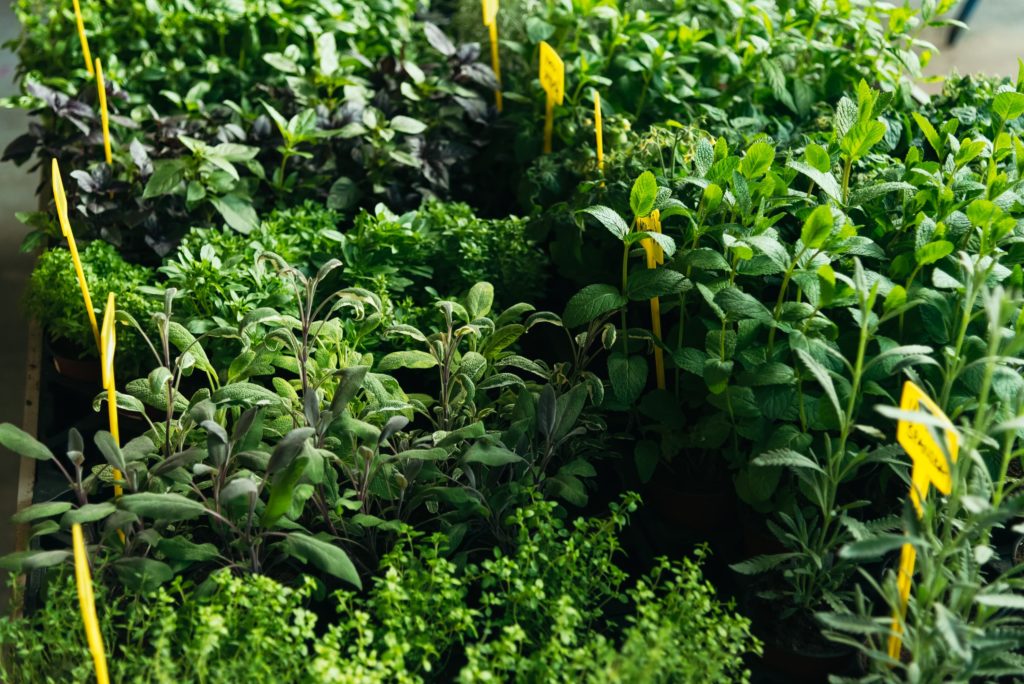
After the last frost, from mid-February or March through May, and again in late August or September for a fall crop. It dies at the first freeze in late November.
Heat and stress. Pinch flower spikes off as soon as they appear, give the plant afternoon shade from June, keep the water consistent, and harvest the tops regularly. Non-flowering ‘Pesto Perpetuo’ and columnar ‘Emerald Towers’ sidestep the problem.
In spring, yes. From June through September it needs afternoon shade or it scalds and bolts. Morning sun and afternoon shade is the summer recipe.
Daily for pots in summer, every two to three days in mulched beds on drip. Never let it wilt repeatedly — that is what makes it bitter.
Downy mildew, which comes with monsoon humidity. Remove infected leaves, improve airflow, water at the base, and plant resistant varieties like ‘Prospera’ for the late-summer season.
Yes — basil is non-toxic to cats and dogs.
Basil live on the herb and vegetable benches; any staff member can point you to them. Locally owned, and a short drive from San Tan Valley, Gilbert, Chandler and Mesa.