Vinca, portulaca, lantana, bougainvillea, angelonia, pentas and colorful succulents are outdoor potted plants that keep their color in Arizona heat above 110°F. The pot, soil, watering routine and exposure matter as much as the plant itself.
Key takeaways
- Vinca, portulaca, lantana and bougainvillea hold color in full sun above 110°F, while pentas does best with afternoon shade.
- Choose pots at least 14 to 16 inches wide and light in color, since thin dark plastic can overheat roots in direct summer sun.
- Water in the morning, and check the soil 2 inches down first, because many flowering annuals need water daily in July and August.
- Plant from March through May so roots are established before highs pass 105°F.
- Leaves that turn yellow while the veins stay green point to iron chlorosis from alkaline soil and water, which chelated iron corrects.

Which potted plants hold their color through an Arizona summer?
Seven choices handle full summer heat in the low desert: vinca, portulaca, lantana, bougainvillea, angelonia, pentas and colorful succulents. These are varieties we commonly carry in our annual flowers and foliage department, although availability changes week to week and season to season. Each plant below has one drawback worth knowing before you buy.
Vinca (Catharanthus roseus)
Vinca grows 10 to 18 inches tall and wide, takes full sun from morning to evening, and blooms in magenta, coral, white and soft lavender without deadheading. Water when the top inch or two of soil dries, and never keep it soggy. The drawback is that it slows in cool fall weather and has no frost tolerance, so plan to replace it in late fall.
Portulaca (Portulaca grandiflora)
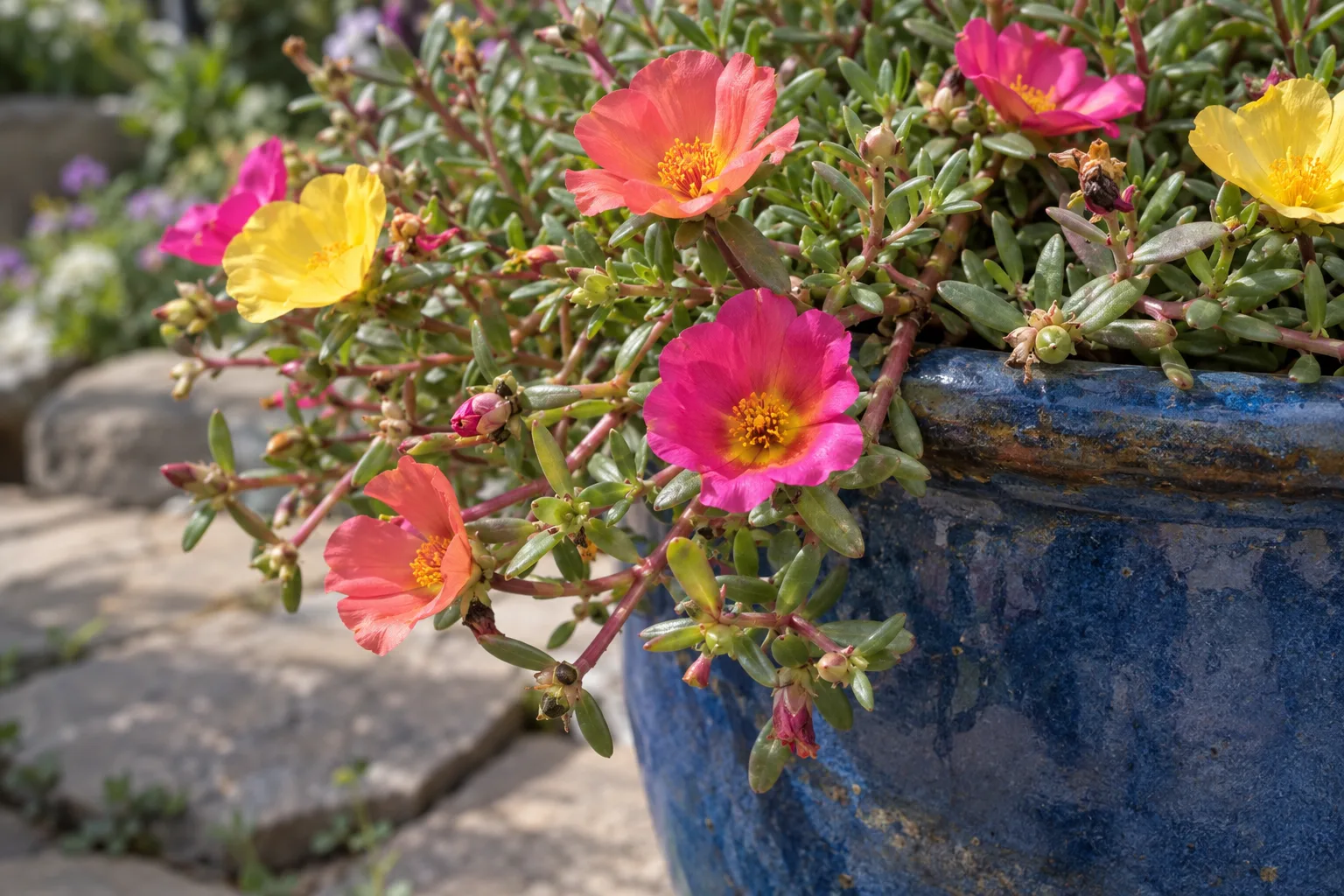
Portulaca stays 4 to 8 inches tall and spreads 12 to 18 inches, which suits shallow bowls and pot edges. Its fleshy leaves store water, so it handles the hottest, brightest spot you have. Once established, it needs water every two to three days in summer. The flowers close in the evening and on overcast days, and plants can look sparse by fall.
Lantana (Lantana camara and trailing Lantana montevidensis)
Mounding lantana reaches 2 to 4 feet, while trailing types stay 1 to 2 feet tall and spill over the rim. It wants full sun and blooms in orange, yellow, pink, red and white clusters that butterflies visit. In a pot, expect to water daily to every other day in peak summer. The drawback is size: mounding types outgrow small pots and need cutting back, and frost burns the tops.
Bougainvillea (Bougainvillea hybrids)
The color on bougainvillea comes from papery bracts around tiny flowers, and it holds for months in magenta, orange, coral, red and white. In a container of 20 gallons or more it stays at 3 to 6 feet with pruning. Give it at least 6 hours of direct sun and let the soil dry partway between waterings. It has thorns and cannot take frost, so cover or move pots on cold nights.
Angelonia (Angelonia angustifolia)
Angelonia sends up spikes of small orchid-like flowers in purple, pink, white and bicolors on plants 1 to 2 feet tall. It takes full to part sun and wants water every one to two days in summer. The drawback is that growth can look sparse in the worst July heat. Cutting it back by about a third in late August refreshes it for fall.
Pentas (Pentas lanceolata)
Pentas grows 2 to 3 feet tall with star-shaped clusters in red, pink, lavender and white that hummingbirds and butterflies visit. It does best with morning sun and afternoon shade, and it needs steady moisture, usually daily in summer pots. The drawback is that hard western sun scorches the leaves, and frost cuts it back.
Agave ‘Blue Glow’ and other colorful succulents
Succulents give color through foliage instead of flowers. Agave ‘Blue Glow’ stays around 2 feet tall and wide, takes full sun and reflected heat, and needs water about once a week or less in summer. Its blue-green leaves with red and yellow edges look good all year. The drawback is sharp leaf tips, so keep it away from walkways and children.
What kind of pot keeps roots cooler in summer?
A light-colored, thick-walled pot at least 14 to 16 inches wide keeps roots cooler than a small dark one. Soil in thin black plastic in direct sun can climb well past 110°F, while glazed ceramic or double-walled resin buffers that heat. Bigger pots also hold more water, so they dry out more slowly. You can compare materials and sizes in our pottery and planters department.
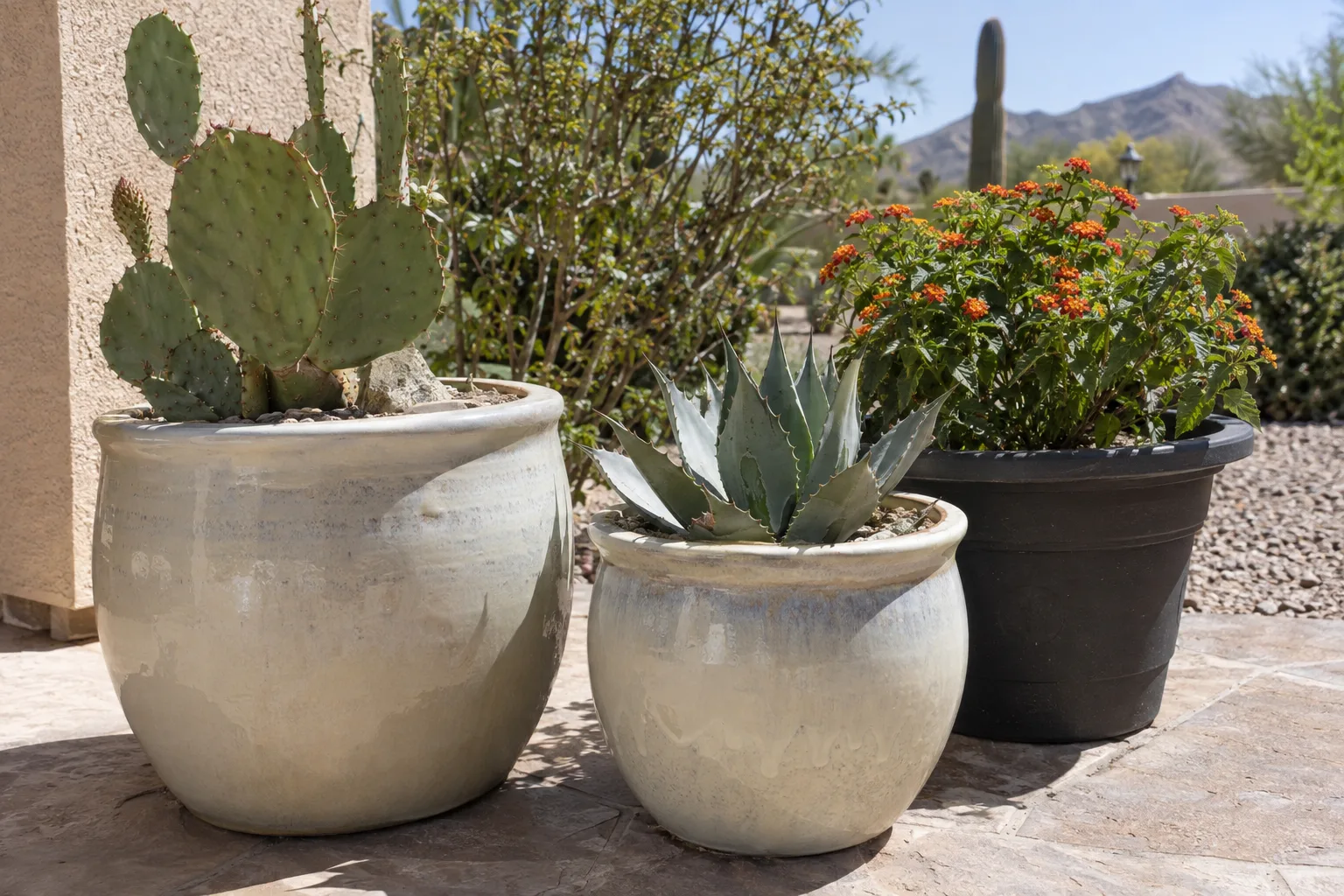
Unglazed terracotta looks good but wicks moisture through its walls, so plants in it need water more often. Pot feet lift the base off hot concrete and let water drain freely. A 1 inch layer of decomposed granite or fine gravel on the soil surface slows evaporation.
How do I plant a container so it survives summer?
Start with drainage, a loose mix and a spot you will not need to change, because a filled 20-gallon pot is very heavy. Follow these steps.
- Pick a pot with several drainage holes, and skip saucers that hold standing water.
- Fill with a quality potting mix blended with roughly 20 to 30 percent perlite, which keeps the mix from compacting in the heat.
- Mix in a slow-release fertilizer at the label rate.
- Set the plant at the same depth it grew in its nursery pot and firm the soil gently.
- Water until it runs freely from the bottom, so no dry pockets remain around the roots.
- Top with 1 inch of fine gravel or decomposed granite.
Mixes heavy in peat can shed water once fully dry. If water runs down the sides without soaking in, set the pot in a tub of water for 20 to 30 minutes.
How often should I water potted plants in summer?
Most flowering annuals in pots need water every day in July and August, and sometimes twice during heat spikes. Succulents want it about once a week, and bougainvillea every two to three days. Push a finger 2 inches into the soil first, and water only if it feels dry at that depth. Water before 8 a.m. so roots are hydrated ahead of the afternoon heat.
Midday wilting in full sun is often a heat response, not a request for water. Check the soil before you grab the hose, because soaking wet soil at 110°F invites root rot. Water until it drains, then stop.
A drip line with a timer and one emitter per pot removes the daily chore. Run it early in the morning and lengthen or shorten the run as the season changes.
Where should I place each container?
Match each plant to the sun it gets, since a pot against a south or west wall lives in a different climate than one on an east porch. Stucco and block walls radiate heat into the evening, so pulling pots about a foot away from them helps. Here is how the exposures sort out.
- East-facing: morning sun and afternoon shade suit pentas and angelonia.
- South-facing: sun most of the day suits vinca, lantana, portulaca and succulents.
- West-facing: hard afternoon sun and reflected heat suit portulaca, bougainvillea and agave.
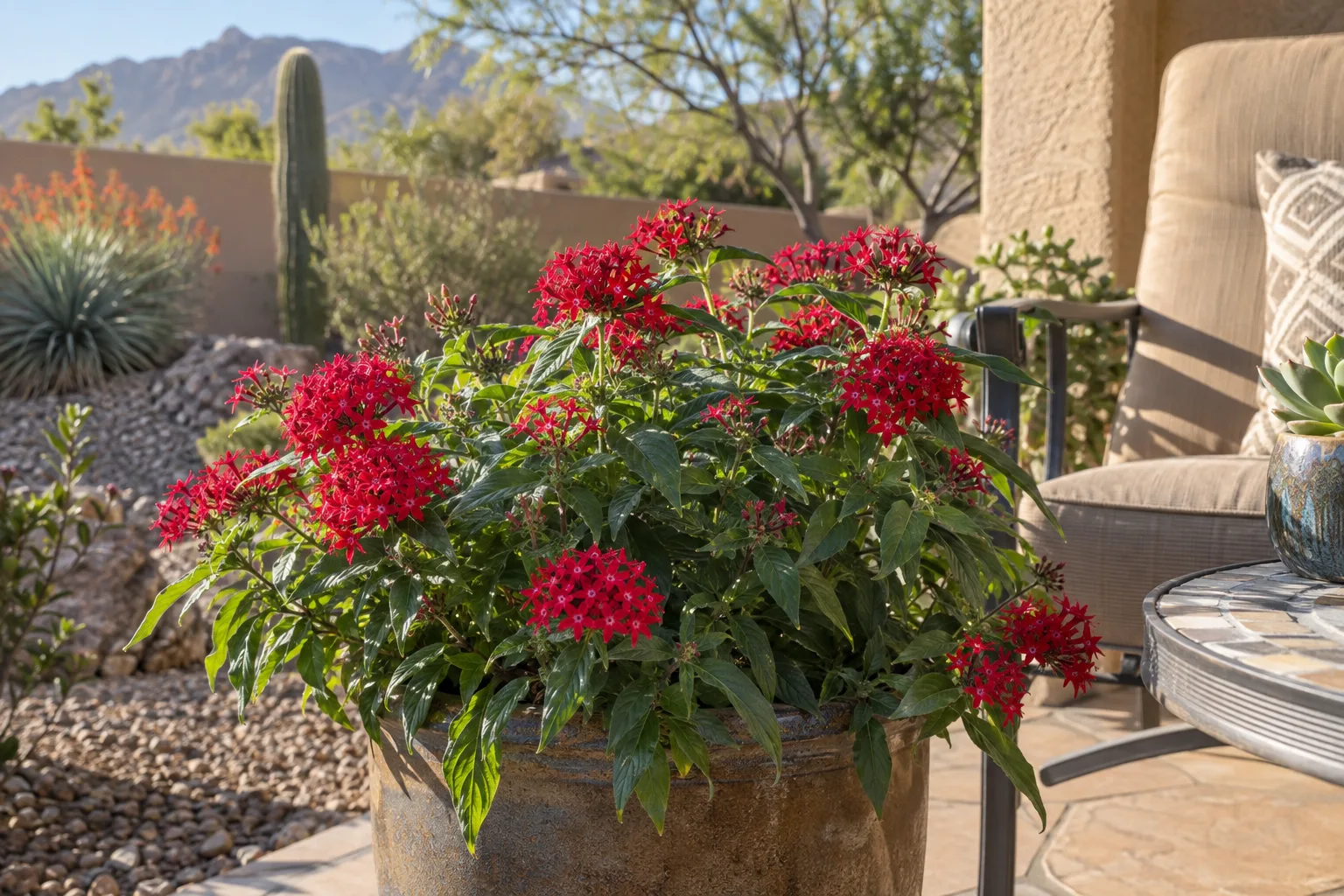
Putting pentas in a west exposure means replacing it every few weeks. Put it where the shade arrives by early afternoon instead.
What should I feed container plants, and when?
Feed on a lighter schedule in midsummer than in spring. Heat slows growth, and heavy feeding at 110°F can burn roots and push soft new growth that scorches. A general pattern for liquid fertilizer is below, and our gardening calendars help with monthly timing.
- March to May: balanced liquid fertilizer every two weeks at the label rate.
- June to August: half strength every three weeks.
- September to October: return to the regular schedule as temperatures ease.
Yellow leaves with green veins mean iron chlorosis, which is common in pots because local water and soil are alkaline. A chelated iron product applied to the soil corrects it. Flushing the pot with extra water every month or so also washes out built-up salts.
How does the monsoon change container care?
From roughly July through September the monsoon brings humidity and the occasional storm, so you can water less on the days after a good soaking rain. Check that every pot drains well after storms, because water sitting around roots in warm soil causes rot quickly. If you run a timer, skip a cycle or two when rain is in the forecast.
Humid, wet-leaf weather also favors powdery mildew on some plants. Water at the base and give pots room for airflow. Many flowering plants push a flush of new growth in early monsoon, so a light feeding in late August supports that fall bloom.
Frequently asked questions
Can I fill my pots with soil from the yard?
No, yard soil is a poor choice for pots. Native East Valley soil is heavy and often has caliche, and in a container it compacts and drains slowly, which suffocates roots. Use a quality potting mix with roughly 20 to 30 percent perlite added, and replace it every one to two years as it breaks down.
When is it too late to plant summer color in pots?
Late May is about the latest for easy results. Plants set out in June face transplant shock and 105°F to 110°F heat at once, with little time to root in. If you plant late, choose established plants in larger pots, shade them for the first week, and water daily.
Do these plants survive winter frost?
Most do not. Vinca, pentas, lantana tops, bougainvillea and angelonia are frost-tender, and the East Valley gets occasional winter frost. When a freezing night is forecast, move pots under an eave or indoors, or cover them with frost cloth. Succulents vary, so check each variety’s cold tolerance.
Do I need to deadhead these plants?
Vinca and angelonia usually bloom without deadheading, and portulaca needs none. Pentas and lantana look tidier and flower more when you pinch off spent clusters. If any plant looks tired in late August, trim leggy stems by about a third and give it a light feeding.
Where can I learn more about container gardening?
Our classes and events page lists current workshops, though topics and dates change through the year. Check it before you visit, and bring a photo of your patio and a note of which direction it faces so we can suggest plants and pot sizes for that exposure.
Which heat-proof container plants are right for your patio?
If you can water daily in July and August, or run a drip timer, vinca, lantana and angelonia give the most color per pot. If the spot gets hard western sun, choose portulaca, bougainvillea or agave. If you travel all summer and have no irrigation, skip thirsty flowering annuals and stay with succulents in large pots. Stop by the nursery in Queen Creek and tell us where your pots will sit.