

A January yard tidy-up in Arizona means pulling small winter weeds, removing dead growth, checking irrigation and pruning only what is safe to cut. These jobs take a few hours now and save several in March, when growth and weeds speed up.
Key takeaways
- Pull winter weeds in January while they are seedlings, before they flower and set seed in February and March.
- Wait until mid-February to cut back frost-damaged bougainvillea, lantana and other tender plants.
- Roses are usually pruned from mid-January to early February, removing about one-third of the cane length.
- Run every irrigation zone and look at each emitter, since winter watering is light and leaks are easy to spot.
- Hold off on fertilizer until new growth appears, usually mid-February or later.

Why is January a good time for yard cleanup in the low desert?
January is a good time because plants grow slowly and the weather is mild enough to work outside. Daytime highs are often in the 60s, far from the 110°F summer heat. Weeds are still small, and you can see which plants took frost damage.
Frost is the reason to be careful. Low-lying parts of Queen Creek and San Tan Valley can see overnight lows near or below freezing on some January nights. Tender plants may look dead after a cold snap and still be alive at the root. Cleanup now also gives you a clear list before spring planting begins. Our gardening calendars lay out what to do month by month.
Should I cut back frost-damaged plants right away?
No. Leave frost-browned growth in place until mid-February, since the dead top growth shields the lower stems from the next cold night. Cutting early exposes fresh wood to frost.
To check whether a stem is alive, scratch it lightly with a fingernail. Green tissue underneath means it is alive. Brown, brittle and dry means it is dead. Plants commonly hit by frost here include bougainvillea, lantana, yellow bells (Tecoma stans) and young tropicals. Once frost danger has mostly passed, cut back to live wood. Dead material from plants that are not frost-prone, such as a broken branch on a desert tree, can come out any time. Bag diseased material instead of composting it.
What can I prune in January, and what should wait?
Prune roses, cut back brown ornamental grasses and remove dead or crossing branches on hardy shrubs. Wait on frost-tender plants, citrus shaping, palms and cacti until later.
Prune now
- Roses: mid-January to early February, removing about one-third of the height and opening up the center.
- Ornamental grasses: cut to roughly 4 to 6 inches once they turn brown.
- Dead wood and rubbing branches on hardy shrubs.
Wait until later
- Bougainvillea and lantana: after mid-February, once new growth shows where live wood begins.
- Citrus: remove only dead wood now and shape after frost risk passes. Our citrus trees page covers varieties we commonly carry, and availability changes week to week and season to season.
- Palms: remove only fully dead fronds, and keep green ones, which protect the trunk and growing point from cold.
- Cacti and succulents: avoid cuts in cold weather because wounds heal slowly.
Use clean, sharp tools. Wiping blades with rubbing alcohol between plants limits the spread of disease.
How do I deal with winter weeds in Arizona?
Pull them in January while they are small. Cool-season weeds such as London rocket, sowthistle, filaree and mallow germinate after fall rains and watering, then flower and seed heavily by March.
Moist winter soil releases roots more easily than baked summer ground. Use a hoe or soil knife, work in the morning and bag the weeds so they cannot reseed. Pre-emergent herbicides can reduce a new flush of seedlings on bare ground, but they must be applied before germination and used exactly as the label directs. Do not apply them where you plan to sow seed. If you suspect a plant is on the state list, check the Arizona noxious weed list before pulling or disposing of it.
How do I check my irrigation system in winter?
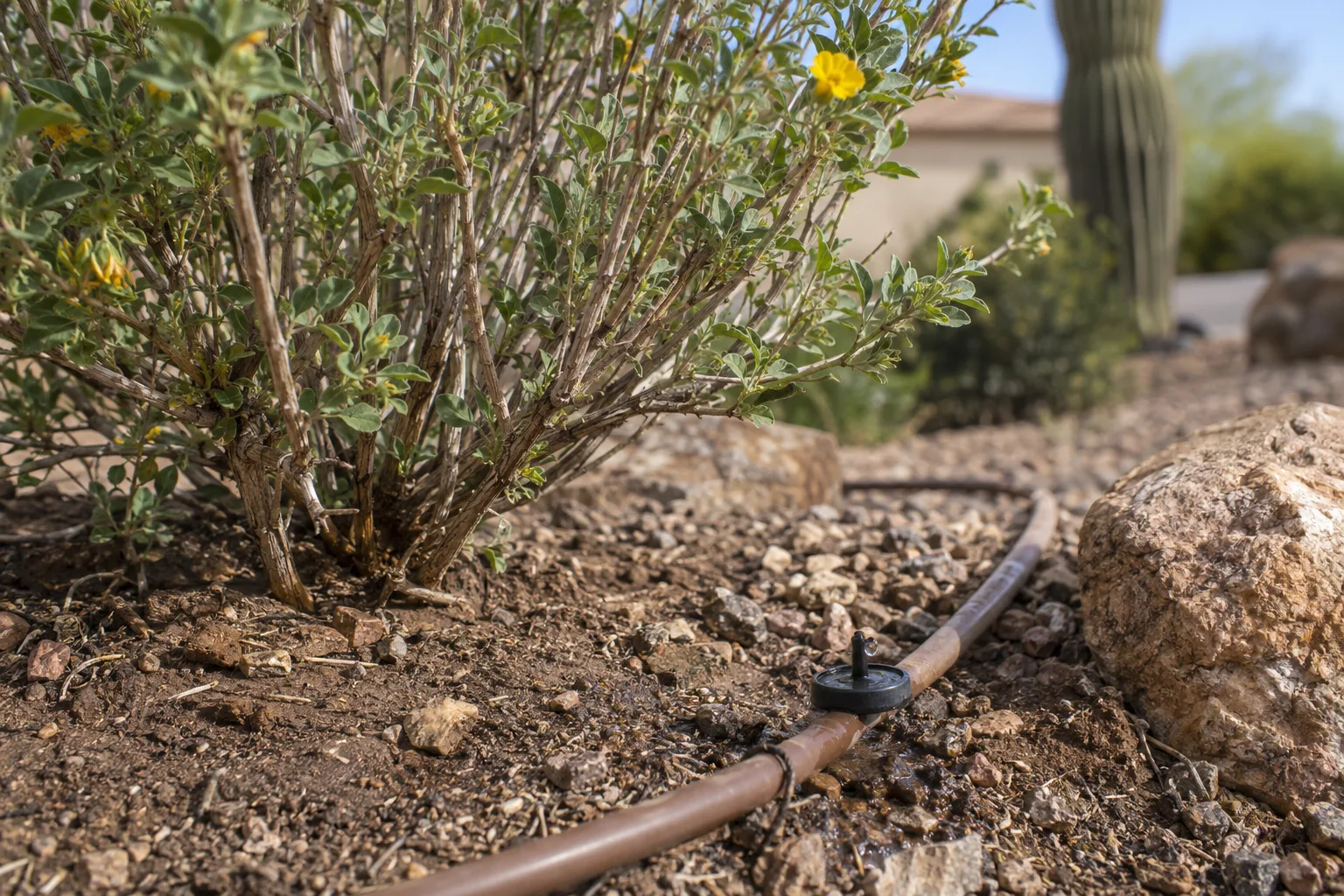
Run each zone for a few minutes and watch every emitter. Look for clogs, cracked tubing and heads knocked out of position. Fix problems now so they do not stress plants in March.
Poly tubing that has been in the sun for years gets brittle, and freezes can crack it. Check exposed mainline sections first. Most established desert trees and shrubs need water only every two to three weeks in January, depending on soil and rainfall. Probe the soil 4 to 6 inches down before irrigating, and skip a cycle if it is still damp. Overwatering in winter is a common cause of root rot.
Should I mulch and prep soil in January?
Yes, mulch is worth adding in January. A 2 to 3 inch layer of shredded wood mulch around trees, shrubs and beds reduces evaporation and softens temperature swings.
Keep mulch a few inches from trunks and stems to prevent rot. Our soil is alkaline and often has caliche, a hard calcium layer that blocks drainage. Organic matter improves soil structure slowly over several seasons. If you are building a new bed, break through caliche or plant in a raised bed with enough depth for roots. Decomposed granite works in non-planted areas. Large river rock holds heat, so use it sparingly near plants.

What is the step-by-step order for a January tidy-up?
Start with a walk-through, then weed, clear dead material, prune, test irrigation and mulch. This order avoids redoing work.
- Walk the yard and note weeds, dead growth and irrigation problems.
- Pull weeds first while the soil is moist.
- Remove dead material from the back of the yard toward the front.
- Prune roses, grasses and hardy shrubs. Leave tender plants.
- Run each irrigation zone and repair leaks.
- Rake and blow debris off paths, patios and gravel.
- Apply pre-emergent to bare soil if you use it, following the label.
- Spread 2 to 3 inches of mulch.
- Write a spring planting list for plants that did not survive.

How does January work compare with waiting until March?
January jobs are quicker and easier. The table shows why each task is better done early.
| Task | January | March |
|---|---|---|
| Weeding | Small seedlings pull easily | Large, flowering and seeding |
| Dead material | Easy to spot | Hidden by new growth |
| Irrigation | Repairs before stress | Problems found in warm weather |
| Pruning | Slow growth, hardy plants only | Active growth flush |
Frequently asked questions
Can I plant in January in the East Valley?
Yes, many things. Cool-season vegetables, herbs, citrus and hardy desert natives can go in during January. Hold frost-tender tropicals until after mid-February. The University of Arizona Cooperative Extension has a vegetable planting calendar for Maricopa County with timing for each crop.
When should I fertilize citrus?
Most guidance puts the first feeding around mid-February, when new growth starts. Feeding in January can push tender shoots into a cold night. Citrus fertilizers with iron, zinc and manganese help in alkaline soil. Follow the label on the bag for amounts, and water thoroughly after applying.
Is my lantana dead after frost?
Probably not. Lantana often regrows from the base even when the top is brown. Scratch a stem for green tissue, leave the damaged top as cover through January, and cut it back to roughly 6 to 8 inches in mid to late February.
How do I spot agave snout weevil?
Look for a collapsing center or soft, foul-smelling tissue at the base of an agave. Affected plants often lean or collapse. Remove severely damaged plants promptly, and ask a local nursery or the Cooperative Extension about treatment options before using any pesticide.
Why does caliche matter for new beds?
Caliche blocks drainage and roots, so water pools above it. Break through it with a pick or bar where you can, or plant in a raised bed. Chemical treatments rarely fix it on their own.
Is a January tidy-up worth the time?
For most yards, yes. A few hours of weeding, careful pruning, an irrigation check and fresh mulch save more time in spring and prevent avoidable plant stress. Skip hard pruning of frost-damaged plants until mid-February, and skip it altogether if your plants are cacti or palms with only a few brown fronds. If your yard is mostly gravel and a few established desert trees, a quick irrigation check and weed pull may be all you need. Stop by our Queen Creek nursery with questions about what to plant next.
