

The best hidden Instagrammable plant spots in Arizona are close to home: Usery and San Tan Mountain regional parks for saguaros, White Tank and Picacho Peak for spring wildflowers, and Boyce Thompson Arboretum for shade and water. Timing matters as much as location.
Key takeaways
- Usery Mountain and San Tan Mountain regional parks put dense saguaro stands a short drive from Queen Creek.
- Wildflowers peak roughly late February through March, and only after enough fall and winter rain.
- Palo verde trees turn yellow from roughly late March into April, and saguaro blooms open in May and June.
- Shoot in the first two hours after sunrise or the last two before sunset, when low light shows texture.
- Summer trips need an early start and at least 1 gallon of water per person, because highs pass 110°F.
Where can I photograph saguaros near Queen Creek without a crowd?
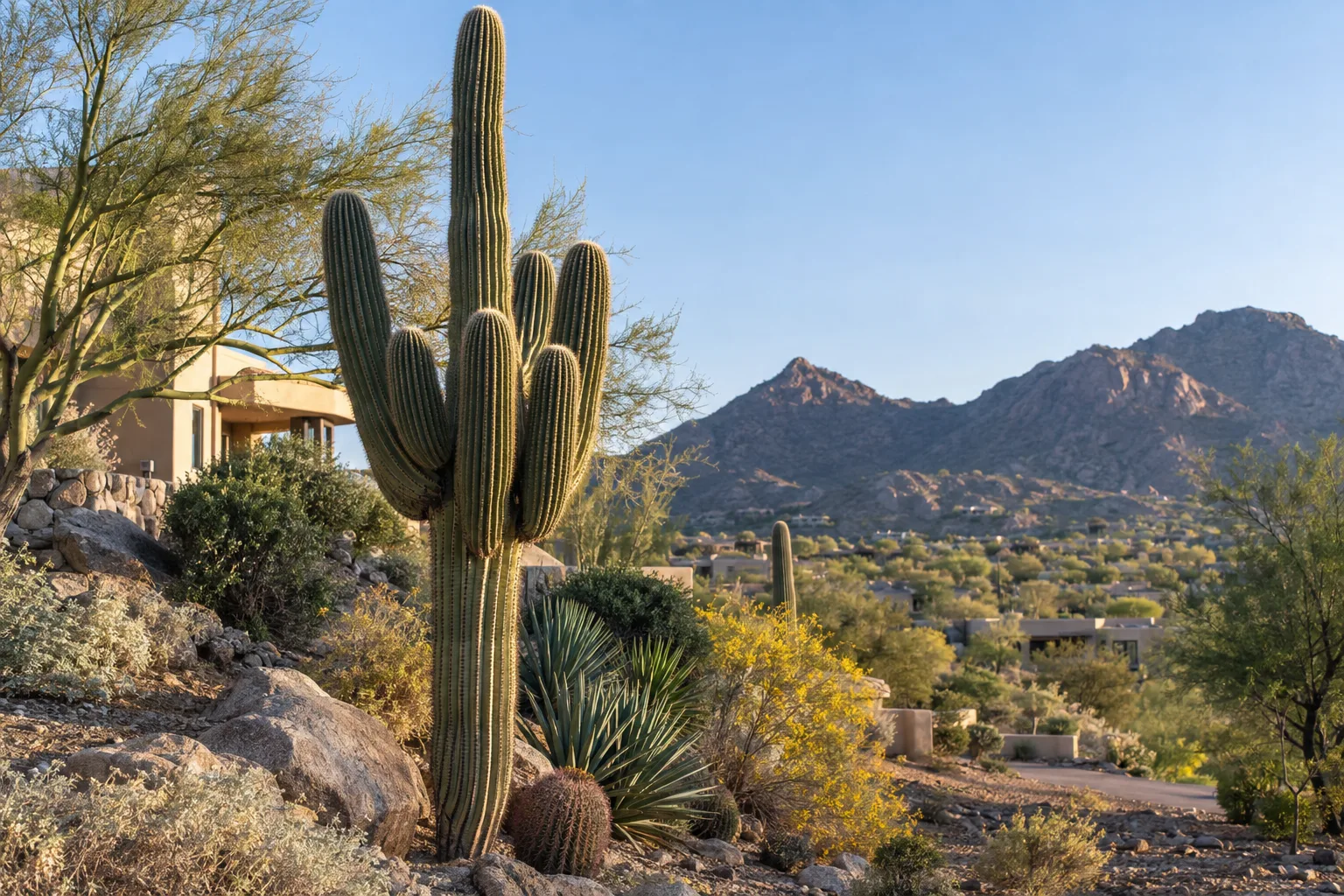
Start with Usery Mountain Regional Park east of Mesa and San Tan Mountain Regional Park south of Queen Creek. Saguaros (Carnegiea gigantea) grow thickly on the rocky slopes at both, and weekday mornings are usually quiet.
Low sun rakes across the pleats of a saguaro and shows the texture that flat midday light erases. Stand so the sun falls from the side, not behind your shoulder. Many saguaros begin life under a nurse tree such as a palo verde, so including one in the frame adds depth and color. We commonly carry palo verde and other desert trees, though availability changes week to week and season to season.
When and where do desert wildflowers bloom in the East Valley?
Wildflowers bloom roughly from late February through March in a year with good winter rain. In a dry winter you may see very little, so check conditions before you drive.
Picacho Peak State Park, between the Phoenix metro and Tucson, is known for Mexican gold poppies on its hillsides in good years. White Tank Mountain Regional Park on the west side of the Valley and San Tan Mountain Regional Park nearer to us also show spring color in wet years. Globe mallow (Sphaeralcea ambigua) adds orange along desert roadsides in spring, and it photographs well against gray-green scrub. Crowds at Picacho Peak are heaviest on weekends, so go early on a weekday if you can.

Which gardens and arboretums are worth the drive?
Boyce Thompson Arboretum in Superior and the Desert Botanical Garden in Papago Park are the two most rewarding. Both hold collections from deserts around the world, so there is something to shoot in most months.
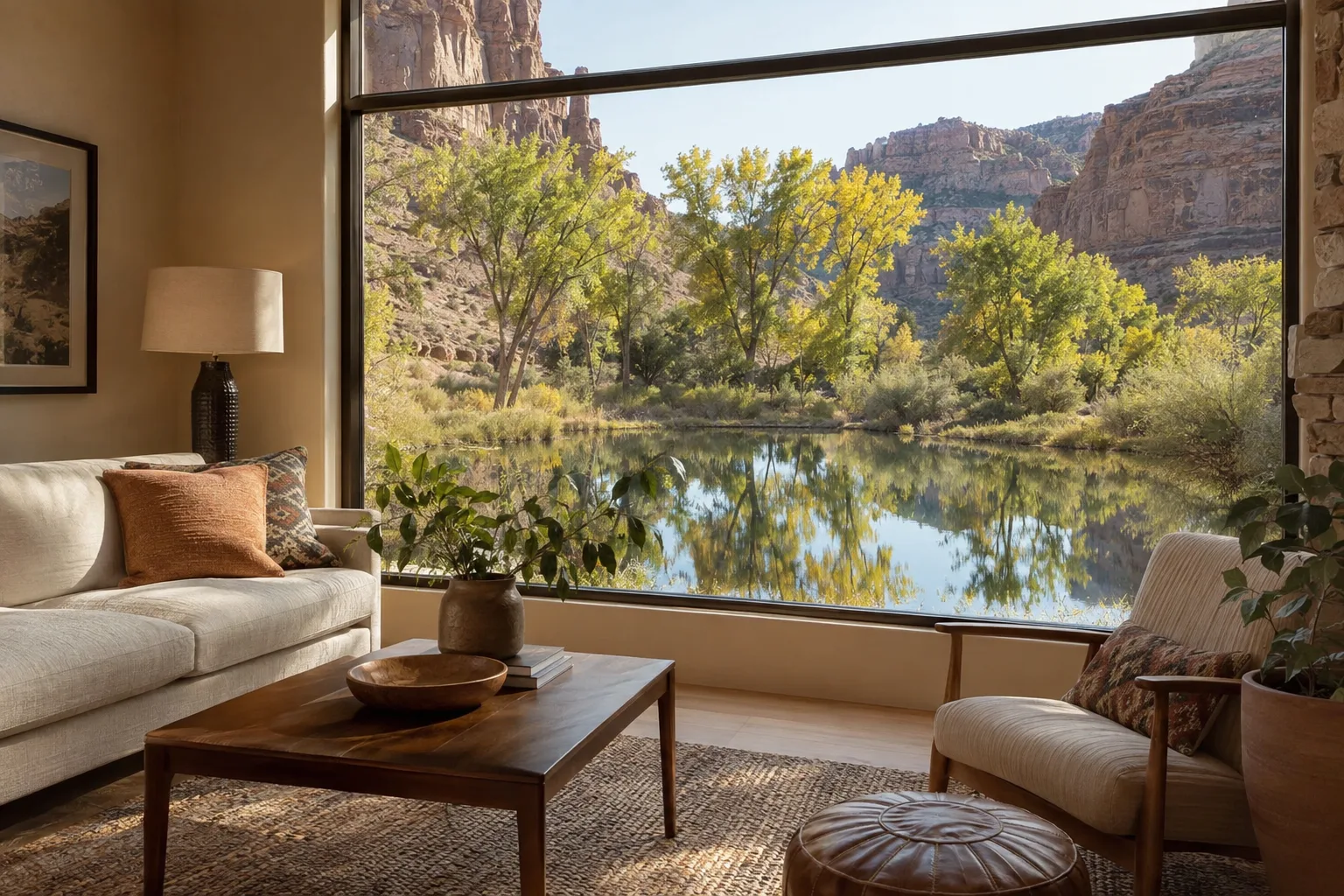
Boyce Thompson sits roughly 45 minutes to an hour from Queen Creek, depending on traffic. Its canyon setting includes Ayer Lake, tall shade trees and desert collections, and open water is rare in desert plant photos. The Desert Botanical Garden sits in the Phoenix metro and is a good pick when you want a controlled setting with paths and benches.
For fall color, look to the cottonwoods along the lower Salt River, which turn yellow in late fall, usually November into early December. Check each site’s website for hours, fees and photography rules before you go.
Which desert plants photograph best?
These five plants give the most color and shape across the year. Each is native to the Sonoran Desert and also grows in home landscapes here.
Saguaro (Carnegiea gigantea)
Mature size is 15 to 40 feet tall. It wants full sun and sharp drainage, and once established it needs very little water beyond rainfall. White flowers open from May into June, followed by red fruit. The drawback is speed: a saguaro may take 50 to 75 years to grow its first arm.
Foothills palo verde (Parkinsonia microphylla)
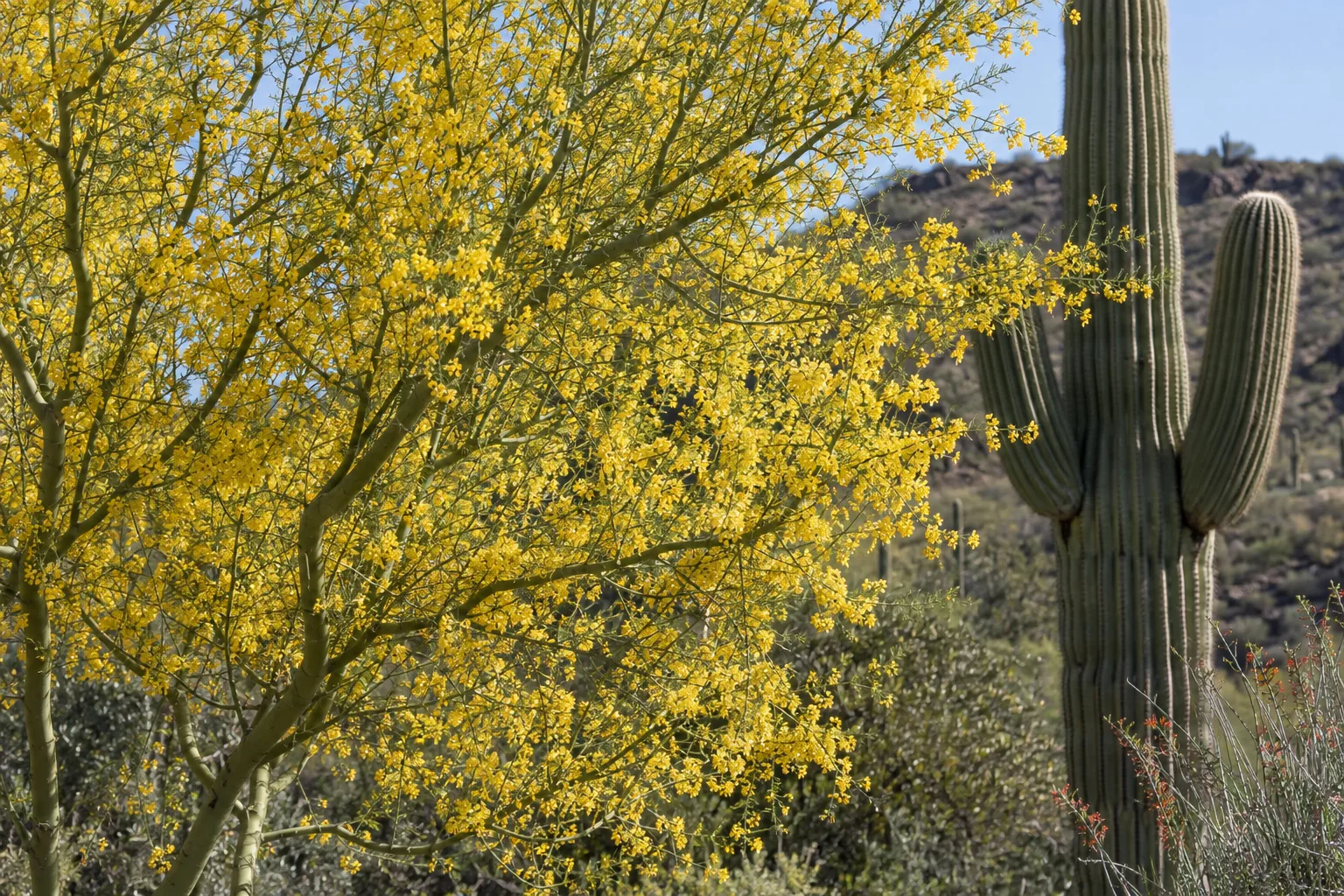
It reaches roughly 15 to 25 feet tall and wide, in full sun, with deep and infrequent watering once established. Bright yellow bloom covers the canopy from roughly late March into April, and the green bark looks good all year. It drops petals, tiny leaves and pods, which clutter pool decks and gutters. See our flowering trees for other bloom options.
Ocotillo (Fouquieria splendens)
Canes grow 8 to 20 feet tall in full sun with little water. Red flower clusters tip the canes in spring, and green leaves appear within days after a good rain. For much of the year it looks like a bundle of bare sticks. It also demands excellent drainage and resents wet soil.
Brittlebush (Encelia farinosa)
This shrub forms a silver-gray mound 3 to 4 feet tall and wide, in full sun, with low water once established. Yellow daisy flowers appear mostly from roughly February through April. It tends to be short-lived and looks sparse in summer heat, so plan to replace it every several years.
Desert marigold (Baileya multiradiata)
It stays 1 to 2 feet tall in full sun with low water. Yellow flowers show up in spring, with repeat bloom after summer or fall rain. The petals have a papery look that suits close-up shots. It is a short-lived perennial that reseeds and looks ragged between flushes of bloom.
What is the best season and time of day for plant photos in Arizona?
Spring offers the most variety, and the first two hours after sunrise give the best light in every season. The table below lays out what to look for by month.
| Months | What to photograph | Where to start |
|---|---|---|
| January to February | Winter-blooming aloes and succulents | Desert Botanical Garden |
| February to April | Wildflowers, brittlebush, globe mallow | Picacho Peak, White Tank, San Tan Mountain |
| March to April | Palo verde in yellow bloom | Usery Mountain, neighborhood washes |
| May to June | Saguaro flowers and fruit | Usery Mountain, San Tan Mountain |
| July to September | Monsoon greening, storm skies | Open parks with long sightlines |
| November | Cottonwood fall color | Lower Salt River, Boyce Thompson |
Midday light from about 10 a.m. to 3 p.m. flattens texture, throws harsh shadows into cactus pleats and washes out yellows. Use that window to scout. If you want to know what is blooming in your own yard each month, our gardening calendars help you plan.
Is it safe to photograph plants in summer and monsoon season?
Yes, if you start at sunrise, carry water and watch the sky. The monsoon runs roughly from July through September, and the desert turns green within days of a good soaking.
Carry at least 1 gallon of water per person and finish before the hottest part of the day. Heat above 110°F drains phone and camera batteries quickly, and a parked car gets far hotter than the air outside, so never leave gear inside. Stay out of washes when storms are anywhere nearby, because flash floods can arrive from rain that fell miles away. Leave ridges at the first thunder.
Stay on marked trails. Cactus spines hurt, and crushed soil crust takes years to recover. The creosote smell after rain and a storm cloud behind a saguaro make the effort worthwhile.
Can I grow a photo-worthy desert garden at home?
Yes, and the plants above are a good starting list. Fall is the usual planting window for most desert natives here, since roots settle in before the summer heat.
Give every plant full sun, fast drainage and room for its mature size. Our caliche and alkaline soil is the main obstacle, so dig a wide hole and avoid soggy backfill. Browse our plant departments to see what grows well in low desert yards, and keep in mind that these are varieties we commonly carry, with availability that changes week to week and season to season. Our classes and events cover planting basics.
Frequently asked questions
What gear helps most for desert plant photos?
A polarizing filter and a sturdy tripod help most. The filter cuts glare off waxy cactus skin and deepens blue sky. Shoot RAW if your camera allows it, since bright sky over shaded ground has a wide range of light. A phone works well for wide scenes at sunrise.
How can I check whether wildflowers are blooming before I drive?
Look at recent photo posts and observations from the park you plan to visit. The iNaturalist app shows dated plant sightings, and park websites and social pages often post bloom updates. Also check how much rain fell between October and February, because a dry winter usually means a thin spring bloom.
Do these parks charge admission?
Most regional and state parks charge a day-use or entrance fee, though amounts change. Boyce Thompson Arboretum and the Desert Botanical Garden charge admission as well. Check each site’s website before you leave so you know the current fee, hours and any rules about tripods or commercial shoots.
Are crested saguaros easy to find?
No, crested saguaros are uncommon, and a visit may not turn one up. The growing tip fans out into a ruffled crest instead of a rounded top. Ask rangers or check recent online sightings, then take the trail at a slow pace and scan the slopes.
Is a desert plant photo trip worth planning?
It is worth it if you can be on the trail by sunrise and you pick your month to match the plant. Spring and late fall give the best return for the least effort. It is not worth the trip if you can only go at midday in July, when heat and flat light work against you. A morning at Usery or San Tan Mountain costs little and shows what grows here. When you are ready to plant your own, visit us at the nursery in Queen Creek.
