Rosemary (Salvia rosmarinus) is the best herb to grow indoors in Arizona in December. It needs a south or west window with 6 or more hours of direct sun, a pot that drains fast, and water only when the soil is dry.
Key takeaways
- Give rosemary 6 to 8 hours of direct sun at a south or west window, or add a grow light for 12 to 14 hours a day.
- Plant it in a 6 to 8 inch terracotta pot with drainage holes, using about two parts potting soil to one part perlite or decomposed granite.
- Water when the top 2 inches of soil are dry, usually every 7 to 14 days in winter, and empty the saucer after 30 minutes.
- Harvest from the tips and never remove more than one-third of the plant at one time.
- Established rosemary also handles typical East Valley winter nights outdoors, so growing it inside is a choice for convenience.
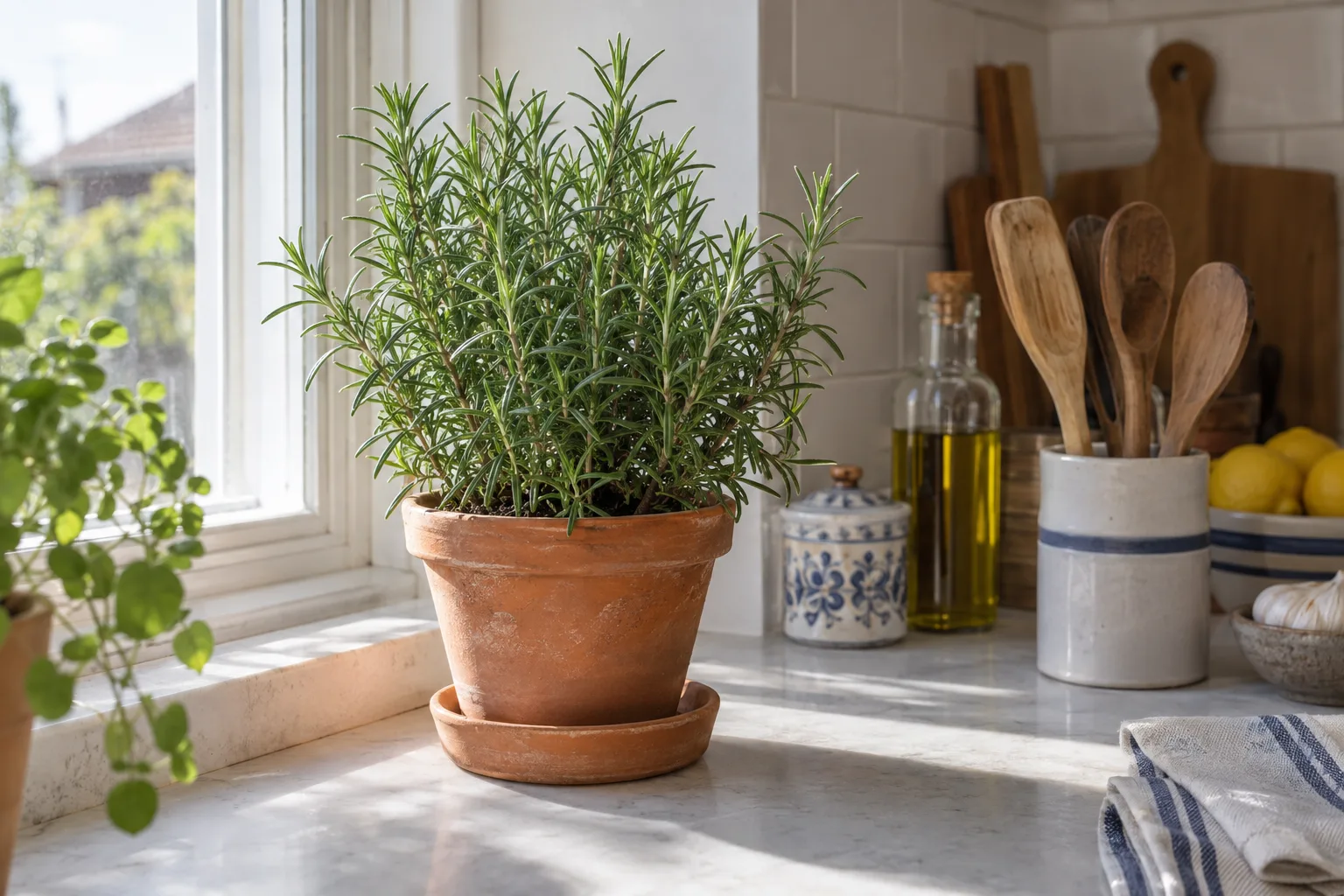
Why is rosemary the best herb to grow indoors in Arizona in December?
Rosemary handles dry air, lean soil and bright light, which are the conditions inside a sunny East Valley home in winter. It comes from rocky Mediterranean hillsides and grows as a woody perennial shrub, so it tolerates gaps between waterings far better than leafy herbs do.
Basil stalls when temperatures fall below about 50°F, and cilantro and mint prefer the cool outdoor air and steady moisture of a Queen Creek winter. Rosemary is the easy one. You can look over the full range in our herbs, vegetables and berries department, and rosemary is a good first herb if you want something that lasts well past the holidays.
How much light does rosemary need indoors?
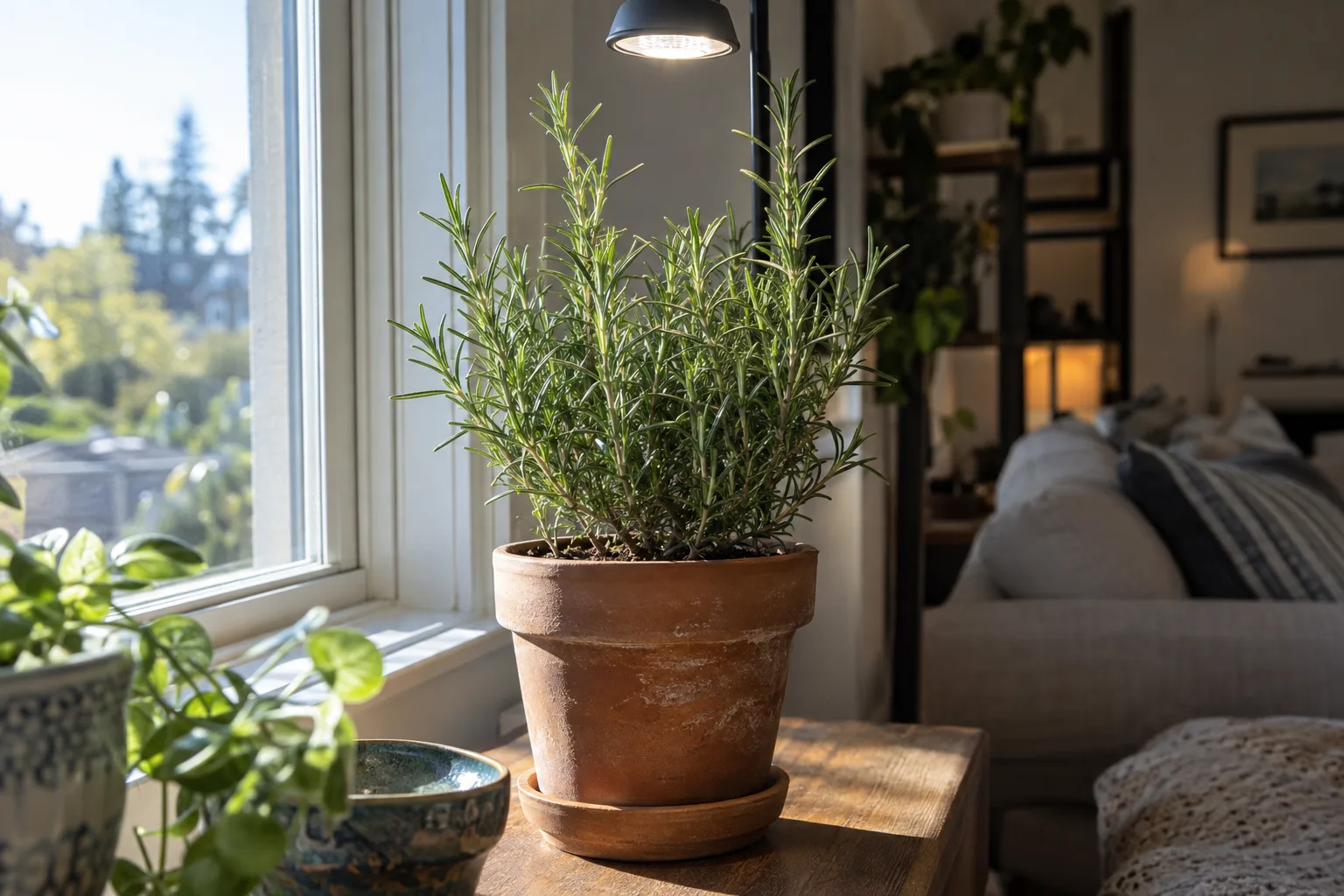
Rosemary needs 6 to 8 hours of direct sun a day, so give it your brightest south or west window. December sun sits low in the sky, and tinted glass, window film or a deep patio overhang can cut the light reaching the pot by a large amount.
Long, stretched stems with small, widely spaced leaves mean the plant wants more light. A grow light fixes it. Hang an LED grow light 6 to 12 inches above the plant and run it 12 to 14 hours a day, and turn the pot a quarter turn each week so every side gets light and the plant grows upright.
If your sunniest window is already taken, a lower-light plant may suit the dimmer rooms better, and our houseplant section covers those. An enclosed sunroom or Arizona room with southern exposure also works well, since it stays warmer than outdoors and brighter than an interior room.
What pot and soil does indoor rosemary need?
Use a 6 to 8 inch terracotta pot with a drainage hole and a fast-draining mix. Terracotta is porous, so moisture leaves through the walls and the roots stay out of soggy soil. Our pottery and planters page is a good place to look for a pot with the right drainage.
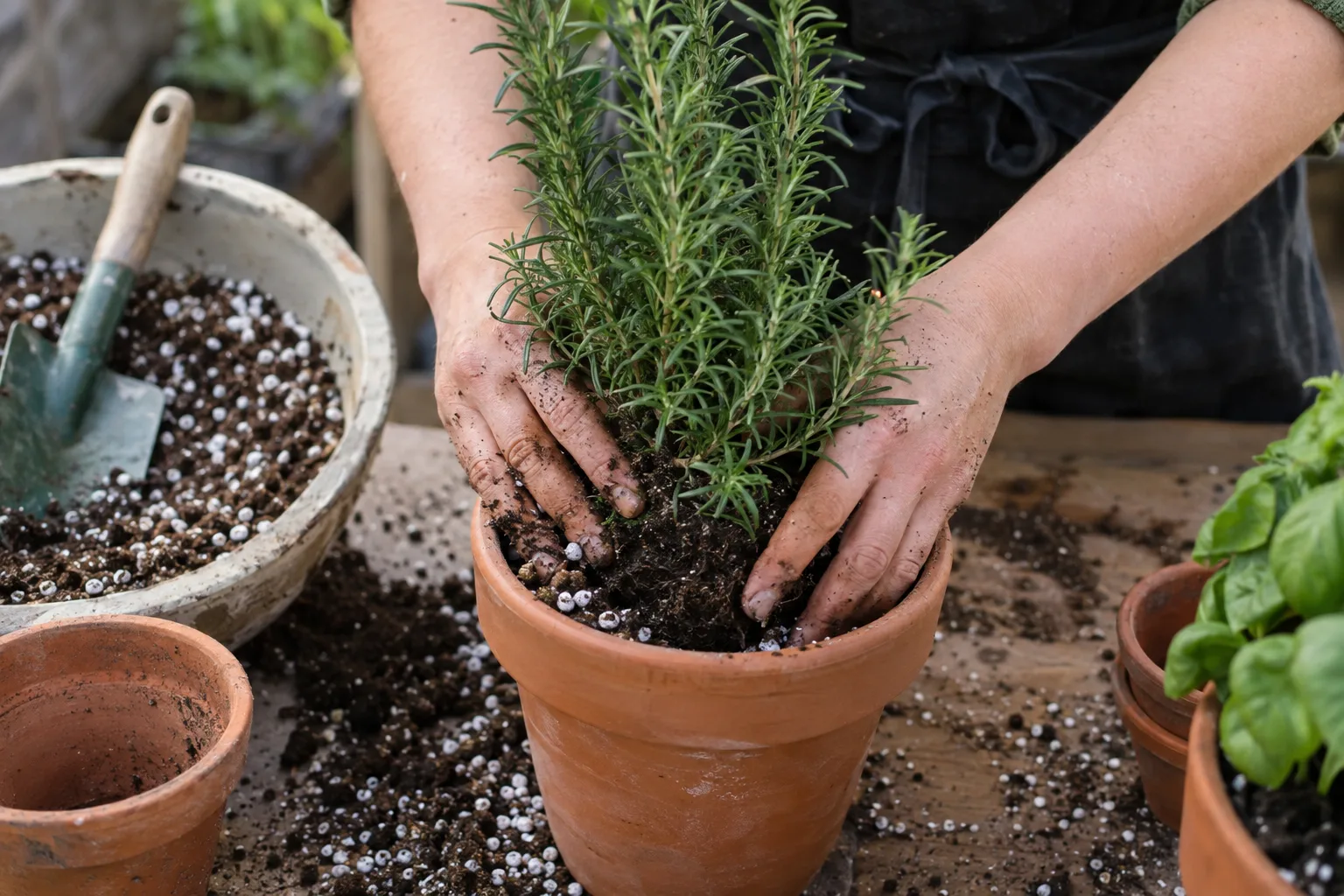
Mix about two parts quality potting soil with one part perlite or decomposed granite, or start with a cactus and succulent mix. Set the crown, where the stem meets the roots, at or just above the soil line, because a buried crown invites stem rot. Skip rich compost.
Hard Arizona tap water leaves mineral salts behind as the pot dries out between waterings. Every 4 to 6 weeks, water slowly with plain water until it runs freely from the bottom for a minute or two to flush the salts out. Rosemary tolerates mildly alkaline water better than most herbs, so filtered water is rarely needed.
How often should I water indoor rosemary in winter?
Water rosemary when the top 2 inches of soil are dry, which is usually every 7 to 14 days indoors in December. Push a finger into the soil to check, and lift the pot as well, since a heavy pot is still wet inside.
Water until the excess runs out of the drainage hole, then empty the saucer after about 30 minutes. Standing water is the fastest way to lose a rosemary plant, because roots sitting in wet soil rot within a couple of weeks. Heating vents and sunny glass dry a pot faster than a cool corner does, so two plants in the same house can need different schedules.
Brown, crispy needle tips usually point to dry indoor air or salt buildup. Flush the pot as described above.
Which rosemary varieties work best in pots?
Upright types such as Tuscan Blue and Spice Island suit most windowsills, and a trailing type suits a hanging pot. Tuscan Blue, Spice Island and prostrate rosemary are varieties we commonly carry, though availability changes week to week and season to season.
| Variety | Growth habit | Best use |
|---|---|---|
| Tuscan Blue | Upright, tall | Larger pots and sunny sunrooms |
| Spice Island | Upright | Kitchen windowsills and cooking |
| Prostrate | Trailing, spreading | Hanging pots, with a milder aroma |
Upright varieties need a bigger pot over time and a quarter turn now and then to stay balanced. Trailing types trail over the rim and need less turning, but they give a smaller harvest from each stem.
How do I prune and harvest rosemary indoors?
Cut stems from the tips with sharp, clean scissors, and take no more than one-third of the plant at any one time. Each cut tip usually branches into two, which gives you a fuller plant and more sprigs to harvest over the following weeks.

Cut into green growth only. Bare, woody stems often do not resprout, so a plant that has gone leggy is best trimmed back by about one-third before the tips have lost their leaves.
Fresh sprigs keep 10 to 14 days in the refrigerator wrapped loosely in a damp paper towel. For longer storage, freeze them on a tray, then move them to a sealed bag, and use them for roasts, focaccia or herb butter through the holidays.
What problems affect indoor rosemary?
Most indoor rosemary problems come from too much water, too little light or stagnant air. Each one shows up in the leaves first.
Yellowing leaves
Yellow leaves most often mean the soil stays too wet. Let the top 2 inches dry before the next watering, check that the drainage hole is clear, and move the pot closer to the window if the light is weak.
White powder on the leaves
A white powdery coating is usually powdery mildew, which shows up where air barely moves around the plant. Space pots apart, run a small fan for a few hours a day, and cut off the affected stems. If it keeps coming back, bring a photo to our nursery team and ask what suits your situation.
Brown needles that drop
Browning and needle drop point to overwatering, hot dry air from a vent, or a cold draft from an exterior door. Slide the plant out of the pot to check the roots. Healthy roots are white and firm, and rotted roots are brown and mushy. If rot has set in, trim the soft roots, repot in fresh dry mix and water sparingly.
Frequently asked questions
Can rosemary stay outside in December in the East Valley?
Yes, established rosemary handles typical East Valley winter nights, including the occasional light frost. It usually grows better outdoors than inside because the light is stronger. Young plants in small pots can sit against a south-facing wall or under cover on the coldest nights.
Can I start rosemary from seed in December?
You can, but a nursery transplant gets you to harvest much sooner. Rosemary seed germinates slowly and unevenly, often taking 2 to 3 weeks or longer, and seedlings stay small for months. Seed makes more sense in late winter, when you have a long growing season ahead of you.
Does indoor rosemary need fertilizer in winter?
Very little. Growth slows in December, and heavy feeding produces weak, soft stems. If you want to feed, use a balanced liquid fertilizer at half strength about once a month. Resume normal feeding as growth picks up in late winter, and check our gardening calendars for monthly timing.
Which herbs can share a sunny windowsill with rosemary?
Thyme, oregano and sage share rosemary’s preference for bright light and soil that dries between waterings. Keep basil, cilantro and mint in their own pots, since they want more water. Water each pot by how its own soil feels, because pots in the same window dry at different rates.
When can I move my rosemary outdoors?
Move it out once spring days warm up, and harden it off over about a week. Start in morning sun or bright shade, then increase the exposure each day. Leaves grown behind window glass can scorch in full low-desert sun if the plant goes straight into it.
Is indoor rosemary right for your home?
Indoor rosemary suits a home with a south or west window that gets 6 or more hours of direct sun, or one where you are willing to run a grow light. It also suits people who check the soil before watering. If your windows are shaded, or you water on a fixed schedule whatever the soil feels like, rosemary will struggle, and a patio pot or garden bed outdoors is the better choice. Come visit us at the nursery in Queen Creek and we can help you choose a plant and a pot.