

Flushing soil salts in Arizona means giving plants one slow, deep soak that moves mineral buildup below the root zone. April is the best window in Queen Creek, after spring growth starts and before summer highs pass 110°F.
Key takeaways
- Flush once in April, when daytime highs are typically in the mid 80s to low 90s and summer heat is still weeks away.
- Soak slowly in several short cycles until water reaches about 24 to 36 inches deep for trees and 12 to 18 inches for shrubs and perennials.
- Test drainage first, because a flush only works where water can move down past the roots, and caliche can block it.
- Wait about two weeks after fertilizing before you flush, then feed lightly afterward.
- After the flush, water deeply and less often so salts keep moving below the root zone.

Why do salts build up in Queen Creek soil?
Irrigation water carries dissolved minerals, and they stay in the soil when plants take up the water or the sun evaporates it. Hard water, alkaline soil and a dry climate all push in the same direction here.
Shallow, frequent watering makes it worse, because each short cycle drops minerals in the top few inches of soil, which is exactly where most of the feeder roots are working. Over a few seasons the concentration climbs until roots struggle to pull in water. A plant can wilt in damp soil for that reason. Fertilizers are also salts, so heavy feeding adds to the load.
Caliche, the cemented calcium carbonate layer common across the East Valley, adds another problem. In some yards it sits a foot or less below the surface and slows drainage, so salty water collects above it. Your water provider’s annual water quality report lists the mineral content of your tap water, and it is worth a look.
How can I tell if salt is hurting my plants?
Look for a white crust on the soil or around drip emitters, brown leaf tips, and plants that wilt while the soil is moist. Several of these overlap with other problems, so treat them as clues rather than proof.
- White, chalky crust on the soil surface, on pot rims or around emitters.
- Brown, crisp leaf tips and edges that wind or sunburn do not explain.
- Slow spring growth while similar plants nearby are pushing new leaves.
- Yellowing between leaf veins, which can also come from an iron shortage in alkaline soil.
- Limp, dull leaves when the soil 6 inches down feels moist.
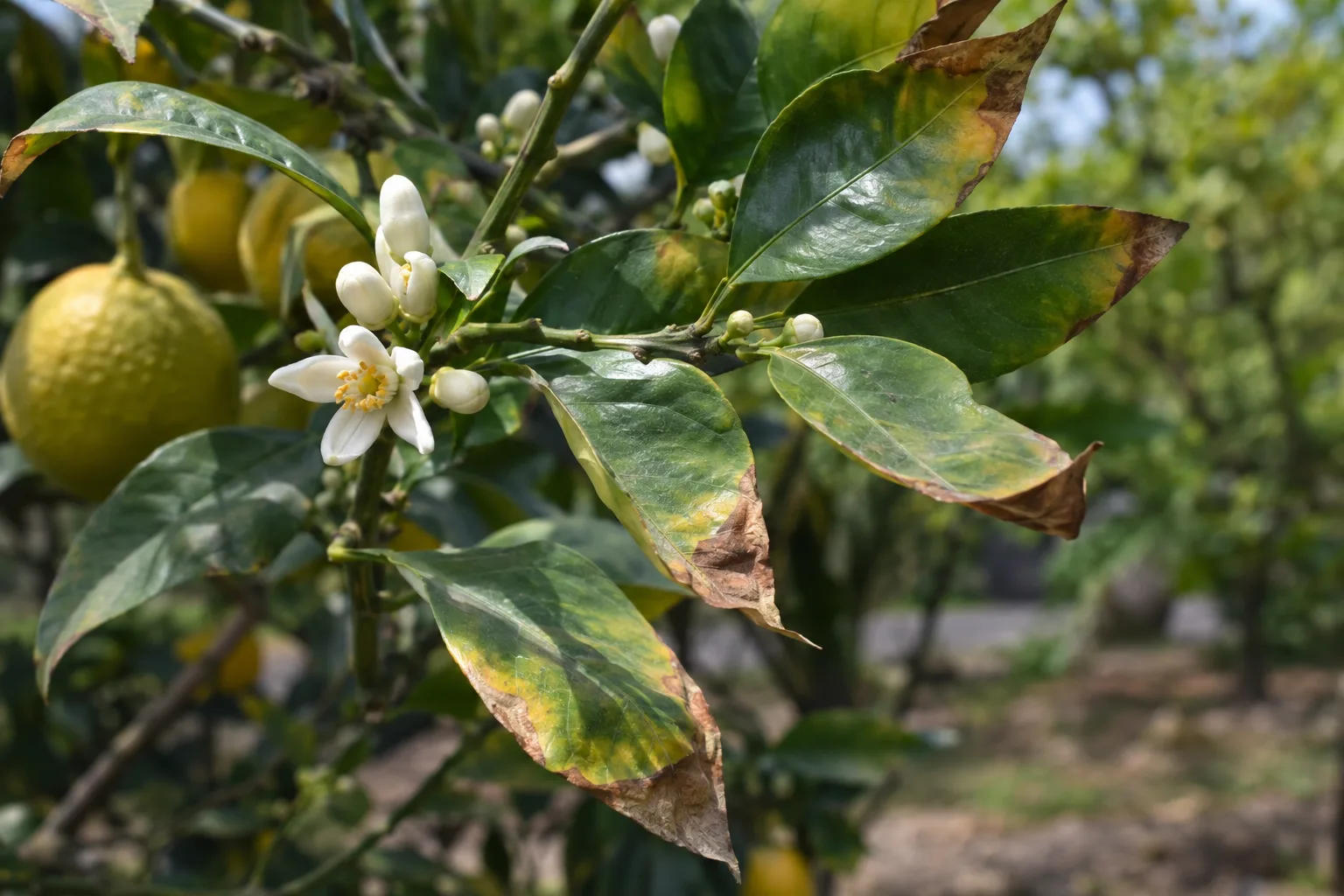
Overwatering, root rot, wind and heat can look similar. A soil test from a lab measures salinity as electrical conductivity (EC) and settles the question. Tolerance varies a great deal between plants, so a reading that stresses a citrus tree may leave a native desert tree untouched.
Why is April the right month to flush soil?
April gives you active plant growth, moderate evaporation and several weeks before the heat arrives. Plants that are already pushing new leaves recover quickly from a heavy soak, and you are not losing half the water to a 105°F afternoon.
By May and June, stressed plants have little reserve left. Getting the soil in order beforehand means they head into summer without a salt problem stacked on top of the heat. The monsoon, roughly July through September, is also still ahead, so you are working with water you control.
Our gardening calendars list other April jobs that pair well with a flush, such as fertilizing and checking irrigation. If you miss April, October is a reasonable second window for salt-sensitive plants, as long as soil is still warm enough for roots to stay active.
What do I need before I flush?
You need a hose or drip system, a soil probe or long screwdriver, and a drainage check. Amendments are optional, and a soil test tells you which ones are worth buying.
The drainage check matters most. Dig a hole about 12 inches deep near the plant, fill it with water, and see how long it takes to empty. If water still stands after 24 hours, flushing will mostly waterlog the root zone, and you should fix drainage first by breaking through caliche or loosening compacted soil.
| Amendment | What it does | Use it when |
|---|---|---|
| Gypsum | Supplies calcium that can displace sodium on clay particles and improve drainage | A soil test shows high sodium |
| Elemental sulfur | Slowly lowers soil pH over months | Alkaline soil is limiting iron, and you can wait for results |
| Compost or organic mulch | Adds organic matter and slows evaporation from the surface | After every flush |
| Wetting agent | Helps water enter dry, water-repellent soil | Water beads up or runs off instead of soaking in |
Gypsum gets recommended often, yet it only helps where sodium is the problem. It does not remove other salts, so test before you spread it.
How do I flush the soil step by step?
Soak the root zone slowly in cycles, check the depth with a probe, then let the soil drain before you water again. The whole job takes an afternoon of attention spread across a day or two.
- Run the drainage test described above and fix any standing water problem first.
- Confirm you have not fertilized in the last two weeks. A flush right after feeding carries the fertilizer past the roots before plants can use it.
- Check that the soil is damp but not saturated. If it is soggy from recent rain or irrigation, wait two or three days.
- Soak the area under the canopy with a slow trickle or your drip system. When water begins to pond or run off, stop for 30 to 60 minutes, then start again. Several short cycles soak in better than one long one.
- The next day, push a probe or long screwdriver into the soil. It slides easily through moist soil and stops in dry soil, so you can see how deep the water went. Repeat the cycles if it falls short of 24 to 36 inches for trees or 12 to 18 inches for shrubs and perennials.
- Let the soil drain for 24 to 48 hours. Wait until the top 2 to 3 inches dry out before resuming normal irrigation, so roots get oxygen.
- Spread 2 to 3 inches of organic mulch over the soil, keeping it a few inches from trunks and stems. Feed lightly a week or two later if the plant needs it.
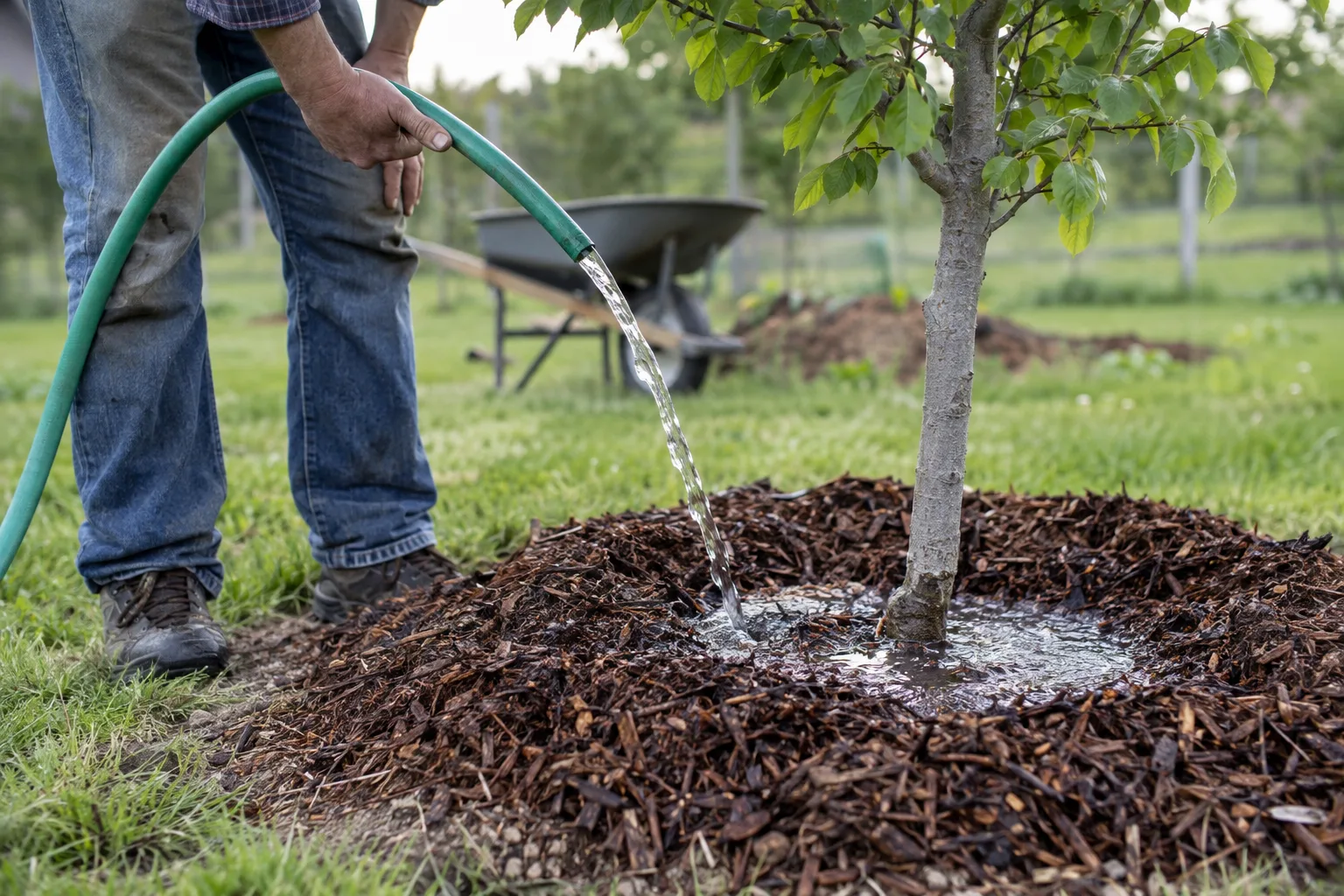
Drip systems work well because they deliver water slowly at the root zone. With a hose, keep the flow low enough that the basin never overflows.
Which plants benefit most from a flush?
Salt-sensitive plants and anything in a pot gain the most. Those with symptoms that match the list above should go first.
Citrus
Citrus trees show leaf tip burn and weak growth when salts build up, and they are generally considered salt-sensitive. Our citrus trees page shows the kinds we commonly carry, and availability changes week to week and season to season.
Vegetable beds
Beds that have been irrigated all winter can carry a salt crust by April. Flush them before you set out warm-season crops, and check the University of Arizona Cooperative Extension planting calendar for timing. Our herbs, vegetables and berries section covers what we commonly carry for the season.
Container plants
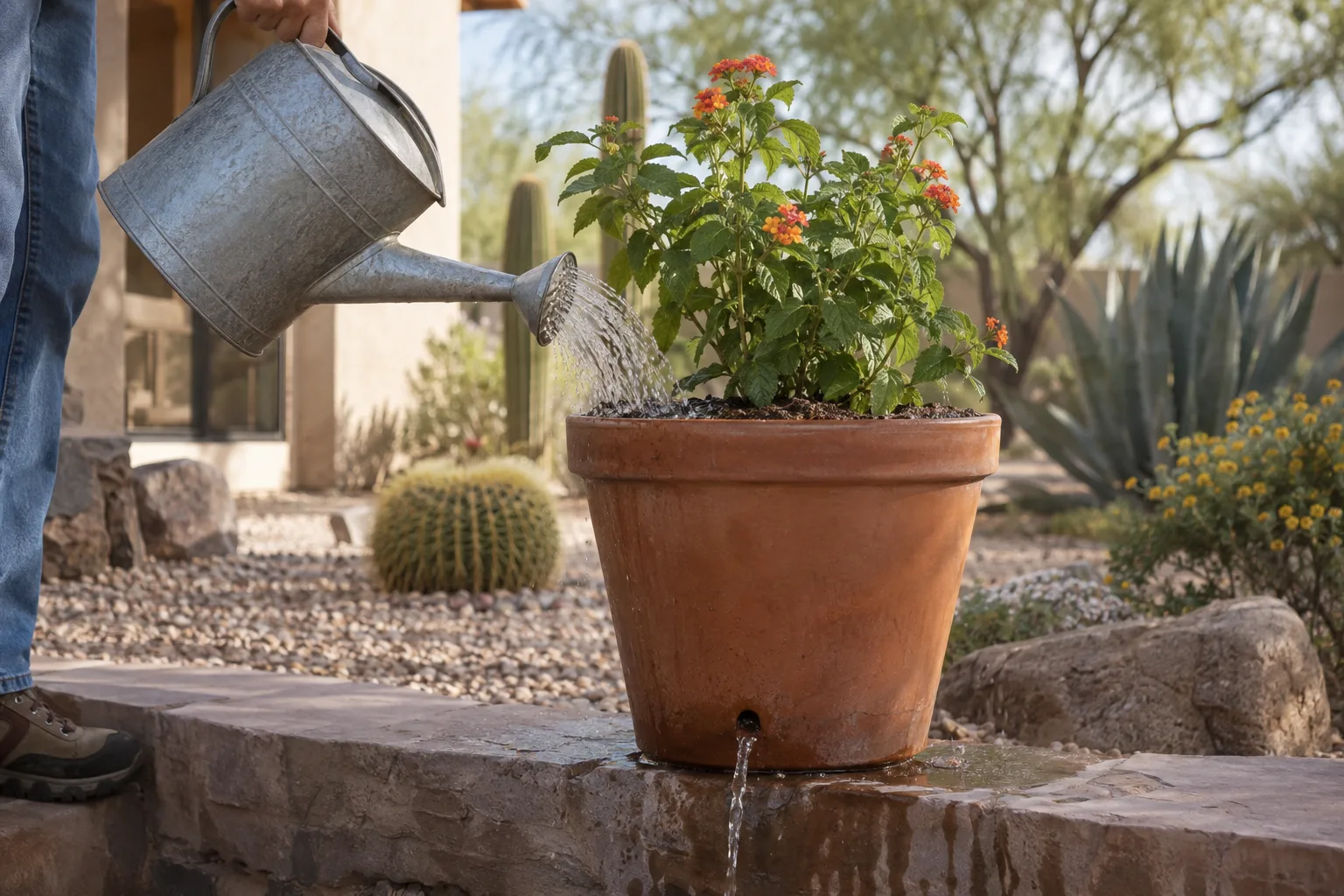
Pots collect salts faster than the ground because the minerals have nowhere to go but out the bottom. Pour water slowly through the pot until it runs freely from the drainage holes, wait 10 minutes, and repeat two or three times. Choose pottery and planters with drainage holes so flushing works at all.
Bermuda lawns
Cynodon dactylon tolerates salt better than most lawn grasses, but frequent shallow watering still builds a crust at the surface. A deep soak in April, before the lawn is in full summer growth, helps even out green-up.
How should I water after the flush?
Water deeply and less often. Each deep irrigation pushes mineral-laden water further down, so the flush keeps working long after April.
- Established trees: wet the soil to 24 to 36 inches, which usually means running drip far longer than a default timer setting.
- Shrubs and perennials: wet to 12 to 18 inches and let the top few inches dry between waterings.
- Lawns: water to 6 to 8 inches per cycle, with fewer cycles per week than a shallow schedule.
Your exact interval depends on soil type, plant and weather, so use the probe to check how far the last watering reached. Keep 2 to 3 inches of mulch on beds to slow evaporation. If you water container plants by hand, a periodic slow flush every few months keeps their salts down too.
Which habits bring salt buildup back?
Shallow watering, heavy fertilizing and bare soil rebuild the problem within a season. Fixing these matters as much as the flush itself.
Running short, frequent cycles wets only the top layer and parks minerals at root level. Applying more fertilizer than the label calls for adds salt directly. Leaving soil bare lets the surface dry and crust over, so use mulch instead.
Skipping the drainage check is the other common error. Flooding soil that cannot drain damages roots about as badly as salt does, and caliche under a planting hole sends salty water right back up. Break through it at planting time, before problems appear.
Frequently asked questions
How often should I flush my soil?
Once a year in April is enough for most in-ground plants if your regular watering is deep and infrequent. Salt-sensitive plants with stress symptoms may benefit from a second flush in October. Pots can be flushed every few months, since they have no deep soil to carry salts away.
Does a water softener affect my plants?
Yes. Softeners usually swap the hardness minerals for sodium, and sodium harms plant roots and soil structure. Many gardeners bypass the softener for outdoor spigots and irrigation lines. A plumber or your softener’s manual can show you how to set that up for your home.
Will flushing wash away nutrients too?
Some, yes. Nitrogen and other mobile nutrients move down with the water. That trade is worth it when salts are the bigger problem. Wait for the soil to drain, then apply a light dose of slow-release fertilizer to replace what was lost without adding a heavy salt load.
Does monsoon rain flush the soil for me?
Rain contains few dissolved minerals, and a heavy storm can leach some salts below the roots. The effect is uneven, though, and runoff on compacted soil or caliche limits it. Keep up deep watering through the monsoon, and treat rain as a bonus rather than a replacement.
Do I need a soil test before flushing?
A test is optional for a basic flush and valuable for choosing amendments. It shows salinity, sodium and pH, so you know whether gypsum or sulfur would help. If your plants look fine, a test also tells you whether you can skip the flush entirely.
Is an April soil flush worth the water in your yard?
It is worth it if you have salt-sensitive plants, a white crust on the soil, or beds and pots irrigated all winter, and your soil drains. Skip it if your plants are healthy and show no signs of buildup, or if water stands in your drainage test until you fix the drainage. Bring photos of your plants or a soil sample, and visit us at the nursery in Queen Creek.
