

To fertilize cactus and succulents in Arizona without damage, feed them lightly in spring and early fall with a low-nitrogen fertilizer, water before and after, and skip the summer heat. Most established in-ground desert plants need very little.
Key takeaways
- Feed in spring (roughly March through May) and again in early fall (September through October), when nights stay above about 50°F.
- Choose a low-nitrogen formula, with an N-P-K ratio around 2-7-7 to 5-10-10, and use half the label rate for the first feeding.
- Skip June through August, when highs pass 110°F, and skip November through February, when frost can damage tender new growth.
- Water deeply the day before and right after applying granules, and never feed dry soil.
- Yellow new growth with green veins in alkaline soil usually points to an iron problem, so reach for chelated iron before more fertilizer.
Do cactus and succulents need fertilizer in Arizona?
Established in-ground desert natives usually need little or none, while potted plants, young plants and those in poor soil benefit from light feeding. Desert plants grow slowly and hold water and nutrients in their tissue, so their appetite is small next to a rose or a vegetable bed.
Nitrogen is the usual culprit. Extra nitrogen pushes soft, pale growth that sunburns when highs pass 110°F and draws aphids and scale insects. Fertilizer salts also build up around roots, especially where hard irrigation water already leaves its own mineral residue.
Mature natives such as saguaro (Carnegiea gigantea) generally take what they need from the soil and monsoon rain. Agave, aloe and prickly pear (Opuntia) in the ground can use a light spring feeding if growth looks pale or slow. Browse our plants to compare cactus, agave and succulent options for your yard.
When should I fertilize cactus and succulents in Arizona?
Fertilize in spring, roughly March through May, and again in early fall, September through October. Both windows bring nights above about 50°F and highs below about 100°F, when most desert plants are growing and can use what you give them.
Skip June through August. At highs above 110°F, roots are stressed and fertilizer salts can burn them while new growth scorches. The monsoon, from roughly July through September, adds humidity and heavy rain to the heat, so wait until storms and humidity ease before your fall feeding, usually sometime in September. Skip November through February too, because a late feeding pushes tender growth that an occasional winter frost can damage. Our gardening calendars lay out the East Valley year month by month, which helps you place these windows.
What is the best fertilizer for cactus and succulents?
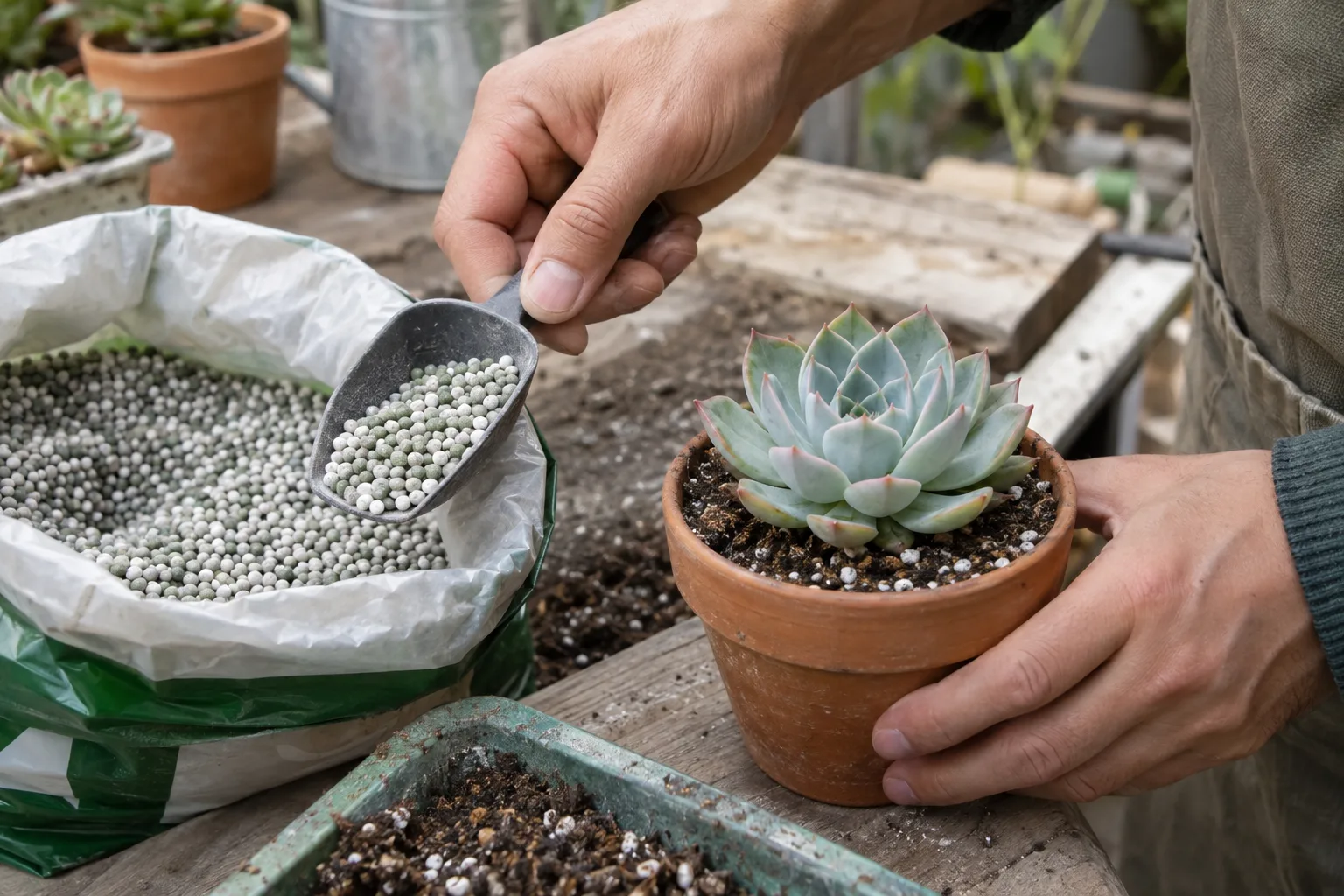
A low-nitrogen fertilizer with an N-P-K ratio around 2-7-7 to 5-10-10, ideally with micronutrients, suits most cactus and succulents. Phosphorus supports roots, and potassium helps with drought and cold tolerance. Slow-release granules and diluted liquids both work well in the low desert as long as you measure carefully and start at half the label rate on the first feeding.
| Fertilizer type | Best for | How often | Burn risk |
|---|---|---|---|
| Slow-release granular, low nitrogen | In-ground cactus, agave, aloe | Spring and early fall | Low |
| Diluted liquid cactus formula | Potted succulents | Monthly in the two windows, at half strength | Low to medium |
| Fish emulsion or worm castings | Pots and in-ground plants | Light top dressing or diluted feed, spring and early fall | Very low |
| Chelated iron | Yellow new growth in alkaline soil | Once or twice a year | Low |
| High-nitrogen lawn fertilizer | Not recommended | Never | High |
Lawn fertilizer is the product most often misused on cactus, because its first number, nitrogen, runs high. Check the first number on the bag. Organic options such as fish emulsion and worm castings release gently and forgive small mistakes. Chelated iron is a separate product that corrects a soil problem and does not replace a balanced feed.
How do I fertilize cactus and succulents step by step?
Water first, apply half the label rate, water again, then wait and watch. You need a low-nitrogen fertilizer, a measuring spoon, thick gloves, a hose or watering can, and folded newspaper or tongs for handling spiny plants.
- Check the forecast. Look for overnight lows above about 50°F and highs below about 100°F for the next several days, and wait if a heat spike is coming.
- Water deeply the day before. Never feed dry soil, because roots in dry ground take up concentrated salts and burn.
- Measure half the label rate for the first feeding. You can add more at the next window, but you cannot undo burn.
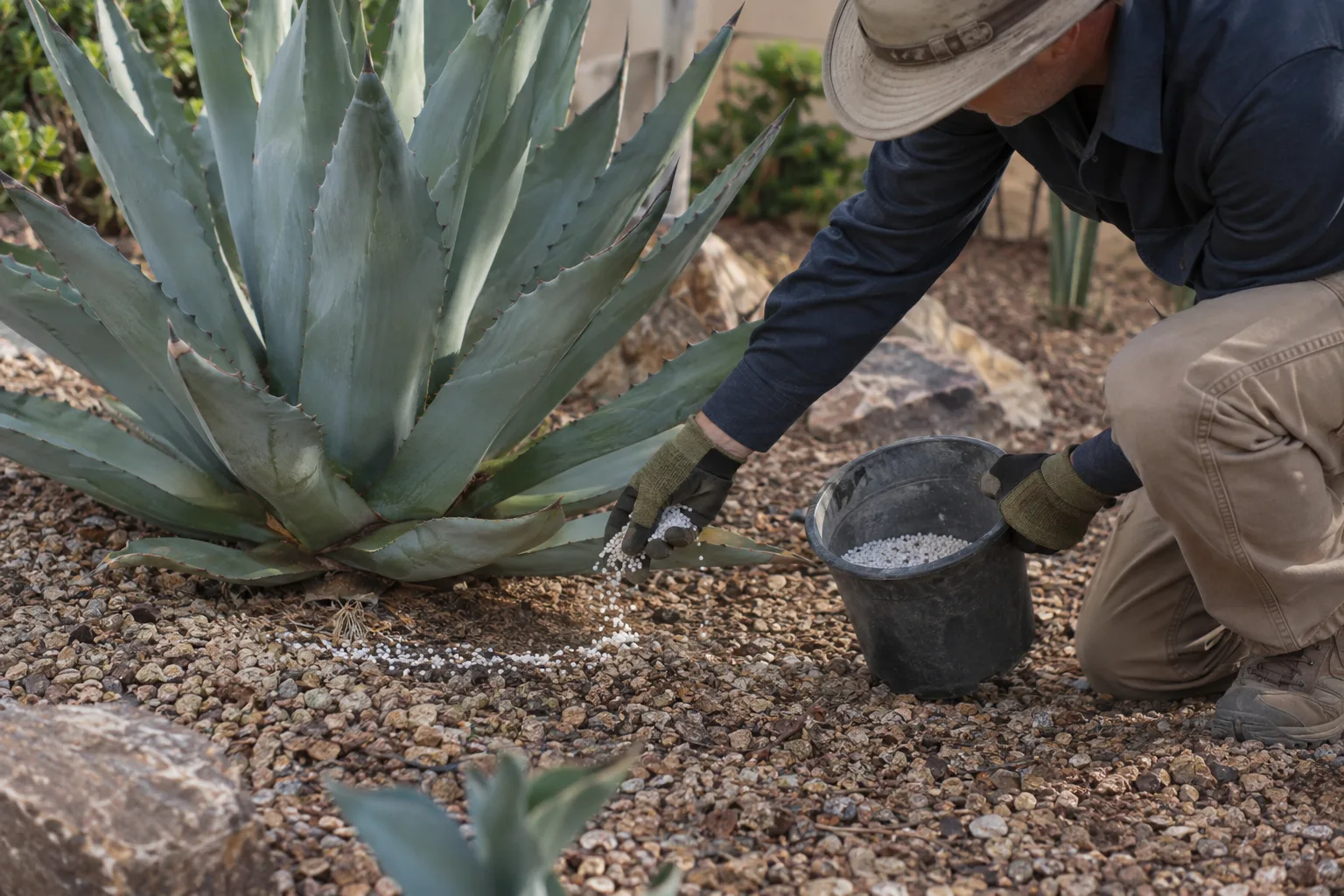
- Scatter granules under the outer edge of the plant’s canopy, where the feeder roots grow, and keep them 4 to 6 inches from the base or trunk.
- Water it in with a slow, deep soak so the granules dissolve and move into the root zone instead of baking on the surface.
- For liquid feeds, pour onto already moist soil in the early morning, and keep the solution off the plant body.
- Write down the date and product, then check the plant after 3 to 4 weeks for firm new growth and good color.
Do potted succulents need different feeding than in-ground plants?
Yes, potted plants need lighter, more frequent feeding because every watering washes nutrients out of the drainage hole. Pots dry out faster too. Use a liquid cactus fertilizer at half strength about once a month during the spring and early fall windows, and skip it the rest of the year.
Salt is the other half of the picture. Hard irrigation water leaves minerals behind and fertilizer adds more, so a white crust may form on the soil or pot rim. Every 6 to 8 weeks, water until it runs freely from the drainage hole, wait about 30 minutes, and do it again to flush the pot. Choose a pot with a large drainage hole; our pottery and planters page is a good place to start.

In-ground plants have a much larger volume of soil around them, so once or twice a year is plenty, and some large established plants need nothing at all.
Why is my cactus or succulent yellow even after fertilizing?
Yellow new growth with green veins is usually iron chlorosis caused by alkaline soil. Low desert soils often have a pH above 7.5, and at that level iron, manganese and zinc stay locked in the soil where roots cannot take them up, even when the soil contains plenty.
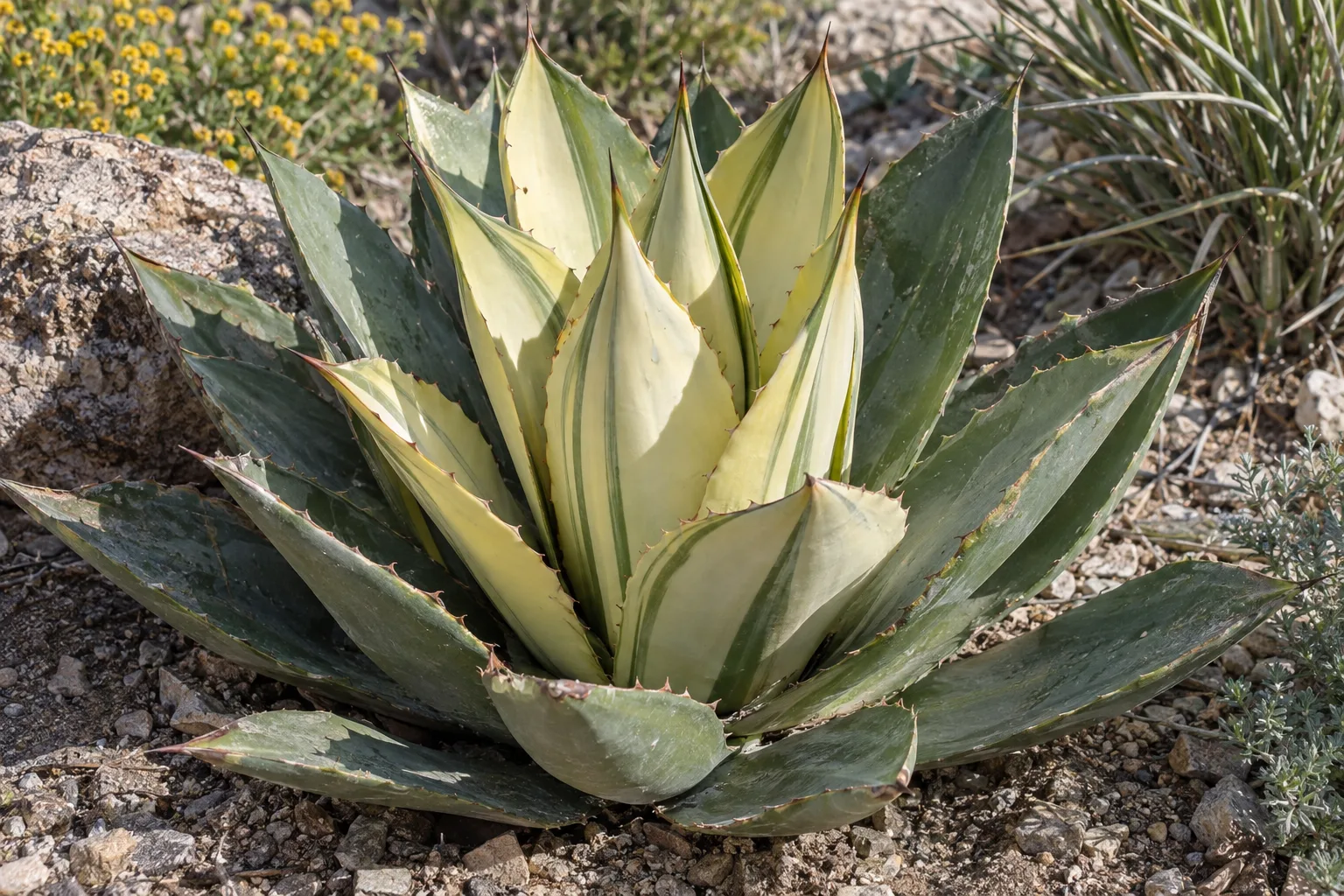
A chelated iron product made for high-pH soil often brings color back within several weeks, while extra nitrogen only adds soft growth. Check drainage too. Caliche, a hard layer of calcium carbonate found a few inches to a few feet below the surface in many East Valley yards, holds water around roots and causes yellowing and mushy bases. If a plant sits in a basin that stays wet, replant it higher or improve drainage before feeding anything. A soil test through the University of Arizona Cooperative Extension shows your pH and salt levels.
Which mistakes damage cactus and succulents?
The common mistakes are feeding in summer, using high-nitrogen products, feeding dry soil, and fertilizing right after planting or repotting. Each one stresses roots or forces weak growth.
- Feeding at 110°F or above, when salts concentrate and roots burn.
- Using lawn or all-purpose fertilizer with high nitrogen, which produces soft growth.
- Applying heavy doses. Stay at the low end of the label, and keep in-ground plants to twice a year at most.
- Fertilizing within 4 to 6 weeks of planting or repotting, while roots are still damaged.
- Spraying foliar feeds in summer heat, which can burn plant tissue.
Overfed plants show brown, crispy tips, mushy patches at the base, stretched pale growth, a white salt crust on the soil, or wilting in moist soil. Flush right away by watering deeply and repeatedly so excess salts move below the root zone. For pots, water until it drains freely, wait 30 minutes, and repeat. Most plants recover if you catch the problem early. To learn more about desert plant care, check the classes and events page for any upcoming sessions.
Frequently asked questions
Can I use regular houseplant fertilizer on cactus?
Yes, if you dilute it to one-quarter strength and use it only in the spring or early fall window. Many houseplant fertilizers are high in nitrogen, which pushes soft growth on cactus. A formula labeled for cactus and succulents has lower nitrogen and is the safer choice for regular use.
Should I fertilize cactus during the monsoon?
No, wait until the monsoon eases, usually in September. Heavy rain flushes nutrients through the soil, and saturated roots in warm, humid conditions raise the risk of rot when you add fertilizer. Rain also carries some minerals into the soil, so plants rarely miss a skipped July and August feeding.
How long after planting can I fertilize a new cactus?
Wait 4 to 6 weeks. Newly planted or repotted cactus have disturbed roots that burn easily on fertilizer salts. Water deeply on a steady schedule while the roots establish, then begin with a half-strength feeding in the next spring or fall window.
Is compost safe for cactus and succulents?
A thin top dressing of compost or worm castings, about half an inch, once or twice a year is safe and gentle. Keep it a few inches from the base so moisture does not sit against the plant. Avoid mixing heavy compost into the planting hole, since cactus need fast drainage.
How should I feed an agave?
Give an agave a light low-nitrogen feeding in spring if growth is slow, and a chelated iron product if new leaves look yellow. Agaves grow slowly and store water, so they need less than most garden plants. Water first, and keep granules out of the center of the rosette.
Is fertilizing worth it for your cactus and succulents?
Yes for potted succulents, young plants, and agave or aloe with pale, slow growth. Skip it for healthy, established natives, which need little beyond soil and monsoon rain. If a plant looks sick and drainage is poor, fix the soil and watering before adding fertilizer, because food will not rescue a rotting root. If you cannot resist feeding through summer, do not start. Stop by our nursery in Queen Creek with a photo of your plant, and we will help you decide.
