

You can harvest carrots, beets, radishes, kale, chard, lettuce, spinach, broccoli, peas, cilantro, parsley and citrus in an Arizona garden in February. Cool-season crops planted in fall reach peak quality now, before warming March days push them to bolt.
Key takeaways
- Carrots, beets and turnips sown in October and November are ready to pull in February, usually when beets and turnips are 2 to 3 inches across.
- Kale, chard and loose-leaf lettuce keep producing if you cut the outer leaves and leave the center growing tip alone.
- Daytime highs usually run from the upper 60s to low 70s with lows in the 40s, and by March warm days push cilantro, spinach and lettuce to bolt.
- Navel oranges, grapefruit, mandarins and Meyer lemons are often ripe on the tree in February, so taste one before you pick.
- Radishes (25 to 30 days) and arugula (30 to 40 days) sown in early February can still finish before the heat.

What can I harvest in an Arizona garden in February?
Mostly cool-season crops that went in between September and November, plus winter citrus. Root crops, leafy greens, broccoli, peas and several herbs all peak this month. Warm-season crops are still weeks away.
If your beds are empty, February is a good month to plan for next fall. Our herbs, vegetables and berries department covers the cool-season crops we commonly carry in fall, though availability changes week to week and season to season. The table below shows typical harvest windows for the low desert.
| Crop | Typical harvest window | Days to maturity | Note |
|---|---|---|---|
| Carrots | December to February | 70 to 80 days | Sweeter after cold nights |
| Beets | January to February | 55 to 70 days | Eat the greens too |
| Kale | November to March | 50 to 65 days | Cut outer leaves only |
| Broccoli | January to February | 80 to 100 days from transplant | Cut before flowers open |
| Snap peas | December to March | 60 to 70 days | Pick often |
| Lettuce | November to March | 45 to 60 days | Cut-and-come-again |
| Cilantro | November to early March | 21 to 28 days to first cut | Bolts fast in warm weather |
Which root vegetables are ready to pull in February?
Carrots, beets, turnips and radishes from fall sowings are the main root crops ready now. Check each one by looking at the top of the root where it meets the soil, then pull a test plant before you commit the whole row.

Carrots
Carrots need 70 to 80 days from seed, so an October sowing is ready from late December on. Roots left in the ground into February hold well and taste sweet because cold nights push the plant to store sugar. Loosen the soil with a garden fork first, since our alkaline, clay-heavy soil grips roots and snaps them when pulled by the tops.
Beets
Pull beets when the roots are about 1.5 to 3 inches across. Larger roots turn woody. Take a few outer leaves from each plant throughout the month, because beet greens are good in salads and sauteed dishes.
Radishes and turnips
Radishes are ready 25 to 30 days after sowing, so a sowing every two to three weeks keeps a steady supply. Turnips need 50 to 60 days and taste best at 2 to 3 inches across. Water the bed the day before pulling any of these roots.
Which leafy greens and herbs can I cut in February?
Kale, chard, lettuce, spinach, arugula and Asian greens such as bok choy are all at their best in February, along with cilantro, parsley, dill and chives. Cool days give these plants tender leaves and good color.
For kale, chard and lettuce, take the oldest outer leaves and leave the center intact so the plant keeps making new growth. Arugula tastes mild when the leaves are 3 to 4 inches long and gets peppery as they grow larger. Spinach is very cold hardy but is one of the first greens to bolt as days lengthen, so cut it generously.
Harvest no more than about one third of an herb plant at a time. Cilantro bolts quickly once March warms up, so use it heavily now. Parsley responds well to cutting the outer stems at the base. Dill can be snipped once plants reach about 8 inches. Chives regrow after cutting to an inch above the soil.
Most of these greens shrug off a light frost near 32°F. Tender lettuce and young seedlings need a cover when forecasts drop into the upper 20s.
Which citrus is ripe in February?
Navel oranges, grapefruit, blood oranges, mandarins and Meyer lemons are commonly ripe in February, though timing varies by variety and by tree. Taste a fruit before picking the rest, because peel color can mislead you. A grapefruit may look pale and still be sweet.

Ripe citrus can hang on the tree for a few weeks, but quality eventually slips and navels can turn dry or puffy if left too long. Pick a fruit, cut it open and judge the flavor. If it tastes good, harvest more. If a hard freeze is forecast, pick ripe fruit ahead of it, since a night in the mid to upper 20s can damage fruit left hanging.
Wait to prune citrus until the danger of frost has passed, usually late February or March, because new growth is tender. If you are thinking about adding a tree for next winter, browse our citrus trees and compare the ripening windows of each variety. Availability changes through the year.
How do I know a crop is ready to harvest?
Each crop gives a different signal, and size is usually the best guide. Flavor confirms it. These are the checks we recommend in February.
- Carrots: shoulders at the soil surface are about three quarters of an inch across, and a sample tastes sweet.
- Beets and turnips: roots are 1.5 to 3 inches across, firm and smooth.
- Leafy greens: outer leaves are full size and a good color, with no flower stalk rising in the center.
- Broccoli: the head is tight and dark green with no yellow showing.
- Snap peas: pods are plump and firm and snap cleanly when bent.
How do I harvest cool-season crops without hurting the plants?
Use clean, sharp tools, pick in the morning and work from the outside of each plant inward. Follow these steps for a February harvest session.
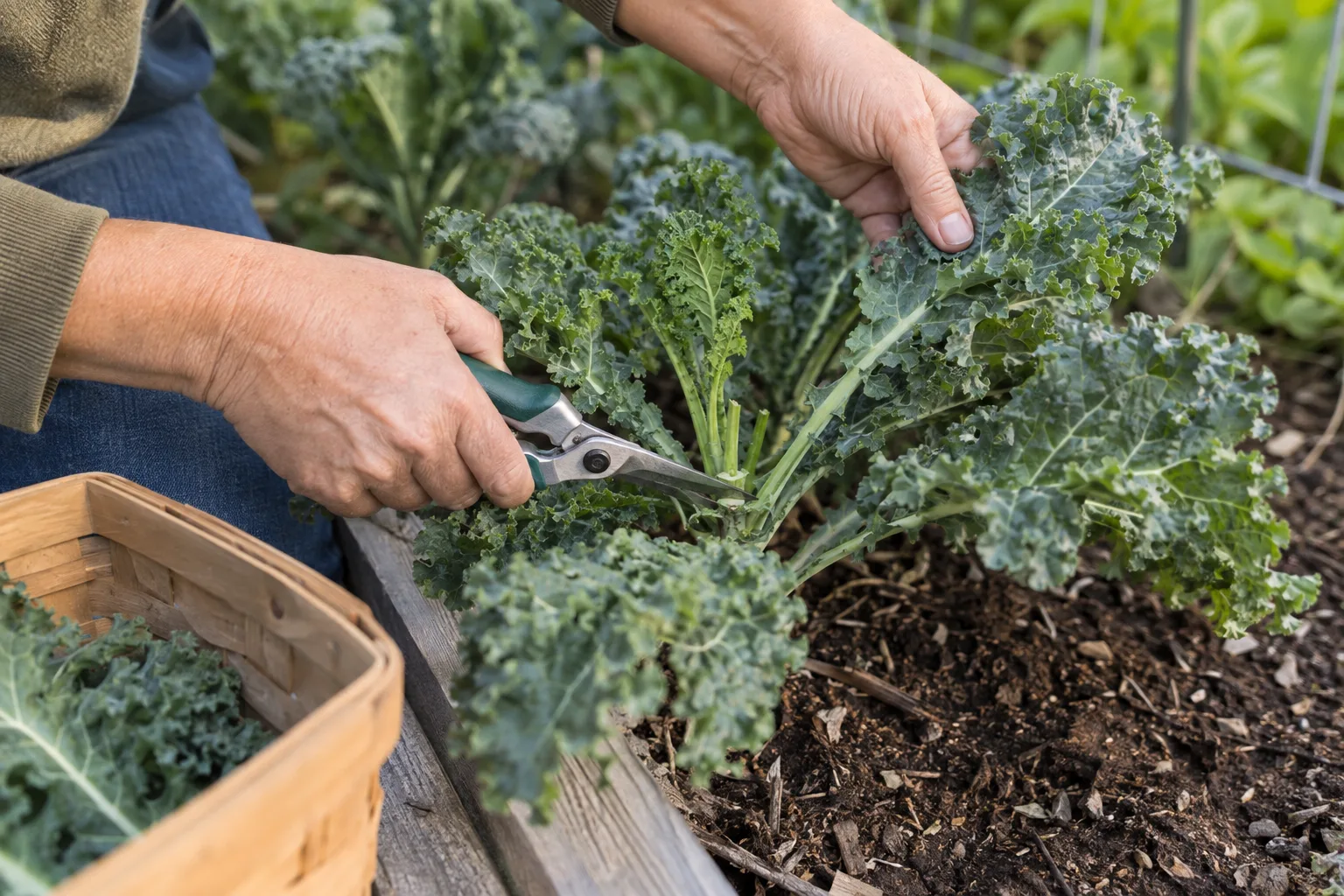
- Walk the beds first and note what is ready, what needs another week and what has started to bolt.
- Water root crops the day before so the soil releases the roots easily.
- Cut greens in the morning, when leaves are full of water after a cool night.
- Use sharp snips or a knife, because dull blades tear stems and invite disease.
- Take the oldest outer leaves of kale, chard and lettuce and leave the center growing.
- Loosen soil beside carrots and beets with a fork, then lift them out whole.
Move harvested greens into the shade or the kitchen right away. February afternoons can reach the low 70s, which is warm enough to wilt tender leaves within minutes. Wrap greens loosely in a damp paper towel and refrigerate them in a bag. Refill any space you clear with a fast green or a spoonful of compost.
What can I plant in February?
Plant fast cool-season crops now and set out warm-season transplants in late February or March, once frost risk has passed. Most low-desert gardeners treat the last frost as a moving target, so watch the forecast.
Radishes, arugula, baby lettuce and spinach cut young can still finish before warm weather arrives. Tomatoes, peppers and eggplant transplants can go in from late February into March if you can cover them on a cold night. Summer squash, cucumbers and melons are sown by seed once nights stay warm.
The University of Arizona Cooperative Extension publishes a vegetable planting calendar for Maricopa County that lists sowing and transplant windows by crop. Our own gardening calendars give a month-by-month view, and the classes and events page lists upcoming workshops.
What should I leave alone in February?
Leave slow crops, heavy citrus pruning and shade-loving shortcuts for another season. Broccoli, cauliflower and full-size carrots sown in February do not have enough cool weeks left to finish.
Hold off on cutting back frost-tender plants until the danger of frost has passed. Frost-damaged growth protects the tissue beneath it. Skip heavy feeding of cool-season crops that are about to be harvested, since extra nitrogen mostly pushes leafy growth.
Frequently asked questions
Can I still sow seed in February?
Yes, but only fast crops. Radishes (25 to 30 days), arugula (30 to 40 days) and baby lettuce or spinach cut young (30 to 45 days) can finish before warm weather arrives in late March or April. Skip broccoli, cauliflower and full-size carrots, which need more cool weeks than February leaves.
Why is my lettuce bitter?
Bitter lettuce usually means the plant is bolting, which warm days and longer daylight trigger, or that it dried out between waterings. Pick leaves while they are young, keep the soil evenly moist, and cut the whole plant once a flower stalk starts rising in the center. Bolted lettuce rarely turns sweet again.
Can I eat broccoli that has yellow flowers?
Yes, you can eat it, though quality drops. Cut the head right away, because open yellow flowers taste stronger and the stalk turns tougher. Side shoots usually form afterward and give you smaller florets for several more weeks, so leave the plant in the ground after the main cut.
Does frost hurt cool-season crops?
Light frost near 32°F rarely harms kale, chard, spinach, carrots or peas, and it can sweeten them. Lettuce, young seedlings and open pea flowers are more tender. If the forecast shows the upper 20s, cover beds with frost cloth or sheets in the evening and remove them in the morning.
Does shade cloth extend the harvest?
It buys a few weeks. A 30 percent shade cloth hung loosely over lettuce, spinach and cilantro cools the bed and slows bolting as March warms up. Day length also triggers bolting, so plan to harvest heavily as soon as plants reach size rather than waiting.
Is a February harvest worth planning for next fall?
Yes, if you have a bed with at least six hours of winter sun and can sow or transplant between September and November. February rewards that work with sweet roots, cut-and-come-again greens, fresh herbs and citrus. Skip it if your yard is mostly shade or you travel through the fall, since young cool-season crops need steady watering. Container growers can join in with a few pots of greens and herbs. Stop by the nursery in Queen Creek and we will help you plan your fall bed.
