

For Arizona fishhook cactus (Mammillaria grahamii), February care means very little: water sparingly, skip fertilizer, leave it where it is, and check drainage. Growth picks up in March, so this month is for watching and preparing.
Key takeaways
- Water a potted fishhook cactus only when the mix is dry all the way through, often every 3 to 4 weeks in February.
- Established plants in the ground usually need no extra water after winter rain.
- Hold fertilizer until nights stay above about 50°F, usually late March or April.
- If you must repot, do it in late February or March, using a gritty mix that is roughly half pumice or coarse sand.
- Cover young or potted plants with frost cloth on nights forecast near 32°F, and keep the soil dry before a cold night.
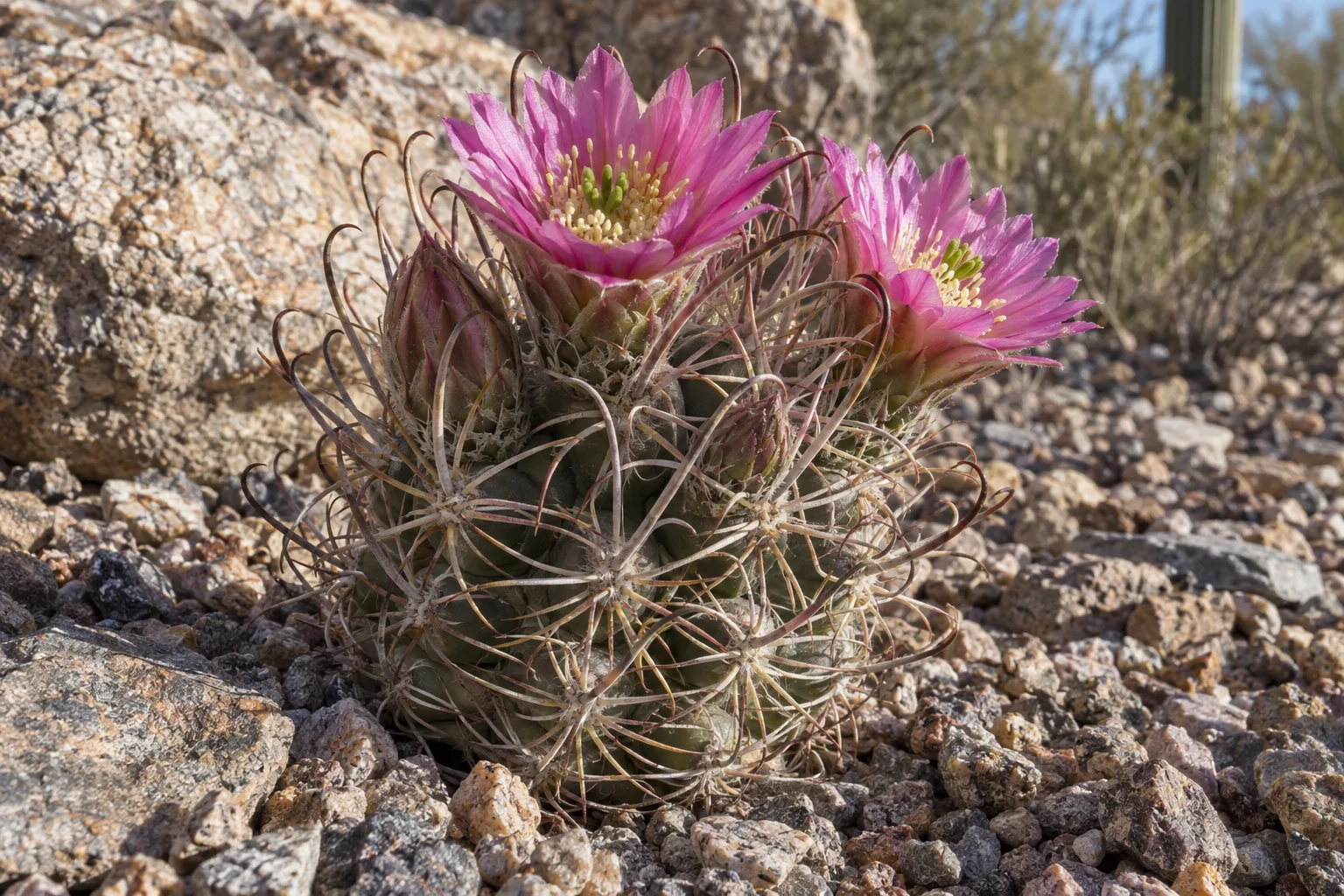
What does an Arizona fishhook cactus need in February?
Very little. Arizona fishhook cactus is a small Sonoran Desert native, usually a few inches tall, with hooked central spines and a ring of pink to magenta flowers near the crown. In February it is semi-dormant, its roots are slow, and it lives off water stored in its body.
Queen Creek nights in February often fall into the 30s, with an occasional frost. Cold and wet together cause more losses than cold alone, so most February care keeps the roots out of damp soil. In the wild this cactus grows in gravelly, fast-draining ground, often beside a shrub that shades it from hot afternoon sun. Our plants page shows the range of desert-adapted plants we sell, and availability changes week to week and season to season.
How often should I water Arizona fishhook cactus in February?
Rarely. Established plants in the ground usually need no extra water in February if winter rain has fallen, and potted plants need a drink only when the mix is dry all the way through, often every 3 to 4 weeks.
Push a wooden skewer to the bottom of the pot to check. If it comes out with dark, damp soil on it, wait another week. A slightly wrinkled body in winter is normal and is not a request for water.
Much East Valley tap water is hard, and the minerals build up as a white crust on the rim and soil surface. Once the weather warms, water potted cacti slowly until water runs from the drainage hole, which flushes the salts. In February, do that only on a day above 60°F.
Should I fertilize a fishhook cactus in February?
No. Feeding a semi-dormant cactus pushes soft growth that a late frost can damage, and roots in cool soil cannot use the nutrients anyway. Wait until nights stay above about 50°F, then give a half-strength cactus fertilizer low in nitrogen once or twice through spring and early summer.
Plants growing in the ground in lean native soil often need no feeding at all.
Can I plant or repot a fishhook cactus in February?
You can repot in the last week or two of February, but March and April are better because roots start growing as the soil warms. New plantings do best from spring into early summer, once the frost risk has passed.
Repot only if roots circle the pot or the plant has sat in the same mix for three or more years. Wear thick gloves, because the hooked spines catch skin and cloth. A terracotta pot with a drainage hole breathes better than glazed or plastic, and it should be only an inch or two wider than the root ball.
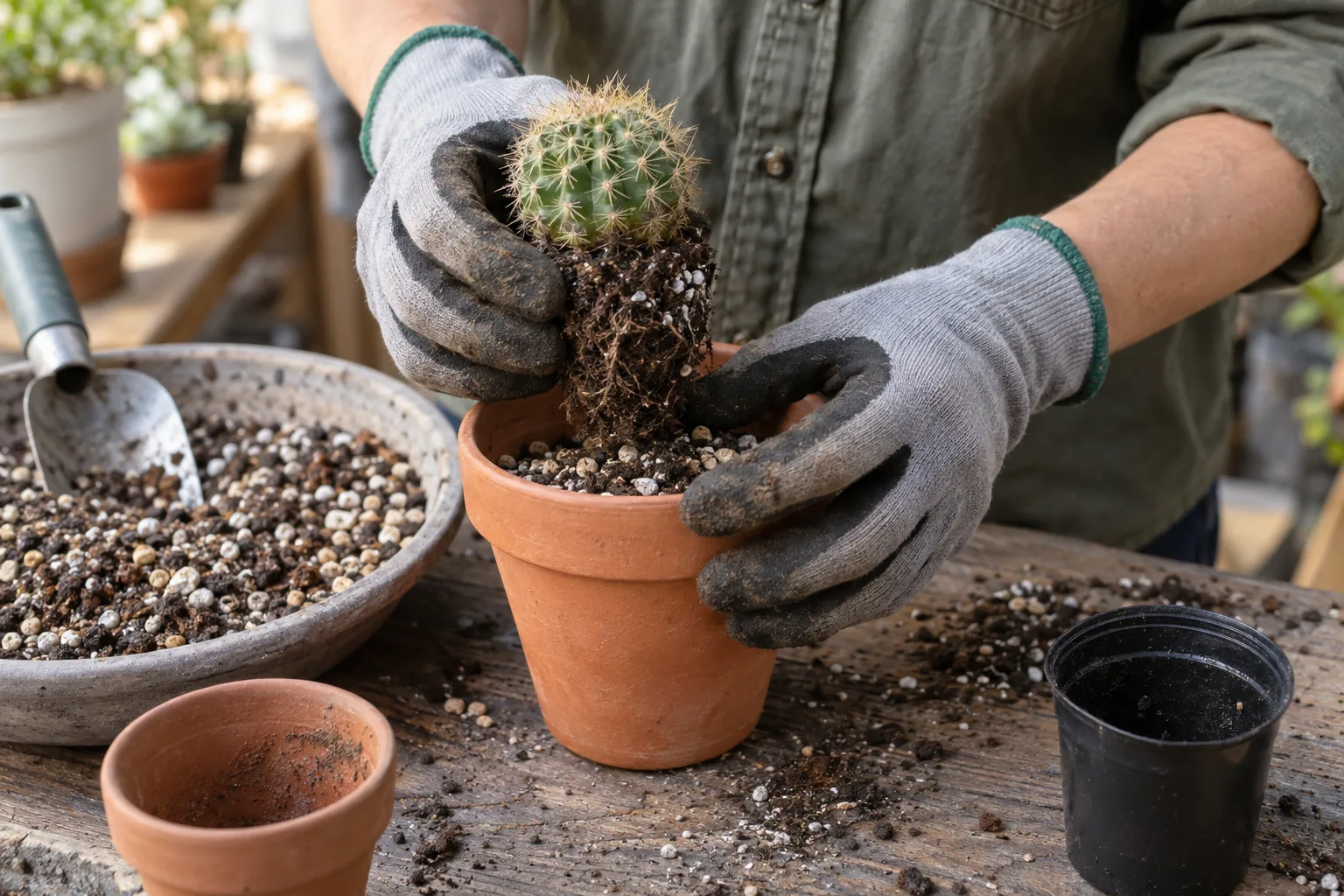
- Let the soil dry out for a week before you start.
- Slide the plant out, gripping it with folded newspaper or tongs.
- Shake off the old mix and trim any black or mushy roots with a clean blade.
- Set the plant in dry shade for 2 to 3 days so cuts can callous.
- Plant it in a mix of about half pumice or coarse sand and half cactus soil, then wait about a week before watering.
Where should I put it in February?
Leave it where it has been wintering. February sun is low and gentle, but a cactus that spent the winter in shade can sunburn if you move it to a hot west wall, and the damage shows as bleached or tan patches that do not heal.
Morning sun with afternoon shade suits it best in the East Valley, especially as temperatures climb toward summer highs above 110°F. If the plant wintered in a garage or indoors, move it out gradually, starting with 2 to 3 hours of morning sun and adding an hour every few days.
What problems should I watch for in February?
Check for rot, cold damage and scale. A look every week or two is enough.
Rot
Soft, dark tissue at the base means rot, usually after cool, wet weeks. It spreads inward, so a plant that is mushy at the base and loose in its spines needs help quickly. Cut back to firm, healthy tissue with a clean blade, let the cut dry for several days, and repot in dry, gritty mix.

Cold damage
Tan or white papery patches on the side facing the wind are frost scars. Light scarring is cosmetic and stays on the plant. For young or potted plants, drape frost cloth over them on nights forecast near freezing and remove it by mid-morning.
Scale insects
Small brown bumps that scrape off are likely scale. Take a clear photo and bring it to us before you spray anything, because the right treatment depends on the pest.
What does the care calendar look like from February to May?
Use the table below as a general guide, and adjust it to your own weather. The gardening calendars on our site give a wider month-by-month view for the low desert.
| Month | Watering | Feeding | Main task |
|---|---|---|---|
| February | Rarely; potted plants every 3 to 4 weeks if bone dry | None | Check drainage, protect from frost |
| March | Potted plants every 2 to 3 weeks if dry | None until nights hold above 50°F | Repot if needed, watch for flower buds |
| April | Potted plants about every 2 weeks | One half-strength feeding | Plant new cacti, flush salts from pots |
| May | Water as the mix dries, more often as heat rises | Second feeding optional | Add afternoon shade before summer heat |

Frequently asked questions
When does Arizona fishhook cactus bloom?
Arizona fishhook cactus flowers from spring into summer, and a plant may bloom again after monsoon rain between July and September. The blooms are pink to magenta and open in a ring near the crown. Each flower lasts only a day or two, and small red fruits follow. Timing shifts with each year’s weather.
How cold can a fishhook cactus take?
Mature plants in the ground tolerate typical East Valley frost, which is usually brief and light. Young, potted and weakened plants are more vulnerable, so cover them with frost cloth when the forecast nears 32°F. Dry soil improves cold tolerance, since cold combined with wet roots does the real damage.
Is a wrinkled body in February a problem?
Mild wrinkling is normal in winter, because the plant uses stored water. Worry if the body is deeply shrunken and the soil has been dry for a month or more, or if the skin feels soft instead of firm. Soft skin points to rot, and more water makes rot worse.
Does rain count as watering?
Yes, a good soaking rain counts as a full watering for plants in the ground, so skip your next scheduled drink. Potted plants under a roof overhang miss the rain and still need the usual check. Drain saucers promptly, because water sitting under a pot keeps the roots wet for days.
Can I grow a fishhook cactus indoors?
You can, but it needs a very bright south or west window. In lower light the plant stretches and turns pale, and the new growth is thin and weak. It does better outdoors on a covered patio with morning sun, moved inside only on the coldest nights.
Is an Arizona fishhook cactus a good fit for your yard?
Yes, if you have a spot with fast-draining soil or a gritty pot, morning sun and afternoon shade. It stays small, needs little water and suits rock gardens, containers and the base of a desert tree. Skip it if your irrigation runs on a fixed schedule, your soil holds water, or you want a tall plant that shows from the street. Stop by our nursery in Queen Creek and we will help you choose the right plant and pot.
