

Arizona homeowners are choosing desert-modern garden design because it cuts water use, shortens the maintenance list, and suits the clean lines of newer homes. Stone, steel and tough plants replace turf, and the yard looks good through summers above 110°F.
Key takeaways
- Established desert-adapted plantings use far less irrigation than turf, but most trees and shrubs still need regular deep watering for their first one to two years.
- Fall (October through November) and early spring (March to April) are the best low desert planting windows, because roots settle in before the 110°F summer.
- Install irrigation lines first, then boulders and edging, then plants, and finish with 2 to 3 inches of decomposed granite or crushed stone.
- Leave each agave and large shrub its full mature spread, often 3 to 8 feet, instead of packing plants close for instant fill.
- Contact your water provider and your HOA before removing turf, because rebate rules and approval steps vary.
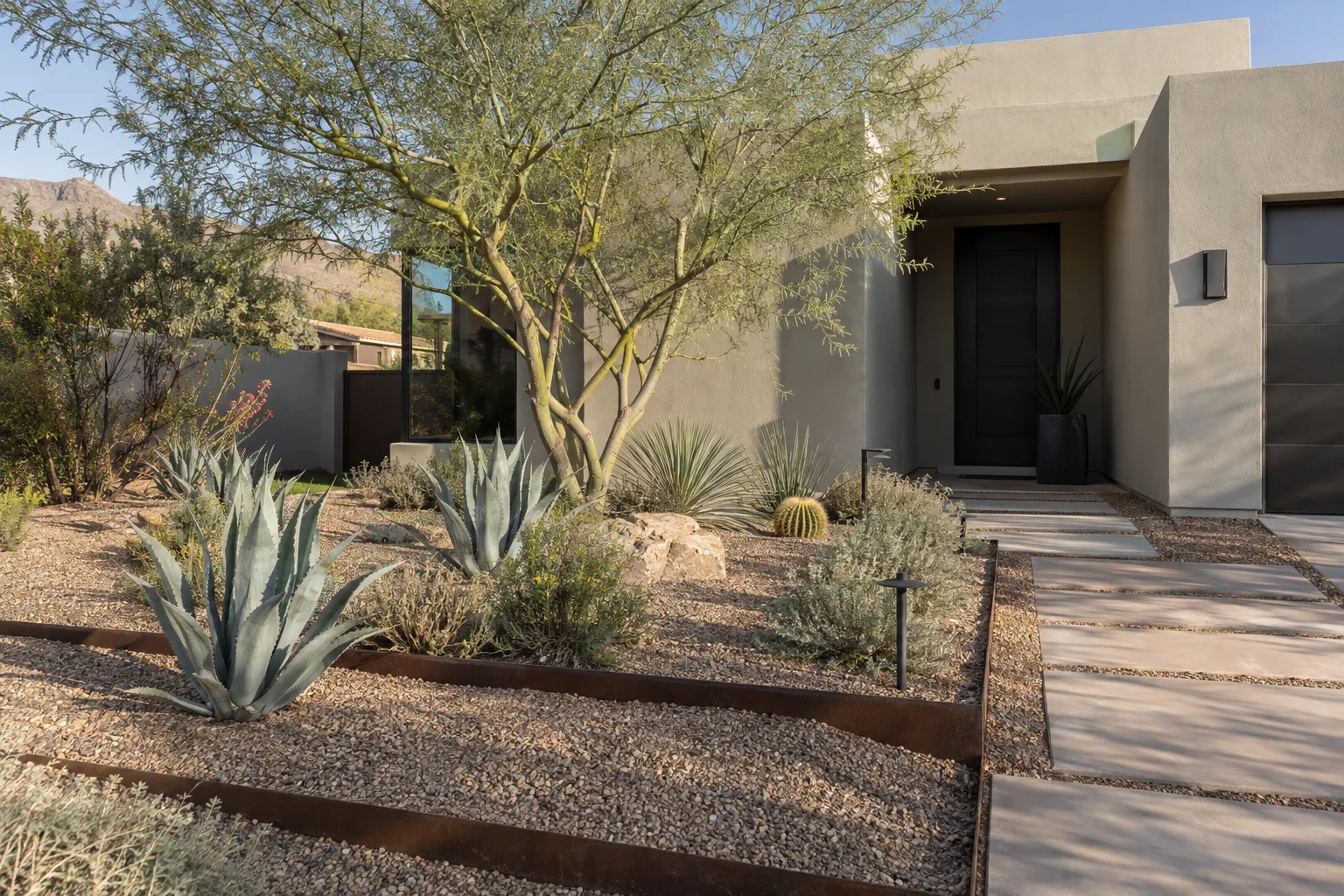
What is desert-modern garden design?
Desert-modern garden design pairs clean lines and a short list of materials with plants that handle the low desert’s heat and alkaline soil. Beds have crisp edges, paths run straight or at gentle angles, and a few bold plants repeat across the yard. One boulder or a drift of agaves does the work of a dozen scattered shrubs.
Xeriscape is the broader practice of saving water in a landscape. Desert-modern adds a design plan to it. That plan borrows from mid-century and contemporary homes, with their flat rooflines and wide overhangs, so horizontal planting beds and steel edging look at home beside many East Valley houses.
Why are East Valley homeowners replacing lawns with desert plantings?
Most make the switch for lower water use and a shorter chore list. A lawn here needs mowing, edging, feeding and irrigation adjustments through months of 100°F weather, while an established desert planting may need pruning a few times a year and a quick check of the drip lines.
The plants are adapted to the low desert’s roughly 8 to 10 inches of annual rain, and drip emitters put water at the roots instead of on open ground. Many of them also bloom in sequence, so the yard changes with the seasons.
Some Valley cities and water providers have offered rebates for converting turf to low-water landscaping. Programs open, close and change their rules, and some require approval before any grass comes out. Ask before you dig. If you live in an HOA, read your community’s landscape guidelines and submit your plan for approval before work begins.
How much water does a desert-modern yard need?
Established desert-adapted trees and shrubs usually need a deep soak every 7 to 14 days in summer and much less in winter, while new plants need water every few days at first. Over the first one to two years you stretch the interval as roots spread into the surrounding soil.
Put drip emitters at the edge of each plant’s canopy and move them outward as it grows. Short daily watering keeps roots shallow. A deep soak followed by a dry-down pushes them lower, where the soil stays cooler during the hottest weeks.
Rain matters too. The monsoon runs roughly July through September, so shape beds into shallow basins that direct runoff toward trees, and use a rain sensor or controller adjustment so the system does not run right after a storm.
Which plants work best in a desert-modern yard?
Plants with strong shapes, silver or blue foliage and low water needs carry this style. You can browse our plant selections to see what suits your yard. These are varieties we commonly carry, and availability changes week to week and season to season.
Trees
Desert Museum palo verde (Parkinsonia ‘Desert Museum’) grows roughly 20 to 25 feet tall and covers itself in yellow flowers in spring. Its green bark stays active after the leaves drop. The drawback is litter, since small leaves and spent flowers collect on patios and in pools.
Desert willow (Chilopsis linearis) reaches about 15 to 25 feet with an open canopy that casts light shade and blooms in pink, purple or white through much of the warm season. It loses its leaves in winter and drops seed pods, so plan where you will sweep. More options are on our desert trees page.
Agaves and succulents
Parry’s agave (Agave parryi) forms a tight blue-gray rosette about 2 to 3 feet tall and wide, and it tolerates winter cold well. Its terminal spine is sharp, so keep it back from walkways and seating.
Red yucca (Hesperaloe parviflora) sends up coral-pink flower stalks from spring into summer, grows about 3 to 4 feet tall, and draws hummingbirds. It needs little more than removing spent stalks. Blue Glow agave (Agave ‘Blue Glow’) stays near 2 feet and suits foreground beds, though a hard frost can mark its leaves.
Perennials and shrubs
Blackfoot daisy (Melampodium leucanthum) makes a low mound under a foot tall with white flowers from spring into fall. Autumn sage (Salvia greggii) grows 2 to 3 feet tall in red, pink, coral or white and takes a cutback in late winter once hard frost has passed. Desert marigold (Baileya multiradiata) adds yellow blooms over silvery foliage, though individual plants are short-lived and reseed to replace themselves.

What hardscape materials give the modern look?
Decomposed granite, crushed stone, steel edging, poured concrete and flagstone create the modern look, and a yard reads best when it uses only two or three of them. Repeating one material across the whole design ties separate beds together and keeps the plants in focus.
| Material | Look and use | Watch for |
|---|---|---|
| Decomposed granite | Warm tan to rust tones for paths and ground cover | Loose material migrates onto patios, while stabilized DG holds a firmer surface |
| Darker crushed stone | Strong contrast with silver and blue plants | Dark rock absorbs more heat |
| Steel edging | Crisp lines between beds and paths | Weathering steel can stain nearby concrete as it rusts |
| Poured concrete | Clean pads and straight paths | It reflects heat onto nearby plants |
| Flagstone or large slabs | Natural stepping stones and patios | Slabs rock if the base is not compacted |
Boulders anchor the design when you bury them one third to one half of their height so they look settled. Large containers also work as sculpture and give height where planting is limited; see our pottery and planters for ideas.
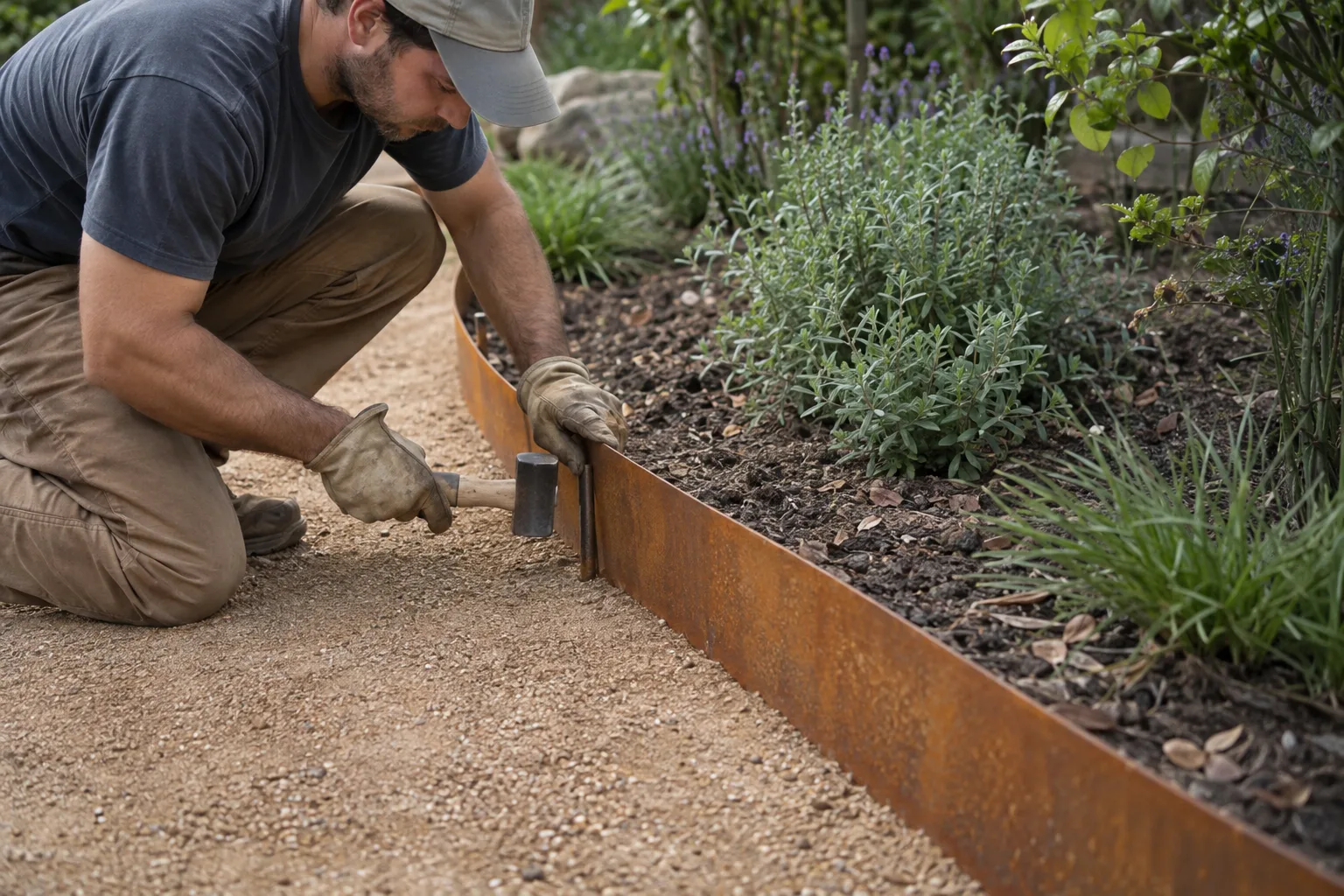
How do I plan and build a desert-modern yard?
Work in this order: map the site, check the rules, prepare the ground, install irrigation, set hardscape, plant, then add rock. Doing the steps out of order is the main reason projects run over budget, because buried drip lines are hard to fix once rock covers them.
- Note sun exposure, drainage and reflected heat from south and west walls. Mark where large trees will cast shade in five years.
- Check with your water provider and HOA, then remove turf.
- Test drainage by filling a planting hole with water. If it still stands after a day, caliche or compacted soil is blocking it, so break through the layer or plant on a mound.
- Lay main lines and drip tubing before any rock goes down.
- Set boulders and edging, following the lines of the design.
- Plant the largest trees and shrubs first, then the accents, grouping in odd numbers such as three or five. Fall and early spring are the best windows.
- Spread 2 to 3 inches of rock and pull it back from trunks and plant crowns.
- Water new plants on a tight schedule, then lengthen the interval as they establish.

What mistakes should I avoid?
The most common mistake is planting too close. Agaves and large shrubs often reach 3 to 8 feet across, and crowded beds look messy within a few years and need constant cutting back. Read the tag for mature size and measure the spacing before you dig.
Reflected heat is the next problem. A west-facing block wall or a concrete pad can raise the temperature around nearby plants well above the air temperature, so place tough, heat-tolerant plants there and keep tender ones in the shade of a tree or structure.
Watering on a fixed daily schedule, piling rock against trunks, and using five different materials in one small yard are also frequent errors. Shade and varied plant heights make a smaller yard feel designed.
Frequently asked questions
How long do desert-modern plants take to establish?
Most trees and shrubs take one to two years to establish, and agaves often settle in faster. Planting in fall gives roots a full cool season before the first summer. During that period, keep deep watering on a steady schedule, then stretch the interval gradually and watch for wilting or leaf drop during the hottest weeks.
Can I grow vegetables and herbs in a desert-modern yard?
Yes, if you give them their own bed. Vegetables need more frequent watering than desert plants, so a raised steel or masonry bed on its own drip zone keeps the two systems separate. Low desert vegetable planting runs mainly from fall through spring, and our gardening calendars list planting windows by month.
Will desert-modern landscaping raise my home’s value?
It can improve curb appeal, but no one can promise a dollar return. Buyers tend to respond to tidy, low-maintenance yards, and lower water bills are easy to explain. Results depend on design quality, plant health and your neighborhood. For a firm answer on your own home, ask a local real estate agent or appraiser.
Do I need a landscape designer?
Not for a small yard with simple beds, but a designer helps with large lots, grading and drainage problems. If you plan it yourself, sketch the beds to scale, list mature plant sizes and mark irrigation zones before buying anything. Check our classes and events page to see what workshops are scheduled.
Does rock mulch make a yard hotter?
Rock absorbs heat during the day and releases it in the evening, so it warms the air near walls and windows. Shade trees, plants placed between the rock and the house, and keeping gravel back from glass reduce the effect. Lighter stone reflects more sunlight, while darker stone holds more heat.
Is desert-modern design right for your yard?
It is a good fit if you want lower water use, a shorter chore list and a yard with a clear design. Plan to water new plants carefully for the first one to two years and to accept some sharp spines and fallen leaves. Skip it if you need a play lawn for kids or dogs, or if your community guidelines call for turf. If you are ready to start, visit us at the nursery in Queen Creek and talk plants.
